Here’s the film of my talk at the recent summer school at the Centre for Investigative Journalism in London a month ago:
Many thanks to Gavin and the rest of the CIJ team for such a stimulating and thought-provoking weekend!
Here’s the film of my talk at the recent summer school at the Centre for Investigative Journalism in London a month ago:
Many thanks to Gavin and the rest of the CIJ team for such a stimulating and thought-provoking weekend!
 It was widely reported today that a number of well-respected British lawyers and civil liberties organisations are questioning the integrity of the much-trumpeted inquiry into UK spy complicity in torture.
And about time too. One hopes this is all part of a wider strategy, not merely a defensive reaction to the usual power play on the part of the British establishment. After all, it has been apparent from the start that the whole inquiry would be questionable when it was announced that Sir Peter Gibson would be chairing the inquiry.
Gibson has certain form. He was until recently the Intelligence Services Commissioner — the very person who for the last five years has been invited into MI5, MI6 and GCHQ for cosy annual chats with carefully selected intelligence officers (ie those who won’t rock the boat), to report back to the government that democratic oversight was working wonderfully, and it was all A‑OK in the spy organisations.
After these years of happy fraternising, when his name was put forward to investigate potential criminal complicity in torture on the part of the spies, he did the publicly decent thing and resigned as Commissioner to take up the post of chair of the Torture Inquiry.
Well, we know the establishment always like a safe pair of hands.… and this safety has also been pretty much guaranteed by law for the last six years.
Ever since the Inquiries Act 2005 was pushed through as law, with relatively little press awareness or parliamentary opposition, government departments and intelligence agencies have pretty much been able to call the shots when it comes to the scope of supposedly independent inquiries.
 Interestingly, Tory grandee Sir Malcolm Rifkind, the former Foreign Secretary who now chairs the Intelligence and Security Committee, has also weighed in to the debate. On BBC Radio 4’s Today programme he stated:
“I cannot recollect an inquiry that’s been proposed to be so open as we’re having in this particular case. When was the last time the head of MI5 and the head of MI6 – the prime minister has made quite clear – can be summoned to this inquiry and be required to give evidence?”
This from the senior politician who has always denied that he was officially briefed about the illegal assassination plot against Colonel Gaddafi of Libya in 1996; this from the man who is now calling for the arming of the very same extremists to topple Gaddafi in the ongoing shambles that is the Libyan War; and this from the man who is also loudly calling for an extension of the ISC’s legal powers so that it can demand access to witnesses and documents from the spy organisations.
No doubt my head will stop spinning in a day or two.…
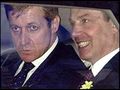 I have long suspected that Alastair Campbell, Labour’s former Director of Communications, may potentially have broken the UK’s Official Secrets Act. Now prima facie evidence is beginning to emerge that he did indeed breach the “clear bright line” against unauthorised disclosure of intelligence.
I know that the Metropolitan Police have their hands full investigating the meltdown that is the News of the World hacking scandal — and also trying to replace all those senior officers who had to resign because of it — but they do have a duty to investigate crime. And not just any old crime, in this case, but one that has potentially threatened the very basis of our national security.
Why do I say this?
 You’ll no doubt have some vague recollection that, in the run-up to the 2003 Iraq War, the British government produced a couple of reports “making a case for war”. The first, the September Dossier (2002), is the one most remembered, as this did indeed sex up the case for war, as well as include fake intelligence about Saddam Hussein trying to acquire uranium from Niger. Most memorably it led to the “Brits 45 minutes from Doom” front-page headline in Rupert Murdoch’s The Sun newspaper, no less, on the eve of the crucial war vote in Parliament.
There was also the notorious leaked Downing Street Memo, where the then-head of MI6, Sir Richard Dearlove ©, was minuted as saying that the intelligence and facts were being fitted around the [predetermined war] policy.
However, for the purposes of a possible Regina v. Campbell day in court, it is the second report that requires our attention.
It was published in February 2003, just before “shock and awe” was launched to liberate the grateful Iraqi people. This report became known as the “Dodgy Dossier”, as it was largely lifted from a 12 year old PhD thesis that the spin doctors had found on the internet. However, it also included nuggets of brand-new and unassessed intelligence from MI6. Indeed, even the toothless Intelligence and Security Committee in Parliament stated in paragraph 82 of its 2002–2003 Annual Report ( Download ISC_2003) that:
“We believe that material produced by the [intelligence] Agencies can be used in publications and attributed appropriately, but it is imperative that the Agencies are consulted before any of their material is published. This process was not followed when a second document was produced in February 2003. Although the document did contain some intelligence-derived material it was not clearly attributed or highlighted amongst the other material, nor was it checked with the Agency providing the intelligence or cleared by the JIC prior to publication. We have been assured that systems have now been put in place to ensure that this cannot happen again, in that the JIC Chairman endorses any material on behalf of the intelligence community prior to publication.”
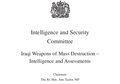 At the time it was reported that Blair and Campbell had spontaneously distributed this report to journalists travelling with them on a tour of the Far East. The ISC confirmed that the intelligence had been passed to journalists without the permission of MI6 in its September 2003 special report — “Iraq Weapons of Mass Destruction: Intelligence and Assessments” (see pars 131 to 134):
“The document was originally given to a number of journalists over the weekend of
1 and 2 February and then placed in the Library of the House on 3 February. The Prime
Minister described the document as follows:
“We issued further intelligence over the weekend about the infrastructure of
concealment. It is obviously difficult when we publish intelligence reports, but I hope
that people have some sense of the integrity of our security services. They are not
publishing this, or giving us this information, and making it up. It is the intelligence
that they are receiving, and we are passing on to people. In the dossier that we
published last year, and again in the material that we put out over the weekend, it is
very clear that a vast amount of concealment and deception is going on.”
“Conclusions:
“The Committee took evidence on this matter from the Chief of the SIS on both
12 February and 17 July and separately from Alastair Campbell on 17 July. Both agreed
that making the document public without consulting the SIS or the JIC Chairman was
a “cock-up”. Alastair Campbell confirmed that, once he became aware that the
provenance of the document was being questioned because of the inclusion of
Dr Al-Marashi’s work without attribution, he telephoned both the Chief of the SIS and
the JIC Chairman to apologise.
“We conclude that the Prime Minister was correct to describe the document as
containing “further intelligence… about the infrastructure of concealment.… It is the
intelligence that they [the Agencies] are receiving, and we are passing on to people.”
“However, as we previously concluded, it was a mistake not to consult the
Agencies before their material was put in the public domain. In evidence to us the
Prime Minister agreed. We have reported the assurance that we have been given
that in future the JIC Chairman will check all intelligence-derived material on
behalf of the intelligence community prior to publication.”
 Crucially, Blair and Campbell had jumped the (old Iraqi super-) gun by issuing this information, but Campbell seems to have got away with it by describing such a breach of the OSA as a “cock-up”. Or perhaps just another precipitous “rush of blood to the head” on his part, as recently described in the long-suppressed testimony of SIS2 revealed around the Chilcot Enquiry and reported in The Guardian:
“Papers released by the Chilcot inquiry into the war show that an MI6 officer, identified only as SIS2, had regular contacts with Campbell: “We found Alastair Campbell, I think, an enthusiastic individual, but also somewhat of an unguided missile.” He added: “We also, I think, suffered from his propensity to have rushes of blood to the head and pass various stories and information to journalists without appropriate prior consultation” (my emphasis).
So why do I suggest that Campbell could be liable for prosecution? It appears that he was a “notified person” for the purposes of Section 1(1) of the OSA. While not employed by the intelligence agencies, notified persons have regular access to intelligence material and are subjected to the highest clearance — developed vetting — in the same way as the full-time spooks. As such, they are also bound by the law against disclosure of such material without the prior written permission of the head of the agency whose intelligence they want to disseminate. There is no room for manœuvre, no damage assessment, and no public interest defence. The law is clear.
And a report in today’s Telegraph about Andy Coulson and the phone-hacking scandal seems to show clearly that Campbell was just such a notified person:
“Unlike Alastair Campbell and other previous holders of the Downing Street communications director role, Mr Coulson was not cleared to see secret intelligence reports and so was spared the most detailed scrutiny of his background and personal life.….
“The only people who will be subject to developed vetting are those who are working in security matters regularly and would need to have that sort of information.
“The only special advisers that would have developed vetting would be in the Foreign Office, Ministry of Defence and maybe the Home Office. Andy Coulson’s role was different to Alastair Campbell’s and Jonathan Powell.
“Alastair Campbell could instruct civil servants. This is why [Coulson] wasn’t necessarily cleared. Given [the nature of] Andy Coulson’s role as more strategic he wouldn’t have necessarily have been subject to developed vetting.”
So it would appear that Alastair Campbell is bang to rights for a breach of the Official Secrets Act under Section 1(1). He released new, unassessed and uncleared MI6 intelligence within the dodgy dossier. This is not just some technical infraction of the law — although even if it were, he would still have a case to answer.
 No, this report led inexorably to our country going to war against Iraq, shoulder to shoulder with the US, and the resulting deaths, maimings, poisonings and displacement of millions of innocent Iraqi people. It has also directly increased the terrorist threat to the UK, as Tony Blair was officially warned pre-Iraq war by the then-head of MI5, Eliza Manningham-Buller. With the dodgy dossier, Campbell has directly harmed countless lives and our national security.
Of course, many of us might fantasise about warmongers getting their just deserts in The Hague. But perhaps the OSA could prove to be Al Campbell’s Al Capone-style tax evasion moment.
Now, what about The Right Honourable Tony Blair?
 The quangocrats charged with overseeing the legality of the work of the UK spies have each produced their undoubtably authoritative reports for 2010.
Sir Paul Kennedy, the commissioner responsible for overseeing the interception of communications, and Sir Peter Gibson, the intelligence services commissioner, both published their reports last week.
Gibson has, of course, honourably now stood down from his 5‑year oversight of MI5, MI6, and GCHQ in order to head up the independent enquiry into spy complicity in torture.
And both the reports say, naturally, that it’s all hunky-dorey. Yes, there were a few mistakes (well, admistrative errors — 1061 over the last year), but the commissioners are confident that these were neither malign in intent nor an indication of institutional failings.
So it appears that the UK spies gained a B+ for their surveillance work last year.
Both commissioners pad out their reports with long-winded descriptions of what precisely their role is, what powers they have, and the full, frank and open access they had to the intelligence officers in the key agencies.
They seem sublimely unaware that when they visit the spy agencies, they are only given access to the staff that the agencies are happy for them to meet — intelligence officers pushed into the room, primped out in their party best and scrubbed behind the ears — to tell them what they want to hear.
Any intelligence officers who might have concerns have, in the past, been rigorously banned from meeting those charged with holding the spies to democratic account.….
.…which is not much different from the oversight model employed when government ministers, the notional political masters of MI6, MI6 and GCHQ, sign off on bugging warrants that allow the aggressive investigation of targets (ie their phones, their homes or cars, or follow them around). Then the ministers are only given a summary of a summary of a summary, an application that has been titrated through many managerial, legal and civil service filters before landing on their desks.
So, how on earth are these ministers able to make a true evaluation of the worth of such an application to bug someone?
They just have to trust what the spies tell them — as do the commissioners.
The Guardian’s spook commentator extraordinaire, Richard Norton-Taylor, has reported that the current chair of the Intelligence and Security Committee (ISC) in the UK Parliament, Sir Malcolm Rifkind, wants the committee to finally grow a pair. Well, those weren’t quite the words used in the Grauny, but they certainly capture the gist.
If Rifkind’s stated intentions are realised, the new-look ISC might well provide real, meaningful and democratic oversight for the first time in the 100-year history of the three key UK spy agencies — MI5, MI6, and GCHQ, not to mention the defence intelligence staff, the joint intelligence committee and the new National Security Council .
 For many long years I have been discussing the woeful lack of real democratic oversight for the UK spies. The privately-convened ISC, the democratic fig-leaf established under the aegis of the 1994 Intelligence Services Act (ISA), is appointed by and answerable only to the Prime Minister, with a remit only to look at finance, policy and administration, and without the power to demand documents or to cross-examine witnesses under oath. Its annual reports are always heavily redacted and have become a joke amongst journalists.
When the remit of the ISC was being drawn up in the early 1990s, the spooks were apoplectic that Parliament should have any form of oversight whatsoever. From their perspective, it was bad enough at that point that the agencies were put on a legal footing for the first time. Spy thinking then ran pretty much along the lines of “why on earth should they be answerable to a bunch of here-today, gone-tomorrow politicians, who were leaky as hell and gossiped to journalists all the time”?
So it says a great deal that the spooks breathed a huge, collective sigh of relief when the ISC remit was finally enshrined in law in 1994. They really had nothing to worry about. I remember, I was there at the time.
This has been borne out over the last 17 years. Time and again the spies have got away with telling barefaced lies to the ISC. Or at the very least being “economical with the truth”, to use one of their favourite phrases. Former DG of MI5, Sir Stephen Lander, has publicly said that “I blanche at some of the things I declined to tell the committee [ISC] early on…”. Not to mention the outright lies told to the ISC over the years about issues like whistleblower testimony, torture, and counter-terrorism measures.
But these new developments became yet more fascinating to me when I read that the current Chair of the ISC proposing these reforms is no less than Sir Malcolm Rifkind, crusty Tory grandee and former Conservative Foreign Minister in the mid-1990s.
For Sir Malcolm was the Foreign Secretary notionally in charge of MI6 when the intelligence officers, PT16 and PT16/B, hatched the ill-judged Gaddafi Plot when MI6 funded a rag-tag group of Islamic extremist terrorists in Libya to assassinate the Colonel, the key disclosure made by David Shayler when he blew the whistle way back in the late 1990s.
Obviously this assassination attempt was highly reckless in a very volatile part of the world; obviously it was unethical, and many innocent people were murdered in the attack; and obviously it failed, leading to the shaky rapprochement with Gaddafi over the last decade. Yet now we are seeing the use of similar tactics in the current Libyan war (this time more openly) with MI6 officers being sent to help the rebels in Benghazi and our government openly and shamelessly calling for régime change.
 But most importantly from a legal perspective, in 1996 the “Gaddafi Plot” MI6 apparently did not apply for prior written permission from Rifkind — which they were legally obliged to do under the terms of the 1994 Intelligence Services Act (the very act that also established the ISC). This is the fabled, but real, “licence to kill” — Section 7 of the ISA — which provides immunity to MI6 officers for illegal acts committed abroad, if they have the requisite ministerial permission.
At the time, Rifkind publicly stated that he had not been approached by MI6 to sanction the plot when the BBC Panorama programme conducted a special investigation, screened on 7 August 1997. Rifkind’s statement was also reported widely in the press over the years, including this New Statesman article by Mark Thomas in 2002.
That said, Rifkind himself wrote earlier this year in The Telegraph that help should now be given to the Benghazi “rebels” — many of whom appear to be members of the very same group that tried to assassinate Gaddafi with MI6’s help in 1996 — up to and including the provision of arms. Rifkind’s view of the legalities now appear to be somewhat more flexible, whatever his stated position was back in the 90s.
Of course, then he was notionally in charge of MI6 and would have to take the rap for any political fall-out. Now he can relax into the role of “quis custodiet ipsos custodes?”. Such a relief.
I shall be watching developments around Rifkind’s proposed reforms with interest.
Here’s the text of an article I wrote for The Guardian a while ago, where I suggest we need a fresh perspective and some clear thinking on the role of the spies in the UK.
Worth reiterating, following the pre-emptive arrest of protesters:
 The cascade of revelations about secret policemen, starting with PC Mark Kennedy/environmental activist “Mark Stone”, has highlighted the identity crisis afflicting the British security establishment. Private undercover police units are having their James Bond moment – cider shaken, not stirred – while MI5 has become ever more plod-like, yet without the accompanying oversight. How has this happened to our democracy without any public debate?
From the late 19th century the Metropolitan Police Special Branch investigated terrorism while MI5, established in 1909, was a counter-intelligence unit focusing on espionage and political “subversion”. The switch began in 1992 when Dame Stella Rimington, then head of MI5, effected a Whitehall coup and stole primacy for investigating Irish terrorism from the Met. As a result MI5 magically discovered that subversion was not such a threat after all – this revelation only three years after the Berlin Wall came down – and transferred all its staff over to the new, sexy counter-terrorism sections. Since then, MI5 has been eagerly building its counter-terrorism empire, despite this being more obviously evidential police work.
Special Branch was relegated to a supporting role, dabbling in organised crime and animal rights activists, but not terribly excited about either. Its prestige had been seriously tarnished. It also had a group of experienced undercover cops – known then as the Special Duties Section – with time on their hands.
 It should therefore come as little surprise that Acpo, the private limited company comprising senior police officers across the country, came up with the brilliant idea of using this skill-set against UK “domestic extremists”. Acpo set up the National Public Order Intelligence Unit (NPOIU). This first focused primarily on animal rights activists, but mission creep rapidly set in and the unit’s role expanded into peaceful protest groups. When this unaccountable, Stasi-like unit was revealed it rightly caused an outcry, especially as the term “domestic extremist” is not recognised under UK law, and cannot legally be used as justification to aggressively invade an individual’s privacy because of their legitimate political beliefs and activism. So, plod has become increasingly spooky. What of the spooks?
As I mentioned, they have been aggressively hoovering up the prestigious counter-terrorism work. But, despite what the Americans have hysterically asserted since 9/11, terrorism is not some unique form of “eviltude”. It is a crime – a hideous, shocking one, but still a crime that should be investigated, with evidence gathered, due process applied and the suspects on trial in front of a jury.
A mature democracy that respects human rights and the rule of law should not intern suspects or render them to secret prisons and torture them for years. And yet this is precisely what our spooks are now allegedly doing – particularly when colluding with their US counterparts.
Also, MI5 and MI6 operate outside any realistic democratic oversight and control. The remit of the intelligence and security committee in parliament only covers the policy, administration and finance of the spies. Since the committee’s inception in 1994 it has repeatedly failed to meaningfully address more serious questions about the spies’ role. The spooks are effectively above the law, while at the same time protected by the draconian Official Secrets Act. This makes the abuses of the NPOIU seem almost quaint. So what to do? A good first step might be to have an informed discussion about the realistic threats to the UK. The police and spies huddle behind the protective phrase “national security”. But what does this mean?
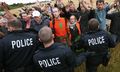 The core idea should be safeguarding the nation’s integrity. A group of well-meaning environmental protesters should not even be on the radar. And, no matter how awful, the occasional terrorist attack is not an existential threat to the fabric of the nation in the way of, say, the planned Nazi invasion in 1940. Nor is it even close to the sustained bombing of government, infrastructure and military targets by the Provisional IRA in the 70s-90s.
Once we understand the real threats, we as a nation can discuss the steps to take to protect ourselves; what measures should be taken and what liberties occasionally and legally compromised, and what democratic accountability exists to ensure that the security forces do not exceed their remit and work within the law.
 Well, this is an interesting case in the US. Thomas Drake, a former senior executive at the American National Security Agency (NSA), the US electronic eavesdropping organisation, is being charged under the 1917 US Espionage Act for allegedly disclosing classified information to a journalist about, gasp, the mismanagement, financial waste and dubious legal practices of the spying organisation. These days it might actually be more newsworthy if the opposite were to be disclosed.…
However, under the terms of the Espionage Act, this designates him an enemy of the American people on a par with bona fide traitors of the past who sold secrets to hostile powers during the Cold War.
It strikes me that someone who reports malpractice, mistakes and under-performance on the part of his (secretive) employers might possibly be someone who still has the motivation to try to make a difference, to do their best to protect people and serve the genuine interests of the whole country. Should such people be prosecuted or should they be protected with a legal channel to disclosure?
Thomas Drake does not sound like a spy who should be prosecuted for espionage under the USA’s antiquated act, he sounds on the available information like a whistleblower, pure and simple. But that won’t necessarily save him legally, and he is apparently facing decades in prison. President Obama, who made such a song and dance about transparency and accountability during his election campaign, has an even more egregious track record than previous presidents for hunting down whistleblowers — the new “insider threat”.
This, of course, chimes with the British experience. So-called left-of-centre political candidates get elected on a platform of transparency, freedom of information, and an ethical foreign policy (think Blair as well as Obama), and promptly renege on all their campaign promises once they grab the top job.
In fact, I would suggest that the more professedly “liberal” the government, the more it feels empowered to shred civil liberties. If a right-wing government were to attack basic democratic freedoms in such a way, the official opposition (Democrats/Labour Party/whatever) would be obliged to make a show of opposing the measures to keep their core voters sweet. Once they’re in power, of course, they can do what they want.
One stark example of this occured during the passing of the British Official Secrets Act (1989) which, as I’ve written before, was specifically designed to gag whistleblowers and penalise journalists. The old OSA (1911) was already in place to deal with real traitors.
And who voted against the passing of this act in 1989? Yes, you’ve guessed it, all those who then went on to become Labour government ministers after the 1997 Labour election landslide — Tony Blair, Jack Straw, the late Robin Cook and a scrum of other rather forgettable ministers and Attorney Generals.…. And yet it was this very New Labour government in the UK that most often used the OSA to halt the free-flow of information and the disclosures of informed whistleblowers. Obama has indeed learnt well.
It’s an oldie but still a goodie: as one of my lawyers once wryly told me, it doesn’t matter whom you vote for, the government still gets in.….
 I did two sessions at Hay-on-Wye philosophy and music festival — How the Light gets In in May 2011.
The first was a debate called “An Age of Transparency” with neo-conservative commentator Douglas Murray, and philosopher Nigel Warburton.
The second was my talk about “Spies, Lies, and Life on the Run”.
Here’s a link to a video of my talk.

 Unsuccessfully resisting the temptation to say that the obvious ones (MI5, MI6 and GCHQ) are still pretty unaccountable, I was intrigued by a few recent articles in The Guardian.
George Monbiot, someone I have enormous respect for but don’t always see eye-to-swivelling-eye with, wrote an excellent piece about the aftershocks of the Mark Kennedy/undercover cop scandal earlier this year.
Monbiot calls for the abolition of that democratically unaccountable senior plod organisation and PLC, the Association of Chief Police Officers (ACPO). This was the organisation under whose aegis the undercover cops spied on hapless environment protestors — the very people who are now being encouraged to appeal against their convictions by Director of Public Prosecutions, no less.
Monbiot quotes a couple of acronyms covering this shady world of police spying: NPOIU and NECTU. But in another Guardian article today — about the police taking pre-emptive steps against so-called anarchists in the run-up to the royal wedding — I saw this:
“The Met is also getting intelligence from the Fixated Threat Assessment Centre, a police unit set up in 2006 together with mental health agencies to identify individuals who are obsessed with members of the royal family, politicians or celebrities.”
Que? When was this unit set up, and who runs it? What about data protection and privacy of medical records? Or are these notions already just quaint anachronisms, and a de facto Big Brother database is already in place?
Perhaps it is time for ACPO to make a clean breast of all the little groupings it has set up over the last decade.….
“This house believes whistleblowers make the world a safer place.”
I was honoured to be asked to say a few words at the recent debate about the value of whistleblowers in London on 9th April 2011.
The Frontline Club and the left-wing New Statesman magazine jointly hosted the event, which starred Julian Assange, editor in chief of Wikileaks. Here is the debate in full:
Needless to say, the opposition had an uphill battle arguing not only against logic, the fair application of law, and the meaning of a vibrant and informed democracy, but also against the new realities in the worlds of journalism and technology.
The first more diplomatically-minded oppositionist adopted a policy of appeasement towards the audience, but the last two had to fall back on the stale and puerile tactics of name-calling and ad hominem attacks. So good to see that expensive educations are never a waste.…
The proposition was supported enthusiatically by the sell-out crowd, a resounding vote of confidence in the democratic notions of accountability and transparency.
Here’s a snippet of my (brief) contribution to a fantastic afternoon:
 Here’s a link to my article in The Guardian today, exploring the confused roles of modern British spies, and looking at some ways to sort out the mess. Both the police and the spooks seem to be having a bit of an identity crisis at the moment…
Are environmental activists really a spying priority?
Revelations about policemen spying on environmental activists suggest we need a sense of perspective on threats to the nation.
The cascade of revelations about secret policemen, starting with PC Mark Kennedy/environmental activist “Mark Stone”, has highlighted the identity crisis afflicting the British security establishment. Private undercover police units are having their James Bond moment – cider shaken, not stirred – while MI5 has become ever more plod-like, yet without the accompanying oversight. How has this happened to our democracy without any public debate?
From the late 19th century the Metropolitan Police Special Branch investigated terrorism while MI5, established in 1909, was a counter-intelligence unit focusing on espionage and political “subversion”. The switch began in 1992 when Dame Stella Rimington, then head of MI5, effected a Whitehall coup and stole primacy for investigating Irish terrorism from the Met. As a result MI5 magically discovered that subversion was not such a threat after all – this revelation only three years after the Berlin Wall came down – and transferred all its staff over to the new, sexy counter-terrorism sections. Since then, MI5 has been eagerly building its counter-terrorism empire, despite this being more obviously evidential police work.
Special Branch was relegated to a supporting role, dabbling in organised crime and animal rights activists, but not terribly excited about either. Its prestige had been seriously tarnished. It also had a group of experienced undercover cops – known then as the Special Duties Section – with time on their hands.
It should therefore come as little surprise that Acpo, the private limited company comprising senior police officers across the country, came up with the brilliant idea of using this skill-set against UK “domestic extremists”. Acpo set up the National Public Order Intelligence Unit (NPOIU). This first focused primarily on animal rights activists, but mission creep rapidly set in and the unit’s role expanded into peaceful protest groups. When this unaccountable, Stasi-like unit was revealed it rightly caused an outcry, especially as the term “domestic extremist” is not recognised under UK law, and cannot legally be used as justification to aggressively invade an individual’s privacy because of their legitimate political beliefs and activism. So, plod has become increasingly spooky. What of the spooks?
As I mentioned, they have been aggressively hoovering up the prestigious counter-terrorism work. But, despite what the Americans have hysterically asserted since 9/11, terrorism is not some unique form of “eviltude”. It is a crime – a hideous, shocking one, but still a crime that should be investigated, with evidence gathered, due process applied and the suspects on trial in front of a jury.
A mature democracy that respects human rights and the rule of law should not intern suspects or render them to secret prisons and torture them for years. And yet this is precisely what our spooks are now allegedly doing – particularly when colluding with their US counterparts.
Also, MI5 and MI6 operate outside any realistic democratic oversight and control. The remit of the intelligence and security committee in parliament only covers the policy, administration and finance of the spies. Since the committee’s inception in 1994 it has repeatedly failed to meaningfully address more serious questions about the spies’ role. The spooks are effectively above the law, while at the same time protected by the draconian Official Secrets Act. This makes the abuses of the NPOIU seem almost quaint. So what to do? A good first step might be to have an informed discussion about the realistic threats to the UK. The police and spies huddle behind the protective phrase “national security”. But what does this mean?
The core idea should be safeguarding the nation’s integrity. A group of well-meaning environmental protesters should not even be on the radar. And, no matter how awful, the occasional terrorist attack is not an existential threat to the fabric of the nation in the way of, say, the planned Nazi invasion in 1940. Nor is it even close to the sustained bombing of government, infrastructure and military targets by the Provisional IRA in the 70s-90s.
Once we understand the real threats, we as a nation can discuss the steps to take to protect ourselves; what measures should be taken and what liberties occasionally and legally compromised, and what democratic accountability exists to ensure that the security forces do not exceed their remit and work within the law.
As I’ve mentioned before, the former heads of UK intelligence agencies have a charming habit of speaking out in support of the rule of law, civil liberties, proportionality and plain common sense — but usually only after they have retired.
Perhaps at their leaving parties their consciences are extracted from the security safe, dusted off and given back — along with the gold watch?
 Even then, post-retirement, they might try to thrice-deny potentially world-changing information, as Sir Richard Dearlove did when questioned by the fearless and fearsomely bright Silkie Carlo about the leaked Downing Street Memo at his recent speech at the Cambridge Union. (The links are in two parts, as the film had to be mirrored on Youtube — Dearlove claimed copyright on the orginal Love Police film and had it taken down.)
And “out of context”, my left foot — he could potentially have saved millions of lives in the Middle East if he’d gone public with his considered professional opinion about the intelligence facts being fitted around a preconceived war policy in the run-up to the invasion of Iraq.
Wouldn’t it be lovely if these esteemed servants of the state, replete with respect, status and honours, could actually take a stand while they are still in a position to influence world events?
 My former boss, Baroness Eliza Manningham-Buller, has been unusually vociferous since her retirement in 2007 and elevation to the peerage. She used her maiden speech to the House of Lords to object to the proposed plans to increase police detention of terrorist suspects without charge from 28 to 42 days; she recently suggested that the “war on terror” is unwinnable and that we should, if possible, negotiate with “Al Qaeda” (well, it worked with the Provisional IRA); and that the “war on drugs” had been lost and the UK should treat recreational drug use as a health rather than a criminal issue. She steals all my best lines.…
But credit where credit is due. Despite the fact that she used the full power of the British state to pursue terrorist suspects up until 2007 and investigate drug barons in the 1990s, she did apparently try to make a stand while en poste in the run-up to the Iraq War. Last year she gave evidence to the Chilcot Enquiry, stating that she had officially briefed the government that an invasion of Iraq would increase the terrorist threat to the UK.
So it’s obvious that once a UK Prime Minister has come over all Churchillian he tends to ignore the counsel of his chief spooks, as we’ve seen with both the Downing Street Memo the Chilcot Enquiry.
With that in mind, I’ve read with interest the recent press reports that the UK authorities apparently knew about Colonel Gaddafi retaining stockpiles of mustard gas and sarin (despite the fact that the world was assured in 2004 that it was his renunciation of WMDs that allowed him back into the international diplomatic fold) .
So the key question is surely: is this another erroneous “45 minutes from attack” moment, with Gaddafi’s alleged stockpiles of WMD a perfect scaremongering pretext to push for a full-on régime change in Libya; or is this genuine, and we were all lied to about Gaddafi’s destruction of his WMD stockpiles for economic advantage and fat, juicy oil contracts?
The Wall Street Journal recently ran an article quoting the concern of “government insiders” about Gaddafi’s potential future terrorism threat against the West, up to and including WMDs, should he cling on to power. Well, yes, it would hardly be surprising if he were now to be as mad as a wasp with his ex-new best buddies. Despite the sordid rapprochement in the last decade, he has been for much of his life an inveterate enemy of the West and sponsor of worldwide terrorism.
Rather than waiting for his “K” and his retirement, would it not be wonderful if the current head of MI5, Jonathan Evans, could extract his conscience from that dusty security safe and make a useful and informed statement to shed some light on the mess that the Libyan war is rapidly becoming? He could potentially change the course of world history and save untold lives.
 What a difference a year makes in the mayfly minds of the old media.
In February 2010 The Guardian’s resident spook watcher, Richard Norton-Taylor, reported that the serving head of MI5, Jonathan Evans, had been forced in 2008 to confess to the credulous and compliant Intelligence and Security Committee in Parliament that the spies had lied, yet again, about their complicity in torture.
This confession came shortly after the ISC had released its “authoritative” report about rendition and torture, asserting that there had been no such complicity. How did the ISC get this so utterly wrong?
It turns out that in 2006 Baroness Eliza Manningham-Buller, Evans’s predecessor in the MI5 hot-seat, had misled the ISC about MI5’s awareness of the use of torture against terrorist suspects, particularly the hapless Binyam Mohamed, whose case was wending its way through the British courts. Bullying-Manner (as she is known in the corridors of power) appears to have been covering up for her predecessor, Sir Stephen Lander, who was quoted in The Telegraph in March 2001 as saying “I blanche at some of the things I declined to tell the committee [ISC] early on”.….
 But Evans had to come clean to the ISC because of the Mohamed court case, and Norton-Taylor wrote, by the Grauny’s standards, his fairly hard-hitting article last year.
Yesterday, however, he seems to be back-tracking frantically. Following an interview by the BBC with former Pakistani President Pervez Musharraf appearing to confirm that MI5 did indeed turn a blind eye to the use of torture, Richard Norton-Taylor and other members of our esteemed Fourth Estate are once again quoting Baroness Manningham-Buller’s dicredited li(n)es to the ISC as gospel truth, and forgeting both the serving head of MI5’s unavoidable confession and the evidence from the Mohamed court case itself.
The ISC was put in place following the 1994 Intelligence Services Act as a democratic fig-leaf: it is not a fully-functioning, independent oversight committee, as it is only able to report on matters of spy policy, finance and administration. It has no powers to investigate properly allegations of crime, torture or operational incompetence, is unable to demand documents or interview witnesses under oath, and is appointed by and answerable only to the Prime Minister. It has been lied to by the spies and senior police time and time again — the very people it notionally oversees. As I have written before, the ISC has since its inception failed to address many key intelligence matters of the day, instead spending its time nitpicking over details.
In the face of this utter lack of intelligence accountability and transparency, is it any wonder that sites like Wikileaks have caught the public’s imagination? Wikileaks is an obvious and necessary reaction to the endemic secrecy, governmental back-scratching and cover-ups that are not only wrong in principle in a notional democracy, but have also resulted directly in illegal wars, torture and the erosion of our traditional freedoms.