The role of intelligence agencies within a democracy

I recently stumbled across this excel­lent art­icle in the Trin­id­ad Express, of all places.  It appears that the state of Trin­id­ad and Tobago is in the throes of debat­ing the legit­im­ate role of intel­li­gence agen­cies with­in a democracy.

Alana Wheel­er, a Ful­bright Schol­ar with a Mas­ters degree in Nation­al Secur­ity Stud­ies, con­trib­utes a clear and well-argued art­icle that gets to the heart of these issues; what is “nation­al secur­ity” and what is the best way to pro­tect a nation’s integ­rity with­in a leg­al, pro­por­tion­ate and demo­crat­ic framework?

If the demo­crat­ic move­ments with­in coun­tries like Tunisia, Egypt and Libya are allowed to coalesce organ­ic­ally and unhindered, no doubt this also be a key issue for their new con­sti­tu­tions — espe­cially after dec­ades of repres­sion and fear meted out by bru­tal securocrats.

So why the hell can­’t we have such an informed debate about these issues in the “mature demo­cra­cies” of UK or the USA?

BBC article: could 7/7 have been prevented?

Peter Taylor, a respec­ted journ­al­ist at the BBC, argues that if there had been more coöper­a­tion between MI5 and region­al police Spe­cial Branches, then the 7/7 bomb­ings in Lon­don in 2005 could have been pre­ven­ted.  His thes­is appears to be that MI5 did not work closely enough with the police (the exec­ut­ive branch) of the UK’s intel­li­gence com­munity: the aptly-named Oper­a­tion Crevice has exposed the cracks in the uni­fied pub­lic façade of the UK intel­li­gence community.

How­ever, Taylor assures us that this prob­lem is in the past, with MI5 officers and Spe­cial Branch police now hap­pily work­ing side by side in region­al offices across the UK.  So that’s OK then.

It con­tin­ues to sur­prise me that seasoned Brit­ish journ­al­ists repeatedly fall into the post‑9/11 group-think of the USA — that ter­ror­ism is a new phe­nomen­on.  Rather start­lingly, Taylor’s art­icle even asserts that the FBI had the Crevice inform­a­tion in real-time, while the West Yorks SB was left in the dark.

Those in the UK with a memory longer than a may­fly’s will be aware that this coun­try endured 30 years of Irish Repub­lic­an ter­ror­ism, and dur­ing the 1990s MI5 had lead respons­ib­il­ity for invest­ig­at­ing this threat.  So from 1993 the spooks did indeed work side-by-side with their region­al SB counter-parts across the coun­try.  Dur­ing this peri­od the emphas­is was on gath­er­ing both intel­li­gence to pre-empt­ively thwart ter­ror­ist plots and also evid­ence to use in the ensu­ing court cases.  And there were some not­able successes.

So what changed in the fol­low­ing dec­ade?  Did the spooks retreat back behind the bar­ri­cades of their Lon­don HQ, Thames House, as the ink dried on the Good Fri­day Agree­ment?  Were the hard-won les­sons of the 1990s so quickly forgotten?

Well, cer­tainly oth­er les­sons from the civil war in Nort­ern Ire­land appear to have been expunged from the col­lect­ive intel­li­gence memory.  For example, the use of tor­ture, mil­it­ary tribunals, intern­ment and curfews were all used extens­ively in the early years of the NI con­flict and all were spec­tac­u­larly counter-pro­duct­ive, act­ing as a recruit­ing ground for new gen­er­a­tions of ter­ror­ists.  Yet these prac­tices now once again appear to be impli­citly con­doned by MI5 and MI6 in the USA’s bru­tal “war on terror”.

So one would hope that this new BBC pro­gramme calls for a reapprais­al of our intel­li­gence infra­struc­ture.  Why should we mind­lessly con­tin­ue to accept the status quo, when this res­ults in les­sons being for­got­ten and mis­takes being repeated?  How about the BBC call­ing for a root and branch review of the threats the UK real­ist­ic­ally faces, and the most efeect­ive way to guard against them, while work­ing with­in the demo­crat­ic process?


My article in The Guardian, 24 January 2011

Annie_1_Heleen_Banner Here’s a link to my art­icle in The Guard­i­an today, explor­ing the con­fused roles of mod­ern Brit­ish spies, and look­ing at some ways to sort out the mess. 

Both the police and the spooks seem to be hav­ing a bit of an iden­tity crisis at the moment…

The Ghost of Daniel Ellsberg

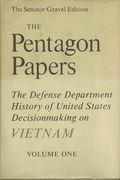
Pentagon_papers This is an excel­lent art­icle from a European tech­no­logy strategist and futur­ist.  It suc­cinctly sums up all that is wrong with the old medi­a’s cov­er­age of the Wikileaks story over the last year, where people obsess about the tech­no­logy, the web­site and the per­son­al life of Juli­an Assange.

As the art­icle says, we should be focus­ing on the core issues: illeg­al wars, war crimes, murder, tor­ture, cor­por­ate and polit­ic­al cor­rup­tion, and dip­lo­mat­ic duplicity.

Let’s address the mes­sage, not attack the mes­sen­ger, and cer­tainly not the medium.


Secrecy laws come out of the closet

Finally the true inten­tions behind the dra­coni­an Brit­ish law, the Offi­cial Secrets Act, and sim­il­ar espi­on­age-related laws in oth­er coun­tries such as the USA, have been laid bare.  All is revealed — these laws appar­ently have noth­ing what­so­ever to do with pro­tect­ing nation­al secur­ity and coun­ter­ing espi­on­age — their primary pur­pose is to stifle dis­sent and legit­im­ate cri­ti­cism of the state.

How can I tell?  Well, look at the reac­tion to the ongo­ing Wikileaks rev­el­a­tions, as opposed to today’s UK spy scan­dal involving the par­lia­ment­ary assist­ant of a hitherto unre­mark­able MP

WikileaksThe now-notori­ous Wikileaks site has been going since 2007 and, in this brief time, has shone a bright light on such nas­ties as Trafigura, the BNP, Sci­ento­logy, Cli­mateg­ate, Guantanamo, the Aus­trali­an inter­net black­list, Sarah Pal­in, and much more.

The site achieved world-wide notori­ety this year with four big stor­ies — start­ing with the har­row­ing film “Col­lat­er­al Murder”, which demon­strated clearly that the Pentagon had been lying to the dis­traught fam­il­ies of the vic­tims of this video-game nasty for years. 

Since then Wikileaks has clev­erly worked with selec­ted media oulets such as The Guard­i­an, The New York Times and Der Spiegel in Ger­many to give us the Afghan War logs and Iraq war files, which exposed endem­ic bru­tal­ity, tor­ture and war crimes (all in the name of spread­ing demo­cracy, of course), and cul­min­at­ing over the last week with the ongo­ing Cableg­ate expose.

The response?  Well the major­ity of the old media, par­tic­u­larly those that did­n’t share in the juicy scoops, has been in attack mode: con­demning whis­tleblow­ing; vil­i­fy­ing the char­ac­ter of Wikileaks spokes­per­son, Juli­an Assange; and glee­fully report­ing the wide­spread cyber­space crack­down (Amazon pulling the site, Payp­al stop­ping con­tri­bu­tions, the ongo­ing hack attacks). 

But this is just so much hot air — what about the real sub­stance of the dis­clos­ures?  The viol­ent hor­ror, war crimes, and gov­ern­ment lies?  Why is our so-called Fourth Estate not demand­ing a response to all this ter­rible evidence?

Julian_AssangeHow­ever, it is the reac­tion of the US polit­ic­al class that is most gob-smack­ingly shock­ing.  The half-wits call for Assange’s pro­sec­u­tion under the US Espi­on­age Act (even though he’s an Aus­trali­an); to have him executed, assas­sin­ated by drone attack, or unlaw­fully dis­ap­peared as an “unlaw­ful com­batant”; and make hys­ter­ic­al calls for Wikileaks to be placed on the US list of pro­scribed for­eign ter­ror­ist organ­isa­tions.  Daniel Ells­berg, the fam­ous Pentagon Papers whis­tleblower, fears for Assange’s life.

Well, you can always tell how effect­ive a whis­tleblower is by the response you engender when telling truth to power, and this is a pretty strik­ing vindication.

Of course, Juli­an Assange is not strictly speak­ing a whis­tleblower per se.  He is the next gen­er­a­tion — a highly-cap­able, high-tech con­duit, using his “hack­iv­ist” skills to out-pace and out-smart those who seek to con­ceal vital information.

As he said dur­ing a TED​.com inter­view last sum­mer, he strives to live by the ideal that to be a man is to be “cap­able and gen­er­ous, not to cre­ate vic­tims, but to nur­ture them…”.  And this is indeed the pro­tec­tion Wikileaks offers, an aven­ue of secure dis­clos­ure for people of con­science on the inside, without their hav­ing to go pub­lic to estab­lish the bona fides of what they are say­ing, with the res­ult­ing vic­tim­isa­tion, loss of career, liberty, and pos­sibly life.

Still, politi­cians seem unable to make the dis­tinc­tion — they are solely focused on loss of face, embar­rass­ment, and shor­ing up the wall of secrecy that allows them to get away with lies, tor­ture and war crimes.  I hope that com­mon sense will pre­vail and Assange will not become anoth­er sac­ri­fi­cial vic­tim on the altar of “nation­al security”.

Katia_ZSo why did I say at the start that the secrecy laws have come out of the closet?  Well, in the wake of all this recent media and polit­ic­al hys­teria about Wikileaks, this little espi­on­age gem appeared in the UK media today.   Essen­tially, the UK Home Sec­ret­ary is boot­ing out an alleged Rus­si­an spy, Ms Katia Zat­uliv­eter who, des­pite get­ting through secur­ity vet­ting (MI5, any­one?), was really an SVR agent  work­ing as the Par­lia­ment­ary assist­ant to Mike Han­cock MP — a man who hap­pens to have a spe­cial interest in Rus­sia and who serves on the UK’s Par­lia­ment­ary Defence Select Committee.

Now, in the old days such alleged activ­ity would mean an auto­mat­ic arrest and prob­able pro­sec­u­tion for espi­on­age under the Offi­cial Secrets Acts (1911 and 1989). If we go with what the old media has repor­ted, this would seem to be a clear-cut case.  Dur­ing the Cold War for­eign spies work­ing under dip­lo­mat­ic cov­er could be dis­creetly PNGed (the jar­gon for declar­ing a dip­lo­mat per­sona non grata).  How­ever, this young woman was work­ing in Par­lia­ment, there­fore can have no such dip­lo­mat­ic cov­er.  But deport­a­tion and the avoid­ance of embar­rass­ment seems to be the order of the day — as we saw also with the explu­sion of the Rus­si­an spy ring from the US last summer).

Which demon­strates with a start­ling clar­ity the real inten­tions behind the Brit­ish OSA and the Amer­ic­an Espi­on­age Act.  The full force of these laws will auto­mat­ic­ally be brought to bear against those expos­ing crime in high and secret places, pour enour­ager les autres,  but will rarely be used against real spies. 

Proof pos­it­ive, I would sug­gest, that these laws were draf­ted to pre­vent cri­ti­cism, dis­sent and whis­tleblow­ing, as I’ve writ­ten before, but not mean­ing­fully to pro­tect our nation­al secur­ity.  One can but hope that the Wikileaks débâcle acts as the long-over­due final nail in the OSA coffin.

Would it not be won­der­ful if our “esteemed” legis­lat­ors could learn from recent events, draw a col­lect­ive deep breath, and finally get to grips with those who pose a real threat to our nations — the people who lie to take us into illeg­al wars, and intel­li­gence officers involved in tor­ture, assas­sin­a­tion and espionage?

Sir John Sawers, head of MI6, makes historic public appearance

For the first time in 100 years “C”, the head of the UK for­eign intel­li­gence ser­vice SIS (com­monly known as MI6) has gone public.

Former career dip­lo­mat Sir John Saw­ers (he of Speedo fame) yes­ter­day made a speech to the UK Soci­ety of Edit­ors in what appeared to be a pro­fes­sion­ally dip­lo­mat­ic rear-guard action in response to a num­ber of hot media top­ics at the moment.

Choos­ing both his audi­ence wisely and his words care­fully, he hit on three key areas:

Tor­ture: Leg­al cases are cur­rently going through UK courts on behalf of Brit­ish vic­tims of tor­ture, in which MI5 and MI6 intel­li­gence officers are alleged to have been com­pli­cit.  The Met­ro­pol­it­an Police are cur­rently invest­ig­at­ing a num­ber of cases.  Over the last week, a Brit­ish mil­it­ary train­ing manu­al on “enhanced” inter­rog­a­tion tech­niques has also been made pub­lic. How­ever, Saw­ers unblush­ingly states that MI6 abides by UK and inter­na­tion­al law and would nev­er get involved, even tan­gen­tially, in tor­ture cases.  In fact, he goes on to assert that the UK intel­li­gence agen­cies are train­ing the rest of the world in human rights in this regard.


Whis­tleblow­ing: In the week fol­low­ing the latest Wikileaks coup — the Iraq War Diar­ies, com­pris­ing nearly 400,000 doc­u­ments detail­ing the every­day hor­ror of life in occu­pied Iraq, includ­ing war crimes such as murder, rape and tor­ture com­mit­ted by both US and UK forces — Saw­ers states that secrecy is not a dirty word: the intel­li­gence agen­cies need to have the con­fid­ence that whis­tleblowers will not emerge to in order to guard agent and staff iden­tit­ies, as well as main­tain­ing the con­fid­ence of their inter­na­tion­al intel­li­gence part­ners that their (dirty?) secrets will remain, um, secret.  One pre­sumes he is advoc­at­ing against the expos­ure of war crimes and justice for the victims.

This, one also pre­sumes, is the jus­ti­fic­a­tion for US politi­cians who pro­pose cyber-attacks against Wikileaks and the declar­a­tion by some US polit­ic­al insiders that Juli­an Assange, spokes­man of the organ­isa­tion, should be treated as an unlaw­fully des­ig­nated “unlaw­ful com­batant”, sub­ject to the full rigour of extra-judi­cial US power, up to and includ­ing assassination. 

Spuri­ous media claims of unveri­fied “dam­age” are the hoary old chest­nuts always dragged out in whis­tleblower cases.  After Wikileaks released its Afghan War Blog in July, gov­ern­ment and intel­li­gence com­ment­at­ors made apo­ca­lyptic pre­dic­tions that the leak had put mil­it­ary and agent lives at risk.  US Defense Sec­ret­ary Robert Gates has since gone on the record to admit that this was simply not true. 

Dur­ing the Shayler whis­tleblow­ing case a dec­ade ago, the gov­ern­ment repeatedly tried to assert that agent lives had been put at risk, and yet the form­al judge­ment at the end of his tri­al stated that this was abso­lutely not the case.  And again, with the recent Wikileaks Iraq War Blog, gov­ern­ment sources are using the same old man­tra.  When will they real­ise that they can only cry wolf so many times and get away with it?  And when will the journ­al­ists regur­git­at­ing this spin wake up to the fact they are being played?

Account­ab­il­ity:  Saw­ers goes on to describe the mech­an­isms of account­ab­il­ity, such as they are.  He accur­ately states, as I have pre­vi­ously described ad nauseam, that under the 1994 Intel­li­gence Ser­vices Act, he is notion­ally respons­ible to his polit­ic­al “mas­ter”, the For­eign Sec­ret­ary, who has to clear in advance any leg­ally dubi­ous for­eign oper­a­tions (up to and includ­ing murder – the fabled “licence to kill” is not fic­tion, as you can see here).

The 1994 ISA also estab­lished the Prime Min­ister­’s Intel­li­gence and Secur­ity Com­mit­tee (ISC) in Par­lia­ment, which many com­ment­at­ors seem to believe offers mean­ing­ful over­sight of the spies.  How­ever, as I have detailed before, this is a mere fig leaf to real account­ab­il­ity: the ISC can only invest­ig­ate issues of policy, fin­ance and admin­is­tra­tion of the spy agen­cies.  Dis­clos­ures relat­ing to crime, oper­a­tion­al incom­pet­ence or involve­ment in tor­ture fall out­side its remit.

But what hap­pens if intel­li­gence officers decide to oper­ate bey­ond this frame­work? How would min­is­ters or the ISC ever know?  Oth­er spy mas­ters have suc­cess­fully lied to their polit­ic­al mas­ters in the past, after all.

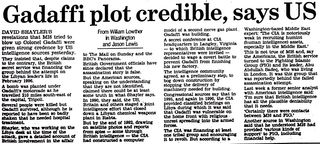
Sir John has the gall to say that, if an oper­a­tion is not cleared by the For­eign Sec­ret­ary, it does not pro­ceed.  But what about the Gadaf­fi Plot way back in 1996, when MI6 was spon­sor­ing a group of Islam­ic extrem­ist ter­ror­ists in Libya to try to assas­sin­ate Col­on­el Gadaf­fi without, it has been asser­ted, the pri­or writ­ten approv­al of the then-For­eign sec­ret­ary, Tory politi­cian Mal­com Rif­kind?  This was repor­ted extens­ively, includ­ing in this art­icle by Mark Thomas in the New States­man. What hap­pens if rogue MI6 officers blithely side-step this notion­al account­ab­il­ity — because they can, because they know they will get away with it — because they have in the past?

MoS_August_97_QPlot_CredibleIn the interests of justice, UK and inter­na­tion­al law, and account­ab­il­ity, per­haps a new Conservative/Coalition gov­ern­ment should now reas­sess its approach to intel­li­gence whis­tleblowers gen­er­ally, and re-exam­ine this spe­cif­ic dis­clos­ure about Libya, which has been backed up by inter­na­tion­al intel­li­gence sources, both US and French, in order to achieve some sort of clos­ure for the inno­cent vic­tims in Libya of this MI6-fun­ded ter­ror­ist attack? And it is finally time to hold the per­pet­rat­ors to account — PT16, Richard Bart­lett, and PT16B, Dav­id Wat­son, who were the seni­or officers in MI6 respons­ible for the murder plot.

As civ­il­ised coun­tries, we need to rethink our approach to the issue of whis­tleblow­ing. Lies, spin,  pro­sec­u­tions and thug­gish threats of assas­sin­a­tion are beneath us as soci­et­ies that notion­ally adhere to the prin­ciples of demo­cracy.  If we can only real­ist­ic­ally hope that the actions of our gov­ern­ments, mil­it­ary forces, and intel­li­gence agen­cies are trans­par­ent and account­able via whis­tleblowers, then we need to ensure that these people are leg­ally pro­tec­ted and that their voices are heard clearly.


The Secret Garden Party, UK 2010

SGP_2010 In July I was invited back to speak at the Secret Garden Party, a music, polit­ics, and arts fest­iv­al held annu­ally some­where, er, secret in the UK.

What a fab week­end.  I have a well-known anti­pathy to sleep­ing under can­vas, but this was an excel­lent fest­iv­al — and even the com­post loos were not too grim. 

Lis­ted as one of the “Star Acts” in the prin­ted fest­iv­al pro­gramme (I blush), I had the lux­ury of an hour and a half to speak in the première debate tent in the Rebels and Intel­lec­tu­als sec­tion of the fest­iv­al — The For­um — a concept that the organ­iser, Ben de Vere, prom­ises to trans­plant to Lon­don some­time in the near future.

Any­way, I ser­i­ously recom­mend put­ting this fest­iv­al in your diar­ies for next year, and keep an eye open for the spread of The Forum.….

Here’s the video:


Gestapo Past and Present

So last week I was on hol­i­day with my lovely Dutch­man in Cologne on the Rhine in Ger­many, a city steeped in his­tory and now chiefly fam­ous for its Goth­ic cathed­ral, widely reputed to be pretty much the last build­ing left stand­ing in the city at the end of WW2.  Eas­ily res­ist­ing both this reli­gious hot­spot and, with slightly more dif­fi­culty, the  siren calls of the brauerei, we decided on a bit of cul­ture, some museums and a stroll along the river. 

How­ever, it turns out that not one but two build­ings had sur­vived WW2 in their entirety.  Tucked away on a back­street, we found the second sur­viv­or: the Gestapo HQ, which had been pre­served as it was found at the end of the war to serve as a ghastly warn­ing to history. 

Gestapo_HQ2Well, as someone who reg­u­larly speaks at con­fer­ences across the world about human rights, total­it­ari­an­ism and encroach­ing police states, I felt I had to have a look.  The build­ing is a non­des­cript office block that looks per­fectly inno­cent from the out­side.  Three floors are open to the pub­lic.  On the first is the museum, with the his­tory of the rise to power of the Nazis.  It was hideously fas­cin­at­ing to read how freedoms and rights were incre­ment­ally eroded as the state slipped ever more from demo­cracy.  The major­ity of the Ger­man people went sleep-walk­ing into nation­al social­ism.  As soon as Hitler had any sort of polit­ic­al power his attack-dogs, the SS, used dis­pro­por­tion­ate, sud­den, and shock­ing viol­ence against Ger­many’s own cit­izens to crush any nas­cent res­ist­ance.  So from 1933 onwards the pop­u­la­tion was ter­ror­ised, as “undesir­ables” were routinely snatched from their homes for ques­tion­ing, tor­ture and imprisonment. 

Gestapo_HQ_Annie_2And the pro­pa­ganda in the media that was on dis­play.….  Shall I just say, even more unsubtle than that which is used against us today.  I sup­pose these dark arts have developed over the inter­ven­ing years.

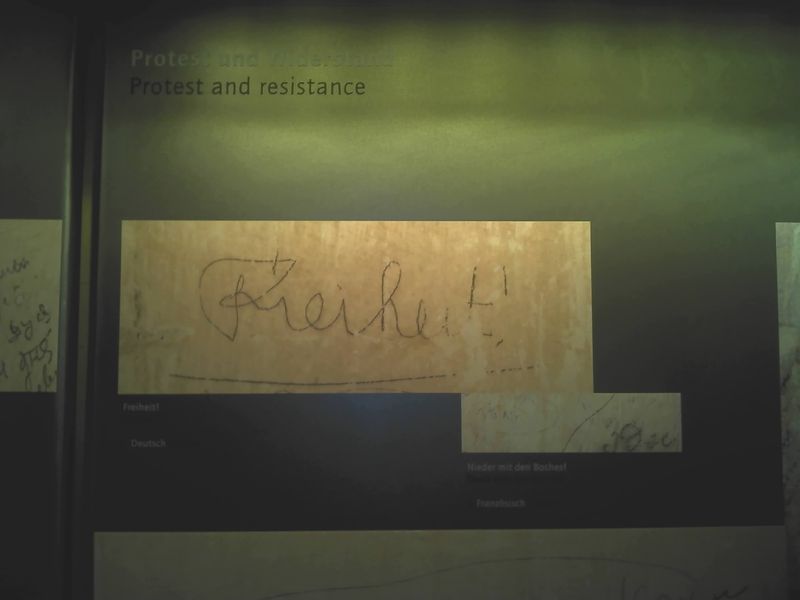
MischaBut it was the lower floors that packed the strongest punch.  The base­ment, just below street level, held the cells — tiny, dank spaces where as many as 30 people had been her­ded togeth­er.  And the walls are covered in graf­fiti in all the lan­guages of Europe — sad, des­per­ate mes­sages to the future from people who were “dis­ap­peared”. They seemed to want to leave a record of the fact simply that they had exis­ted: they had loved, they missed their fam­il­ies, they were try­ing to hold their heads high des­pite the agon­ies inflic­ted daily, they were inno­cent, they were about to die.…..

Hold_your_head_highThere was one more level — the rein­forced rat hole deep under­ground, which served both as the air-raid shel­ter for the Gestapo officers (the pris­on­ers were left upstairs in their cells dur­ing the raids), and as the tor­ture rooms.  Con­sid­er­ately, the Gestapo car­ried out their most bru­tal inter­rog­a­tions under­ground, so that the screams could not be heard at street level.

As we emerged, some­what silent, from this museum, I noticed that we, and many oth­er vis­it­ors, all turned to stare at this build­ing: it looked so bland and innoc­u­ous from the out­side.  But then people would inspect the base­ment win­dows that hid the cells.  The smokers in the group all sparked up as soon as they were out­side, drag­ging hard on their cigar­ettes.  Oth­ers just stood silently. 

So the museum does its job.  It is a power­ful warn­ing from the grave.  Homo hom­ini lupus: man is wolf to man, ever has been and ever will be, absent adequate leg­al restraint.  This is why the Uni­ver­sal Declar­a­tion of Human Rights was put in place in 1948, to pre­vent such atro­cit­ies from hap­pen­ing again.

Yet, at the risk of sound­ing sen­ten­tious, such abuse is going on around the world right now, par­tic­u­larly in the cause of the end­less, neb­u­lous “war on ter­ror”.  We have been lazy, blind and fool­ish, let­ting our basic rights slide away.  People are dis­ap­peared, extraordin­ar­ily rendered, to for­eign pris­ons and tor­tured for years.  Assas­sin­a­tion lists have been drawn up by US intel­li­gence agen­cies; sus­pects face kangaroo, mil­it­ary-style courtrooms, where they face the death pen­alty but are not allowed to know the full case against them; our gov­ern­ments aggress­ively, illeg­ally, invade oth­er coun­tries, and yet the politi­cians who lie to take us into these wars, thereby caus­ing the need­less death, pois­on­ing, maim­ing and dis­place­ment of mil­lions of people, are not called to account for their crimes, as they should be under the Nurem­berg Prin­ciples, the Rome Stat­ute, and the Inter­na­tion­al Crim­in­al Court.

We, the cit­izens of still just-about-func­tion­ing demo­cra­cies, should be ashamed.  We need to re-remem­ber our his­tory and take a stand — before it’s too late.

Protest_and Resist

CCC Sigint 2010 — Das Leben Der Anderen

Finally the video of my talk at the CCC-SigInt in Cologne, dis­cuss­ing the whis­tleblow­ing, pri­vacy, the crimes of spy agen­cies and what hack­ers can do about it.

Das Leben Der Ander­en, talk at CCC SigInt 2010 from Annie Machon on Vimeo.

US Intelligence targets Wikileaks

WikileaksThe US gov­ern­ment has appar­ently been get­ting its knick­ers in a twist about the excel­lent Wikileaks web­site.  A report writ­ten in 2008 by US army counter-intel­li­gence ana­lys­ing the threat posed by this haven for whis­tleblowers has been leaked to, you’ve guessed it, the very sub­ject of the report.

Wikileaks was set up three years ago to provide a secure space for prin­cipled whis­tleblowers around the world to expose cor­rup­tion and crimes com­mit­ted by our gov­ern­ments, intel­li­gence agen­cies and mega-cor­por­a­tions.  The site takes great care to veri­fy the inform­a­tion it pub­lishes, adheres to the prin­ciple of expos­ing inform­a­tion very much in the pub­lic interest, and vig­or­ously pro­tects the identi­fy of its sources.

By doing so, Wikileaks plays a vital part in inform­ing cit­izens of what is being done (often illeg­ally) in their name.  This free flow of inform­a­tion is vital in a democracy.

Well, no gov­ern­ment likes a clued-up and crit­ic­al cit­izenry, nor does it like to have trans­par­ency and account­ab­il­ity imposed on it.  Which led to the report in question.

As I have writ­ten before ad nauseam, whis­tleblowers provide an essen­tial func­tion to the healthy work­ing of a demo­cracy.  The simplist­ic approach would be to say that if gov­ern­ments, spies and big cor­por­a­tions obeyed the law, there would be no need for whis­tleblowers.  How­ever, back in the real, post‑9/11 world, with its end­less, neb­u­lous “war on ter­ror”, illeg­al wars, tor­ture, extraordin­ary rendi­tion and Big Broth­er sur­veil­lance, we have nev­er had great­er need of them.

Rather than ensur­ing the highest stand­ards of leg­al­ity and prob­ity in pub­lic life, it is far sim­pler for the powers that be to demon­ise the whis­tleblower — a fig­ure who is now (accord­ing to the Exec­ut­ive Sum­mary of the report) appar­ently seen as the “insider threat”.  We are look­ing at a nas­cent McCarthy­ism here.  It echoes the increas­ing use by our gov­ern­ments of the term “domest­ic extrem­ists” when they are talk­ing about act­iv­ists and protesters.

There are laws to pro­tect whis­tleblowers in most areas of work now.  In the UK we have the Pub­lic Interest Dis­clos­ure Act (1998).  How­ever, gov­ern­ment, mil­it­ary, and espe­cially intel­li­gence pro­fes­sion­als are denied this pro­tec­tion, des­pite the fact that they are most often the very people to wit­ness the most hein­ous state abuses, crimes and cor­rup­tion.  If they try to do some­thing about this, they are also the people most likely to be pro­sec­uted and per­se­cuted for fol­low­ing their con­sciences, as I described in a talk at the CCC in Ber­lin a couple of years ago.

Ideally, such whis­tleblowers need a pro­tec­ted leg­al chan­nel through which to report crimes, with the con­fid­ence that these will be prop­erly invest­ig­ated and the per­pet­rat­ors held to account.  Fail­ing that, sites like Wikileaks offer an invalu­able resource.  As I said last sum­mer at the Hack­ing at Ran­dom fest­iv­al in NL, when I had the pleas­ure of shar­ing a stage with Wikileaks founder Juli­an Assange, I just wish that the organ­isa­tion had exis­ted a dec­ade earli­er to help with my own whis­tleblow­ing exploits.

The Offi­cial Secrets Act (1989) in the UK, is draf­ted to stifle whis­tleblowers rather than pro­tect real secrets.  Such laws are routinely used to cov­er up the mis­takes, embar­rass­ment and crimes of spies and gov­ern­ments, rather than to pro­tect nation­al secur­ity.  After all, even the spooks acknow­ledge that there are only three cat­egor­ies of intel­li­gence that abso­lutely require pro­tec­tion: sens­it­ive oper­a­tion­al tech­niques, agent iden­tit­ies and ongo­ing operations.

This US counter-intel­li­gence report is already 2 years old, and its strategy for dis­cred­it­ing Wikileaks (by expos­ing one of their sources pour encour­ager les autres) has, to date, mani­festly failed. Cred­it is due to the Wikileaks team in out-think­ing and tech­no­lo­gic­ally out­pa­cing the intel­li­gence com­munity, and is a ringing endorse­ment for the whole open source philosophy.

I’ve said this before, and I shall say it again: as our coun­tries evolve ever more into sur­veil­lance soci­et­ies, with big broth­er data­bases, CCTV, bio­met­ric data, police drones, vot­ing com­puters et al, geeks may be our best (and last?) defence against emer­ging Big Broth­er states.

FBI Whistleblower Sibel Edmonds

Sibel_EdmondsI strongly recom­mend you take the time to watch this film about FBI whis­tleblower, Sibel Edmonds.

Kill the Mes­sen­ger”  joins some inter­est­ing dots, not just about what might have been going on round Sibel’s case, but also adds a dif­fer­ent per­spect­ive to the notori­ous out­ing of CIA officer, Valer­ie Plame.

Of course, a film that invest­ig­ates how the might of the state can be used to stifle the legit­im­ate dis­sent of a whis­tleblower will always res­on­ate with me.

Same mes­sage, dif­fer­ent country.

Vers la Verite, Paris, October 2009

VV_Graphic_Paris_2009So the Vers la Ver­ite events in Par­is earli­er this month were a great suc­cess.  I’ve organ­ised a few inter­na­tion­al tours and events in my time, but this was one of the most con­cen­trated series of dif­fer­ent hap­pen­ings I’ve been involved in.  Thanks go to Debora Blake for all her work in situ in Par­is, and also to the ReOpen posse, who offered a lot of prac­tic­al sup­port and were major spon­sors of the weekend.

Vers la Ver­ite was a gath­er­ing of cam­paign­ers and act­iv­ists from across Europe and North Amer­ica, who met to dis­cuss “geo­pol­it­ic­ally incor­rect issues” (as Debora likes to call them!), such as the illeg­al wars in the Middle East, media spin, intel­li­gence manip­u­la­tion, the erosion of our civil liber­ties in the name of the unend­ing “war on ter­ror” — and the need for a new, inde­pend­ent enquiry into the tra­gic events of 9/11, the nex­us of so many of these issues.  It was fant­ast­ic to see so many old and new friends in Par­is — what a show of com­mit­ment to mak­ing the world a safer and more equit­able place.  It gave me hope.

Speakers_Paris_2009We were also priv­ileged to have cam­paign­ers of the cal­ibre of the 2008 US Green Party pres­id­en­tial can­did­ate Con­gress­wo­man Cyn­thia McKin­ney, journ­al­ist and  recent MEP Giuli­etto Chiesa, Pro­fess­or Niels Har­rit of Copen­ha­gen Uni­ver­sity, and French act­or and dir­ect­or Math­ieu Kas­so­vitz at the events. 

Press_Conference_Paris_2009The week­end star­ted with a press con­fer­ence on Fri­day 9th Octo­ber at the Mair­ie of the 2nd arron­disse­ment in Par­is, kindly hos­ted by the May­or, him­self a Green Party politician.

Procope_Paris_2009In the even­ing, while the act­iv­ists met up at the all-night water­ing hole, Café L’Et­in­celle on the Rue de Rivoli, Cyn­thia was the guest of hon­our at a spon­sors’ din­ner at the fam­ous Le Pro­cope bras­ser­ie.  This is the old­est res­taur­ant in Par­is, and has hos­ted Ben­jamin Frank­lin (who reputedly worked on the draft of the Amer­ic­an Con­sti­tu­tion there), as well as Voltaire.

Brunch_Paris_2009The Sat­urday was the main day of events, start­ing with a light lunch for  inter­na­tion­al act­iv­ists at Les Halles des Olivi­ers at La Bel­levil­loise, with impromptu music from Dr Jazzz.  In the after­noon we con­vened for a plan­ning ses­sion, fol­lowed in the even­ing by a pub­lic meet­ing.  Debora ably hos­ted the event with Cyn­thia McKin­ney, Giuli­etto Chiesa and Niels Har­rit and myself as the speak­ers, dis­cuss­ing dif­fer­ent aspects of gov­ern­ment cov­er-ups and lack of account­ab­il­ity, all drawn from our own exper­i­ences.  The film “Zero”, dir­ec­ted by Giuli­etto Chiesa, was screened, as well as excerpts from “Amer­ic­an Black­out” fea­tur­ing Cyn­thia, and the work of won­der­ful French comedi­an and cam­paign­er, Jean Mar­ie Bigard.

Kassovitz_Paris_2009A sur­prise and very wel­come attendee was Math­ieu Kas­so­vitz, who suc­cess­fully bid in the auc­tion for the col­lect­or’s edi­tion of the excel­lent “Glob­al Out­look” research pub­lic­a­tion, signed by Cynthia.

The week­end wrapped up with a demo on Sunday morn­ing, march­ing from Place de la Repub­lique to Place Bastille — two res­on­ant loc­a­tions — before an inform­al farewell Parisi­an lunch.

It was fant­ast­ic to meet so many inspir­ing people, who are com­mit­ted to chan­ging the world for the bet­ter. Thank you all for tak­ing the time and trouble to get to Par­is for the
week­end  — it was great to see so many old and new friends! 

And thanks once again to Debora, AtMoh, Marc, Jean Marc, Chris­tophe (x2!), Arno and the rest of the Par­is posse. Also to Cyn­thia, Giuli­etto and Niels for their pro­fes­sion­al­ism, ded­ic­a­tion and sheer joy, all in the face of adversity. 

Alan Johnson’s MI5 File?

Alan_JohnsonI won­der what inform­a­tion, if any, MI5 has on file about new-ish UK Home Sec­ret­ary, Alan John­son?  Or, more per­tin­ently, what HE thinks the spies might have.…..

How else explain his recent com­ments in The Daily Tory­graph? He said that he will be the voice of those who can­not defend them­selves — ie those poor, anonym­ous intel­li­gence officers in MI5.  He even drags out the hoary old chest­nut that a crim­in­al invest­ig­a­tion into prima facie evid­ence that the spooks have been involved in ser­i­ous crime — the tor­ture of anoth­er human being — would dam­age nation­al security. 

I’m sur­prised he man­aged to bite back Tony Blair’s infam­ous line, that an invest­ig­a­tion into pos­sible spy incom­pet­ence and crime would be a “ludicrous diversion”

Ever since Labour came to power in 1997, we have had a series of Home Sec­ret­ar­ies strain­ing to avoid doing their job vis a vis the spooks in Thames House: the job being that of polit­ic­al mas­ter of MI5, thereby provid­ing a modic­um of demo­crat­ic over­sight to an extremely power­ful and secret­ive organ­isa­tion, hold­ing it to account and ensur­ing it obeys the law. 

The role of Home Sec­ret­ary is not to be the cham­pi­on of unac­count­able spies who are pro­tec­ted from invest­ig­a­tion and over­sight by a whole raft of secrecy legislation.

More and more evid­ence is emer­ging that MI5 assisted the USA’s extraordin­ary rendi­tion plan, that it  was com­pli­cit in tor­ture, and that its officers have lied to cov­er their tracks.  Under this ava­lanche of scan­dal, some MPs have finally woken up to the fact that the Home Sec­ret­ary should be ensur­ing MI5 obeys the law.  Some are even dar­ingly sug­gest­ing that there should be prop­er Par­lia­ment­ary over­sight of the spies, rather than the fig leaf that is the Intel­li­gence and Secur­ity Com­mit­tee — hand-picked by and only answer­able to the Prime Min­is­ter, and power­less to ques­tion intel­li­gence officers under oath, demand papers, or look at any­thing more ser­i­ous than policy, fin­ance or administration.

Walk_the_plankThe Met­ro­pol­it­an Police have even begun a crim­in­al invest­ig­a­tion into MI5’s com­pli­city in tor­ture.  While I doubt any case that could, ahem,  “dam­age nation­al secur­ity” will ever come to court,  a few juni­or officers may be asked to do the decent thing and quietly walk the plank. 

But the real issue — the closed, self-per­petu­at­ing group-think cul­ture, where officers should just fol­low orders and not rock the boat — will con­tin­ue unchal­lenged, res­ult­ing inev­it­ably in yet more scandals.

It is time we had a Home Sec­ret­ary who is up to the job and who has the back­bone to ini­ti­ate some mean­ing­ful reform of MI5

Spy Chiefs attack UK Police State

DearloveSir Richard Dear­love, ex-head of MI6 and cur­rent Mas­ter of Pem­broke Col­lege, Cam­bridge, has been much in the news recently after gra­cing the Hay on Wye book fest­iv­al, where he gave a speech.  In this, he is repor­ted to have spoken out, in strong terms, against the endem­ic and all-per­vas­ive sur­veil­lance soci­ety devel­op­ing in the UK

Ex-spy chiefs in the UK have a charm­ing habit of using all these sur­veil­lance meas­ures to the nth degree while in the shad­ows, and then hav­ing a Dam­as­cene con­ver­sion into civil liber­ties cam­paign­ers once they retire.  Eliza Man­ning­ham-Buller, the ex-head of MI5, used her maid­en speech in the House of Lords to argue against the exten­sion of the time lim­it the police could hold a ter­ror­ist sus­pect without charge, and even Stella Rim­ing­ton (also ex-MI5) has recently thrown her hat in the ring.  They nick all my best lines these days.

Would­n’t it be great if one of them, one day, could argue in favour of human rights, pro­por­tion­al­ity and the adher­ence to the law while they were still in a pos­i­tion to influ­ence affairs?

Dear­love him­self could have changed the course of world his­tory if he had found the cour­age to speak out earli­er about the fact that the intel­li­gence case for the Iraq war was being fixed around pre-determ­ined policy.  As it is, we only know that he objec­ted to this because of the notori­ous, leaked Down­ing Street Memo.

The Guard­i­an news­pa­per repor­ted that Dear­love even touched on the real­ity of obtain­ing min­is­teri­al per­mis­sion before break­ing the law.  Which, of course, is the ulti­mate point of the 1994 Intel­li­gence Ser­vices Act, and does indeed enshrine the fabled “licence to kill”.  It states that MI6 officers can break the law abroad with impun­ity from pro­sec­u­tion if, and only if, they obtain pri­or writ­ten per­mis­sion from their polit­ic­al mas­ter — in this case the For­eign Secretary.

How­ever, accord­ing to The Guard­i­an, he seems to have mis­un­der­stood the spir­it of the law, if not the letter:

He said that the intel­li­gence com­munity was “some­times asked to act in dif­fi­cult cir­cum­stances. When it does, it asks for leg­al opin­ion and min­is­teri­al approv­al … It’s about polit­ic­al cover”. 

Moment­ar­ily put­ting aside the not unim­port­ant debate about wheth­er the spies and the gov­ern­ment should even be allowed tech­nic­ally to side-step inter­na­tion­al laws against crimes up to, and includ­ing, murder, I am still naively sur­prised by the shame­less­ness of this state­ment:  the notion of min­is­teri­al over­sight was put in place to ensure some kind of demo­crat­ic over­sight and account­ab­il­ity for the work of the spies — not to provide polit­ic­al cov­er, a fig leaf.

I think he’s rather giv­en the game away here about how the spies really view the role of  their “polit­ic­al masters”.