Here’s a talk I did last week at the international Akzept Conference in Bielefeld about prohibition and the failed “war on drugs”:
Akzept Kongress 2013 from Annie Machon on Vimeo.
Here’s a talk I did last week at the international Akzept Conference in Bielefeld about prohibition and the failed “war on drugs”:
Akzept Kongress 2013 from Annie Machon on Vimeo.
Here’s my recent interview on London Real TV, discussing all things whistleblowing, tech, intelligence, and the war on drugs. Thanks Brian and Colin for a fun hour!
Here is a taster of my recent interview on London Real TV. It was diverse, lively and fun, and should be broadcast in full tomorrow:
Annie Machon — Whistleblower — London Real TV from Annie Machon on Vimeo.
First published by RT Op-Edge.
Andrew Parker, the Director General of the UK’s domestic security Service (MI5) yesterday made both his first public speech and a superficially robust defence of the work of the intelligence agencies. Reading from the outside, it sounds all patriotic and noble.
 And who is to say that Parker does not believe this after 30 years on the inside and the MI5 groupthink mentality being what it is? Let’s give him the benefit of the doubt. However, I have two problems with his speech, on both a micro and a macro scale.
Let’s start with the micro — ie the devil in the detail — what is said and, crucially, what is left unsaid. First up: oversight, which the spook apologists have dwelt on at great length over the last few months.
I wrote about this last week, but here’s some of that devilish detail. Parker correctly explains what the mechanisms are for oversight within MI5: the Home Office warrants for otherwise illegal activities such as bugging; the oversight commissioners; the Complaints Tribunal; the Intelligence and Security Committee in Parliament. This all sounds pretty reasonable for a democracy, right?
Of course, what he neglects to mention is how these systems can be gamed by the spies.
The application for warrants is a tick-box exercise where basic legal requirements can be by-passed, the authorising minister only ever sees a summary of a summary.… ad infinitum.… for signature, and never declines a request in case something literally blows up further down the line.
Sure, there are independent commissioners who oversee MI5 and its surveillance work every year and write a report. But as I have written before, they are given the royal treatment during their annual visit to Thames House, and officers with concerns about the abuse of the warrantry system are barred from meeting them. Plus, even these anodyne reports can highlight an alarming number of “administrative errors” made by the spies, no doubt entirely without malice.
The complaints tribunal — the body to which we can make a complaint if we feel we have been unnecessarily spied on, has always found in favour of the spies.
And finally, the pièce de résistance, so to speak: the Intelligence and Security Committee in parliament. How many times do I have to write this? Top cops and Parker’s spy predecessors have admitted to lying successfully to the ISC for many years. This is not meaningful oversight, nor is the fact that the evidence of earlier major intelligence whistleblowers was ignored by the ISC, except for the part where they might be under investigation by MI5 themselves.…
Of course, the current Chair of the ISC, Sir Malcom Rifkind, has entered the lists this summer to say that the ISC has just acquired new powers and can now go into the spies’ lairs, demand to see papers, and oversee operational activities. This is indeed good, if belated, news, but from a man who has already cleared GCHQ’s endemic data-mining as lawful, one has to wonder how thorough he will be.
While the committee remains chosen by the PM, answerable only to the PM, who can also vet the findings, this committee is irredeemably undemocratic. It will remain full of credulous yes-men only too happy to support the status quo.
Secondly, what are the threats that Parker talks about? He has worked for MI5 for 30 years and will therefore remember not only the Cold War era, where Soviet spies were hunted down, but also the very real and pervasive threat of IRA bombs regularly exploding on UK streets. At the same time hundreds of thousands of politically active UK citizens were aggressively investigated. A (cold) war and the threat of terrorism allowed the spies a drag-net of surveillance even then.
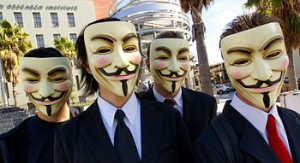 How much worse now, in this hyper-connected, data-mining era? One chilling phrase that leapt out at me from Parker’s speech was the need to investigate “terrorists and others threatening national security”. National security has never been legally defined for the purposes of UK law, and we see the goal posts move again and again. In the 1980s, when Parker joined MI5, it was the “reds under the bed”, the so-called subversives. Now it can be the Occupy group encamped in the City of London or environmental activists waving placards.
So now for my macro concerns, which are about wider concepts. Parker used his first public speech to defend not only the work of his own organisation, but also to attack the whistleblowing efforts of Edward Snowden and the coverage in The Guardian newspaper. He attempts to seamlessly elide the work and the oversight models of MI5 and GCHQ. And who is falling for this? Well, much of the UK media apparently.
This muddies the waters. The concerns about Snowden’s disclosures are global — the TEMPORA project affects not only the citizens of the UK but people across Europe and beyond. For Rifkind or the Foreign Secretary to complacently say that GCHQ is overseen by them and everything is hunkey-dorey is just not good enough, even for the hapless citizens of the UK. How much more so for those unrepresented people across the world?
The IOCA (1985) and later and much-abused RIPA (2000) laws were written before the UK government could have conceived of the sheer scale of the internet. They are way out of date — 20th century rolling omnibus warrants hoovering up every scrap of data and being stored for unknown times in case you might commit a (thought?) crime in the future. This is nothing like meaningful oversight.
Unlike the UK, even the USA is currently having congressional hearings and media debates about the limits of the electronic surveillance programme. Considering America’s muscular response after 9/11, with illegal invasions, drone strikes, CIA kill lists and extraordinary kidnappings (to this day), that casts the UK spy complacency in a particularly unflattering light.
Plus if 58,000 GCHQ documents have really been copied by a young NSA contractor, why are Parker and Rifkind not asking difficult questions of the American administration, rather than continuing to justify the antiquated British oversight system?
Finally, Parker is showing his age as well as his profession when he talks about the interwebs and all the implications. As I said during my statement to the LIBE committee in the European Parliament:
First published on RT Op-Edge. Also on Information Clearing House and The Huffington Post.
The disparity in response to Edward Snowden’s disclosures within the USA and the UK is astonishing. In the face of righteous public wrath, the US administration is contorting itself to ensure that it does not lose its treasured data-mining capabilities: congressional hearings are held, the media is on the warpath, and senior securocrats are being forced to admit that they have lied about the efficacy of endemic surveillance in preventing terrorism.
Just this week General Alexander, the head of the NSA with a long track record of misleading lying to government, was forced to admit that the endemic surveillance programmes have only helped to foil a couple of terrorist plots. This is a big difference from the previous number of 54 that he was touting around.
Cue calls for the surveillance to be reined in, at least against Americans. In future such surveillance should be restricted to targeted individuals who are being actively investigated. Which is all well and good, but would still leave the rest of the global population living their lives under the baleful stare of the US panopticon. And if the capability continues to exist to watch the rest of the world, how can Americans be sure that the NSA et al won’t stealthily go back to watching them once the scandal has died down — or just ask their best buddies in GCHQ to do their dirty work for them?
I’m sure that the UK’s GCHQ will be happy to step into the breach. It is already partially funded by the NSA, to the tune of $100 million over the last few years; it has a long history of circumventing US constitutional rights to spy on US citizens (as foreigners), and then simply passing on this information to the grateful NSA, as we know from the old Echelon scandal; and it has far more legal leeway under British oversight laws. In fact, this is positively seen to be a selling point to the Americans from what we have seen in the Snowden disclosures.
GCHQ is absolutely correct in this assessment — the three primary UK intelligence agencies are the least accountable and most legally protected in any western democracy. Not only are they exempt from any real and meaningful oversight, they are also protected against disclosure by the draconian 1989 Official Secrets Act, designed specifically to criminalise whistleblowers, as well as having a raft of legislation to suppress media reporting should such disclosures emerge.
This might, indeed, be the reason that the UK media is not covering the Snowden disclosures more extensively — a self-censoring “D” Notice has been issued against the media, and The Guardian had its UK servers smashed up by the secret police. 1930s Germany, anyone?
Defenders of the status quo have already been out in force. Foreign Secretary William Hague, who is notionally responsible for GCHQ, said cosily that everything was legal and proportionate, and Sir Malcolm Rifkind, the current chair of the Intelligence and Security Committee in parliament last week staunchly declared that the ISC had investigated GCHQ and found that its data mining was all legal as it had ministerial approval.
Well that’s all OK then. Go back to sleep, citizens of the UK.
What Hague and Rifkind neglected to say was that the ministerial warrantry system was designed to target individual suspects, not whole populations. Plus, as the Foreign secretary in charge of MI6 at the time of the illegal assassination plot against Gaddafi in 1996, Rifkind of all people should know that the spies are “economical with the truth”.
In addition, as I’ve written before, many former top spies and police have admitted that they misled lied to the ISC. Sure, Rifkind has managed to acquire some new powers of oversight for the ISC, but they are still too little and 20 years too late.
This mirrors what has been going on in the US over the last few years, with senior intelligence official after senior official being caught out lying to congressional committees. While in the UK statements to the ISC have to date not been made under oath, statements made to the US Congress are — so why on earth are apparent perjurers like Clapper and Alexander even still in a job, let alone not being prosecuted?
It appears that the US is learning well from its former colonial master about all things official secrecy, up to and including illegal operations that can be hushed up with the nebulous and legally undefined concept of “national security”, the use of fake intelligence to take us to war, and the persecution of whistleblowers.
Except the US has inevitably super-sized the war on whistleblowers. While in the UK we started out with the 1911 Official Secrets Act, under which traitors could be imprisoned for 14 years, in 1989 the law was amended to include whistleblowers — for which the penalty is 2 years on each charge.
The US, however, only has its hoary old Espionage Act dating back to 1917 and designed to prosecute traitors. With no updates and amendments, this is the act that is now rolled out to threaten modern whistleblowers working in the digital age. And the provisions can go as far as the death penalty.
President Obama and the US intelligence establishment are using this law to wage a war on whistleblowers. During his presidency he has tried to prosecute seven whistleblowers under this Espionage Act — more than all the previous presidents combined — and yet when real spies are caught, as in the case of the Russian Spy Ring in 2010, Obama was happy to cut a deal and send them home.
An even more stark example of double standards has emerged this August, when a leak apparently jeopardised an ongoing operation investigating a planned Al Qaeda attack against a US embassy in the Middle East. This leak has apparently caused immediate and quantifiable damage to the capabilities of the NSA in monitoring terrorism, and yet nobody has been held to account.
But, hey, why bother with a difficult investigation into leaking when you can go after the low-hanging fruit — otherwise known as principled whistleblowers who “out” themselves for the public good?
This to me indicates what the US intelligence infrastructure deems to be the real current issue — “the insider threat” who might reveal crucial information about state crimes to the world’s population.
And yet the US representatives still trot out the tired old lines about terrorism. Senator Lindsey Graham stated this week that the current level of endemic surveillance would have prevented 9/11. Well, no, as previous intelligence personnel have pointed out. Coleen Rowley — Time Person of the Year 2002 — is famous for highlighting that the US intelligence agencies had prior warning, they just didn’t join the dots. How much worse now would this process be with such a tsunami of data-mined intelligence?
In summary, it’s good to see at least a semblance of democratic oversight being played out in the USA, post-Snowden. It is a shame that such a democratic debate is not being held in the UK, which is now the key enabler of the USA’s chronic addiction to electronic surveillance.
However, I fear it is inevitably too little too late. As we have seen through history, the only protection against a slide towards totalitarianism is a free media that allows a free transfer of ideas between people without the need to self-censor. The global US military-security complex is embedded into the DNA of the internet. We cannot rely on the USA to voluntarily hand back the powers it has grabbed, we can only work around them as Brazil has suggested it will do, and as the EU is contemplating.
Other than that, responsibility for our privacy rests in our own hands.
This week I was invited to give a statement to the LIBE Committee at the European Parliament about whistleblowing and the NSA mass surveillance scandal.
I was in good company: ex-NSA Tom Drake, ex-Department of Justice Jesselyn Radack, and ex-NSA Kirk Wiebe. As well as describing the problems we had faced as intelligence whistleblowers, we also suggested some possible solutions.
We were well received, even to the extent of an ovation from the normally reticent MEPs. We also all did various interviews for TV during the day, but this is the only one I have tracked down so far.
Here is the video:
EU Parliament LIBE Inquiry on Electronic Mass Surveillance of EU Citizens from Annie Machon on Vimeo.
Below is some background material from my submission to the European Parliament’s LIBE Committee on the implications of the NSA scandal.
Here is a video link to the hearing.
LIBE Committee Inquiry on Electronic Mass Surveillance of EU Citizens, European Parliament, 30th September 2013
Biography:
Annie Machon was an intelligence officer for the UK’s MI5 in the 1990s, before leaving to help blow the whistle on the crimes and incompetence of the British spy agencies. As a result she and her former partner had to go on the run around Europe, live in exile in France, face arrest and imprisonment, and watch as friends, family and journalists were arrested.
She is now a writer, media commentator, political campaigner, and international public speaker on a variety of related issues: the war on terrorism, the war on drugs, the war on whistleblowers, and the war on the internet. In 2012 she started as a Director of LEAP in Europe (www.leap.cc).
Annie has an MA (Hons) Classics from Cambridge University.
Background material:
Recommendations:
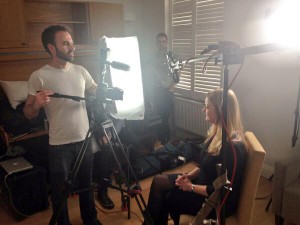 I had a fabulous time doing an interview on behalf of LEAP for the new anti-prohibition film, The Culture High.
Made by Adam Scorgie, who directed the cult film, The Union, his new work promises to be the film on the subject of cannabis prohibition. Thanks to the team for a wide-ranging, lively and stimulating interview.
If you want to support their work, click here. And the film will be released next summer.
Last week I was invited to discuss the control of the media by the spies and the government apparatus by the Centre for Media Studies at the Stockholm School of Economics in Riga. Many thanks to Hans, Anders and the team for inviting me, and to Inese Voika , the Chair of Transparency International in Latvia, for setting the scene so well.
I focused particularly on how journalists can work with and protect whistleblowers:
Whistleblowing is the New Rock and Roll from Annie Machon on Vimeo.
The International Day of Privacy was celebrated globally on 31 August, with the cases of Chelsea Manning and Edward Snowden bringing extra energy and resonance to the subject.
I was invited take part in a demonstration in Berlin, culminating with a talk at the hugely symbolic Brandenburg Gate. Here’s the talk:
Finally the videos from the whistleblower track at the August international geekfest OHM 2013 in the Netherlands are beginning to emerge. Here’s one of the key sessions, the Great Spook Panel, with ex-CIA Ray McGovern, ex-FBI Coleen Rowley, ex-NSA Tom Drake, ex-Department of Justice Jesselyn Radack, and myself.
We came together to show, en masse, that whistleblowing is done for the democratic good, to discuss the (frighteningly similar) experiences we all went through, and to show that whistleblowers can survive the process, build new lives, and even potentially thrive.
Here is a great article about the whistleblowers at OHM by Silkie Carlo (@silkiecarlo) for Vice Magazine.
With the recent cases of Chelsea Manning, Wikileaks and Edward Snowden, respect to the OHM organisers who saw the relevance of this event so far ahead.
Here is a video of a debate I was involved with about whistleblowers on the most recent edition of BBC debate show, Sunday Morning Live. The question under discussion: are whistleblowers heroes or villains?
BBC Sunday Morning Live from Annie Machon on Vimeo.
A shame that some of the studio guests used this opportunity to launch ad hominem attacks rather than focus on the key question, but I’m glad I could contribute.
Here is my most recent RT interview, live as Chelsea Manning was sentenced to 35 years in a US prison for blowing the whistle and exposing war crimes:
RT Interview about Manning sentencing from Annie Machon on Vimeo.
First published on RT Op-Edge.
David Miranda had just spent a week in Berlin, before flying back to his home country, Brazil, via London’s Heathrow airport. As he attempted to transit on to his flight home — not enter the UK, mind you, just make an international connection — he was pulled to one side by the UK’s border security officers and questioned for nine hours, as well as having all his technical equipment confiscated.
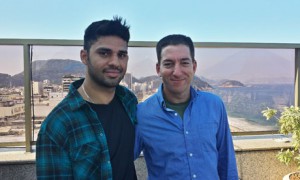 He was detained for the maximum period allowed under the draconian terms of Schedule 7 of the UK’s Terrorism Act (2000). His apparent “crime”? To be the partner of campaigning journalist Glenn Greenwald who broke the Edward Snowden whistleblowing stories.
Miranda’s detention has caused outrage, rightly, around the world. Diplomatic representations have been made by the Brazilian government to the British, UK MPs are asking questions, and The Guardian newspaper (which is the primary publisher of Greenwald’s stories), has sent in the lawyers.
This episode is troubling on so many levels, it is difficult to know where to begin.
 Firstly, the Terrorism Act (2000) is designed to investigate, er, terrorism — at least, so you would think. However it is all too easy for mission creep to set in, as I have been saying for years. The definition of terrorism has expanded to cover activists, placard wavers, and protesters as well as, now apparently, the partners of journalists. The old understanding of due legal process is merely yet another quaint, British artefact like the Magna Carta and habeas corpus.
In the UK we now have secret courts covering all things “national security”, we have pervasive Big Brother surveillance as exemplified by GCHQ’s TEMPORA programme, and we have our spies involved in kidnapping and torture.
So Schedule 7 of the Terrorism Act is just another small nail in the coffin of historic British freedoms. Under its terms, anyone can be pulled aside, detained and questioned by border security guards if they are “suspected of” involvement in, the commissioning of, or financial support for terrorism. The detainee is not allowed to speak to a lawyer, nor are they allowed not to answer questions, on pain of criminal prosecution. Plus their property can be indefinitely seized and ransacked, including computers, phones, and other gadgets.
Under Schedule 7 people can be questioned for a maximum of 9 hours. After that, the authorities either have to apply for a formal extension, charge and arrest, or release. According to a UK government document, 97% people are questioned for less than 1 hour then released and only 0.06% are held for six hours. Miranda was held up until the last minute of the full nine hours before being released without charge.
Secondly, this abuse of power displays all too clearly the points that Edward Snowden has disclosed via Greenwald about a burgeoning and out-of-control surveillance state. The detention of Miranda displays all the obsessive vindictiveness of a wounded secret state that is buzzing around, angry as a wasp. Snowden has the protection of the only state currently with the power to face down the brute might of US “diplomacy”, and Greenwald still has the shreds of journalist protections around him.
Friends and partners, however, can be seen as fair game.
I know this from bitter personal experience. In 1997 former MI5 intelligence officer, David Shayler, blew the whistle on a whole range of UK spy crimes: files on government ministers, illegal phone taps, IRA bombs that could have been prevented, innocent people in prison, and an illegal MI6 assassination plot against Gaddafi, which went wrong and innocent people died.
Working with a major UK newspaper and with due respect for real national secrets, he went public about these crimes. Pre-emptively we went on the run together, so that we could remain free to argue about and campaign around the disclosures, rather than disappearing into a maximum security prison for years. After a month on the run across Europe, I returned to the UK to work with our lawyers, see our traumatised families, and pack up our smashed-up, police-raided flat.
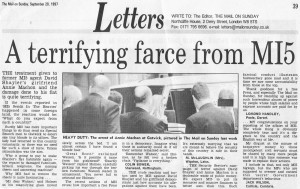 In September 1997 I flew back with my lawyer from Spain to London Gatwick. I knew that the Metropolitan Police Special Branch wanted to interview me, and my lawyer had negotiated this ahead of my travel. Despite this, I was arrested at the immigration desk by six heavies, and carted off to a counter-terrorism suite at Charing Cross police station in central London, where I was interrogated for six hours.
At that point I had done nothing more than support David. As another ex-MI5 officer I agreed that the spies needed greater oversight and accountability, but actually my arrest was because I was his girlfriend and going after me would be leverage against him. But is got worse — two days later Shayler’s two best friends and his brother were arrested on flagrantly trumped-up charges. None of us was ever charged with any crime, but we were all kept on police bail for months.
Looking back, our treatment was designed to put more pressure on him and “keep him in his box” — it was pure intimidation. Journalists and students were also threatened, harassed, and in one case charged and convicted for having the temerity to expose spy crimes disclosed by Shayler. To this day, none of the criminals in the UK intelligence agency has ever been charged or convicted.
So the threats and intimidation around the Snowden case, and the detention of Greenwald’s partner, are old, old tactics. What is new is the sheer scale of blatant intimidation, the sheer brutish force. Despite the full glare of global internet and media coverage, the US and UK spooks still think they can get away with this sort of intimidation. Will they? Or will we, the global citizenry, draw a line in the sand?
Oh, and let’s not forget the sheer hypocrisy as well — the US condemns Snowden for seeking refuge in Russia, and castigates that country for its civil rights record on certain issues. Be that as it may, the US establishment should look to the log in its own eye first — that one of its young citizens faces the death sentence or life-long incarceration for exposing (war) crimes against the global community as well as the country’s own constitution.
There is an internationally-recognised legal precedent from the Nuremburg Nazi trials after World War 2: “just following orders” is not a defence under any law, particularly when those orders lead to victimisation, war crimes and genocide. The UK border guards, as well as the international intelligence communities and military, would do well to heed that powerful lesson from history.
So this overzealous use of a law to detain the partner of a journalist merely travelling through the UK should make us all pause for thought. The West has long inveighed against totalitarian regimes and police states. How can they not recognise what they have now become? And how long can we, as citizens, continue to turn a blind eye?