Coincidentally, while in Iceland I was invited on to RT to do an interview about the country’s proposal to censor the internet in order to stop access to violent porn. I stress that this discussion is still, apparently, at a consultative stage — decisions have yet to be taken.
Category Archives: Current Affairs
Silfur Egils Interview, Iceland
My recent interview on Iceland’s premier news discussion show, Silfur Egils, hosted by the excellent Egill Helgason.
The name refers to an old Norse saga about a hero, an earlier Egill, throwing handfuls of silver to the ground so he could make the Viking politicos of the day scrabble around in the dirt trying to pick up the coins.
Plus ça change, plus c’est la même chose.
The Keiser Report — my recent interview
My recent interview on Max Keiser’s excellent RT show, The Keiser Report, apparently now the most watched English language news commentary show across the world.
We were discussing such happy subjects as the war on terror, the war on drugs, but predominantly the war on the internet:
LEAP Interview on The Real News Network, October 2012
I participated in the Law Enforcement Against Prohibition (LEAP) board meeting last October in Baltimore. While there, I arranged for board members to do a series of interviews about the failed global “war on drugs” with the excellent and independent Real News Network.
The tide of history is with us — more and more countries are speaking out about the failure of prohibition. LEAP supports and contributes to this discussion.
LEAP has representatives across the world with a wide range of professional expertise: police officers, drug czars, judges, prison governors, lawyers, drug enforcement officers, and even the occasional former spook.…
Our varied experiences and backgrounds have brought us to one conclusion: we all assess the “war on drugs” to have been an abject failure that causes more global societal harm than good, as well as funding organised crime, terrorism and white collar bank crime.
We urgently need to rethink the failed UN drug conventions.
Here is the RNN interview I participated in, along with Brazilian Judge Maria Lucia Karam:
The Petraeus Affair
My recent interview on RT about the Petraeus Affair and the possible real reasons for his exposure and resignation:
More on Libya, with RTTV
A recent interview on RTTV about the ongoing civil war in Libya following the NATO invasion last year:
Interview for the Release newsletter, “TalkingDrugs”
 An interview I did on behalf of LEAP this week for the newsletter of the UK campaign, Release.
Release, run by the indefatigable Niamh Eastwood, does excellent work providing legal advice about drug issues, and campaigning for fairer and more compassionate drug laws.
The interview appeared in the campaign’s newsletter, “TalkingDrugs”.
Here’s the link, and here’s the text:
Q1 What led you into thinking that current drug policies on illicit drugs were failing?
My journey began when I was working as an intelligence officer for MI5 in the 1990s. One of my roles was investigating terrorist logistics and working closely with UK Customs. I learned then that trying to stop the flow of illicit material into the UK (whether drugs, weapons, or people) is like looking for a needle in the proverbial haystack. Plus there is a huge overlap between the funding of organised crime and terrorist groups.
Over the last decade I have become a writer, commentator and public speaker on a variety of inter-connected issues around intelligence, the war on terror, whistleblowers, policing, and civil liberties. To me, the war on drugs meshes very closely with all these topics. Three years ago I was approached by LEAP to become a speaker, and then in March this year I became a member of the international board and also the Director of LEAP Europe in order to consolidate the organisation’s work here.
Q2 Do you think that there are barriers to police officers being honest about the effectiveness of their actions to combat the trade in illicit drugs and is the greater disquiet amongst those involved in law enforcement about current policies than is popularly perceived ?
Yes, absolutely, and it’s not just amongst the police but also the wider law enforcement community.
LEAP supporters, approaching 100,000 in over 90 countries around the world, include judges, lawyers, prison governors, customs and intelligence officers, and former drug czars. Within all these professions there is a tacit understanding that you toe the conventional line. In my experience, most people go into this type of work hoping not only to have an interesting job, but also to do some good and make a difference. Many then see the social fall-out, or that friends, family or community are affected by the drug wars, and many serving officials do question what it is all about and what it is really achieving.
However, they are there to do a job, which is upholding and applying the law. The cultural pressure within such groups can make it extremely difficult on many levels for them to speak out.
Any change to the international and national drug laws will have to come from the politicians within the UN and nationally. LEAP increasingly contributes to the political debate and is building a groundswell of support internationally. Most people today will know someone who has at least tried a currently illegal drug. They also instinctively know this is mere social experimentation, relaxation or, at worst, a health problem. And penalisation, imprisonment and a criminal record exacerbates rather than helps the situation.
Q3 Does the policing of drug possession impact the effectiveness of policing generally and what benefits do you think could stem from ceasing to use law enforcement to attempt to discourage drug use?
There are multiple strands to this issue: the diversion of police resources, the additional crime caused by prohibition that is not dealt with successfully, the diversion of resources from harm reduction programmes, the criminalisation of what are essentially health issues, and the disrepute that results for law enforcement.
The policing of drug possession takes away vast resources from investigating other crimes such as burglary, rape and murder. Yet it is largely pointless – those with a drug dependency need health interventions, and there will always be replacements for any low-level dealers who are arrested and imprisoned. If you arrest and convict a rapist, he will not be on the streets committing more rapes; but if you catch a drug dealer, you just create a job vacancy for which many will compete in ever more violent ways for a slice of an incredibly lucrative market.
The UK anti-prohibition advocacy group, Transform, estimates that even if just cannabis were legalised in the UK, an additional $1.6 billion would flow into the British economy every year. While tax raised on a controlled and regulated cannabis trade is predicted to provide the bulk of this ($1.2 billion), $170 million would be saved from law enforcement, $155 million from the justice system, and $135 million from the prison system.
In the current economic situation, can the UK afford not to consider alternatives to the current drug war?
Also, as we have seen since the decriminalistion laws in Portugal since 2001 and Switzerland since 1994, the “peace dividend” by ending the war on drugs would not only see a drop in property crimes (about 50% of which are committed to fund drug dependencies), it could also be used to finance and extend harm reduction programmes. As we have seen in the case of tobacco across the West, we do not need to ban a substance to reduce its use; education and treatment are far more effective.
Finally, illegal drugs are available to anyone who wants to buy them on the streets of the UK. The increasing militarisation of the police to fight the war on drugs, the breakdown of civil liberties for the same reason (mirroring the war on terror), and the widespread flagrant flouting of the drug laws by large numbers of the population, thereby “making an ass of the law”, has led to a breakdown of trust and respect between the police and the policed. One of LEAP’s aims is to rebuild this trust, this social contract.
Q4 The impact on the safety of law enforcement personnel of the ‘war on drugs’ should be an issue for other membership organisations representing the sector, will you be reaching out to them to encourage campaigning on the issue?
Safety is certainly an issue, although we have been more fortunate in Europe than our colleagues in the USA, where the more prevalent gun culture leads to many more law enforcement deaths. That said, gang violence is on the rise across Europe where organised crime gangs fight increasingly violent turf battles.
Mexico has been one of the worst hit countries in the world. Since the ramping up of the war on drugs almost six years ago, over 62,000 men women and children have been tortured and murdered in that country, and many of them had no involvement whatsoever in the drugs trade. In fact, LEAP USA has just successfully participated in the Mexican Caravan for Peace, a group of activists and families highlighting the tragedy, that toured across the USA for a month to raise awareness and finished with a rally in Washington last week.
The increasing violence of the drugs trade and the militarisation of the response should be of concern to all law enforcers, membership organisations and allied groups working in the drugs sector. We need to think urgently about how to avoid a similar spiral of violence in Europe. LEAP is happy to reach out to such organisations to develop a more humane solution.
Q5 How would you like to see LEAP in Europe develop and will you be looking to lobby European policy makers in Brussels?
There are already LEAP speakers across most European countries. We in LEAP see the organisation’s primary goal as educational. We shall be working to build up speaking engagements for a wide variety of groups and audiences, including the political sector, as well as strengthening our media exposure. We recognise the valuable work Release and other NGOs and advocacy groups are already doing across Europe, and hope that you will see that we offer a unique voice and pool of expertise that can be used to strengthen your work.
It is wonderful that so many organisations and indeed governments around the world (particularly in Europe and Latin America) are now focusing on exploring alternatives such as decriminalistion and harm reduction programmes. Based on our professional experience, LEAP argues that we need, at very least, to consider the next logical step in the chain: controlled regulation of the drug market as we currently do with alcohol and tobacco.
Decriminalisation may help to reduce the harm for the drug users, but leaves the drug trade in the hands of increasingly violent global organised crime networks. Only by removing the profit motive from this illicit trade can we end the involvement of the criminal element and all the attendant violence, and work to make the world safer for all.

Interview about Iran on The Real News Network
Following on from the article former CIA analyst, Ray McGovern, and I co-authored last month about the possible “fixing” of intelligence around Iran, here is a subsequent interview we did for The Real News Network:
The Olympics — Welcome to the Machine
Published in The Huffington Post UK, 27 July 2012
OK, I was really so not planning on ever writing anything, whatsoever, at any point while I continue to breathe, about the London Olympics. First of all I have absolutely zero interest in the circus that is modern competitive sport (panem et circenses), and secondly what more could I possibly add to the scandals around the security? All the information is out there if people choose to join the dots.
But synchronicity plays its part. Firstly, this morning I read this excellent article by former UK ambassador-turned-whistleblower, Craig Murray, about how the UK is now under martial law in the run-up to the Olympics. Shortly afterwards I did an interview with the women’s glossy magazine, Grazia, about the security set-up around the games. I know, I know, sometimes the heavens align in a once-in-a-century configuration.…..
So on the back of this fortuitous alignment and while my angry-o-meter is still spiked at the “dangerous” level, I wanted to set some thoughts down.
 Craig is correct — because of the Olympic Games, London has gone into full martial law lock-down. Never before in peace-time has the capital city of the formerly Great Britain seen such a military “defensive” presence: missile launchers on local tower blocks primed to blow straying commercial airliners out of the skies over London, regardless of “collateral damage”; anti-aircraft bunkers dug in on Greenwich common; and naval destroyers moored on the Thames.
Plus, absent the promised G4S publicly-funded work-experience slaves — sorry, security staff — the military has been drafted in. Soldiers just home from patrolling the streets in Afghanistan in daily fear of their lives have had all leave cancelled. Instead of the much-needed R & R, they shall be patrolling the Olympic crowds. Does anyone else see a potential problem here?
And all this follows a decade of erosion of basic freedoms and civil liberties — all stripped away in the name of protecting the UK from the ever-growing but nebulous terrorist threat.
But I would take it a step further than Craig Murray — this is not just martial law, this is fascist martial law.
(And being conscious of any potential copyright thought-crimes, I hereby give all due credit to a very famous UK TV advert campaign which appears to use the same cadence.)
Why do I say this is one step beyond?
The Italian World War II dictator, Benito Mussolini, is famously credited with defining fascism thus: “the merger of the corporate and the state”.
And this is precisely what we are seeing on the streets of London. Not only are Londoners subjected to an overwhelming military and police presence, the corporate commissars are also stalking the streets.
 When Seb Coe and Tony Blair triumphantly announced that London had won the Olympics on 6th July 2005, one of their mantras was how London and the UK would benefit from the presence of the games. They painted a rosy picture of local businesses booming on the back of the influx of tourists.
But the cold reality of today’s Olympics is greyer. Commuters are being advised to work from home rather than use the overloaded transport networks; the civil service is effectively shutting down; and Zil lanes for the “great and the good” of the Olympics universe are choking already congested London streets.
Even worse, businesses across the UK, but particularly the local ones in the economically deprived environs of the Olympic Park in East London, are categorically NOT allowed to benefit from the games. Under the terms of the contracts drawn up by the corporate mega-sponsors, London small businesses are not allowed to capitalize in any conceivable, possible, miniscule way on the presence of the games in their own city.
And these terms and conditions are enshrined in the Olympics Act 2006; any infraction of the rules carries a criminal penalty. For more than a week, corporate police enforcers have been patrolling London looking for infractions of the Olympic trademark. And this goes way beyond “Olympics R US” or some such. As Nick Cohen wrote in an excellent recent article in The Spectator magazine:
“In the London Olympic Games and Paralympic Games Act of 2006, the government granted the organisers remarkable concessions. Most glaringly, its Act is bespoke legislation that breaks the principle of equality before the law. Britain has not offered all businesses and organisations more powers to punish rivals who seek to trade on their reputation. It has given privileges to the Olympics alone. The government has told the courts they may wish to take particular account of anyone using two or more words from what it calls ‘List A’ — ‘Games’; ‘Two Thousand and Twelve’; ‘2012’; ‘twenty twelve’. The judges must also come down hard on a business or charity that takes a word from List A and conjoins it with one or more words from ‘List B’ — ‘Gold’; ‘Silver’; ‘Bronze’; ‘London’; ‘medals’; ‘sponsors’; ‘summer’. Common nouns are now private property.”
I heard recently that a well-established local café in Stratford, East London, that has for years been known as the Olympic Café, has been ordered to paint over its sign for the duration of the games. If I owned the café, I would be tempted to sue the Olympic Committee for breach of trademark.
 It seems to me that this real-world trademark protectionism is an extension of the ongoing copyright wars in cyberspace — a blatant attempt to use state level power and legislation to protect the interests of the wealthy international mega-corps few. We saw early attempts at this during the South African Football World Cup in 2010, and the Vancouver Winter Olympics the same year.
But the London Olympics take it to the next level: there is a long list of what you are not allowed to take into the stadia. Spectators will be subjected to airport-style security theatre. This will ensure that no liquids of more than 100ml can be carried, although empty bottles will be allowed if people want to fill them up with tap water on site. This, of course, means that more spectators will be buying their sponsor-approved liquids in situ and at no-doubt over-inflated prices, to the benefit of one of the key Olympic sponsors.
The London games seem to be the first time that the global corporate community is demonstrating its full spectrum dominance — where the legal, police, and military resources of the state are put at the disposal of the giant, bloated, money-sucking leech that is the International Olympic Committee.
 Every city that has hosted the Olympics over the last four decades has been financially bled white; many are still paying back the initial investment in the infrastructure, even if it is now decaying and useless. Greece, anybody?
But do the IOC or its regional pimps care? Hell, no. Like all good parasites, once the original host has been drained dry, the Games move on to a new food source every four years.
What really, deeply puzzles me is why the hell are the people of London not out there protesting against this corporatist putsch? Perhaps they fear being shot?
How can it be a crime to take a full bottle of water into a stadium when you want to watch a sport? How can it be a crime to tweet a picture? How can it be criminal to celebrate the occasion in your local pub with Olympic flags draped around your bar, drinking a beer and eating a burger marketed cheesily as “fit for champions” or some such?
The original ideals behind the reconstitution of the modern Olympics in 1896 were a highly romanticised and distorted vision of the values of the ancient games. But even that naïve ideal has been lost in the crapulous corporatism that is the modern event.
We have even gone way beyond the Roman view of bread and circuses placating the masses. Now we are into the hardcore realpolitik of international corporations and national governments using the games as a perfect pretext to tighten the “security” screws even more.
And so the UK is proud to present full-blown Corporate Fascism Version 2.0.
Vae victis.
What whistleblowers want
Whistleblowers want the sun and the moon — or at least they want to get their information out there, they want to make a difference, they want a fair hearing, and they don’t want to pay too high a personal price for doing so.
Is that too much to ask? The decision to expose criminality and bad practice for the public good has serious, life-changing implications.
By going public about serious concerns they have about their workplace, they are jeopardising their whole way of life: not just their professional reputation and career, but all that goes with it, such as the ability to pay the mortgage, their social circle, their family life, their relationship… Plus, the whistleblower can potentially risk prison or worse.
 So, with these risks in mind, they are certainly looking for an avenue to blow the whistle that will offer a degree of protection and allow them to retain a degree of control over their own lives. In the old days, this meant trying to identify an honourable, campaigning journalist and a media organisation that had the clout to protect its source. While not impossible, that could certainly be difficult, and becomes increasingly so in this era of endemic electronic surveillance.
Today the other option is the secure, high-tech publishing conduit, as trail-blazed by Wikileaks. While this does not provide the potential benefits of working with a campaigning journalist, it does provide anonymity and a certain degree of control to the modern whistleblower, plus it allows their information to reach a wide audience without either being filtered by the media or blocked by government or corporate injunctions.
As someone who has a nodding acquaintance with the repercussions of blowing the whistle on a secret government agency, I have liked the Wikileaks model since I first stumbled across it in 2009.
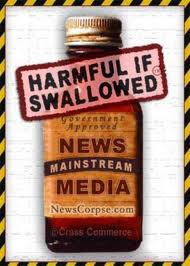 As with most truly revolutionary ideas, once posited it is blindingly obvious.
Never before has this been technically possible — the idea that a whistleblower’s information could be made freely available to the citizens of the world, in order to inform their democratic choices, with no blockage, not censorship, no filtering or “interpretation” by the corporate media.
This is particularly relevant in an age when the global media has been consolidated in the hands of a few multinationals, and when these multinationals have a certain, shall we say “cosy”, relationship with many of top our politicians and power elites.
The control of the mainstream media by the spooks and governments has been the focus of many of my recent talks. These corrupt inter-relationships have also been recently laid bare with the News International phone-hacking scandals.
The days of garnering news from one favoured paper or TV bulletin are long gone. Few people now trust just one media outlet — they skip across a variety of news sources, trying to evaluate the truth for themselves. But even that can be problematic when something big occurs, such as the “justification” for the invasion of Iraq or Libya, and the current beat of war drums against Iran, when the corporate media mysteriously achieves a consensus.
Hence the democratic disconnect, hence the distrust, and hence (in part) the plummeting profits of the old media.
Wikileaks is based on a simple concept — it allows the people to read the source material for themselves and make up their own minds based on real information. This led to exposure of all kinds of global nasties way before the massive 2010 US data-dump.
Despite this approach, the impact was initially subdued until Wikileaks collaborated with the old media. This, as we all know, did indeed produce the coverage and awareness of those issues deemed important as it was filtered through the MSM. This has also inevitably lead to tensions between the new model hacktivists and the old-school journalists.
 No government, least of all the USA, likes to have demands for justice and transparency forced upon it, and the push back since 2010 has been massive across the world in terms of an apparently illegal financial blockade, opaque legal cases and a media backlash. Certain of Wikileaks’s erstwhile media partners have collaborated in this, turning on one of their richest sources of information in history.
However, Wikileaks is more than a media source. It is a whole new model — a high-tech publisher that offers a safe conduit for whistleblowers to cache and publicise their information without immediately having to overturn (and in some cases risk) their lives.
For this work, Wikileaks has over the years won a number of internationally prestigious journalism awards.
Inevitably, critics in the mainstream media seem to want to have their cake and eat it too: one early partner, the New York Times, has written that it doesn’t recognise Wikileaks as a journalist organisation or a publisher — it is a source, pure and simple.
Either way, by saying this the media are surely shooting themselves in the corporate feet with both barrels. If Wikileaks is indeed “just” a source (the NYT seems to be blithely forgetting that good journalism is entirely dependent on its sources), then the media are breaking their prime directive: protect a source at all costs.
However, if Wikileaks is a journalism or publishing organisation and as such is being targeted by the US government, then all other media are surely equally at risk in the future?
By not standing up for Wikileaks in either capacity, it appears that the old media have a death wish.
Over the years whistleblowers around the world have demonstrated their trust in Wikileaks, as it was set up by someone emerging from the original bona fide hacker community. And rightly so — let’s not forget that no source has been exposed through the failure of the organisation’s technology.
Many media organisations rushed to emulate its success by trying to set up their own “secure” whistleblowing repositories. What the media execs failed to understand was the hacker ethos, the open source mentality: they went to their techie department or commercial IT service providers and said “we want one”, but failed to understand both the ethos and the security concerns around closed, proprietary software systems, often channelled through the post-Patriot Act, post-CISPA USA.
Other, apparently well-meaning organisations, also tried to emulate the Wikileaks model, but most have died a quiet death over the last year. Perhaps, again, for want of real trust in their origin or tech security?
Why on earth would any security-conscious whistleblower, emerging out of a government, military or intelligence organisation, trust such a set-up? If someone comes out of such an environment they will know all-too-well the scale of the push-back, the possible entrapments, and the state-level resources that will be used to track them down. They either need an über-secure whistleblowing platform, or they need journalists and lawyers with fire in their belly to fight the fight, no matter what.
 So now to OpenLeaks — apparently the brainchild of Wikileaks defector Daniel Domsheit-Berg. He and the shadowy “Architect” famously fell out with Julian Assange in late 2010, just when the political heat was ramping up on the organisation. They left, reportedly taking some of the crucial coding and a tranche of files with them, and Domsheit-Berg decided to set up a rival organisation called OpenLeaks. As a result of his actions, Domsheit-Berg was uniquely cast out of the international hacker group, the CCC in Berlin.
He now seems to have been welcomed back into the fold and OpenLeaks appears, finally, to be ready to receive whistleblower information.
However, there is a crucial difference between the two organisations. Where Wikileaks wants to lay the information out there for public evaluation, OpenLeaks will merely act as a repository for certain approved mainstream media organisations to access. We are back to the original blockage of the corporate media deciding what information we, the people, should be allowed to ingest.
I would not wish to comment on Domsheit-Berg’s motivation, but to me this seems to be an even worse option for a whistleblower than directly contacting a campaigning journalist with a proven track record of covering hard-core stories and fighting for the cause.
 With OpenLeaks, the whistleblower loses not only the automatic widespread dissemination of their information, but also any semblance of control over which journalists will be working on their story. Their information will be parked on the website and anyone from pre-selected media organisations will be able to access, use and potentially abuse it.
One could say that OpenLeaks operates as a secure staging platform where a whistleblower can safely store sensitive documents and information.… but the founder allegedly removed and destroyed sensitive files from Wikileaks when he jumped ship in 2010. Could any whistleblower really trust that OpenLeaks would not similarly “disappear” shit-hot information in the future?
Plus, there is the added worry for any rightly-paranoid whistleblower that the founder of OpenLeaks so easily abandoned Wikileaks when under pressure. Who’s to say that this would not happen again, if the full might of the Pentagon were brought to bear on OpenLeaks?
OpenLeaks offers neither the personal support of working with a trusted journalist and a media organisation with the clout to fight back, nor does it provide full disclosure to the wider public to side-step potential media self-censorship and government law suits, as the original Wikileaks model does.
As such OpenLeaks seems, at least to this particular whistleblower, to be an evolutionary blip — a retrograde step — in the quest for justice and accountability.
Students for Sensible Drug Policy (SSDP) UK Conference
 Last month, in my new role as Director of LEAP Europe, I was invited to do a talk at the SSDP conference in London. It was great to meet the key SSDP organisers, and also share a platform with Jason Reed, the co-ordinator of LEAP UK.
The student activists of SSDP are demanding that our political classes instigate a mature, fact-based discussion about the “war on drugs”.
Sorry to rehash all the well-known articles about why this “war” is such a failure on every conceivable front, but just let me reiterate three key points: prohibition will always fail (as this classic “Yes Minister” scene depicts), and the regulation and taxation of recreational drugs (in the same way as alcohol and tobacco) would be good for society and for the economy; it would decapitate organised crime and, in some cases, the funding of terrorism; and it would make the use and possible abuse of recreational drugs a health issue rather than a criminal matter.
The students get this — why can’t our politicians?
Jason and I had a warm welcome from the SSDP. They can see the value of law enforcement professionals — police, judges, lawyers, and customs and intelligence officers — using their experience to contribute to the debate. I look forward to LEAP working more closely with the SSDP.
And do drop me an email if you would like to help LEAP in Europe.
21st Century Pacificism (The Old Stuff)
 I have always been ideologically opposed to war and all the horrors that flow in its wake: agonising fear and death, famine, displacement, maiming, torture, rape, internment and the breakdown of all the hard-won values of civilised human law and behaviour.
Looking back, I think that was partly why I was attracted to work in diplomacy and how I ended up being enticed into intelligence. These worlds, although by no means perfect, could conceivably be seen as the last-ditch defences before a country goes bellowing into all-out war.
I marched against the Iraq war, toured the UK to speak at Stop the War meetings, worked with Make Wars History, and have ceaselessly spoken out and written about these and related issues.
 Today in the UK we have reached a consensus that Blair’s government lied to the country into the Iraq war on the false premise of weapons of mass destruction, and subsequently enabled the Bush administration to do the same in the USA, hyping up the threat of a nuclear Iraq using false intelligence provided by MI6.
Millions of people marched then, and millions of people continue to protest against the ongoing engorgement of the military/intelligence complex, but nothing ever seems to change. It’s democratically disempowering and an enervating experience. What can we do about it?
I have a couple of suggestions (The New Stuff), but first let’s look at some of the most egregious current fake realities.
 Last year we had the spectacle of the current No 10 incumbent, Dave Cameron, stating that the Libyan intervention would be nothing like Iraq — it would be “necessary, legal and right”. But there was no subsequent joined-up thinking, and Blair and his cronies have still not been held to account for the Iraq genocide, despite prima facie breaches of international war law and of the Official Secrets Act.…
 But help might be at hand for those interested in justice, courtesy of Abdel Hakim Belhaj, former Libyan Islamic Fighting Group leader, MI6 kidnapping and torture victim, and current military commander in Tripoli.
After NATO’s humanitarian bombing of Libya last year and the fall of Gaddafi’s régime, some seriously embarrassing paperwork was found in the abandoned office of Libyan Foreign Minister and former spy head honcho, Musa Kusa (who fled to the UK and subsequently on to Qatar).
These letters, sent in 2004 by former MI6 Head of Terrorism and current BP consultant, Sir Mark Allen, gloatingly offer up the hapless Belhaj to the Libyans for torture. It almost seems like MI6 wanted a gold star from their new bestest friends.
Belhaj, understandably, is still slightly peeved about this and is now suing MI6. As a result, a frantic damage-limitation exercise is going on, with MI6 trying to buy his silence with a million quid, and scattering unattributed quotes across the British media: “it wasn’t us, gov, it was the, er, government.…”.
Which drops either (or both) Tony Blair and Jack Straw eyebrow-deep in the stinking cesspit. One or other of them should have signed off on Belhaj’s kidnapping, knowing he would be tortured in Tripoli. Or perhaps they actually are innocent of this.…. but if they didn’t sign off on the Belhaj extraordinary kidnapping, then MI6 was running rampant, working outside the law on their watch.
Either way, there are serious questions to be answered.
 Both these upstanding politicians are, of course, suffering from political amnesia about this case. In fact, Jack Straw, the Foreign Secretary at the time of the kidnapping, has said that he cannot have been expected to know everything the spies got up to — even though that was precisely his job, as he was responsible for them under the terms of the Intelligence Security Act 1994, and should certainly have had to clear an operation so politically sensitive.
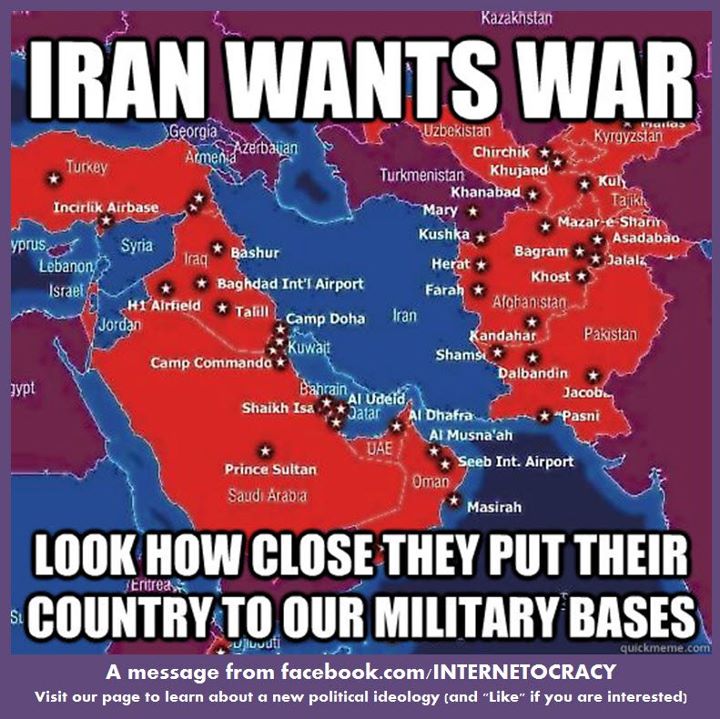
In the wake of Afghanistan, Iraq and Libya, what worries me now is that exactly the same reasons, with politicians mouthing exactly the same platitudinous “truths”, are being pushed to justify an increasingly inevitable strike against Iran.
Depressing as this all is, I would suggest that protesting each new, individual war is not the necessarily the most effective response. Just as the world’s markets have been globalised, so manifestly to the benefit of all we 99%-ers, have many other issues.
Unlike Dave Cameron, we need to apply some joined-up thinking. Global protest groups need to counter more than individual wars in Iraq, Afghanistan, Pakistan, Somalia, Libya, Sudan (North and South), Syria, Iran.….. sorry, I’m getting writer’s cramp just enumerating all the current wars.
Give me a while to overcome my moral spasm, and I shall return with a few suggestions about possible ways forward — 21st Century Pacifism; the New Stuff.
Talks in Sweden and Norway
Off on my travels again at the end of the week, with two keynotes at Scandinavian journalism conferences.
 I shall first be speaking at the Grav conference in Sweden on Friday 23 March.
 Topics under discussion will include everything from security and intelligence to the war on terror, civil liberties to ethics and media freedoms, government accountability to whistleblowing and Wikileaks.
On Saturday I travel on to Norway to speak at the SKUP conference to give a talk and also on Sunday morning to participate in a panel discussion about all things whistleblowing and Wikileaks. I gather that such discussions can get quite, um, lively.
I’m looking forward to an interesting and stimulating weekend.
The Extradition Farce — why the delay in reform?
Outrage continues to swell about the peremptory extradition of British citizens to face trial on tenuous charges abroad.
Thanks to the tireless campaigning of distraught family members, a growing anger in the UK press, and indignant questions and debates in Parliament — even our somnambulant MPs have roused themselves to state that Something Must be Done — the Extradition Act 2003 is now centre stage, and reform of the law will no doubt occur at some point.
As there is a growing consensus, why the delay? I have a theory, but first let’s review some of the most troubling recent cases.
 The case that really brought the issue to widespread public attention is the decade-long extradition battle of Gary McKinnon. With this sword of Damocles hanging over his head for so long, poor Gary has already effectively served a 10-year sentence, uncertain of his future and unable to work in his chosen profession. Thanks to the indefatigable campaigning of his mother, Janis Sharp, his case has received widespread support from the media and politicians alike.
Despite this the Home Secretary, Theresa May (who has recently been working so hard in Jordan to protect the rights of Abu Qatada), has dragged her feet abominably over making a decision about whether Gary should be extradited to the US to face a possible 70-year prison sentence — even though the UK investigation into his alleged crime was abandoned way back in 2002.
 Then there is the more recent case of student Richard O’Dwyer, wanted in the US even though he lives in the UK and has broken no British laws. He is facing a 10 year maximum security sentence if extradited. Once again, his mother, Julia, is tirelessly fighting and campaigning for her son.
Most recently, Chris Tappin, a retired businessman and golf club president, has been shipped off to a Texas high security penitentiary following what sounds like a US entrapment operation (a technique not legally admissable in UK courts), and faces a 35 year sentence if convicted.
 Despite having turned himself in, this elderly gent, who walks with the aid of a cane, is considered such a flight risk that he was last week denied bail. Once again, his wife Elaine has come out fighting.
My heart goes out to all these women, and I salute their tenacity and bravery. I remember living through a similar, if mercifully briefer, four months back in 1998 when the UK government tried and failed to extradite David Shayler from France to the UK to stand trial for a breach of the OSA. I remember with crystal clarity the shock of the arrest, the fear when he disappeared into a foreign legal system without trace, the anguish about his life in an alien prison.
 And I remember the frightening moment when I realised I had to step up and fight for him — the legal case, dealing with MPs and the endless media work, including the terror of live TV interviews. And all this when you are worried sick about the fate of a loved one. Shall I just say it was a steep learning curve?
In the wake of the recent extradition cases, there have been questions in Parliament, motions, debates, reviews (Download Review), and there is an ongoing push for an urgent need for reform. And no doubt this will come, in time.
So why the delay? Why not change the law now, and prevent McKinnon, O’Dywer and many others being sacrificed on the American legal altar — the concept of “judicial rendition”, as I have mentioned before.
Well, I have a theory, one derived from personal experience. The British media — most notably the Daily Mail — inveigh against the unilateral extradition of UK citizens to the USA’s brutal prison régime. There is also some concern about extradition to other European jurisdictions — usually on the fringes to the south and east of the continent, regions where the British seem to have a visceral fear of corrupt officials and kangaroo courts.
But what many commentators seem to miss is the crucial legal connection — the extradition arrangements that ensure Brits can be shipped off to the US and many other legal banana republics comparable legal systems to face outrageous sentences are, in fact, embedded within the Extradition Act 2003. This is the act that enshrined the power of the European Arrest Warrant, the the act that was rushed through Parliament in the midst of the post‑9/11 terrorism flap.
And, of course, this is the very act that is currently being used and abused to extradite Julian Assange to Sweden merely for police questioning (he has not even been charged with any crime), whence he can be “temporarily surrendered” to the delights of the US judicial process. Hmm, could this possibly be the reason for the delay in reforming the Act?
 Let me guess, you think this is beginning to sound a bit tin-foil hat? Surely it is inconceivable that the British politicians and judges would delay righting a flagrant legal wrong that manifestly results in innocent people being unjustly extradited and prosecuted? Surely our government would move swiftly to protect its citizens?
As I mentioned, my theory stems from personal experience. Once again delving into the mists of time, in 1997 David Shayler blew the whistle on the wrongful conviction on terrorist charges of two innocent Palestinian students, Samar Alami and Jawad Botmeh. Their lawyer, the excellent Gareth Peirce, was immediately on the case, but the UK government dragged its heels for a year. Why?
During that time, the UK government tried to have Shayler extradited from France to the UK to stand trial. Government lawyers were confident of victory and delayed a decision on the students’ appeal against their convictions until the whistleblower was safely incarcerated in HMP Belmarsh, awaiting trial.
Except it all went wrong, and the French freed Shayler for being manifestly a political whistleblower, which in their legal opinion was not an extradictable offence. Only at that point did the UK government lawyers begin to work with Peirce on the Palestinian case, details of which can be found here.
 So my theory is that the UK is dragging its feet about reforming the preposterous Extradition Act until it has Assange safely over in Sweden. However, they may be counting their chickens prematurely — and they should never, ever overlook the determination of the campaigning mother, in this case Christine Assange.
But in the meantime, while the UK continues to prostitute itself to the USA, how many more innocent people will have to suffer unjust and unjustifiable extradition?