I was live on RT as the conviction of Bradley Manning was announced:
RT interview as the conviction of Bradley Manning was announced from Annie Machon on Vimeo.
I was live on RT as the conviction of Bradley Manning was announced:
RT interview as the conviction of Bradley Manning was announced from Annie Machon on Vimeo.
Published on Consortium News, RT Op-Edge, and The Real News Network.
In a sensational article in a UK newspaper last weekend, the former head of the UK’s foreign intelligence gathering agency, MI6, appears to have broken the code of omertà around the fraudulent intelligence case used as the pretext for the Iraq war in 2003.
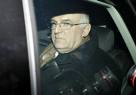 Sir Richard Dearlove, former head of MI6 and current Master of Pembroke College, Cambridge, contacted the UK’s Mail on Sunday newspaper to state that he had written his version of the (ab)use of intelligence in the run-up to the US/UK invasion of Iraq. With the long-awaited and much-delayed official Chilcot Enquiry into the case for war about to be published, Dearlove is obviously aware that he might be blamed for the “sexing up” of the intelligence, and that Teflon Tony Blair might once again shuffle off all responsibility.
You’ll no doubt have some vague recollection that, in the run-up to the 2003 Iraq War, the British government produced a couple of reports “making a case for war”, as Major General Michael Laurie said in his evidence to the enquiry in 2011: “We knew at the time that the purpose of the [September] dossier was precisely to make a case for war, rather than setting out the available intelligence, and that to make the best out of sparse and inconclusive intelligence the wording was developed with care.”
The first such report, the September Dossier (2002), is the one most remembered, as this did indeed “sex up” the case for war as the deceased Iraqi weapons inspector Dr David Kelly exposed. It also included the fraudulent intelligence about Saddam Hussein trying to acquire uranium from Niger. It was this latter claim that Colin Powell used to such great effect at the UN Security Council.

Also, just six weeks before the attack on Iraq, the “Dodgy” Dossier, based largely on a 12-year old PhD thesis culled from the Internet, but containing nuggets of raw MI6 intelligence — was presented by spy and politician alike as ominous premonitory intelligence.
Most memorably in the UK, it led to the bogus “Brits 45 minutes from Doom” front-page headline in Rupert Murdoch’s The Sun newspaper, no less, on the eve of the crucial war vote in Parliament.
Interestingly from a British legal position, it appears that Tony Blair and his spin doctor Alastair Campbell released this report without the prior written permission of the head of MI6, which means that they would appear to be in breach of the UK’s draconian secrecy law, the Official Secrets Act (1989).
Thus was made the dodgy case for war. All lies — millions of deaths and many more maimed, wounded, and displaced, yet no one held to account.
Subsequently, there was also the notorious leaked Downing Street Memo, where Sir Richard Dearlove was minuted as saying that the intelligence and facts were being fitted around the [predetermined war] policy.
On July 23, 2002 at a meeting at 10 Downing Street, Dearlove briefed Tony Blair and other senior officials on his talks with his American counterpart, CIA Director George Tenet, in Washington three days before.
In the draft minutes of that briefing, which were leaked to the London Times and published on May 1, 2005, Dearlove explains that George Bush had decided to attack Iraq and the war was to be “justified by the conjunction of terrorism and weapons of mass destruction.” While then-Foreign Secretary Jack Straw points out that the case was “thin,” Dearlove explains matter-of-factly, “the intelligence and facts are being fixed around the policy.”
 There is no sign in the minutes that anyone hiccuped — much less demurred — at ”making a case for war” and furthering Blair’s determination to join Bush in launching the kind of “war of aggression” outlawed by the post-world war Nuremberg Tribunal and the UN treaty.
The acquiescence of the chief spies helped their political masters mainline into the body politic unassessed, raw intelligence and forged documents, with disastrous consequences for the people of Iraq and the world.
Yet Dearlove long remained unrepentant. Even as recently as 2011, post-retirement and bloated with honours, he continued to deny culpability. When questioned about the Downing Street Memo during an address to the prestigious Cambridge University Union Society by the fearless and fearsomely bright student, Silkie Carlo, Dearlove tried grandiloquently to brush her aside.
But were the remarks in the Memo really “taken out of context” as Dearlove tried to assert? No – the text of the Memo was clear and explicit.
So Dearlove could potentially have saved millions of lives across the Middle East if he had gone public then, rather than now as he is threatening, with his considered professional opinion about the intelligence facts being fitted around a preconceived war policy.
Would it not be lovely if these retired servants of the crown, replete with respect, status and honours, could actually take a stand while they are in a position to influence world events?
Doing so now, purely to preserve his reputation rather than to preserve lives, is even more “ethically flexible” than you would normally expect of an average MI6 intelligence officer. Perhaps that is why he floated to the top of the organisation.
Dearlove is right to be worried about how both Chilcot and history will judge him. These intelligence failures and lies have been picked over and speculated about for years. They are an open secret.
But holding the gun of disclosure to the UK government’s head smacks of desperation. He is quoted as saying that he has no plans to breach the Official Secrets Act by publishing his memoirs. But by publishing an account of the run-up to the Iraq war, he would be still guilty of a breach of the OSA. It has been established under UK law that any unauthorised disclosure crosses the “clear bright line” of the law. And Dearlove seems well aware of this – his original plan was for his account to be made available after his death.
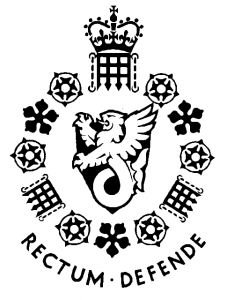 I can see why he would plan that – firstly he would not risk prosecution under the draconian terms of the OSA, but his account would, in his view, set the record straight and protect his reputation for posterity. A posthumous win-win.
The official motto of the UK spies is “Regnum Defende” — defence of the realm. Serving intelligence officers mordantly alter this to “Rectum Defende” — politely translated as watch your back.
Dearlove seems to be living up to the motto. He must be one very frightened old man to be contemplating such premature publication.
With credit and thanks to former CIA analyst, current truth-teller and general pain in the “regnum” to the intelligence establishment, Ray McGovern, and also Sander Venema for his elegantly classical reworking of the final image.
My latest interview on RT about the German intelligence agencies’ complicity in the PRISM surveillance programme:
Revealed: Germany partner of NSA, Merkel denies knowledge from Annie Machon on Vimeo.
Edward Snowden’s disclosures first revealed that the NSA had been spying on EU institutions; cue German anger.
Then it was revealed that Germany is seen as a Class 3 partner in surveillance by the USA. This means that they are not deemed by the NSA to be intelligence partners but rather targets — in the same way as China, Iraq, and Saudi Arabia. This means that on average half a billion German communications are hoovered up by the NSA every month. And this despite a strong constitution devised to prevent such excesses, as the memories of the Gestapo and the Stasi still resonate; cue German anger.
And now it appears that, despite their (unknown?) Class 3 status, the German intelligence services, the foreign BND and the domestic BfV, have themselves been main-lining off the NSA’s illegal PRISM programme; cue German.… political embarrassment.
With friends like the USA, who needs enemies?
As the old media propaganda battle inevitably heats up around the Edward Snowden case, I stumbled across this little American news gem recently. The premise being that potential whistleblowers are now deemed to be the new “insider threat”.
Well, the US spooks and their friends have already had a pretty good run through the “reds under the bed” of McCarthyism, political subversives, illegals, Muslims and “domestic extremists”, whatever the hell that really means legally. Now they’ve hit on another threatening category to justify yet further surveillance crackdowns. What’s in a name.….
Firstly, this is old news resurrected in the wake of the Edward Snowden disclosures to scare people anew. Way back in 2008 the US government wrote a report about “insider threats” and the perceived danger of the high-tech publisher Wikileaks and, in early 2010 the report was leaked to the very same organisation.
 In 2008 the US government strategy was to expose a Wikileaks source so that others would be deterred from using the conduit in future. Well that didn’t happen — Wikileaks technologically outpaced the lumbering, brutish might of the US and sycophantic Western intelligence agencies. The unfortunate Bradley Manning was exposed by an FBI snitch, Adrian Lamo, rather than from any technical failure of the Wikileaks submission system.
What did occur was a muscular display of global corporatism, with nation after nation capitulating to take down the Wikileaks site, but mirror sites survived that pointed to Switzerland (which has a strong tradition of direct democracy, self defence and free speech and which remains steadfastly independent from international diplomatic circle jerks the UN, NATO, and such like.
On top of that, all major financial channels stopped donations to Wikileaks — an act now been deemed to be manifestly illegal in some countries.
Now, in the wake of the Manning and Snowden disclosures, the US mainstream media appears, inevitably, to be trying to conflate the cases of known traitors with, you’ve guessed it, bona fide whistleblowers.
Cases such as Aldrich Ames and Robert Hanssen, who betrayed their countries by selling secrets to an enemy power — the Soviet Union — in an era of existential threat. They were traitors to be prosecuted under the US Espionage Act (1917) — that is what it was designed for.
This has nothing whatsoever to do with the current whistleblower cases and is just so much basic neuro-linguistic programming. *Yawn*. Do people really fall for that these days?
This is a tired old tactic much used and abused in the officially secret UK, and the USA has learned well from its former colonial master — so much for 1776 and the constitution.
However, in the CBS interview mentioned above it was subtly done — at least for a US broadcast — with the commentator sounding reasonable but with the imagery telling a very different story.
In my view this conflation exposes a dark hypocrisy at the heart of the modern military-security complex. In the old days the “goodies” and “baddies” were simplistically demarcated in the minds of the public: free West good; totalitarian East bad. This followed the mainstream propaganda of the day, and those who worked for the opposition — and the Soviet Union gave the US/UK intelligence axis a good run for its money — were prosecuted as traitors. Unless, of course, they emerged from the ruling class, when they were allowed to slip away and evade justice.
And of course many of us remember the scandal of the Russian spy ring that was exposed in 2010 — many individuals who had illegally been infiltrated into the US for decades. Yet, when they were caught and exposed, what happened? A deal was struck between the US and Russia and they were just sent home.
No such liberality is shown to true modern-day whistleblowers. Quite the opposite, with the UK and the US willing to breach all established diplomatic protocols to hunt down their quarry. This despite the fact that the whistleblowers are liberating information about the illegality of our own governments to empower all of us to act as informed citizens, and despite the fact that they are exposing global-level crimes.
 Bradley Manning and Edward Snowden have risked their lives to expose the fact that we are living under a global police state and that our military and intelligence agencies are running amok across the planet, with CIA kill lists, renditions, torture, wars, drone strikes and dirty tricks.
Yet the West is not officially at war, nor is it facing an existential threat as it did during the Second World War or the so-called Cold War. Despite this, the US has used the Espionage Act (1917) more times in the last 5 years than over the preceding century. Is it suddenly infested with spies?
Well, no. But it is suddenly full of a new digital generation, which has grown up with the assumption that the internet is free, and which wants to guarantee that it will remain free without Big Brother watching over their shoulders. Talented individuals who end up working for the spy agencies will inevitably be perturbed by programmes such as PRISM and TEMPORA. Lawyers, activists and geeks have been warning about this for the last two decades.
By 1911 the UK had already put in place not only the proto-MI5, but also then added the first Official Secrets Act (OSA) to prosecute real traitors ahead of the First World War. The UK updated the OSA in 1989 specifically to suppress whistleblowing. The US has learned these legal suppression lessons well, not least by shredding its constitution with the Patriot Act.
However, it has neglected to update its law against whistleblowers, falling back instead onto the hoary old 1917 Espionage Act — as I said before, more times in the past five years than over the last century.
This is indeed a war on whistleblowers and truth-tellers, nothing more, nothing less.
What are they so afraid of? Idealists who believe in the old democratic constitutions? The Universal Declaration of Human Rights and other such fuddy-duddy concepts?
Or could the real enemy be the beneficiaries of the whistleblowers? When the US government says that Manning or Snowden have aided the enemy, do they, could they, mean we the people?
The answer to that would logically be a resounding “yes”. Which leads to another question: what about the nation states — China, Russia, Iran — that we have been told repeatedly over the last few years are hacking and spying on us?
The phrase “pot and kettle” springs to mind. There are no goodies and baddies any more. Indeed, all that remains is outright and shocking hypocrisy.
Snowden has laid bare the fact that the US and its vassals are the most flagrant protagonists in this cyberwar, even as our governments tell us that we must give up basic human rights such as privacy, to protect us from the global threat of terrorism (while at the same time arming and funding our so-called terrorist enemies).
Yet whistleblowers who bravely step up and tell us our governments are committing war crimes, that we are being spied on, that we live under Orwellian surveillance, are now the people being prosecuted for espionage, not the “real” spies and certainly not the war criminals.
In the CBS interview, former US General Michael Hayden, ex-head of the CIA and NSA asked: “what kind of moral judgement does it take for someone to think that their view trumps that of two presidents, the Congress and Senate, the court system and 35,000 co-workers at the NSA?”
Er, perhaps someone who does not want to collude in the most stark examples of global war crimes and illegal surveillance? And perhaps someone who believes that the Universal Declaration of Human Rights was set up for a reason after the horrors of the Second World War?
When the rule of law breaks down, who is the real criminal?
What we are witnessing is a generational clash, not a clash of ideologies. The oldsters still be believe in the Cold War narrative (or even “cowboys and Indians”?) of goodies, baddies and existential threats. The digital generations have grown up in the wake of 9/11 and all the associated governmental over-reaction — war crimes go unreported and untried, real civil liberties are an historic artefact, and the global population lives under Big Brother surveillance. Why on earth is anyone, really, surprised when young people of honour and idealism try to take a stand and make a difference?
We should be more worried about our future if the whistleblowers were to stop coming forward.
Here is a recent interview I did for the Real News Network about the global and European fall-out from the Edward Snowden disclosures:
And here’s a version with the text.
For readers who have not yet signed up to my monthly newsletter, here is the excerpt about Edward Snowden from my June edition, with a little update at the end:
The Edward Snowden saga is riveting for me on so many levels.You’ll no doubt be aware of the case, unless you have been living in a cupboard for the last few weeks. Snowden is the brave young NSA contractor who has blown the whistle on a range of global surveillance programmes that the Americans and the Brits have developed over the last few years to fight the war on terrorism spy on all of us.
The sheer scale of his disclosures so far is incredible and has huge implications for what remains of our democratic way of life. Just today more information emerged to show that the NSA has been spying on key EU institutions — which might go some way to explaining why so much recent EU legislation appears to favour the interests of US corporatism over those of European citizens.…
Pundits have been calling him the most significant whistleblower since Daniel Ellsberg, who leaked the Pentagon Papers about the Vietnam war 40 years ago. But I would go further. In my view Edward Snowden is the most significant whistleblower in modern history because, while Ellsberg disclosed vital information, it was largely a matter that affected the Americans and the hapless Vietnamese. What Snowden has exposed, just to date, impacts all of us around the world.
Snowden has confirmed the darkest fears of legal experts, geeks and concerned global citizens about the sheer scale of the surveillance society we all now live under. Not only are our intelligence agencies running amok, they do so using the infrastructure of the global internet megacorps. What he has laid bare is the fact that we are all already living under full-blown fascism.
He played it so well with that early film stating very clearly his motivation to go public — to defend a way of life that he saw was under threat. He appears to have learned from the mistakes of previous whistleblowers. He chose a journalist who understands the issues and has the fire in the belly and the international profile to fight his corner. Glenn Greenwald is a fearless campaigning lawyer-turned-journalist who for years has been defending the work of Wikileaks, with the irony being that he is now the new Assange, being attacked, threatened and smeared for reporting the disclosures.
Of course, I and many other former whistleblowers have been swamped by the usual frenzied media tsunami, called up for interview after interview. For me this began just as I was about to turn in for the night at 11.30pm on 9th June, when RT rang me up asking for an urgent live interview just as the identity of Snowden was emerging across the world’s media. After a frantic 15 minutes sorting out the makeup and the tech (in that order, naturally), I was wide awake again and speaking on live TV. From that came a slew of other requests over the next few days, including many programmes on the BBC, Sky News, and multiple radio and newspaper interviews. I could barely find time to leave my phone and computer to get to the bathroom.… Then the wave receded for a few days before Snowden fled to Russia, when the whole cycle began again.
Reading about Snowden going on the run also brought back a number of personal memories for me. In 1997 I fled the UK with David Shayler only 12 hours ahead of his initial disclosures about MI5 criminality breaking in the UK media. We were pursued across Europe, and had a month literally on the run, followed by a year living in hiding in la France Profonde before David was arrested, pending extradition, at the request of the British government. He spent almost 4 months in a Paris prison before the French released him — their view being that he was a whistleblower, which was deemed to be a political offence for which France specifically does not extradite. We lived more openly in Paris for another two years, although David was trapped in France — had he travelled to another country the whole ghastly extradition process would have started again.
Well, there are worse places than France to be trapped in exile, but even so it was difficult for him. How much more so for Edward Snowden, whose options are more seriously constrained and who faces life in prison in the US if he is caught? Knowing the penalties he faces and being aware of the tracking capabilities and the ruthless disregard for the law and human rights of the modern US intelligence infrastructure, his bravery in exposing the global US surveillance state is truly breath-taking.
To finish, here is one of my recent Sky News interviews about the Edward Snowden case:
Sky TV interview on Snowden case from Annie Machon on Vimeo.
Addendum: today’s news told us that Bolivian President, Evo Morales’s official, diplomatically protected, plane have been barred from flying home from Moscow over much of Euro airspace, where he had been participating in high-level talks. The reason being that Edward Snowden might have been be on board. Morales was grounded in Austria and had to submit to a police search of the plane, against all diplomatic protocol. No Snowden was found, naturally.
I see this as a very clever move by persons unknown — testing exactly what the international response would be if Edward Snowden tries to fly out of Russia. And the Europeans, under undoubted pressure from the US, have fallen for it hook, line and sinker.
The US-Euro complicit patsies have been flushed out by this diplomatic scandal. Demonstrations are apparently already occurring against the French embassy in Bolivia. And this on the same day that the French President, Francois Hollande, used the Snowden disclosures to delay the rightly-maligned US-EU trade agreement.
So, even as the French use the Snowden disclosures for political advantage, they apparently refuse to assist the source. Which is unfortunate — my memory of French law is that whistleblowing is deemed a political act and the French specifically do not extradite for alleged political offences.
Perhaps the French constitution and law have changed since Sarkozy took France into NATO.…
First published on RT Op-Edge, with the slightly more circumspect title: “British police secretly operated outside democratic control for years”. Also on HuffPo UK.
In the wake of the global impact of the ongoing Edward Snowden saga, a smaller but still important whistleblower story flared and faded last week in the UK media.
Peter Francis revealed that 20 years ago he had worked as an undercover cop in the Metropolitan Police Force’s secret Special Demonstrations Squad (SDS) section. In this role, Francis stated that he was tasked to dig up dirt with which the Met could discredit the family of murdered black teenager, Stephen Lawrence and thereby derail their campaign for a full and effective police investigation into his death. The Lawrence family correctly believed that the original investigation had been fumbled because of institutional police racism at that time.
The fact that secret police were posing as activists to infiltrate protest groups will come as no shock after the cascade of revelations about secret policemen in 2011, starting with DC Mark Kennedy/environmental activist “Mark Stone”. Kennedy was uncovered by his “fellow” activists, and nine more quickly emerged in the wake of that scandal. This has resulted in an enquiry into the shadowy activities of these most secret officers, accusations that the Crown Prosecution Service suppressed key evidence in criminal trials, and a slew of court cases brought by women whom these (predominantly male) police officers seduced.
But the disclosures of Peter Francis plumb new depths. In the wake of the Stephen Lawrence murder, many left-wing and anti-Nazi groups jumped on the bandwagon, organising demonstrations and provoking confrontations with the far-right British National Party. There was a clash near the BNP’s bookshop in south London in 1993. So, sure, the Met Police could potentially just about argue that the undercover officers were trying to gather advance intelligence to prevent public disorder and rioting, although the sheer scale of the operation was utterly disproportionate.
However, what is completely beyond the Pale is this apparent attempt to smear the traumatised family of a murder victim in order to derail their campaign for justice.
The role of undercover cops spying on their fellow citizens who are politically active is distasteful in a democracy. And the fact that, until the original scandal broke in 2011, the reconstituted SDS continued to target peace and environmental protest groups who offered no threat whatsoever to national security is disgraceful — it smacks of the Stasi in East Germany.
To make matters even worse, when details emerged two years ago, it became apparent that the SDS Version 2.0 was operating outside the formal hierarchy of the police, with what little democratic oversight that would provide. In fact, it emerged that the SDS been renamed the National Public Order Intelligence Unit (NPOIU) and had for years been the private fiefdom of a private limited company — the Association of Chief Police Officers (ACPO). Within a notional democracy, this is just gobsmacking.
So how did this mess evolve?
From the late 19th century the Metropolitan Police Special Branch investigated terrorism while MI5, established in 1909, was a counter-intelligence unit focusing on espionage and political “subversion”. The switch began in 1992 when Dame Stella Rimington, then head of MI5, effected a Whitehall coup and stole primacy for investigating Irish terrorism from the Met. As a result MI5 magically discovered that subversion was not such a threat after all – this revelation only three years after the Berlin Wall came down – and transferred all its staff over to the new, sexy counter-terrorism sections. Since then, MI5 has been eagerly building its counter-terrorism empire, despite this being more obviously evidential police work.
Special Branch was relegated to a supporting role, dabbling in organised crime and animal rights activists, but not terribly excited about either. Its prestige had been seriously dented. It also had a group of experienced undercover cops – known then to MI5 as the Special Duties Section – with time on their hands.
It should therefore come as little surprise that ACPO came up with the brilliant idea of using this skill-set against UK “domestic extremists”. It renamed the SDS as the NPOIU, which first focused primarily on potentially violent animal rights activists, but mission creep rapidly set in and the unit’s role expanded into peaceful protest groups. When this unaccountable unit was revealed it rightly caused an outcry, especially as the term “domestic extremist” is not recognised under UK law, and cannot legally be used as justification to aggressively invade an individual’s privacy because of their legitimate political beliefs and activism.
So, as the police become ever more spooky, what of MI5?
As I mentioned, they have been aggressively hoovering up the prestigious counter-terrorism work. But, despite what the Americans have hysterically asserted since 9/11, terrorism is not some unique form of “eviltude”. It is a crime – a hideous, shocking one, but still a crime that should be investigated, with evidence gathered, due process applied and the suspects on trial in front of a jury.
A mature democracy that respects human rights and the rule of law should not intern suspects or render them to secret prisons and torture them for years. And yet this is precisely what our spooks have been doing – particularly when colluding with their US counterparts.
Also, MI5 and MI6 have for years operated outside any realistic democratic oversight and control. Until this year, the remit of the Intelligence and Security Committee in Parliament has only covered the policy, administration and finance of the spies. Since the committee’s inception in 1994 it has repeatedly failed to meaningfully address more serious questions about the spies’ role, and has been repeatedly lied to by senior spies and police officers.
The spooks are effectively above the law, while at the same time protected by the draconian Official Secrets Act. This makes the abuses of the NPOIU seem almost quaint. So what to do? A good first step might be to have an informed discussion about the realistic threats to the UK. The police and spies huddle behind the protective phrase “national security”. But what does this mean?
The core idea should be safeguarding the nation’s integrity. A group of well-meaning environmental protesters should not even be on the radar. And, no matter how awful, the occasional terrorist attack is not an existential threat to the fabric of the nation in the way of, say, the planned Nazi invasion in 1940. Nor is it even close to the sustained bombing of government, infrastructure and military targets by the Provisional IRA in the 1970s-90s.
Only once we understand the real threats can we as a nation discuss the necessary steps to take to protect ourselves effectively; what measures should be taken, what liberties occasionally and legally compromised, and what democratic accountability exists to ensure that the security forces do not exceed their remit and work within the law.
It is only by going through this process that can we ensure such scandals as the secret police will remain firmly in the past. And in the wake not only of Peter Francis’s confessions but the sheer scale of the endemic electronic surveillance revealed by Edward Snowden, this long-overdue national debate becomes ever more necessary.
As the news broke that NSA whistleblower, Edward Snowden, had fled Hong Kong for Russia today, I was invited on RT to do an interview. At that point few people had any idea of his plans. However, it appears that the USA had charged Snowden under the Espionage Act 1917 (no surprises) and then asked Hong Kong to arrest and hold him, pending extradition. Equally unsurprisingly, Hong Kong found mistakes in the paperwork and used the opportunity to complain about US spying activity in its territory.
Anyway, this gave Snowden, with apparently the help of the whistleblowing publishing site Wikileaks, the chance to leave the country and fly to Russia, with the reported final destination being Ecuador.
So here’s my initial take on the situation:
Snowden case shows US is bully boy of world — RTTV interview from Annie Machon on Vimeo.
 OK, this has to be a bleeding obvious point, but I feel moved to make it anyway.
After the brutal Woolwich murder of Drummer Lee Rigby, there were calls from the British securocrats to resurrect the discredited Communications Data bill — aka the Snoopers’ Charter. Capitalising on the nation’s shock, they believed it was the right time to push through a particularly draconian piece of legislation, as I wrote at the time.
The aim of the Snooper’s Charter is to store all the meta-data of our communications in the UK, which means they can potentially be used as evidence against us at some nebulous future point if the legal goalposts shift — as they seem to be doing at an alarming rate these days.
Not only are activists now being called “domestic extremists” or “terrorists”, but the concept of secret courts seems to be metastasising at an alarming rate — it is not longer just a concept used in immigration and now civil courts, it has reached the giddy heights of the Supreme Court in the UK, with the secret hearings around the Iranian Mellat bank. Top UK Law Lord Neuberger was recently quoted, in the Daily Mail of all places, as saying that secret justice is no justice.
But I digress. Post-Woolwich, the securocrats were overtaken by events. The courageous Edward Snowden blew the whistle on the fact that the NSA and its pals like GCHQ are already hoovering up all our electronic communications, as well as spying on top politicians. As a result the securocrats have gone to ground, but no doubt they will try to slither out again soon.
Or perhaps not — today still further surveillance horrors emerged as a result of the Snowden disclosures: the UK listening post GCHQ, which has long had an unhealthily incestuous relationship with the NSA, has gone to the next level with the “Total Mastery of the Internet” programme, codenamed “TEMPORA”.
The reported capabilities of TEMPORA are huge — GCHQ can tap into all the information flowing through the trans-Atlantic fibre optic cables and beyond. It is truly sucking on the fire hydrant of information
This should be gobsmacking news, but the concept was already reported in The Register 4 years ago. The trouble is, nobody really cared then or just thought it was a bunch of geeks being paranoid. Now this is global news thanks to the brave actions of a whistleblower.
One has to wonder if the UK government is so keen to ram the Snoopers’ Charter into law as a retrograde justification for the endemic PRISM and TEMPORA snooping that has already been going on for years? And let’s not forget the old prototype snooping programe, ECHELON
As a leading European privacy campaigner recently wrote, by the year 1215 British barons had more basic rights under the Magna Carta than we modern day serfs can possibly aspire to now.
How can we be going backwards, so fast?
O tempora, o mores indeed.…. some classicist, somewhere in the bowels of the British intelligence agencies, is having a laugh.
I have held back from writing about the Edward Snowden NSA whistleblowing case for the last week — partly because I was immersed in the resulting media interviews and talks, and partly because I wanted to watch how the story developed, both politically and in the old media. The reaction of both can tell you a lot.
That does not mean that I did not have a very positive response to what Snowden has done. Far from it. The same night the story broke about who was behind the leaks, I discussed the implications on an RT interview and called what he did Whistleblowing 2.0.
Why did I say that? Well, it appeared from his initial video interview with The Guardian that he had learned from previous whistleblowing cases: he had watched the media and carefully chosen a journalist, Glenn Greenwald, with a good track record on the relevant issues who would probably fight his corner fearlessly; his information clearly demonstrated that the intelligence agencies were spinning out of control and building surveillance states; he carefully chose a jurisdiction to flee to that might have the clout to protect him legally against the wrath of an over-mighty USA; and he has used his internet and media savvy to gain as much exposure and protection as quickly as possible.
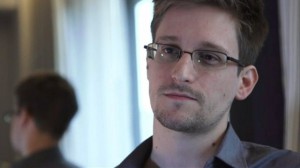 Plus, he has been incredibly brave, considering the draconian war on whistleblowers that is currently being waged by the American administration. There have been three other NSA whistleblowers in recent years, all also talking about endemic surveillance. All have paid a high personal price, all displayed great bravery in the face of adversity yet, sadly, none has achieved the same level of international impact. Were we just deaf to their warnings, or has Snowden played this better?
I think a bit of both. He’s a geek, a young geek, he will have seen what happened to other whistleblowers and appears to have taken steps to avoid the same pitfalls. He has gone public to protect his family and prevent harm to his former colleagues in any ensuing witch-hunt. And he has fled the country in order to remain at liberty to argue his case, which is key to keeping the story alive for more than a week in the gadfly minds of the old media. I know, I’ve been involved in the same process.
He has blown the whistle to protect an American way of life he thinks “worth dying for”. Yet he has broadened out the issues internationally — what happens in America impacts the rest of the world. This, in my view, is crucial. I have been writing for years that the US is increasingly claiming global legal hegemony over the entire internet, as well as the right to kidnap, torture and murder foreigners at will.
The Patriot Act has not only shredded the US constitution, it also now apparently has global reach for as long as our craven governments allow it to. Now we know that this is not some abstract concept, theory or speculation — we are all potentially being watched
Edward Snowden argued his case very effectively in a live chat on The Guardian newspaper website. It became clear that he is indeed a new generation of whisteblower. This is not someone who witnessed one crime and immediately felt he had to speak out. This is a technical expert who watched, over time and with dismay, the encroaching Big Brother surveillance state that is taking over the world via the NSA and its clones.
He is young, he had faith that a new government would mean change, but in the end felt compelled to take considered action when he witnessed the unaccountable mission creep, the limited and ineffectual oversight, and the neutered politicians who rush to reassure us that everything is legal and proportionate when they really have no idea what the spy agencies get up to.
In both the US and the UK the spies repeatedly get away with lying to the notional oversight bodies about mistakes made, rules bent, and illegal operations. Former senior CIA analyst, Ray McGovern, has catalogued the US lies, and here are a few home-brewed British examples. The internet companies have also been wriggling on the hook over the last week.
Snowden appears to be very aware not only of potential state level surveillance but also the global corporatist aspect of the subversion of the basic companies most people use to access the internet — Google, Facebook, Microsoft, Yahoo, Apple, Skype et al. A few pioneers have been discussing the need to protect oneself from such corporatist oversight for years, and such pioneers have largely been ignored by the mainstream: they’re “just geeks” they are “paranoid”, “tin foil hat” etc.
Edward Snowden has laid bare the truth of this globalised, corporatist Big Brother state. From his public statements so far, he seems very alive to the international aspects of what he is revealing. This is not just about Americans being snooped on, this affects everybody. We are all subject to the brutal hegemony that US securocrats and corporations are trying to impose on us, with no rights, no redress under the law.
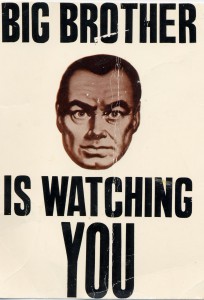 We have already seen this with the illegal US state take-down of Kim Dotcom’s secure cloud service, Megaupload, with the global persecution of Wikileaks, with Obama’s war on whistleblowers, with the NDAA, with the asymmetric extradition cases, with the drone wars across the Middle East and Central Asia.…. where to stop?
Snowden, through his incredible act of bravery, has confirmed our worst fears. It is not just corporations that have gone global — surveillance has too. And now, thankfully, so too are whistleblowers.
What troubles me somewhat is the way that the old media is responding — even The Guardian, which broke the story. Glenn Greenwald is an excellent, campaigning journalist and I have no doubt whatsoever that he will fight to the wire for his source.
However, the newspaper as an entity seems to be holding back the free flow of information. Charitably, one could assume that this is to maximise the impact of Snowden’s disclosures. Less charitably, one could also see it as a way to eke out the stories to maximise the newspaper’s profits and glory. Again, it’s probably a bit of both.
However, I do not think this will ultimately work in the best interests of the whistleblower, who needs to get the information out there now, and get the whole debate going now.
Plus, today it was reported that a D‑Notice had been issued against the UK media last week. I have written before about this invidious self-censorship with which the British media collaborates: senior editors and senior military personnel and spooks meet to agree whether or not stories may act against “national security” (still a legally undefined phrase), and ban publications accordingly. And this is “voluntary” — what does that say about our press holding power to account, when they willingly collude in the suppression of information?
Plus, some of the key journalists at The Guardian who were involved in the Wikileaks stitch-up are also now pecking away at the Snowden story. The old media are still continuing to act as a bottleneck of the free flow of information from whistleblowers to the public domain. In the post-Wikileaks era, this is a retrograde step. It is not for them to assess what the public needs to know, nor is it down to them to analyse and second-guess why any whistleblower is doing what they are doing.
As Edward Snowden stated: “The consent of the governed is not consent if it is not informed”.
The whistleblower behind last week’s PRISM leaks dramatically went public last night. Edward Snowden gave an interview to Glenn Greenwald of The Guardian explaining calmly and cogently why he chose to expose the NSA’s endemic data-mining. An immensely brave man.
Here is an interview I did about the case last night for RT:
Published on www.politics.co.uk, and Huffington Post UK.
Following the awful murder of Drummer Lee Rigby in Woolwich last week, the political securocrats who claim to represent the interests of the British intelligence services have swung into action, demanding yet further surveillance powers for MI5 and MI6 “in order to prevent future Woolwich-style attacks”.
As I’ve written before, it was heartening that the UK Prime Minister said in the aftermath of the attack that there would be no knee-jerk security reaction. However, that has not deterred certain intelligence sock-puppets from political opportunism — they stridently call for the resurrection of the draft Communications Data Bill that was earlier this year kicked into the long grass. If the hawks are successful, the new law would have implications not only for our freedoms at home, but also for our policy and standing abroad.
Recently the civil liberties camp acquired a surprising ally in this debate, with MI5 unexpectedly entering the fray. And rightly so. There is absolutely no need for this new legislation, the requisite powers are already in place. Senior security sources have argued that those citing the Woolwich attack to promote the snoopers’ charter are using a “cheap argument”.
As I said in this recent BBC radio interview, all the necessary laws are already in place for MI5 either to passively monitor or aggressively investigate persons of interest under the original terms of IOCA (1985) and updated in the Regulation of Investigatory Powers Act (RIPA 2000).
There now appears to be little doubt that the two Woolwich suspects were well and truly on the MI5 radar. It has been reported that they had been targets for at least 8 years and that Michael Adebolajo had been approached to work as an agent by MI5 as recently as 6 months ago.
One of his friends, Abu Nusaybah, recorded an interview for BBC’s Newsnight programme last week, only to be arrested by counter-terrorism police immediately afterwards. He stated that Adebolajo had been tortured and threatened with rape after his arrest in Kenya en route to Somalia, and that this treatment may have flipped him into more violent action. Indeed, the tale gets ever murkier, with reports yesterday stating that Adebolajo was snatched by the SAS in Kenya on the orders of MI5.
Other information has since been released by the organisation CagePrisoners indicating that Adebolajo’s family and friends had also been harrassed to pressurize him into reporting to MI5.
All of which obviates the early claims that Adebolajo was either a “lone wolf” or a low-priority target. It certainly indicates to me that MI5 will have at the very least been monitoring Adebolajo’s communications data, especially if they were trying to recruit him as a source. If that indeed turns out to have been the case, then without doubt MI5 will also have been intercepting the content of his communications, to understand his thinking and assess his access. Anything less would have been slipshod — a dereliction of duty — and all this could and should have been done under the existing terms of RIPA.
So what are the chances of some real oversight or answers?
If we’re talking about an independent inquiry, the chances are slim: the Inquiries Act (2005) passed little noticed into law, but it means that the government and the department under investigation can pretty much determine the scope and terms of the inquiry to which they are subject.
However, might we nail the flag of hope to the mast of the Intelligence and Security Committee of Parliament (ISC) — the committee tasked with overseeing the work of the UK intelligence agencies? The new DG of MI5, Andrew Parker, has already submitted a written report about Woolwich and will be giving evidence to the ISC in person next week about whether MI5 missed some vital intelligence or dropped the ball.
Th ISC of Parliament was established as part of the Intelligence Services Act (1994) — the law that finally brought MI6 and GCHQ under the umbrella of notional democratic oversight. MI5 had already come into the legal fold with the Security Service Act (1989).
As I have written before, initially the ISC was a democratic fig-leaf — its members were appointed by the PM not Parliament, it reported directly to the PM, and its remit only covered the policy, finance and administration of the UK’s intelligence agencies.
Until this year the ISC could not investigate operational matters, nor could it demand to see documents or question top spooks under oath. Indeed, it has been well reported that senior spies and police have long evaded meaningful scrutiny by being “economical with the truth”.
Former MI5 DG Sir Stephen Lander in 2001 said “I blanche at some of the things I declined to tell the committee early on”; a more recent DG, Sir Jonathan Evans, had to admit in 2008 that MI5 had lied about its involvement in torture; and Lord Blair, former Commissioner of the Metropolitan Police, had to apologise in 2008 for misleading the ISC about the number of thwarted terrorist attacks on his watch.
However the current Chair of the ISC, Sir Malcom Rifkind, has pursued a more muscular oversight role. And it seems he has at least won some battles. The one good element to have come out of the contentious Justice and Security Act (2013) appears to be that the ISC has more direct accountability to Parliament, rather than just to the PM (the devil is expressed in the detail: the ISC is now “of” Parliament, rather than “in” Parliament…).
Somewhat more pertinently, the ISC can now investigate operational matters, demand papers and witnesses, and it appears they now have a special investigator who can go and rummage around the MI5 Registry for information.
It remains to be seen how effective the ISC will realistically be in holding the intelligence agencies to account, even with these new powers. However, Sir Malcolm Rifkind has good reason to know how slippery the spies can be — after all, he was the Foreign Secretary in 1995/6, the years when MI6 was funding Al Qaeda associates to assassinate Colonel Gaddafi of Libya. The attack went wrong, innocent people were killed and, crucially, it was illegal under UK law, as MI6 had not requested the prior written permission for such a plot from the Foreign Secretary, as required under Section 7(1) of the aforementioned ISA (1994). Rifkind has always claimed that he was not told about the plot by MI6.
So, in the interests of justice let us hope that the Rifkind and the other members of the ISC fully exercise their powers and that MI5’s new DG, Andrew Parker is somewhat more frank about the work of his agency than his predecessors have been. It is only through greater honesty and accountability that our intelligence agencies can learn from the mistakes of the past and better protect our country in the future.
Yesterday I gave an interview to BBC Radio Ulster about the security fall-out of the Woolwich murder and the cynical political opportunism of those calling, inevitably, for greater powers for the spies and a reintroduction of the proposed Communuications Data Bill, dubbed the “snoopers’ charter”.
The brutal murder in Woolwich last week of Drummer Lee Rigby rightly caused shock and outrage. Inevitably there has been a media feeding frenzy about “terrorist” attacks and home-grown radicalisation. British Prime Minister, David Cameron, felt it necessary to fly back from a key meeting in France to head up the British security response.
One slightly heartening piece of news to emerge from all the horror is that the PM has stated, at least for now, that there will be no knee-jerk security crack-down in the wake of this killing. Sure, security measures have been ramped up around military bases in the UK, but cynical calls from the securocrats to reanimate a proposed “snoopers’ charter”, aka the draft Communications Data Bill, have for now been discounted. And rightly so — MI5 already has all the necessary powers to monitor suspects.
However, there does still seem to be a politically disingenuous view about the motivation behind this murder. Yet the suspects themselves made no secret of it — indeed they stayed at the scene of the crime for twenty minutes apparently encouraging photos and smart phone recordings in order to get across their message. When the police armed response team finally arrived, the suspects reportedly charged at the police brandishing knives and possibly a gun. They were shot, but not fatally. This may have been attempted “suicide by cop” — delayed until they had said their piece.
This does not strike me as the actions of “crazed killers” as has been reported in the media; rather it reminds me of the cold and calculated actions of Norwegian mass murderer, Anders Breivik. The Woolwich murder was designed to maximize the impact of the message in this social media age.
And the message being? Well, it was indeed captured on smart phone and sent out to the world. The killers clearly stated that this was a political action designed to highlight the gruesome violence daily meted out across North Africa, the Middle East, and Central Asia as a result of the western policy of military interventionism.
This manifests in a variety of ways: violent resistance and insurgency against puppet governments as we see in Iraq; internecine civil war in countries such as post-NATO intervention Libya; covert wars fought by western proxies, as we see in Syria; or overt attacks in Yemen, Somalia, Afghanistan and Pakistan, where US and UK controlled drones target militants named for assassination on presidentially-approved CIA kill lists with the resulting collateral murder of community gatherings, children and wedding parties.
All this does not justify the appalling murder in Woolwich, and the perpetrators must face justice for the crime. However, it does go some way to explaining why such an atrocity occurred, and we as a society need to face up to the facts or this will happen again.
Saying this does not make me an apologist for terrorism, any more than it did journalist Glenn Greenwald — a writer who has had the journalistic attack dogs unleashed on him for similar views. Beyond the group-think denialism within the Washington Beltway and the Westminster Village, the cause and effect are now widely-recognised. Indeed, in her 2010 testimony to the Chilcot Inquiry about the Iraq War, former head of MI5 Eliza Manningham-Buller said precisely the same thing — and I don’t think anyone would dare to label her “an apologist for terrorism”.
The seed of Islamic extremism was planted by western colonialism, propagated by the 1953 CIA and MI6 coup against President Mossadegh of Iran, watered by their support for a fledging Al Qaeda in the 1980s Afghan resistance to the Soviet invasion, and is now flourishing as a means both of violently attempting to eject western occupying forces from Muslim countries and gaining retribution against the West.
We need to face up to this new reality. The brutal murder of this soldier may be a one-off attack, but I doubt it. Indeed, similar attacks against French soldiers in Toulouse occurred last year, and this weekend there has already been what appears to be a copy-cat attack against a soldier in Paris.
In this endemic surveillance society terrorist groups are all too aware of the vulnerabilities inherent in large-scale, co-ordinated attacks, the planning of which can be picked up by sigint or from internet “chatter”. Much simpler to go for the low-tech atrocity and cynically play the all-pervasive social media angle for maximum coverage.
The UK media has reported that the Woolwich suspects have been on the British intelligence radar for the last 8 years, but MI5 failed to take prompt action. The inevitable government enquiry has been promised, but the fall-back defensive position, already being trotted out by former spies and terrorism experts across the media is that the security services are never going to be in a position to accurately predict when every radicalised person might “flip” into violence and that such “lone wolf” attacks are the most difficult to stop.
As more news emerges, this is looking increasingly disingenuous. Reports have emerged that one of the suspects, Michael Adebolajo, was approached to work as an agent for MI5 half a year ago, apparently after he had been arrested and assaulted by police in Kenya. This may be another example of the security services’ failed Prevent initiative that seems to be causing more harm that good within the young British Muslim community.
This story has been compounded by the recent intriguing arrest of one of Adebolajo’s friends, the self-styled Abu Nusaybah, immediately after he had finished recording an interview about this for the BBC’s Newsnight programme. The Metropolitan Police Counter-Terrorism Command swooped at the Beeb and arrested the man on terrorism charges: he has now disappeared into the maw of the legal system.
The only long-term and potentially effective solution is to address the fundamental issues that lead to Islamic violence and terrorism and begin negotiations. The UK, at least, has been through this process before during the 1990s, when it was attempting to resolve the civil war in Northern Ireland. Indeed my former boss, Eliza Manningham-Buller, stated as much during a BBC lecture in 2011, saying that the US and UK governments need to negotiate with Al Qaeda to reach a political settlement.
Over the last 20 years, Al Qaeda has consistently demanded the removal of the western (predominantly US) military presence from the Middle East. Since the 9/11 attacks our political elites and media have equally consistently spun us the line that Al Qaeda carries out attacks because it “hates our way of life, hates our freedoms”.
Unless our governments acknowledge the problems inherent in continued and violent western interventionism, unless they can accept that the war on terror results in radicalisation, “blowback” and yet more innocent deaths, and until they admit that negotiation is the only viable long-term solution, we are all condemned to remain trapped in this ghastly cycle of violence.
