A recent interview on RTTV about the ongoing civil war in Libya following the NATO invasion last year:
Category Archives: Interviews
The Real News Network Interview on Whistleblowing
Part One of my recent interview on the excellent, independent and fearless Real News Network:
Interview for the Release newsletter, “TalkingDrugs”
 An interview I did on behalf of LEAP this week for the newsletter of the UK campaign, Release.
Release, run by the indefatigable Niamh Eastwood, does excellent work providing legal advice about drug issues, and campaigning for fairer and more compassionate drug laws.
The interview appeared in the campaign’s newsletter, “TalkingDrugs”.
Here’s the link, and here’s the text:
Q1 What led you into thinking that current drug policies on illicit drugs were failing?
My journey began when I was working as an intelligence officer for MI5 in the 1990s. One of my roles was investigating terrorist logistics and working closely with UK Customs. I learned then that trying to stop the flow of illicit material into the UK (whether drugs, weapons, or people) is like looking for a needle in the proverbial haystack. Plus there is a huge overlap between the funding of organised crime and terrorist groups.
Over the last decade I have become a writer, commentator and public speaker on a variety of inter-connected issues around intelligence, the war on terror, whistleblowers, policing, and civil liberties. To me, the war on drugs meshes very closely with all these topics. Three years ago I was approached by LEAP to become a speaker, and then in March this year I became a member of the international board and also the Director of LEAP Europe in order to consolidate the organisation’s work here.
Q2 Do you think that there are barriers to police officers being honest about the effectiveness of their actions to combat the trade in illicit drugs and is the greater disquiet amongst those involved in law enforcement about current policies than is popularly perceived ?
Yes, absolutely, and it’s not just amongst the police but also the wider law enforcement community.
LEAP supporters, approaching 100,000 in over 90 countries around the world, include judges, lawyers, prison governors, customs and intelligence officers, and former drug czars. Within all these professions there is a tacit understanding that you toe the conventional line. In my experience, most people go into this type of work hoping not only to have an interesting job, but also to do some good and make a difference. Many then see the social fall-out, or that friends, family or community are affected by the drug wars, and many serving officials do question what it is all about and what it is really achieving.
However, they are there to do a job, which is upholding and applying the law. The cultural pressure within such groups can make it extremely difficult on many levels for them to speak out.
Any change to the international and national drug laws will have to come from the politicians within the UN and nationally. LEAP increasingly contributes to the political debate and is building a groundswell of support internationally. Most people today will know someone who has at least tried a currently illegal drug. They also instinctively know this is mere social experimentation, relaxation or, at worst, a health problem. And penalisation, imprisonment and a criminal record exacerbates rather than helps the situation.
Q3 Does the policing of drug possession impact the effectiveness of policing generally and what benefits do you think could stem from ceasing to use law enforcement to attempt to discourage drug use?
There are multiple strands to this issue: the diversion of police resources, the additional crime caused by prohibition that is not dealt with successfully, the diversion of resources from harm reduction programmes, the criminalisation of what are essentially health issues, and the disrepute that results for law enforcement.
The policing of drug possession takes away vast resources from investigating other crimes such as burglary, rape and murder. Yet it is largely pointless – those with a drug dependency need health interventions, and there will always be replacements for any low-level dealers who are arrested and imprisoned. If you arrest and convict a rapist, he will not be on the streets committing more rapes; but if you catch a drug dealer, you just create a job vacancy for which many will compete in ever more violent ways for a slice of an incredibly lucrative market.
The UK anti-prohibition advocacy group, Transform, estimates that even if just cannabis were legalised in the UK, an additional $1.6 billion would flow into the British economy every year. While tax raised on a controlled and regulated cannabis trade is predicted to provide the bulk of this ($1.2 billion), $170 million would be saved from law enforcement, $155 million from the justice system, and $135 million from the prison system.
In the current economic situation, can the UK afford not to consider alternatives to the current drug war?
Also, as we have seen since the decriminalistion laws in Portugal since 2001 and Switzerland since 1994, the “peace dividend” by ending the war on drugs would not only see a drop in property crimes (about 50% of which are committed to fund drug dependencies), it could also be used to finance and extend harm reduction programmes. As we have seen in the case of tobacco across the West, we do not need to ban a substance to reduce its use; education and treatment are far more effective.
Finally, illegal drugs are available to anyone who wants to buy them on the streets of the UK. The increasing militarisation of the police to fight the war on drugs, the breakdown of civil liberties for the same reason (mirroring the war on terror), and the widespread flagrant flouting of the drug laws by large numbers of the population, thereby “making an ass of the law”, has led to a breakdown of trust and respect between the police and the policed. One of LEAP’s aims is to rebuild this trust, this social contract.
Q4 The impact on the safety of law enforcement personnel of the ‘war on drugs’ should be an issue for other membership organisations representing the sector, will you be reaching out to them to encourage campaigning on the issue?
Safety is certainly an issue, although we have been more fortunate in Europe than our colleagues in the USA, where the more prevalent gun culture leads to many more law enforcement deaths. That said, gang violence is on the rise across Europe where organised crime gangs fight increasingly violent turf battles.
Mexico has been one of the worst hit countries in the world. Since the ramping up of the war on drugs almost six years ago, over 62,000 men women and children have been tortured and murdered in that country, and many of them had no involvement whatsoever in the drugs trade. In fact, LEAP USA has just successfully participated in the Mexican Caravan for Peace, a group of activists and families highlighting the tragedy, that toured across the USA for a month to raise awareness and finished with a rally in Washington last week.
The increasing violence of the drugs trade and the militarisation of the response should be of concern to all law enforcers, membership organisations and allied groups working in the drugs sector. We need to think urgently about how to avoid a similar spiral of violence in Europe. LEAP is happy to reach out to such organisations to develop a more humane solution.
Q5 How would you like to see LEAP in Europe develop and will you be looking to lobby European policy makers in Brussels?
There are already LEAP speakers across most European countries. We in LEAP see the organisation’s primary goal as educational. We shall be working to build up speaking engagements for a wide variety of groups and audiences, including the political sector, as well as strengthening our media exposure. We recognise the valuable work Release and other NGOs and advocacy groups are already doing across Europe, and hope that you will see that we offer a unique voice and pool of expertise that can be used to strengthen your work.
It is wonderful that so many organisations and indeed governments around the world (particularly in Europe and Latin America) are now focusing on exploring alternatives such as decriminalistion and harm reduction programmes. Based on our professional experience, LEAP argues that we need, at very least, to consider the next logical step in the chain: controlled regulation of the drug market as we currently do with alcohol and tobacco.
Decriminalisation may help to reduce the harm for the drug users, but leaves the drug trade in the hands of increasingly violent global organised crime networks. Only by removing the profit motive from this illicit trade can we end the involvement of the criminal element and all the attendant violence, and work to make the world safer for all.

Interview about Iran on The Real News Network
Following on from the article former CIA analyst, Ray McGovern, and I co-authored last month about the possible “fixing” of intelligence around Iran, here is a subsequent interview we did for The Real News Network:
The Lindmo Show, Norway
Following on from my talk at the Norwegian SKUP investigative journalism conference in March, I was invited onto the Anne Lindmo Show in Norway on 4 May.
Anne is one of the most famous and respected journalists in Norway, and her chat show is extremely popular on prime time NRK TV on Friday nights. We had a lively session discussing the world of spying, what it was like to blow the whistle and go on the run, and the personal price that has to be paid.
Here’s the link to the whole show, and here’s my segment:
Lindmo interview on Norwegian TV from Annie Machon on Vimeo.
The Report on BBC Radio 4 — the Death of Gareth Williams
A look at the forensic and police failures around the investigation of the still inexplicable death of intelligence officer, Gareth Williams, in London in 2010.
Here’s the link.
The Gareth Williams Inquest
What a mess, what a cover-up. The inquest into the sad, strange death of Gareth Williams concluded yesterday, with the coroner raising more questions than she was able to answer.
It was also patently obvious that both MI6 and the Metropolitan Police Counter-Terrorism Squad (SO15) hampered the investigation, for the inevitable reasons of “national security”.
When will MI6 realise that it is not above the law?
My heart goes out to Gareth’s family.
A blast from the past
How strange to stumble across this article in the Guardian newspaper yesterday, which describes a journalist’s justifiably paranoid experiences interviewing David Shayler and me back in 2000 while writing an article for Esquire magazine.
The author, Dr Eamonn O’Neill, now a lecturer in journalism at Strathclyde University, spent a few days with us in London and Paris way back when.
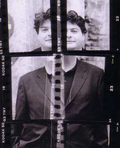 The Esquire article highlights the paranoia and surveillance that we had to live with at the time, and the contradictory briefings and slanders that were coming out of the British establishment and the media. O’Neill also intelligently tries to address the motivations of a whistleblower.
When it was published I was mildly uncomfortable about this article — I felt it didn’t do David full justice, nor did it appear to get quite to the heart of the issues he was discussing. I suppose, at the time, I was just too enmeshed in the whole situation.
Now, with hindsight, it is more perspicacious than I had thought. And rather sad.
This article is a timely reminder of how vicious the establishment can be when you cause it embarrassment and pain; the treatment meted out to David Shayler was brutal. And yet nothing has changed to this day, as we can see with the ongoing pursuit and vilification of Wikileaks.
Book Review on “Epilogue”
Reviewing “The Art of Betrayal” on Press TV’s Epilogue with former MP Derek Conway and Glenmore Treanar-Harvey.
Review of “Tinker, Tailor, Soldier, Spy”
A review on “Cinepolitics” of the new film of John Le Carre’s classic spy novel, and its continuing relevance:
Libya, MI6, and torture — interview on Press TV
Libya, MI6, torture, and more happy subjects discussed recently on “Africa Today” on Press TV.
The programme was interesting, informed and balanced. Do have a watch:
Libyans caught between a rock and a hard place
This article in today’s New York Times, particularly these following two paragraphs, sent a shiver down my spine for the fate of the Libyan people:
 “The most powerful military leader is now Abdel Hakim Belhaj, the former leader of a hard-line group once believed to be aligned with Al Qaeda.The growing influence of Islamists in Libya raises hard questions about the ultimate character of the government and society that will rise in place of Col. Muammar el-Qaddafi’s autocracy.….
.…Mr. Belhaj has become so much an insider lately that he is seeking to unseat Mahmoud Jibril, the American-trained economist who is the nominal prime minister of the interim government, after Mr. Jibril obliquely criticized the Islamists.”
The Libyans, finally free of Gaddafi’s 42-year dictatorship, now seem faced with a choice between an Islamist faction that has stated publicly that it wants to base the new constitution on Sharia — a statement that must have caused a few ripples amongst Libya’s educated and relatively emancipated women — or a new government headed up by an American-trained economist.
 And we all know what happens to countries when such economists move in: asset stripping, the syphoning off of the national wealth to transnational mega-corps, and a plunge in the people’s living standards. If you think this sounds extreme, then do get your hands on a copy of Naomi Klein’s excellent “Shock Doctrine” — required reading for anyone who wants to truly understand the growing global financial crisis.
Of course, this would be an ideal outcome for the US, UK and other western forces who intervened in Libya.
Mr Belhaj is, of course, another matter. Not only would an Islamist Libya be a potentially dangerous result for the West, but should Belhaj come to power he is likely to be somewhat hostile to US and particularly British interests.
Why? Well, Abdul Hakim Belhaj has form. He was a leading light in the Libyan Islamic Fighting Group, a terrorist organisation which bought into the ideology of “Al Qaeda” and which had made many attempts to depose or assassinate Gaddafi, sometimes with the financial backing of the British spies, most notably in the failed assassination plot of 1996.
Of course, after 9/11 and Gaddafi’s rapprochement with the West, this collaboration was all air-brushed out of history — to such an extent that in 2004 MI6 was instrumental in kidnapping Belhaj, with the say-so of the CIA, and “extraordinarily rendering” him to Tripoli in 2004, where he suffered 6 years’ torture at the hands of Libya’s brutal intelligences services. After this, I doubt if he would be minded to work too closely with UK companies.
So I’m willing to bet that there is more behind-the-scenes meddling from our spooks, to ensure the ascendency of Jibril in the new government. Which will be great for Western business, but not so great for the poor Libyans.….
RTTV Interview: Libya — the perfect storm
My RTTV interview today about Libya, torture, and UK double-dealing: