The Canadian Tour

OK, so I’m a crap blog­ger — but I have to say that my access to the inter­net was severely lim­ited dur­ing my travels across Canada!  And then I had to go back to the UK, then NL.…

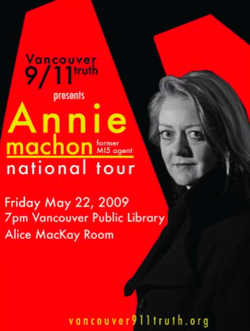
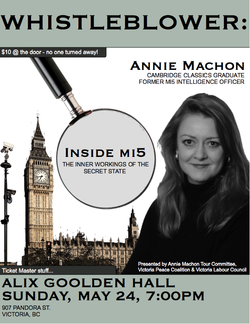
Vancouver_posterCanada was great — the first nation­al speak­ing tour organ­ised by the coun­try’s  9/11 groups.  And before you roll your eyes, these are cit­izens’ groups that are call­ing for a new enquiry — in response to a moun­tain of evid­ence from hun­dreds of cred­ible experts around the world, who ques­tion the offi­cial account peddled by the 9/11 Commission. 

Bear­ing in mind how the issue of 9/11 has been used and abused by our dear gov­ern­ments to jus­ti­fy the end­less “war on ter­ror”, the use of tor­ture, the wars in the Middle East and the erosion of our freedoms at home, I think any con­cerned and respons­ible cit­izen should, at the very least, keep an open mind about this issue and do their own research.  Espe­cially as the 9/11 Com­mis­sion was, in the words of its two chairs, Keane and Hamilton, “set up to fail”!

But back to the tour.  Huge thanks go to Patrick, the nation­al organ­iser of the tour, who had the vis­ion and com­mit­ment to pull the whole thing togeth­er, as well as sort out all the logist­ics and arrange a con­stant flow of media inter­views for me, of which more below.  And of course to the organ­isers of the events: Eliza­beth, Ruk­shana, Mark, JF, Michael, Adam, Adnan, Graeme, and all the oth­er act­iv­ists — too many to name individually.

I had to fly to Van­couver via Chica­go O’Hare, which spooked me to begin with.  I’ve been through that air­port before and it has, in the past, lived up to its well-deserved repu­ta­tion for power-crazed immig­ra­tion officers.  How­ever, I got a real sweetie — we ended up hav­ing an inter­est­ing chat about the nature of demo­cracy, before he cracked a smile and waved me through. 

In com­par­is­on, Van­couver air­port is a Zen exper­i­ence — all nat­ive art install­a­tions and water­falls.  As I emerged blink­ing into the late after­noon sun­shine (it was about 3am by my body clock), I was greeted by the Van­couver posse and whisked away in the Truth Bus to food, wine and anoth­er radio inter­view

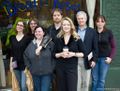
Georgina_photo3I did a series of radio and news­pa­per inter­views the next morn­ing (thanks, Ruk­shana’s mum for the use of the phone!), before being whisked off on a tour of Van­couver by Ruk­shana and Geor­gina.  The city blew me away with its beauty — moun­tains up close, parks, sea and arty quar­ters.  If it was­n’t so
damned close to the US bor­der, I would be ser­i­ously temp­ted to move
there. 

At the end of the after­noon, I had a fab time being inter­viewed on Van­couver 1410 CFUN driv­e­time radio, before one more tele­phone inter­view and a well-earned glass of cham­pagne at Geor­gina and Darren’s.

After this day of recov­ery, I was then invited onto the Bill Good Show the next morn­ing.  Bill is the grand old man of BC media, and he was a excel­lent inter­view­er.  I had half an hour with him, and the show went out to over a quarter of a mil­lion people.

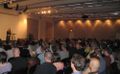
Vancouver_photo2The meet­ing that night was a great suc­cess — I could feel the energy and interest of the audi­ence as I spoke for 1 1/2 hours, and then had over an hour more of ques­tions.  I think it’s wrong for the media to say people are no longer inter­ested in polit­ics — they’re just not that inter­ested in the estab­lished polit­ic­al hier­arch­ies and systems.

If I had thought Van­couver lovely, the scenery was even more beau­ti­ful as I took the ferry down the bay to Vic­tor­ia, past small wooded islands.  Of course, that was the moment my cam­era decided to pack up…

I had a lovely couple of days in Vic­tor­ia, pampered by Eliza­beth and Bri­an, shown the beau­ties of the island and meet­ing a num­ber of act­iv­ists.  I also had the pleas­ure of meet­ing Row­land Mor­gan, (co-author with Ian Hen­shall) of the excel­lent best­seller, “9/11 Revealed”

I’d done a num­ber of inter­views before arriv­ing on the island.  The Vic­tor­ia event was very well atten­ded and I had a stand­ing ova­tion at the end.

Then it was back to Van­couver for anoth­er hour-long inter­view on Co-op Radio and a pot luck sup­per with the act­iv­ists, before fly­ing off to Ott­awa for the east­ern leg of the tour.  I arrived at mid­night to be greeted by the lovely Mar­jor­ie and Cam, who hos­ted me for a couple of nights.  My sleep was all too brief, as I had to get up at 4.30 to make a 6am radio inter­view.

The Ott­awa event was smal­ler (I would say it was an extremely rainy night!), but per­fectly formed.  Des­pite this, the group seemed very enthused about put­ting on future events.

The next day brought a Grey­hound bus ride up to Mon­tréal.  Such moments in life are when you wish you’d put Simon and Gar­funkel on your I‑pod.  My 18 hours in Mon­tréal were hec­tic — and we only just made it to the meet­ing on time, what with an excel­lent din­ner and ter­rible traffic.  The meet­ing was really vibrant.  After­wards, when every­one else was head­ing out to party, I had to slink back to my bed for a brief 4 hours sleep, before get­ting a train at 6.30 to Toronto.

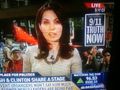
Adnan_on_TVI hit the ground run­ning, with a lunch­time inter­view, then a peace demo in the city centre.  Clin­ton and Bush Jr were in town, giv­ing a talk to 5000 of the faith­ful who were flush enough to cough up between $200 and $5000 to hear their bien pensees.  Inde­pend­ent media did a couple of good inter­views with me.  Shame­fully, the Stop the War Toronto group only man­aged to rustle up about 1,000 pro­test­ers out­side the con­fer­ence centre, and then refused to give a plat­form to Split­ting the Sky, a Cana­dian peace act­iv­ist who had attemp­ted to arrest Bush for war crimes when he vis­ited Cal­gary in April, and who had him­self been arres­ted for his pains.  How­ever, some oth­er peace act­iv­ists had some good coverage!

The next day, hav­ing caught up on some sleep at last, I had an excel­lent time at the Toronto uni­ver­sity radio sta­tion, where we had a lively hour-long inter­view, before head­ing off to my event at the university. 

Next stop, Water­loo Uni­ver­sity, where I did a round of inter­views accom­pan­ied by the journ­al­ist and cam­paign­er, Bar­rie Zwick­er. The format that night changed to an inter­view on stage con­duc­ted by him, which worked really well. 

Spyinggame003The final stop of the tour was Hamilton where, after anoth­er all-too-brief night, I had three morn­ing inter­views — 2 on radio, and one recor­ded for the TV even­ing news.  A lovely Lebanese lunch with a group of pro­fess­ors from the uni­ver­sity fol­lowed, and then a much needed chance to sleep it off, before head­ing out to the final gig, organ­ised by Pro­fess­or Graeme Mac­Queen and hos­ted by Mohawk Col­lege.  Well, they always say the last one is the best — and I had an amaz­ing even­ing.  Over an hour of talk, fol­low­ing by 1 1/2 hours of ques­tions from an inter­ested and informed audience. 

So a great time in an amaz­ing coun­try.  Thanks once again to all who made this tour such a suc­cess, and good luck with your future plans!
Make Wars History UK Tour, 2009

In Janu­ary and Feb­ru­ary 2009 Chris Cover­dale toured the UK speak­ing at Make Wars His­tory meet­ings.  I had the pleas­ure of intro­du­cing him at a num­ber of events.  The first date of the tour was in Liverpool:

Gareth Peirce on Torture, Secrecy and the British State

Gareth_Peirce_1Lead­ing UK human rights law­yer, Gareth Peirce, has writ­ten a power­ful and elo­quent art­icle in the Lon­don Review of Books about the Brit­ish state’s involve­ment in torture. 

She also broadens out the argu­ment to look at the fun­da­ment­al soci­et­al prob­lems — lack of account­ab­il­ity, secrecy, the use and abuse of the concept of “nation­al secur­ity”  — that cre­ated a cul­ture that facil­it­ates and con­dones torture.

Gareth has fought for vic­tims of injustice for four dec­ades, focus­ing primar­ily on ter­ror­ism and intel­li­gence issues. 

A long piece, but stick with.  It’s worth it!

ETH0 Hacker Camp, January 2009

In Janu­ary 2009 I was invited to talk at ETH0, a small but select hack­er camp held in the wilds of the Neth­er­lands.  The crowd was young, hip, informed — and very inter­ested in the use and abuse of intel­li­gence and par­tic­u­larly the erosion of our most basic civil liber­ties.   Events like this give me hope.

Some of the organ­isers are also involved in plan­ning a major techno-polit­ic­al hack­er fest­iv­al, Hack­ing at Ran­dom, in NL this sum­mer.   An event not to be missed!

Canadian Speaking Tour, May 2009

Vancouver_posterOn 22 May I shall be start­ing my very own nation­al speak­ing tour in Canada.   Fol­low­ing my vis­it to Cali­for­nia last year, the Cana­dian 9/11 Truth groups have pulled togeth­er a 7‑event tour, where I will have the chance to dis­cuss the intel­li­gence world, whis­tleblow­ing, going on the run and the issue of 9/11, par­tic­u­larly focus­ing on its reper­cus­sions around the world: the end­less “war on ter­ror”, the illeg­al wars in the Middle East, and the erosion of our demo­cra­cies in the West.

The Cana­dian Truth Move­ment tire­lessly cam­paigns for a new, inde­pend­ent inquiry in the tra­gic events of 9/11, and has in the past hos­ted speak­ers such as Pro­fess­or Dav­id Ray Griffin  and archi­tect Richard Gage.

More inform­a­tion about the tour can be obtained from: directors@vancouver911truth.org or elizwood@shaw.ca.  See you there!

Victoria_poster


Tour dates:

Fri­day 22 May — Van­couver

Sunday 24 May — Vic­tor­ia

Wed­nes­day 27 May — Ott­awa

Thursday 28 May — 
Mon­tréal

Sat­urday 30 May — Toronto 

Sunday 31 May — Waterloo 

Monday 1 June — Hamilton

Deja Vu

I had a strong sense of déjà vu today, when I read about the woes of Mrs Green, the bar­ris­ter wife of Tory MP Dami­en Green who was arres­ted last Novem­ber for allegedly encour­aging gov­ern­ment inform­a­tion leaks.

Mr Green was arres­ted under an obscure and antique piece of legis­la­tion for “con­spir­ing to com­mit mis­con­duct in a pub­lic office and aid­ing and abet­ting, coun­selling or pro­cur­ing mis­con­duct in a pub­lic office”.  This, des­pite the fact that civil ser­vice man­dar­ins had per­suaded the Met­ro­pol­it­an Police Spe­cial Branch (MPSB) to invest­ig­ate him because he posed a “ser­i­ous threat to nation­al secur­ity”.  The case has now been dropped and reports have now shown that these civil ser­vants sig­ni­fic­antly over­stated the case to spur the police into action.

In such a case the obvi­ous step would have been for the Met to have invoked the dra­coni­an 1989 Offi­cial Secrets Act.  Cer­tainly their heavy-handed response seemed to indic­ate that this was how they were view­ing the grav­ity of the case, even if they were des­per­ately try­ing to avoid the attend­ant scan­dal such a step would have pro­voked.    Spe­cial Branch officers in the Counter-Ter­ror­ism squad are not nor­mally sent to rip apart people’s houses for minor offences.

Which takes me back to the inter­view with the out­raged Mrs Green.  A bar­ris­ter spe­cial­ising in highly con­fid­en­tial child abuse cases, she inno­cently let the secret police enter her home, only to watch in dis­be­lief as they ripped it apart in what sounds to me like a counter-ter­ror­ism style search.  They, of course, found noth­ing rel­ev­ant to their invest­ig­a­tion, but scoured the com­puters, removed the bed­sheets, took away love let­ters between the Greens, and even rifled through the chil­dren’s books.

I sup­pose I was more for­tu­nate than the hap­less Mrs Green.  When the secret police ripped apart my home in the same way back in 1997, I was in Europe with my ex-part­ner and col­league, MI5 whis­tleblower Dav­id Shayler.  After we had exposed the fact that MI5 was shame­lessly break­ing the law, the MPSB had obtained a war­rant that allowed them to search our home for mater­i­al relat­ing to our employ­ment in MI5.  As I was away, they jack­hammered the front door in, and then spent two days rip­ping through the flat in Pimlico.  It had been my home for 4 years.

Nat­ur­ally, the police found noth­ing rel­ev­ant.  That did not deter them from search­ing the place for two days, and tak­ing away bags of pos­ses­sions, includ­ing some of my under­wear, the bed­sheets, pho­to­graphs, and our love let­ters.  They also smashed up chairs and lamps, ripped the bath apart, pulled up the car­pets, and scattered my remain­ing under­wear across the bed­room floor. It looked like they had been play­ing with it.

I saw all this when I returned home a month later, and I felt viol­ated.  I know this is a com­mon reac­tion when one’s home is burgled; but in this case my home had been despoiled by the police, not by crim­in­als.  No doubt, some would say that we, and the Greens, deserved this treat­ment.  After all, we had the temer­ity to expose mal­prac­tice, lies, and crime with­in gov­ern­ment circles.  We, of course, would argue that we had acted for the pub­lic good.

Whatever.  I still think that a counter-ter­ror­ism style search of a whis­tleblower­’s house is over the top and delib­er­ately intimidatory.

The police may have ran­sacked my home, but I was nev­er charged with any offence.  Nor did I ever did get my under­wear or love let­ters back.….

Quick to Miss a Trick

Bob_QuickFormer Assist­ant Com­mis­sion­er of Spe­cial Oper­a­tions at the Met­ro­pol­it­an Police, Bob Quick, has hit the head­lines a couple of times in the last few months — for all the wrong reasons. 

Last Novem­ber he author­ised the arrest of Tory MP Dami­en Green for allegedly encour­aging leaks of sens­it­ive gov­ern­ment inform­a­tion.  This had the knock-on bene­fit of wak­ing MPs up to the fact that we are now liv­ing in a de facto police state.  Well, I sup­pose that must have been a wel­come dis­trac­tion for them.  It must be so dull merely to spend your time devis­ing new and ingeni­ous ways of fid­dling your par­lia­ment­ary expenses. 

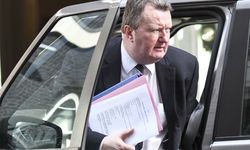
This week, Quick was pho­to­graphed enter­ing Down­ing Street with highly clas­si­fied doc­u­ments under his arm about a sens­it­ive UK ter­ror­ist invest­ig­a­tion, which were clearly vis­ible to wait­ing pho­to­graph­ers.  The clearly vis­ible “Secret” brief­ing doc­u­ment detailed an MI5-led oper­a­tion, code­named Path­way, and bounced the counter-ter­ror­ism agen­cies into mak­ing pre­ma­ture arrests of the sus­pects, many of them young Pakistanis in the UK on stu­dent visas.

Out­rage fol­lowed this massive secur­ity lapse.  What on earth was the man doing, openly car­ry­ing secret doc­u­ments?  Pro­tect­ive rules dic­tate that such papers are not allowed out­side HQ unless signed out and in a secur­ity briefcase.  The vol­un­tary press cen­sor­ship com­mit­tee, the Defence, Press and Broad­cast­ing Advis­ory Com­mit­tee, has slapped a ‘D’ Notice all over the story.  Quick has, of course, resigned.  Reportedly, he may even (gasp) face dis­cip­lin­ary pro­ceed­ings with­in the Met.

Is it just me, or people miss­ing a trick here?  This man has dis­closed a highly clas­si­fied intel­li­gence doc­u­ment without per­mis­sion.  In addi­tion, this doc­u­ment con­tained inform­a­tion about an ongo­ing oper­a­tion AND the names of seni­or intel­li­gence officers — accord­ing to MI5 lore two of the most dam­aging types of inform­a­tion that could pos­sibly be dis­closed.  So, why is Quick not facing pro­sec­u­tion under the dra­coni­an 1989 Offi­cial Secrets Act?  He clearly falls under Sec­tion 1(1) of the Act as a noti­fied per­son if he is hand­ling Secret documents:

1(1) A per­son who is or has been—

(a) a mem­ber of the secur­ity and intel­li­gence ser­vices; or

(b) a per­son noti­fied that he is sub­ject to the pro­vi­sions of this subsection,

is guilty of an offence if without law­ful author­ity he dis­closes any inform­a­tion, doc­u­ment or oth­er art­icle relat­ing to secur­ity or intel­li­gence which is or has been in his pos­ses­sion by vir­tue of his pos­i­tion as a mem­ber of any of those ser­vices or in the course of his work while the noti­fic­a­tion is or was in force.

Under these pro­vi­sions, there is no real defence under law.  Leg­al pre­ced­ent in recent OSA tri­als has clearly estab­lished that the reas­on for an unau­thor­ised dis­clos­ure of secrets is irrel­ev­ant.  (The the­or­et­ic­al and untested sub­sequent defence of “neces­sity” has no bear­ing on this par­tic­u­lar case.)  Wheth­er the breach occurs due to prin­cipled whis­tleblow­ing or a mis­take does­n’t mat­ter: the clear bright line against dis­clos­ure has been crossed and pro­sec­u­tion inex­or­ably follows.

Except if you have suf­fi­ciently seni­or­ity, it appears.….

MPs object to police state

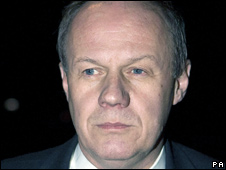
Dgreen An inter­est­ing polit­ic­al row has erup­ted this week in the UK about the arrest of the oppos­i­tion Tory MP, Dami­en Green, who is also the Shad­ow Min­is­ter for Immig­ra­tion.  He was arres­ted on Thursday for alleged breaches of an obscure com­mon law  “aid­ing and abet­ting mis­con­duct in pub­lic office”.

Reports indic­ate that the Met­ro­pol­it­an Police Spe­cial Branch, or as the news­pa­pers would have it the “anti-ter­ror­ism branch” was called in to invest­ig­ate leaks from the Home Office about immig­ra­tion policy, that Green was using these leaks to score points off the gov­ern­ment, and the Home Sec­ret­ary Jac­qui Smith in particular.

Nat­ur­ally, MPs from both sides of the House have been froth­ing at the mouth:  how dare Plod embar­rass an MP by arrest­ing him without warn­ing and by con­duct­ing co-ordin­ated searches of his homes and offices in both Kent and Lon­don?  News­pa­pers, par­tic­u­larly on the right of the polit­ic­al spec­trum, have been full of head­lines say­ing that this is proof that we are liv­ing in a police state.

While I have some sym­pathy for the belea­guered Mr Green, hav­ing also been hauled off by the Met Spe­cial Branch and quizzed for hours for dis­cuss­ing sens­it­ive inform­a­tion that was very much in the pub­lic interest, as well as see­ing my home ripped apart in a co-ordin­ated counter-ter­ror­ism style raid and seen friends arres­ted in co-ordin­ated dawn raids, I am still aghast at the hypo­crisy of both the politi­cians’ and medi­a’s reaction.

Many of us are already all to pain­fully aware that we live in a de facto police state.  Under the notori­ous Sec­tion 44 of the 2000 Ter­ror­ism Act, we can all be stopped and searched for no reas­on — and can even be arres­ted purely so that a bobby on the beat can ascer­tain our iden­tity.  Notices to this effect are now help­fully pinned up out­side most tube sta­tions in Lon­don.  Thou­sands of people are sub­ject to this across the UK every year on the streets of Britain.

But oth­er points rather leap to my atten­tion from the cov­er­age of this case.  If MPs don’t like the heavy-handed use and abuse of police powers, why did they pass these laws in the first place?  Did they not think through the implic­a­tions?  Or do they think that, as MPs, they are some­how above the laws of this land?

Plus, seni­or MPs are arguing that the use of leaks from dis­gruntled civil ser­vants is a time-hon­oured way for HM Oppos­i­tion in Par­lia­ment to hold the gov­ern­ment to account.  Well, that might be good for the MPs’ par­lia­ment­ary careers, but what of the hap­less and fre­quently brave souls with­in the Civil Ser­vice who face 2 years in pris­on for such leaks if they are con­victed of a breach of the 1989 Offi­cial Secrets Act?  And, of course, there is no leg­al defense under the OSA of hav­ing acted “in the pub­lic interest” — the very argu­ment that MPs are using to jus­ti­fy Green’s expos­ure of Home Office cov­er-ups and incompetence. 

As far as I can see, there have been no com­ments from either journ­al­ists or MPs about the fate of the source.    The most I could find was the fol­low­ing in the Daily Tele­graph:

An alleged “whis­tleblower”, thought to be a male Home Office offi­cial was arres­ted 10 days ago.”

Either that means that journ­al­ists and MPs could­n’t give a toss about the fate of this per­son — after all, an MP’s career is far more import­ant — or that any report­ing of the arrest of the whis­tleblower has been injunc­ted in the media to the nth degree.  This would be even more troub­ling, as someone can just be “dis­ap­peared” into a Kafka-esque leg­al nightmare. 


Ethics Talk at a School

Earli­er this month I was invited back to the Bish­ops Stort­ford High School to do a talk for its Eth­ics and Cit­izen­ship Course.  This is a new, man­dat­ory part of the nation­al cur­riculum, and a good thing too.

I spoke about the role of a whis­tleblower in a demo­crat­ic soci­ety, and also about the erosion of our demo­crat­ic freedoms.  About 300 pupils atten­ded, and the response was fant­ast­ic, with many inter­est­ing and intel­li­gent ques­tions.  And so there should be — this is the gen­er­a­tion that will have to deal with the mess we are mak­ing of our civil liber­ties in this country.

August 2007 Mail on Sunday Article

Dav­id Shayler­’s former part­ner reveals: How the bul­ly­ing State crushed him
By ANNIE MACHON

Link to daily mail ori­gin­al — link to Daily Mail com­ments

Ten years ago this month former MI5 officer Dav­id Shayler made shock­ing rev­el­a­tions in this news­pa­per about how Bri­tain’s spies were unable to deal with the grow­ing threat of glob­al terrorism.

He dis­closed how MI5’s pecu­li­ar obses­sion with bur­eau­cracy and secrecy pre­ven­ted cru­cial inform­a­tion being used to stop bomb­ings. And he told how insuf­fi­cient agents and inept decision-mak­ing meant that ter­ror­ist groups were not prop­erly monitored.

None of his ori­gin­al dis­clos­ures was shown to be wrong. Indeed, in 2005 the bomb­ings in Lon­don proved the whis­tleblower cor­rect: MI5 was not equipped to counter ter­ror on our streets.

The Gov­ern­ment response to Dav­id’s dis­clos­ures was to place a gag­ging order on The Mail on Sunday and launch a six-year cam­paign to dis­cred­it and per­se­cute Shayler. Alastair Camp­bell threatened to ‘send in the heav­ies’ and the whis­tleblower was forced into exile abroad, jailed twice and sued for dam­ages; his friends and fam­ily were har­assed and some arrested.

He faced a bleak, uncer­tain future and for many years he was under intense stress and pres­sure, often isol­ated and always under sur­veil­lance. I had a ring­side seat for the ‘Get Shayler’ oper­a­tion because I was an MI5 officer at the same time (1991−96) and also his girl­friend and co-cam­paign­er until last year when I ended my rela­tion­ship with a broken man.

I wit­nessed first-hand the extraordin­ary psy­cho­lo­gic­al, phys­ic­al and emo­tion­al bur­den of being a whis­tleblower when the full power of the secret State is launched against you. A dec­ade on the res­ults of that per­ni­cious cam­paign became clear when I heard that Dav­id had pro­claimed him­self as “The Mes­si­ah” and “God” and could pre­dict the weath­er. I was saddened but not shocked. The story of Dav­id Shayler is not just one of a whis­tleblower but also an indict­ment of the lack of demo­cracy and account­ab­il­ity in Britain.

I first met Dav­id when we were both work­ing in F2, the counter-sub­ver­sion sec­tion of MI5, where we were repeatedly reas­sured that MI5 had to work with­in the law. We were young and keen to help pro­tect our coun­try. I noticed Dav­id imme­di­ately, as he was very bright, and always asked the dif­fi­cult ques­tions. Over a peri­od of a year we became friends, and then we fell in love.

In the run-up to the 1992 Gen­er­al Elec­tion we were involved in assess­ing any par­lia­ment­ary can­did­ate and poten­tial MP. This meant that they all had their names cross-ref­er­enced with MI5’s data­base. If any can­did­ates had a file, this was reviewed. We saw files on most of the top politi­cians of the past dec­ade, from Tony Blair down, some­thing that gave us concerns.

We then both moved to G Branch, the inter­na­tion­al counter-ter­ror­ist divi­sion, with Dav­id head­ing the Liby­an sec­tion. It was here that he wit­nessed a cata­logue of errors and crimes: the illeg­al phone-tap­ping of a prom­in­ent Guard­i­an journ­al­ist, the fail­ure of MI5 to pre­vent the bomb­ing of the Israeli embassy in Lon­don in July 1994, which res­ul­ted in the wrong­ful con­vic­tion of two inno­cent Palestini­ans, and the attemp­ted assas­sin­a­tion of Col­on­el Gad­dafi of Libya.

Dav­id raised this with his bosses at the time but they showed no interest. So we resigned from MI5 after decid­ing to go pub­lic to force an inquiry into the Gad­dafi plot.

After The Mail on Sunday rev­el­a­tions we decamped to France while Dav­id tried to get the Gov­ern­ment to take his evid­ence and invest­ig­ate MI5’s crimes, some­thing, to this day, it has refused to do. Rather than address­ing the prob­lem, the Intel­li­gence Ser­vices tried to shoot the mes­sen­ger. They planted stor­ies claim­ing Dav­id was a fan­tas­ist, over­looked for pro­mo­tion, and was too juni­or to know what he was talk­ing about. These are clas­sic tac­tics used against whis­tleblowers and were wheeled out again when Dr Dav­id Kelly took his life.

We even­tu­ally returned home in 2000, by which time Dav­id felt isol­ated and angry. He began to dis­trust friends and thought that many of them might be report­ing on him. He was con­vinced he was con­stantly fol­lowed and began to take pho­to­graphs of people in the street. When the tri­al star­ted, and with Dav­id effect­ively gagged, the jury had no choice but to convict.

He received a six-month sen­tence but the judg­ment exon­er­ated him of pla­cing agents’ lives at risk, con­ced­ing that he had spoken out in what he thought to be the pub­lic interest. Dav­id had blown the whistle with the best of motives. He had exposed hein­ous State crimes up to and includ­ing murder, yet he was the one in pris­on with his repu­ta­tion in tat­ters. His release from jail saw a changed man. Dav­id was full of anger, frus­tra­tion and bit­ter­ness and became depressed and with­drawn. He was drawn to the spir­itu­al teach­ings of kab­ba­l­ah, and became obsessed with the sub­ject instead of focus­ing on what we should do to sur­vive. Last sum­mer, I went away for a week­end. When I returned, Dav­id had shaved off all his hair and his eye­brows as part of his spir­itu­al evol­u­tion. He knew that I had always loved his long, thick hair, so it felt like a per­son­al slap in the face. He was in trouble. He was quick to anger if any­one ques­tioned him. He became obsess­ive about little details, espoused wacky the­or­ies and shunned his fam­ily and old friends. His para­noia also escal­ated. His exper­i­ence of being houn­ded and vil­i­fied for a dec­ade had left a deep per­se­cu­tion com­plex. Even­tu­ally the strain was too much and I ended the relationship.

It was dif­fi­cult as we had shared so much over the 14 years we had been togeth­er, but it felt that we were no longer a team – Dav­id was focus­ing only on eso­ter­ic issues. Look­ing back, I am still proud of what we did. I believe that if you wit­ness the crimes that we did, you have to take action. But the price for tak­ing that stand against a bully State can be high. It is tra­gic to see an hon­our­able and brave man crushed in this way. The Brit­ish Estab­lish­ment is ruth­less in pro­tect­ing its own interests rather than those of our coun­try. Today Dav­id Shayler is liv­ing testi­mony to that.

Gareth Peirce talks to Moazzam Begg

An inter­view between Guantanamo detain­ee, Moazzam Begg, and human rights law­yer Gareth Peirce.

I have writ­ten before about the appalling treat­ment of people like Moazzam, who are kid­napped, tor­tured, and held illeg­ally without charge in Amer­ica’s secret pris­on camps and Gitmo. Here he has the chance to inter­view Gareth about this and the wider implications:


Gareth Peirce has worked indefatig­ably over many years to defend vic­tims of mis­car­riages of justice in the UK courts and bey­ond. The roll call of those she has helped, not just leg­ally but also with emo­tion­al sup­port and a gentle and humane approach, includes: the Guild­ford Four, the Birm­ing­ham Six, Samar Alami and Jawed Bot­meh (the Israeli Embassy Two), Dav­id Shayler, the Bel­marsh internees, Judith Ward, the fam­ily of Jean Charles de Menezes, and now the Guantanamo victims.

Gareth is a true hero of our times. 

Save Our Free Speech

The Guard­i­an today repor­ted that the United Nations Com­mit­tee on Human Rights had issued a damning indict­ment of the Brit­ish gov­ern­ment’s use of legis­la­tion to sup­press a right that is fun­da­ment­al to all func­tion­ing demo­cra­cies: free­dom of expression.

This is not news to me. But it’s inter­est­ing that free­dom of expres­sion is now being cur­tailed in so many var­ied, inter­est­ing and ima­gin­at­ive ways: libel laws, ter­ror­ism laws and offi­cial secrecy. That’s quite an arsenal.

Bri­tain is now infam­ous for being the “libel cap­it­al” of the world. Wealthy indi­vidu­als can use our courts to sup­press pub­lic­a­tion of crit­ic­al books and art­icles any­where in the world, if they can prove that the book has been sold in the UK – even if it’s just one, second-hand copy on Amazon. The magazine, Private Eye, has been com­ment­ing on this extens­ively over the last year.

Then, under the slew of new counter-ter­ror­ism legis­la­tion that the Labour gov­ern­ment has intro­duced since 2001, it is now an offence to say any­thing that might “encour­age” ter­ror­ism. That defin­i­tion is so broad that, say, you or I made an inno­cent com­ment about the Palestini­an or Iraqi situ­ation, and this could be mis­con­strued by anoth­er per­son as encour­aging them to viol­ence, this could be assessed sub­ject­ively as a crim­in­al offence by the pro­sec­ut­ing author­it­ies. This is third party thought-crime.

These sort of laws have a neg­at­ive impact on free speech, as pub­lish­ers, edit­ors and journ­al­ists begin to self-cen­sor rather than run informed risks for the pub­lic good.

But it’s the third area of law that res­on­ates most with me, for obvi­ous reas­ons: the 1989 Offi­cial Secrets Act, which crim­in­al­ises any unau­thor­ised dis­clos­ure by serving or former intel­li­gence officers, noti­fied per­sons, and oth­er crown ser­vants and offi­cials. These people are the most likely to wit­ness high crimes and mis­de­mean­ors on the part of gov­ern­ment, police and the intel­li­gence ser­vices, and yet they are the most crim­in­al­ised in this coun­try for speak­ing out. Whis­tleblowers in oth­er areas of work are spe­cific­ally pro­tec­ted by the law under the Pub­lic Interest Dis­clos­ure Act (1998).

How did this hap­pen? Ever since the 1911 Offi­cial Secrets Act came into force, there has been legis­la­tion to pro­tect this nation’s genu­ine secrets against the actions of trait­ors. Under this law, crown ser­vants face 14 years in pris­on if they betray inform­a­tion to hos­tile powers. Of course we need to pro­tect genu­ine secrets, and this is cer­tainly safe­guard enough.

The change in this law was spe­cific­ally designed to gag genu­ine whis­tleblowers in sens­it­ive areas, not pro­tect nation­al secur­ity. This came about in the 1980s after the notori­ous failed pro­sec­u­tion of Min­istry of Defense civil ser­vant, Clive Pont­ing. In 1984 he blew the whistle on the fact the Brit­ish gov­ern­ment knew that the Argen­tini­an war­ship, the Gen­er­al Bel­grano, was sail­ing away from the exclu­sion zone dur­ing the Falk­lands War in 1982. Des­pite this, the order was still giv­en to attack it, and many were killed. Pont­ing was rightly out­raged by this, and went pub­lic. His actions were mani­festly in the pub­lic interest, and this was pre­cisely the suc­cess­ful defense he ran in court. Furi­ous, the Con­ser­vat­ive gov­ern­ment of the time re-wrote the secrecy laws, remov­ing the pub­lic interest defense to deter such prin­cipled whis­tleblowers in the future. And this is the cur­rent Offi­cial Secrets Act cri­ti­cised so strongly by the UN.

Inter­est­ingly, at the time the Labour party strongly opposed this change, rightly think­ing that this would cur­tail cru­cial inform­a­tion reach­ing the pub­lic domain. At this point, of course, many of them cor­rectly sus­pec­ted that they were on the receiv­ing end of illeg­al invest­ig­a­tions by MI5.

The roll call of Labour MPs who voted against the pro­posed Act as it passed through Par­lia­ment in 1988 includes such luminar­ies as Tony Blair, Jack Straw and the former Attor­ney Gen­er­al John Mor­ris. All these people went on to use the 1989 OSA to threaten and pro­sec­ute the intel­li­gence whis­tleblowers of the last decade.

The blanket ban on free­dom of expres­sion for intel­li­gence per­son­nel appears to be illeg­al under the terms of the European Con­ven­tion of Human Rights. Sure, Art­icle 10(2) does give nations the lim­ited right to cur­tail free­dom of expres­sion in a pro­por­tion­ate way to pro­tect nation­al secur­ity. How­ever, the term “nation­al secur­ity” has nev­er been defined for leg­al pur­poses in this coun­try and is used as a catch-all phrase to pre­vent dis­clos­ure of any­thing embar­rass­ing to the gov­ern­ment and the intel­li­gence agen­cies. Plus, dur­ing these cases, law­yers and judges have con­sist­ently con­fused the notion of the nation­al interest with nation­al secur­ity – two very dif­fer­ent beasts. And free­dom of expres­sion can­not be leg­ally cur­tailed under the Con­ven­tion merely for reas­ons of “the nation­al interest”.

So I was heartened to read the UN’s ver­dict on this leg­al mess: “Powers under the Offi­cial Secrets Act have been “exer­cised to frus­trate former employ­ees of the crown from bring­ing into the pub­lic domain issues of genu­ine pub­lic interest, and can be exer­cised to pre­vent the media from pub­lish­ing such matters”.”

Let’s hope this leads to the rein­state­ment of the pub­lic interest defence at the very least. Dur­ing this time of the unend­ing “war on ter­ror”, gov­ern­ments lying to take us into illeg­al wars, and the use of tor­ture and intern­ment, whis­tleblowers play an import­ant role in uphold­ing and defend­ing our demo­crat­ic val­ues. We need to pro­tect them, not pro­sec­ute them.

The Rise of the Mercenary

Steph­en Arm­strong pub­lished an inter­est­ing art­icle in today’s New States­man magazine. Based on his new book War plc: the Rise of the New Cor­por­ate Mer­cen­ary, it exam­ines the rise of the cor­por­ate secur­ity con­sult­ant. Or in basic Eng­lish – mercenaries.

I met Steph­en when I was invited by James Whale to review the book on Press TV. I was impressed with his research and depth of know­ledge on this sub­ject. It was an unusu­ally har­mo­ni­ous talk show — rather than arguing, we all took a broadly sim­il­ar approach to the issue of mer­cen­ar­ies, over­sight and accountability.

The increas­ing privat­isa­tion of intel­li­gence is an insi­di­ous devel­op­ment in the world of espi­on­age and war. For many dec­ades there have exis­ted on the fringes of the offi­cial intel­li­gence world a few private secur­ity com­pan­ies; think Kroll, Black­wa­ter, Aegis. These com­pan­ies are often the last refuge of .….. former intel­li­gence officers of the west­ern spook organisations.

These people, often frus­trated at the overly bur­eau­crat­ic nature of the gov­ern­ment­al spy organ­isa­tions, resign and are gently steered towards these cor­por­a­tions. That, or the relo­ca­tion officers get them nice juicy jobs at mer­chant banks, arms com­pan­ies or inter­na­tion­al quan­gos. It’s always use­ful to have reli­able chaps in use­ful places, after all.

In the last dec­ade, how­ever, we have seen an explo­sion in the num­ber of these com­pan­ies. One of my former col­leagues is a founder of Dili­gence, which is going from strength to strength. These kinds of com­pan­ies spe­cial­ise in cor­por­ate spy­ing, the neut­ral­isa­tion of oppos­i­tion and protest groups, and secur­ity. The lat­ter usu­ally boils down to provid­ing mil­it­ary muscle in hot spots like Iraq. While I can see the attrac­tion for sol­diers leav­ing crack regi­ments and won­der­ing what on earth they can do with their spe­cial­ised expert­ise, and who then decide that earn­ing £10,000 a week risk­ing their lives in Bagh­dad is a good bet, this has wor­ry­ing implic­a­tions for the rule of law.

Leav­ing aside the small mat­ter that, under inter­na­tion­al and domest­ic UK law, all wars of aggres­sion are illeg­al, our offi­cial Brit­ish mil­it­ary pres­ence in Afgh­anistan and Iraq is at least to a cer­tain degree account­able. The most egre­gious war crimes have res­ul­ted in court mar­tials. But the new mer­cen­ar­ies live in a leg­al no-man’s land, and in this ter­rit­ory any­thing goes. Or can at least be covered up.

This is the same prin­ciple that has guided these unof­fi­cial spook com­pan­ies over the years – plaus­ible deni­ab­il­ity. What little demo­crat­ic over­sight there is in the UK of the intel­li­gence com­munity still does give them lim­ited pause for thought: what if the media hears about it? What if an MP asks an awk­ward ques­tion? By using former col­leagues in the cor­por­ate intel­li­gence world, MI5, MI6 et al can out source the risk.

The over­sight and account­ab­il­ity for the offi­cial spooks and the army are bad enough. The privat­isa­tion of intel­li­gence and mil­it­ary might makes a fur­ther mock­ery of the feeble over­sight pro­vi­sions in place in this coun­try. This is a wor­ry­ing devel­op­ment in leg­al and demo­crat­ic terms; more import­antly, it has a dir­ect, daily impact on the rights of inno­cent men, women and chil­dren around the world. We need to ensure that the offi­cial and unof­fi­cial spooks and mil­it­ary are account­able under the law.