A fun interview with Heimir Már Pétursson on TV2, filmed during my recent tour of Iceland:
Iceland TV 2 from Annie Machon on Vimeo.
A fun interview with Heimir Már Pétursson on TV2, filmed during my recent tour of Iceland:
Iceland TV 2 from Annie Machon on Vimeo.
My recent interview on Iceland’s premier news discussion show, Silfur Egils, hosted by the excellent Egill Helgason.
The name refers to an old Norse saga about a hero, an earlier Egill, throwing handfuls of silver to the ground so he could make the Viking politicos of the day scrabble around in the dirt trying to pick up the coins.
Plus ça change, plus c’est la même chose.
Wikileaks spokesman, Kristinn Hrafnsson, invited me to speak at the Icelandic Centre for Investigative Journalism while I was in Iceland in February.
While focusing on the intersection and control between intelligence and the media, my talk also explores many of my other current areas of interest.
Iceland Journalists talk 2013 from Annie Machon on Vimeo.
Well, this will be an interesting week. On the invitation of Snarrotin, the Icelandic civil liberties organisation, I’m off to Iceland for a series of talks and interviews on behalf of Law Enforcement Against Prohibition (www.leap.cc).
Iceland is an inspirational and interesting country. Following the 2008 credit crash, the Icelanders bucked international trends and actually held some of their ruling élite — the politicians and bankers who had brought about these financial problems — to account. The government fell, some bankers were fired and prosecuted, and the Icelandic people are having a serious rethink about the way their democracy could and should work.
And indeed why should the people pay the price for the decisions made in their name by an unaccountable élite? One could speciously argue that the people had a meaningful choice at the ballot box.… but back in the real, 21st century political world, Iceland was as stitched-up as all other notional Western democracies. The worst allegation that can be thrown at the people was that they were disengaged, uninvolved and sidelined from how their country was really run — as many of us across the West feel to this day.
But apparently no longer in Iceland: since the financial crisis the citizens of this small democracy have re-engaged in the political process, and the future is looking rosy.
New, accountable politicians have been elected to form a new government. Citizens have been involved in drawing up a new constitution, and heated debates are challenging the established shibboleths of the corporatist governing class: revolving around such issues as finance, internet freedoms, free media, terrorism, and how a modern country should be run in the interest of the many. And next week, I hope, a rethink of the country’s obligations to the international “war on drugs”.
While the issue is strenuously ignored by the Western governing élite, it is now widely recognised that the current prohibition strategy has failed outright: drug trafficking and use has increased, the street price of drugs has plummeted and they are endemically available, whole communities have been imprisoned, whole countries have become narco-states and descended into drug war violence, and the only people to profit are the organised crime cartels and terrorist organisations that reap vast profits. Oh, and of course the banks kept afloat with dirty drug money, the militarised drug enforcement agencies, and the politicians who now, hypocritically, want to look “tough on crime” despite allegations that they also dabbled in their youth.….
Well, the time has come for an adult discussion about this failed policy, using facts and not just empty rhetoric.
So, a week discussing all my favourite happy topics: the “war” on drugs, the “war” on terror, and the “war” on the internet. My type of mini-break!

Here’s the link to my interview tonight on UK Anonymous Radio — I had a great time and found it a fun, wide-ranging, and stimulating hour. I hope you do too. So, thank you Anonymous.
And also thank you to Kim Dotcom setting up the new file-sharing site, Mega, which replaces his illegally-taken-down global site, MegaUpload. I have somewhere safe, I think, to store my interviews!
What a shambolic disgrace that MegaUpload raid was, and what a classic example of the global corporatist agenda that I discuss in the interview.
I do love geeks.
My recent interview on Max Keiser’s excellent RT show, The Keiser Report, apparently now the most watched English language news commentary show across the world.
We were discussing such happy subjects as the war on terror, the war on drugs, but predominantly the war on the internet:
Here is a link to an in-depth interview I did recently at the Czech national radio station in Prague.
As a Director of Law Enforcement Against Prohibition (LEAP), I was invited to Prague by the progressive Czech National Drug Co-ordinator, Jindrich Voboril, to speak at a drugs conference in the Czech Parliament.
I recently represented LEAP at a panel discussion in London about the failed war on drugs after a screening of the excellent film The House I Live In, along with Steve Rolles of Transform and Niamh Eastwood of Release:
Oval Space Cinema Club: ‘The House I Live In’ — Panel Discussion from Oval Space on Vimeo.
I participated in the Law Enforcement Against Prohibition (LEAP) board meeting last October in Baltimore. While there, I arranged for board members to do a series of interviews about the failed global “war on drugs” with the excellent and independent Real News Network.
The tide of history is with us — more and more countries are speaking out about the failure of prohibition. LEAP supports and contributes to this discussion.
LEAP has representatives across the world with a wide range of professional expertise: police officers, drug czars, judges, prison governors, lawyers, drug enforcement officers, and even the occasional former spook.…
Our varied experiences and backgrounds have brought us to one conclusion: we all assess the “war on drugs” to have been an abject failure that causes more global societal harm than good, as well as funding organised crime, terrorism and white collar bank crime.
We urgently need to rethink the failed UN drug conventions.
Here is the RNN interview I participated in, along with Brazilian Judge Maria Lucia Karam:
 An interview I did on behalf of LEAP this week for the newsletter of the UK campaign, Release.
Release, run by the indefatigable Niamh Eastwood, does excellent work providing legal advice about drug issues, and campaigning for fairer and more compassionate drug laws.
The interview appeared in the campaign’s newsletter, “TalkingDrugs”.
Here’s the link, and here’s the text:
Q1 What led you into thinking that current drug policies on illicit drugs were failing?
My journey began when I was working as an intelligence officer for MI5 in the 1990s. One of my roles was investigating terrorist logistics and working closely with UK Customs. I learned then that trying to stop the flow of illicit material into the UK (whether drugs, weapons, or people) is like looking for a needle in the proverbial haystack. Plus there is a huge overlap between the funding of organised crime and terrorist groups.
Over the last decade I have become a writer, commentator and public speaker on a variety of inter-connected issues around intelligence, the war on terror, whistleblowers, policing, and civil liberties. To me, the war on drugs meshes very closely with all these topics. Three years ago I was approached by LEAP to become a speaker, and then in March this year I became a member of the international board and also the Director of LEAP Europe in order to consolidate the organisation’s work here.
Q2 Do you think that there are barriers to police officers being honest about the effectiveness of their actions to combat the trade in illicit drugs and is the greater disquiet amongst those involved in law enforcement about current policies than is popularly perceived ?
Yes, absolutely, and it’s not just amongst the police but also the wider law enforcement community.
LEAP supporters, approaching 100,000 in over 90 countries around the world, include judges, lawyers, prison governors, customs and intelligence officers, and former drug czars. Within all these professions there is a tacit understanding that you toe the conventional line. In my experience, most people go into this type of work hoping not only to have an interesting job, but also to do some good and make a difference. Many then see the social fall-out, or that friends, family or community are affected by the drug wars, and many serving officials do question what it is all about and what it is really achieving.
However, they are there to do a job, which is upholding and applying the law. The cultural pressure within such groups can make it extremely difficult on many levels for them to speak out.
Any change to the international and national drug laws will have to come from the politicians within the UN and nationally. LEAP increasingly contributes to the political debate and is building a groundswell of support internationally. Most people today will know someone who has at least tried a currently illegal drug. They also instinctively know this is mere social experimentation, relaxation or, at worst, a health problem. And penalisation, imprisonment and a criminal record exacerbates rather than helps the situation.
Q3 Does the policing of drug possession impact the effectiveness of policing generally and what benefits do you think could stem from ceasing to use law enforcement to attempt to discourage drug use?
There are multiple strands to this issue: the diversion of police resources, the additional crime caused by prohibition that is not dealt with successfully, the diversion of resources from harm reduction programmes, the criminalisation of what are essentially health issues, and the disrepute that results for law enforcement.
The policing of drug possession takes away vast resources from investigating other crimes such as burglary, rape and murder. Yet it is largely pointless – those with a drug dependency need health interventions, and there will always be replacements for any low-level dealers who are arrested and imprisoned. If you arrest and convict a rapist, he will not be on the streets committing more rapes; but if you catch a drug dealer, you just create a job vacancy for which many will compete in ever more violent ways for a slice of an incredibly lucrative market.
The UK anti-prohibition advocacy group, Transform, estimates that even if just cannabis were legalised in the UK, an additional $1.6 billion would flow into the British economy every year. While tax raised on a controlled and regulated cannabis trade is predicted to provide the bulk of this ($1.2 billion), $170 million would be saved from law enforcement, $155 million from the justice system, and $135 million from the prison system.
In the current economic situation, can the UK afford not to consider alternatives to the current drug war?
Also, as we have seen since the decriminalistion laws in Portugal since 2001 and Switzerland since 1994, the “peace dividend” by ending the war on drugs would not only see a drop in property crimes (about 50% of which are committed to fund drug dependencies), it could also be used to finance and extend harm reduction programmes. As we have seen in the case of tobacco across the West, we do not need to ban a substance to reduce its use; education and treatment are far more effective.
Finally, illegal drugs are available to anyone who wants to buy them on the streets of the UK. The increasing militarisation of the police to fight the war on drugs, the breakdown of civil liberties for the same reason (mirroring the war on terror), and the widespread flagrant flouting of the drug laws by large numbers of the population, thereby “making an ass of the law”, has led to a breakdown of trust and respect between the police and the policed. One of LEAP’s aims is to rebuild this trust, this social contract.
Q4 The impact on the safety of law enforcement personnel of the ‘war on drugs’ should be an issue for other membership organisations representing the sector, will you be reaching out to them to encourage campaigning on the issue?
Safety is certainly an issue, although we have been more fortunate in Europe than our colleagues in the USA, where the more prevalent gun culture leads to many more law enforcement deaths. That said, gang violence is on the rise across Europe where organised crime gangs fight increasingly violent turf battles.
Mexico has been one of the worst hit countries in the world. Since the ramping up of the war on drugs almost six years ago, over 62,000 men women and children have been tortured and murdered in that country, and many of them had no involvement whatsoever in the drugs trade. In fact, LEAP USA has just successfully participated in the Mexican Caravan for Peace, a group of activists and families highlighting the tragedy, that toured across the USA for a month to raise awareness and finished with a rally in Washington last week.
The increasing violence of the drugs trade and the militarisation of the response should be of concern to all law enforcers, membership organisations and allied groups working in the drugs sector. We need to think urgently about how to avoid a similar spiral of violence in Europe. LEAP is happy to reach out to such organisations to develop a more humane solution.
Q5 How would you like to see LEAP in Europe develop and will you be looking to lobby European policy makers in Brussels?
There are already LEAP speakers across most European countries. We in LEAP see the organisation’s primary goal as educational. We shall be working to build up speaking engagements for a wide variety of groups and audiences, including the political sector, as well as strengthening our media exposure. We recognise the valuable work Release and other NGOs and advocacy groups are already doing across Europe, and hope that you will see that we offer a unique voice and pool of expertise that can be used to strengthen your work.
It is wonderful that so many organisations and indeed governments around the world (particularly in Europe and Latin America) are now focusing on exploring alternatives such as decriminalistion and harm reduction programmes. Based on our professional experience, LEAP argues that we need, at very least, to consider the next logical step in the chain: controlled regulation of the drug market as we currently do with alcohol and tobacco.
Decriminalisation may help to reduce the harm for the drug users, but leaves the drug trade in the hands of increasingly violent global organised crime networks. Only by removing the profit motive from this illicit trade can we end the involvement of the criminal element and all the attendant violence, and work to make the world safer for all.

 Last month, in my new role as Director of LEAP Europe, I was invited to do a talk at the SSDP conference in London. It was great to meet the key SSDP organisers, and also share a platform with Jason Reed, the co-ordinator of LEAP UK.
The student activists of SSDP are demanding that our political classes instigate a mature, fact-based discussion about the “war on drugs”.
Sorry to rehash all the well-known articles about why this “war” is such a failure on every conceivable front, but just let me reiterate three key points: prohibition will always fail (as this classic “Yes Minister” scene depicts), and the regulation and taxation of recreational drugs (in the same way as alcohol and tobacco) would be good for society and for the economy; it would decapitate organised crime and, in some cases, the funding of terrorism; and it would make the use and possible abuse of recreational drugs a health issue rather than a criminal matter.
The students get this — why can’t our politicians?
Jason and I had a warm welcome from the SSDP. They can see the value of law enforcement professionals — police, judges, lawyers, and customs and intelligence officers — using their experience to contribute to the debate. I look forward to LEAP working more closely with the SSDP.
And do drop me an email if you would like to help LEAP in Europe.
Just back from the annual United Nations happy-clappy session about drug prohibition in Vienna, the Commission on Narcotic Drugs. I was there as part of the delegation from Law Enforcement Against Prohibition (LEAP), a global campaign of serving and former police officers, lawyers, judges, intelligence officers, customs officers and prison governors, all with years of experience on the front line of the drug war, and all of whom campaign against prohibition.
Why do they do this? Precisely because they have, during their professional lives, witnessed the terrible failure of the drug prohibition laws.
LEAP’s message is simple, logical and powerful, and its membership credible and experienced — have a look at the website.
The UN delegation consisted of former US drug prosecutor Jim Gierach, retired Brazilian judge Maria Lucia Pereira Karam, award-winning US prison superintendent Rick Van Wickler, and myself.
Needless to say, LEAP and all this breadth of relevant expertise was marginalised at the UN.
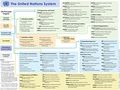 The UN is the sine qua non of bureaucracies, an organisation of such Byzantine complexity it makes your eyes bleed to look at it.
Each country around the world funds the UN via voluntary donations. Once they have coughed up, they are allowed to send national delegates to represent “their” interests at shindigs such as the CND. Those delegates are pre-briefed by their bureaucrats about the line they must take, and no dissent is allowed.
NGOs are notionally able to feed in their views to their delegates, although access is limited, and over the last few years the language of the CND has indeed moved towards harm reduction and children’s rights. But this merely propagates the basic, flawed premise that “drugs” are bad, not that the “war on drugs” has comprehensively failed, is ill-thought out, and actively damages society.
 UN decisions on drug policy are made by consensus, which means that there is no real democratic debate and that the resolutions are so bland as to be meaningless. At no point whatsoever are evidence-based alternative solutions, such as regulated legalisation, even whispered in the corridors of power.
The CND’s key achievement this year was to get all the nations to reaffirm their commitment to the 100-year old International Hague Convention, the first drug prohibition law in a long and escalating legal litany of failure and harm. And this in the teeth of all evidence provided by the successful decriminalisation experiments in Portugal, Switzerland and the Netherlands.
So here’s where the fun kicks in, but I stress that this is my highly personal take on what it was like to attend the CND last week:
.….….
WARNING: CND appears to be a potent psychotropic drug which has unknown and potentially damaging effects on the human brain. Exposure to CND for even so short a period as a week can lead to disorientation, numbness, depression and a dislocation from reality. No data exists about the long-term psychological effects of prolonged exposure, but some subjects can display uncharacteristic aggression after only a couple of days’ experience of CND.
CND appears to be highly addictive leading to rapid dependency, and delegates return year after year for another hit. For a week, it’s party time, but then comes the crashing low, as they have to push CND on their own countries for another long year, against all common notions of decency, humanity and community.
CND is continually presented to vulnerable delegates as the only lifestyle choice. Those who question its efficacy are outcast from the gang. But what of the delegates’ rights to live a CND-free life, away from the peer pressure, bullying and violence? What about reducing the harm that CND increasingly causes to communities across the world?
As the godfathers of CND push the line of harm reduction programmes, developing countries are increasingly drawn into a life of sordid “money dependency”, even prostituting themselves politically to enable their continued reliance on CND.
The organisations controlling CND garner huge profits, and there is little political will to change the current set-up.
.….….
So, a win-win for the drug cartels, terrorists, enforcement agencies, governments, bureaucrats and the wider global “drug war” infrastructure.
Not so good for the rest of us.


Law Enforcers Say Ending Prohibition Will Improve Global Security & Human Rights
VIENNA, AUSTRIA – Judges, prosecutors and jailers who support legalizing drugs are bringing their message to the United Nations Commission on Narcotic Drugs meeting next week in Vienna. At the U.N. session, which comes just days after the Obama administration stepped-up its attempts to counteract the emerging anti-prohibition sentiment among sitting presidents in Latin America, the pro-legalization law enforcement officials will work to embolden national delegations from around the world to push back against the U.S.-led failed “war on drugs.”
 Richard Van Wickler, a currently-serving jail superintendent who will be representing Law Enforcement Against Prohibition (LEAP) in Vienna, says, “World leaders who believe we could better handle drug problems by replacing criminalization with legal control are becoming less and less afraid of U.S. reprisal for speaking out or reforming their nations’ policies. And for good reason.”
Van Wickler, who has was named 2011’s Corrections Superintendent of the Year by the New Hampshire Association of Counties, explains, “Voters in at least two U.S. states will be deciding on measures to legalize marijuana this November. It would be pure hypocrisy for the American federal government to continue forcefully pushing a radical prohibitionist agenda on the rest of the world.”
In recent weeks, Presidents Otto Perez Molina of Guatemala, Juan Manuel Santos of Colombia, Laura Chinchilla of Costa Rica and Felipe Calderon of Mexico have added their voices to the call for a serious conversation on alternatives to drug prohibition, causing U.S. Vice President Joe Biden to travel to Latin America this week in an unsuccessful attempt to quash the debate.
 Former Chicago drug prosecutor James Gierach, recently a featured speaker at a conference in Mexico City last month attended by the first lady of Mexico and the former presidents of Colombia and Brazil, says, “The unending cycle of cartel violence caused by the prohibition market has turned a steady trickle of former elected officials criticizing prohibition into a flood of sitting presidents, business leaders and law enforcement officials calling for an outright discussion about legalization. It’s time for the U.S. and the U.N. to acknowledge that legal control, rather than criminalization, is a much better way to manage our drug problems. The world can have either drug prohibition, violence and corruption or it can have controlled drug legalization with safe streets and moral fabric, but it can’t have both.”
The UN meeting in Vienna is an annual opportunity for nations around the world to re-evaluate drug control strategies and treaties. More information about the meeting is here
In recent years, countries like Portugal and Mexico have made moves to significantly transform criminalization-focused drug policies into health approaches by fully decriminalizing possession of small amounts of all drugs. Still, no country has yet to legalize and regulate the sale of any of these drugs. Doing so, the pro-legalization law enforcers point out, would be the only way to prevent violent transnational criminal organizations from profiting in the drug trade.
 Also attending the conference on behalf of LEAP will be former Brazilian judge Maria Lucia Karam and former UK MI5 intelligence officer Annie Machon.
Law Enforcement Against Prohibition (LEAP) represents police, prosecutors, judges, FBI/DEA agents and others who support legalization after fighting on the front lines of the “war on drugs” and learning firsthand that prohibition only serves to worsen addiction and violence. More info can be found here.
CONTACT:
Tom Angell: 001 202 557‑4979 or media@leap.cc
Shaleen Title: 001 617 955‑9638 or speakers@leap.cc
An update is apparently due of the 1994 edition of the “Diagnostic and Statistical Manual of Mental Disorders”, the psychiatrists’ bible that allows them to tick-box their patients into a disorder, and then, no doubt, prescribe Big Pharma industry drugs or an expensive form of therapy. Anyone who has ever watched Adam Curtis’s excellent “Century of Self” will be aware of the pathologising of society to the benefit of the psychiatric professions and far beyond.
I am not making light of serious mental illnesses requiring specialised and long term treatment such as bipolar, schizophrenia or chronic depression. These are crippling and soul-destroying conditions and many families, including my own, have been touched by them.
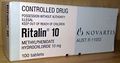 But I am concerned by the appalling Pharma-creep that has been going on over the last few decades where, for example, increasing numbers of children are labeled with ADHD and ladled full of Ritalin (which can also lead to a thriving black market in the onward sale of said drug). And we are apparently about to see ever more divaricating disorders added to the shrinks’ bible.
 As this recent article in The Independent states, stroppy teens will now have “oppositional defiance disorder”, and adults who think of sex more than every 20 minutes are suffering from “hypersexual disorder”. (How on earth will this be diagnosed — will potential sufferers have to keep a thought crime diary as they go about their daily lives? Management meetings could be so much more diverting as people break off to write an update every so often — although they might have to pretend they’re playing buzzword bingo.) And those suffering from shyness or loneliness will suffer from “dysthymia”. Well, as a classicist, I’m glad to see that ancient Greek still has a role to play in today’s lexicon.
I know that such behavioural traits can be debilitating, but to pathologise them seems rather extreme — enough to give a person a complex.….
 On another somewhat facetious note I was intrigued to see this doing the internet rounds recently. It appeared to suggest that having a robust distrust of your government was also about to be pathologised as Anti-Government Phobia, which I presume would mean that vast swathes of the world’s population were mentally ill. However, I think the clue to the legitimacy of the piece was in the name of the supposed author: Ivor E. Tower MD.….
However, back to the point of this article. This was the paragraph in the Indie report that really got my goat:
“More worrying, according to some experts, are attempts to redefine crimes as illnesses, such as “paraphilic coercive disorder”, applied to men engaged in sexual relationships involving the use of force. They are more commonly known as rapists.”
So it appears that crime will now be explained away as a disorder.
 But, but, but.… the key point LEAPing out at me, if you’ll forgive the clumsy link, is that this seems to be in direct, sharp contrast to how we deal with an immense and ongoing problem in the world today: namely the 50 year old failed “war on drugs”. In this phoney war millions of people across the world have been, and against all expert advice, continue to be treated as criminals rather than as patients.
Rather than rehash (sorry) all the well-known articles about why this war is such a failure on every conceivable front, let me just make three key points: prohibition will always fail (as this classic “Yes Minister” scene depicts), and the regulation and taxation of recreational drugs (in the same way as alcohol and tobacco) would be good for society and for the economy; it would decapitate organised crime and, in some cases, the funding of terrorism; and, most pertinently for the purposes of this article, it would make the use and possible abuse of recreational drugs a health issue rather than a criminal matter.
Many people at some point in their lives experiment with drugs such as dope, E, coke, or whatever and have fun doing so, just as many like to have a drink to unwind after work. A small percentage will go on to develop medical problems.
That is the crux of the argument here. Excessive abuse of drugs, both licit and illicit, is manifestly a health issue and yet some people are criminalised. Compare and contrast the proposed new shrinks’ bible, where what were formerly deemed to be crimes will now be seen as medical disorders.
 I would call this rank hypocrisy, but perhaps the shrinks can come up with a more high-brow name? I propose Societal DoubleThink Disorder.
The Bankers’ Bonus being that it would conveniently (psycho)pathologise all our “peace-speaking” war-mongering politicians, “free market” monopolistic big businesses, and “publicly owned but private profit” banks.
Praise the Government and pass the Ritalin.…