Category Archives: Machon
Canadian Speaking Tour, May 2009
 On 22 May I shall be starting my very own national speaking tour in Canada. Following my visit to California last year, the Canadian 9/11 Truth groups have pulled together a 7‑event tour, where I will have the chance to discuss the intelligence world, whistleblowing, going on the run and the issue of 9/11, particularly focusing on its repercussions around the world: the endless “war on terror”, the illegal wars in the Middle East, and the erosion of our democracies in the West.
The Canadian Truth Movement tirelessly campaigns for a new, independent inquiry in the tragic events of 9/11, and has in the past hosted speakers such as Professor David Ray Griffin and architect Richard Gage.
More information about the tour can be obtained from: directors@vancouver911truth.org or elizwood@shaw.ca. See you there!
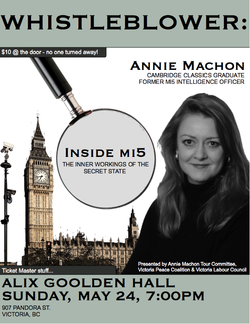
Tour dates:
Friday 22 May — Vancouver
Sunday 24 May — Victoria
Wednesday 27 May — Ottawa
Thursday 28 May —
Montréal
Saturday 30 May — Toronto
Sunday 31 May — Waterloo
Monday 1 June — Hamilton
Deja Vu
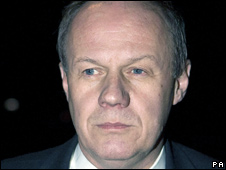 I had a strong sense of déjà vu today, when I read about the woes of Mrs Green, the barrister wife of Tory MP Damien Green who was arrested last November for allegedly encouraging government information leaks.
Mr Green was arrested under an obscure and antique piece of legislation for “conspiring to commit misconduct in a public office and aiding and abetting, counselling or procuring misconduct in a public office”. This, despite the fact that civil service mandarins had persuaded the Metropolitan Police Special Branch (MPSB) to investigate him because he posed a “serious threat to national security”. The case has now been dropped and reports have now shown that these civil servants significantly overstated the case to spur the police into action.
In such a case the obvious step would have been for the Met to have invoked the draconian 1989 Official Secrets Act. Certainly their heavy-handed response seemed to indicate that this was how they were viewing the gravity of the case, even if they were desperately trying to avoid the attendant scandal such a step would have provoked. Special Branch officers in the Counter-Terrorism squad are not normally sent to rip apart people’s houses for minor offences.
Which takes me back to the interview with the outraged Mrs Green. A barrister specialising in highly confidential child abuse cases, she innocently let the secret police enter her home, only to watch in disbelief as they ripped it apart in what sounds to me like a counter-terrorism style search. They, of course, found nothing relevant to their investigation, but scoured the computers, removed the bedsheets, took away love letters between the Greens, and even rifled through the children’s books.
I suppose I was more fortunate than the hapless Mrs Green. When the secret police ripped apart my home in the same way back in 1997, I was in Europe with my ex-partner and colleague, MI5 whistleblower David Shayler. After we had exposed the fact that MI5 was shamelessly breaking the law, the MPSB had obtained a warrant that allowed them to search our home for material relating to our employment in MI5. As I was away, they jackhammered the front door in, and then spent two days ripping through the flat in Pimlico. It had been my home for 4 years.
Naturally, the police found nothing relevant. That did not deter them from searching the place for two days, and taking away bags of possessions, including some of my underwear, the bedsheets, photographs, and our love letters. They also smashed up chairs and lamps, ripped the bath apart, pulled up the carpets, and scattered my remaining underwear across the bedroom floor. It looked like they had been playing with it.
I saw all this when I returned home a month later, and I felt violated. I know this is a common reaction when one’s home is burgled; but in this case my home had been despoiled by the police, not by criminals. No doubt, some would say that we, and the Greens, deserved this treatment. After all, we had the temerity to expose malpractice, lies, and crime within government circles. We, of course, would argue that we had acted for the public good.
Whatever. I still think that a counter-terrorism style search of a whistleblower’s house is over the top and deliberately intimidatory.
The police may have ransacked my home, but I was never charged with any offence. Nor did I ever did get my underwear or love letters back.….
Ethics Talk at a School
Earlier this month I was invited back to the Bishops Stortford High School to do a talk for its Ethics and Citizenship Course. This is a new, mandatory part of the national curriculum, and a good thing too.
I spoke about the role of a whistleblower in a democratic society, and also about the erosion of our democratic freedoms. About 300 pupils attended, and the response was fantastic, with many interesting and intelligent questions. And so there should be — this is the generation that will have to deal with the mess we are making of our civil liberties in this country.
August 2007 Mail on Sunday Article
David Shayler’s former partner reveals: How the bullying State crushed him
By ANNIE MACHON
Link to daily mail original — link to Daily Mail comments
Ten years ago this month former MI5 officer David Shayler made shocking revelations in this newspaper about how Britain’s spies were unable to deal with the growing threat of global terrorism.
He disclosed how MI5’s peculiar obsession with bureaucracy and secrecy prevented crucial information being used to stop bombings. And he told how insufficient agents and inept decision-making meant that terrorist groups were not properly monitored.
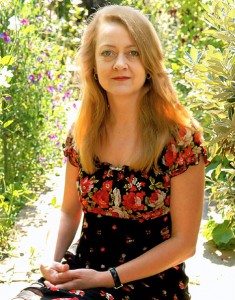 None of his original disclosures was shown to be wrong. Indeed, in 2005 the bombings in London proved the whistleblower correct: MI5 was not equipped to counter terror on our streets.
The Government response to David’s disclosures was to place a gagging order on The Mail on Sunday and launch a six-year campaign to discredit and persecute Shayler. Alastair Campbell threatened to ‘send in the heavies’ and the whistleblower was forced into exile abroad, jailed twice and sued for damages; his friends and family were harassed and some arrested.
He faced a bleak, uncertain future and for many years he was under intense stress and pressure, often isolated and always under surveillance. I had a ringside seat for the ‘Get Shayler’ operation because I was an MI5 officer at the same time (1991−96) and also his girlfriend and co-campaigner until last year when I ended my relationship with a broken man.
I witnessed first-hand the extraordinary psychological, physical and emotional burden of being a whistleblower when the full power of the secret State is launched against you. A decade on the results of that pernicious campaign became clear when I heard that David had proclaimed himself as “The Messiah” and “God” and could predict the weather. I was saddened but not shocked. The story of David Shayler is not just one of a whistleblower but also an indictment of the lack of democracy and accountability in Britain.
I first met David when we were both working in F2, the counter-subversion section of MI5, where we were repeatedly reassured that MI5 had to work within the law. We were young and keen to help protect our country. I noticed David immediately, as he was very bright, and always asked the difficult questions. Over a period of a year we became friends, and then we fell in love.
In the run-up to the 1992 General Election we were involved in assessing any parliamentary candidate and potential MP. This meant that they all had their names cross-referenced with MI5’s database. If any candidates had a file, this was reviewed. We saw files on most of the top politicians of the past decade, from Tony Blair down, something that gave us concerns.
We then both moved to G Branch, the international counter-terrorist division, with David heading the Libyan section. It was here that he witnessed a catalogue of errors and crimes: the illegal phone-tapping of a prominent Guardian journalist, the failure of MI5 to prevent the bombing of the Israeli embassy in London in July 1994, which resulted in the wrongful conviction of two innocent Palestinians, and the attempted assassination of Colonel Gaddafi of Libya.
David raised this with his bosses at the time but they showed no interest. So we resigned from MI5 after deciding to go public to force an inquiry into the Gaddafi plot.
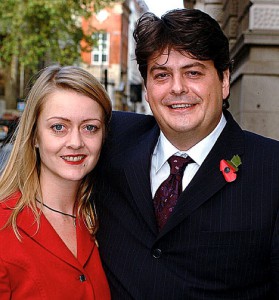 After The Mail on Sunday revelations we decamped to France while David tried to get the Government to take his evidence and investigate MI5’s crimes, something, to this day, it has refused to do. Rather than addressing the problem, the Intelligence Services tried to shoot the messenger. They planted stories claiming David was a fantasist, overlooked for promotion, and was too junior to know what he was talking about. These are classic tactics used against whistleblowers and were wheeled out again when Dr David Kelly took his life.
We eventually returned home in 2000, by which time David felt isolated and angry. He began to distrust friends and thought that many of them might be reporting on him. He was convinced he was constantly followed and began to take photographs of people in the street. When the trial started, and with David effectively gagged, the jury had no choice but to convict.
He received a six-month sentence but the judgment exonerated him of placing agents’ lives at risk, conceding that he had spoken out in what he thought to be the public interest. David had blown the whistle with the best of motives. He had exposed heinous State crimes up to and including murder, yet he was the one in prison with his reputation in tatters. His release from jail saw a changed man. David was full of anger, frustration and bitterness and became depressed and withdrawn. He was drawn to the spiritual teachings of kabbalah, and became obsessed with the subject instead of focusing on what we should do to survive. Last summer, I went away for a weekend. When I returned, David had shaved off all his hair and his eyebrows as part of his spiritual evolution. He knew that I had always loved his long, thick hair, so it felt like a personal slap in the face. He was in trouble. He was quick to anger if anyone questioned him. He became obsessive about little details, espoused wacky theories and shunned his family and old friends. His paranoia also escalated. His experience of being hounded and vilified for a decade had left a deep persecution complex. Eventually the strain was too much and I ended the relationship.
It was difficult as we had shared so much over the 14 years we had been together, but it felt that we were no longer a team – David was focusing only on esoteric issues. Looking back, I am still proud of what we did. I believe that if you witness the crimes that we did, you have to take action. But the price for taking that stand against a bully State can be high. It is tragic to see an honourable and brave man crushed in this way. The British Establishment is ruthless in protecting its own interests rather than those of our country. Today David Shayler is living testimony to that.
Resonance FM Interview
 This is an interview I recorded for Resonance FM with We Are Change UK, a rapidly-growing activist group in the USA and Europe, in which I get the chance to discuss the spies, their crimes, cover-ups, the media, the war on terror and the erosion of our freedoms, amongst many other issues:
Cynthia McKinney and Annie Machon in Amsterdam, 2007
After the London event in 2007, Cynthia McKinney and I flew over to Amsterdam for an interview at a big public event organised by new media organisation, Docs at the Docks.
The Rise of the Mercenary
Stephen Armstrong published an interesting article in today’s New Statesman magazine. Based on his new book War plc: the Rise of the New Corporate Mercenary, it examines the rise of the corporate security consultant. Or in basic English – mercenaries.
I met Stephen when I was invited by James Whale to review the book on Press TV. I was impressed with his research and depth of knowledge on this subject. It was an unusually harmonious talk show — rather than arguing, we all took a broadly similar approach to the issue of mercenaries, oversight and accountability.
The increasing privatisation of intelligence is an insidious development in the world of espionage and war. For many decades there have existed on the fringes of the official intelligence world a few private security companies; think Kroll, Blackwater, Aegis. These companies are often the last refuge of .….. former intelligence officers of the western spook organisations.
These people, often frustrated at the overly bureaucratic nature of the governmental spy organisations, resign and are gently steered towards these corporations. That, or the relocation officers get them nice juicy jobs at merchant banks, arms companies or international quangos. It’s always useful to have reliable chaps in useful places, after all.
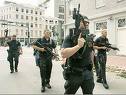 In the last decade, however, we have seen an explosion in the number of these companies. One of my former colleagues is a founder of Diligence, which is going from strength to strength. These kinds of companies specialise in corporate spying, the neutralisation of opposition and protest groups, and security. The latter usually boils down to providing military muscle in hot spots like Iraq. While I can see the attraction for soldiers leaving crack regiments and wondering what on earth they can do with their specialised expertise, and who then decide that earning £10,000 a week risking their lives in Baghdad is a good bet, this has worrying implications for the rule of law.
Leaving aside the small matter that, under international and domestic UK law, all wars of aggression are illegal, our official British military presence in Afghanistan and Iraq is at least to a certain degree accountable. The most egregious war crimes have resulted in court martials. But the new mercenaries live in a legal no-man’s land, and in this territory anything goes. Or can at least be covered up.
This is the same principle that has guided these unofficial spook companies over the years – plausible deniability. What little democratic oversight there is in the UK of the intelligence community still does give them limited pause for thought: what if the media hears about it? What if an MP asks an awkward question? By using former colleagues in the corporate intelligence world, MI5, MI6 et al can out source the risk.
The oversight and accountability for the official spooks and the army are bad enough. The privatisation of intelligence and military might makes a further mockery of the feeble oversight provisions in place in this country. This is a worrying development in legal and democratic terms; more importantly, it has a direct, daily impact on the rights of innocent men, women and children around the world. We need to ensure that the official and unofficial spooks and military are accountable under the law.
New Statesman Article, August 2008
The new spies
When
the Cold War ended, it didn’t spell curtains for the secret agent.
Private espionage is a booming industry and environmental protest
groups are its prime target

As you hunker down for the last few days of the Camp for Climate
Action, discussing how to force your way into Kingsnorth power station
in an attempt to prevent the construction of a new coal facility, cast
your eyes around your fellow protesters. Do they look entirely bona
fide to you? And don’t look for the old-school special branch officers
— Kent Police are a tiny force. It’s the corporate spies hired by
private companies you need to watch out for.
According to the private espionage industry itself, roughly one in four of your comrades is on a multinational’s payroll.
Russell Corn, managing director of Diligence, one of a growing
number of “corporate intelligence agencies”, with offices high in the
Canary Wharf glass tower, says private spies make up 25 per cent of
every activist camp. “If you stuck an intercept up near one of those
camps, you wouldn’t believe the amount of outgoing calls after every
meeting saying, ‘Tomorrow we’re going to cut the fence’,” he smiles.
“Easily one in four of the people there are taking the corporate
shilling.”
In April this year, for instance, the anti-aviation campaign network
Plane Stupid, one of the main organisers of the eco-camp built to
protest against the expansion of Heathrow Airport, announced that one
of its activists, Ken Tobias, was actually called Toby Kendall, was
working for a corporate espionage firm called C2i, and had been leaking
information about the group to paying clients and the media. He had
been hired by an as yet unknown private company to provide information
and disrupt the group’s campaigning.
When Tobias first turned up at Plane Stupid’s meetings in July 2007,
he seemed a committed former Oxford student dedicated to reducing
aircraft emissions. The group gradually became suspicious because he
showed up early at meetings, constantly pushed for increasingly drama
tic direct action and — the ultimate giveaway — dressed a little too
well for an ecowarrior. When they showed his picture around Oxford they
found an old college pal who identified him as Toby Kendall. A quick
Google search revealed his Bebo page with a link to a corporate
networking site, where his job as an “analyst” at C2i International,
working in “security and investigations”, was pasted in full public
view.
Just a month earlier, a woman called Cara Schaffer had contacted the
Student/Farmworker Alliance, an idealistic bunch of American college
students who lobby fast-food companies to help migrant workers in
Florida who harvest tomatoes. Like the cockle-pickers of Morecambe Bay,
many of these workers are smuggled into the US by gangs which then take
their passports and force them to work without pay to clear often
fictitious debts to regain their papers.
Digging up dirt
Again, Schaffer’s excessive eagerness aroused suspicion, and again,
the internet revealed her true identity. She owned Diplomatic Tactical
Services, a private espionage firm which had pre viously hired as a
subcontractor one Guillermo Zara bozo, today facing murder charges in
Miami for his role in allegedly executing four crew members of a
chartered fishing boat, an allegation he denies. Schaffer turned out to
be working for Burger King — the home, perhaps appropriately, of the
Whopper.
The cute thing about these two bozos is that they got caught pretty
early on, but that was because they were young and had no background in
espionage.
The real market is in proper, old-school spies who are suddenly
entering the private sector. For professional spooks, the 1990s were no
fun at all. The Cold War was over, defence spending was down and a
detailed knowledge of cold-drop techniques in central Berlin was
useless to governments looking for Arabic speakers who knew the Quran.
From New York and London to Moscow and Beijing, any decent-sized
corporation can now hire former agents from the CIA, FBI, MI5, MI6 and
the KGB. The ex-spooks are selling their old skills and contacts to
multinationals, hedge funds and oligarchs, digging up dirt on
competitors, uncovering the secrets of boardroom rivals and exposing
investment targets. They are also keeping tabs on journalists,
protesters and even potential employees.
“MI5 and MI6 in particular have always guided ex-employees into
security companies,” explains Annie Machon, the former MI5 agent who
helped David Shayler blow the whistle on the security services back in
1997. “It’s always useful to them to have friends they can tap for info
or recruit for a job that requires plausible deniability. The big
change in recent years has been the huge growth in these companies.
Where before it was a handful of private detective agencies, now there
are hundreds of multinational security organisations, which operate
with less regulation than the spooks themselves,” she says.
Corn’s company Diligence, for instance, was set up in 2000 by Nick
Day, a former MI5 spy, and an ex-CIA agent, Mike Baker. Before long,
the duo had built up a roster of high-paying clients including Enron,
oil and pharmaceutical companies, as well as law firms and hedge funds.
In 2001, a small investment by the Washington lobbying company Barbour
Griffith & Rogers propelled their growth. However, BGR and Baker
sold their stakes in 2005, shortly before a scandal shook Diligence.
KPMG, the global professional services firm, accused Diligence staff of
impersonating British spies to gain information on a corporate takeover
for a Russian telecoms client called Alfa Group. Diligence settled the
lawsuit without admitting liability.
Since then, it has recruited the former Conservative Party leader
Michael Howard as chairman of its European operations. And it is that
sort of respectability and lobbying power that big players are after.
In 2007, the parent company of the US private military firm Blackwater,
which hit the headlines for gunning down Iraqi civilians in Baghdad
last September, entered this market through Total Intelligence
Solutions (TIS), a new CIA-type private operation, to provide
intelligence services to commercial clients.
Discreet investigations
Blackwater’s vice-chairman, J Cofer Black, who runs TIS, spent three
decades in the CIA and the state department, becoming director of the
Counterterrorist Centre and co-ordinator for counter terrorism, a job
with ambassadorial rank. He describes the new company as bringing “the
intelligence-gathering methodology and analytical skills traditionally
honed by CIA operatives directly to the boardroom. With a service like
this, CEOs and their security personnel will be able to respond to
threats quickly and confidently — whether it’s determining which city
is safest to open a new plant in or working to keep employees out of
harm’s way after a terrorist attack.”
Black also says TIS will operate a “24/7 intelligence fusion and
warning centre” that will monitor civil unrest, terrorism, economic
stability, environmental and health concerns, and information
technology security around the world.
The established firms already operating in this area include Kroll,
Aegis, Garda, Control Risks, GPW and Hakluyt & Co. More firms are
opening every day and there is little regulation of the sector.
Hakluyt & Co was founded in 1995 by former British MI6 officers,
with a reputation for discreet and effective investigations. The
company butler, a former gurkha, greets visitors to its London HQ, a
town house off Park Lane. In winter, meetings can be conducted beside
the fire. Computers are rarely in sight. Hakluyt’s advisory board has
become an exit chamber for captains of industry and former government
officials. Members have included Sir Rod Eddington, a former BA CEO,
and Sir Christopher Gent, former chief executive of Vodafone.
“It is hard to work well for an oil company without knowing who all
the key decision-makers in a government are and having the right
contacts to reach them,” explains Stéphane Gérardin, who runs the
French private security company Géos. “We have an intelligence section
where we employ some investigative journalists, people from the finance
sector, from equity banks and some from security backgrounds.
“It is an important part of image protection for our clients as
well. We have our own tracking and monitoring centre, with analysts
doing risk mapping and preparing our clients for every potential
problem. It could be about alerting them to local sensitivities. Or, in
this globalised internet age, it can be a group of students in
Cambridge who have launched a protest website, who may be sending out a
petition.
“So we need to be able to understand and prepare our own propaganda
to counter such attacks. This is work we do to protect our clients.”
Trusted friend
Like the state security services, which ended up running Class War
in the 1990s after a hugely successful penetration, these spies work to
become reliable members of any protest movement. In April 2007, the
Campaign Against Arms Trade called in the police after court documents
showed that the weapons manufacturer BAE Systems had paid a private
agency to spy on the peace group.
BAE admitted that it had paid £2,500 a month to LigneDeux
Associates, whose agent Paul Mercer — accepted as a trusted member of
the campaign — passed information, including a legally privileged
document, to BAE’s director of security, Mike McGinty.
Unlike the security services, however, these services don’t bother
with penetrating the far left or anti-fascist groups. Their clients are
only interested in the protest movements that threaten corporations.
And as that is the nature of much protest in these times, it is a wide
field, but with a particular impact on environmental groups.
At any of this summer’s green protests the corporate spies will be
there, out-of-work MI5 agents tapping green activists’ mobile phones to
sell the information on to interested companies.
Russell Corn knows of incidents where a spook at a meeting has
suggested a high-street bank as a target, then left the meeting to
phone the officers of said bank, telling them that he has penetrated an
activist camp planning an attack and offering to sell the details. Corn
has no time for such behaviour, however.
“The thing about a really good private spy,” he tells me, “is that you’ll never know he’s around and he’ll never get caught.
“The fact you can’t see them … it means nothing at all.”
The Media and the Spies
The UK mainstream media has made much this week of Home Secretary Jacqui Smith’s assertion that MI5 had not requested the government’s proposed extension of the imprisonment without charge of terrorist suspects from 28 to 42 days.
This statement has caused a furore in the UK, and there is a chance that the PM may lose the key vote in Parliament on this amendment tomorrow.
 In fact, such has been the uproar that the Director General of MI5, Jonathan Evans, is reported by Reuters to have made a rare public statement:
“Since the security service is neither a prosecuting authority nor responsible for criminal investigations, we are not, and never have been, the appropriate body to advise the government on pre-charge detention time limits,” he said in a statement on the MI5 website.
“We have not, therefore, sought to comment publicly or privately on the current proposals, except to say that we recognise the challenge posed for the police service by the increasingly complex and international character of some recent terrorist cases.”
What particularly strikes me about this is an apparently insignificant phrase, “raised publicly or privately”.
In contrast to the Metropolitan Police Commissioner Sir Ian Blair, who admitted to “unintentionally misleading” the parliamentary Joint Committee charged with assessing the need to increase the detention limit, Evans had refused to give evidence about the 42 day issue. So he has certainly not raised this in a publicly accountable way.
It’s the word “private” that intrigues me. It reeks of sotto voce discussions between old school chums at the grander gentlemen’s clubs in London: of unattributable briefings between anonymous MI5 officers and chosen journalists; and of cosy lunches with Fleet Street editors in the DG’s dining room at Thames House, MI5’s London HQ.
While Evans denies using this methodology around the 42 day issue, his statement confirms that such private discussions do indeed play a part in influencing policy decisions and media perception.
 I saw this approach first-hand in the 1990s during the whistleblowing years. In fact, it was then that MI5 stepped up its charm offensive with politicians and journalists. It was during one of the first of these cosy media lunches in Thames House, hosted by the then DG Stephen Lander, that the respected BBC Diplomatic Editor Mark Urban asked a fateful question about the Gaddafi Plot and was reportedly told by Lander that “he was not here to answer half-baked questions from smart-arse journalists”. So there were certain shortfalls in the charm, even if the lack of accountability held up well.
But there are other, more sinister ways for the spies to manipulate public opinion. MI6 has a sensitive section called Information Operations (I/Ops), which exists purely to set the news agenda for the spies. I/Ops manages this either by massaging the facts, spinning the tone of the story or, more worryingly, planting false stories in a quiescent press.
In the 1990s there was a famous case. Colonel Gaddafi’s son, Saif Al Islam, applied for a visa to come to Britain. I/Ops planted a completely false story in The Sunday Telegraph that he was involved in money laundering with Iran and, lo and behold, MI5 had the perfect excuse to deny him a visa. Al Islam subsequently sued the newspaper which, faced with Shayler’s evidence, settled out of court.
 A few months ago the ex-head of MI6, Sir Richard Dearlove, gave a talk at the LSE about the intelligence agencies and the media. I went along to have a laugh, and was graciously allowed to ask a question. Naturally I raised the issue of I/Ops, its relationship with the media, and whether such a role was acceptable in a modern democracy.
In the context of the talk, what could have been more pertinent? However, Dearlove declined to answer. In fact, he went so far as to say that such a matter was “within the ring of secrecy”. At which point a journalist from a prestigious national newspaper who was sitting next to me, turned and said gleefully that this at last proved that I/Ops existed. Gratifying as this was, I shall reiterate my question: is the role of I/Ops acceptable in a modern democracy, where we are supposed to enjoy freedom of information, transparency and accountability from the powers-that-be?
IT Defense Conference, Hamburg January 2008
In January 2008 I spoke at the IT Defense Conference in Hamburg in January 2008. This is a summary of my talk.
The Spying Game? – Annie Machon
I gave a presentation about the role of intelligence
agencies in the current era of the unending “war on terror”, how they
monitor us, and the implications for our democracies.
 In the name of protecting national security, spy agencies are being
given sweeping new powers and resources. Their intelligence has been
politicised to build a case for the disastrous war in Iraq, they are
failing to stop terrorist attacks, and they continue to collude in
illegal acts of internment and torture, euphemistically called
“extraordinary rendition”. Most western democracies have already given
so many new powers to the spies that we are effectively living in
police states. As an informed community, what can we do about this?
t‑style: normal; font-variant: normal; font-weight: normal; font-size: 7pt; line-height: normal; font-size-adjust: none; font-stretch: normal;”> The illegal MI6
assassination attempt against Colonel Gaddafi of Libya
International Islamic Fair, Malaysia 2007
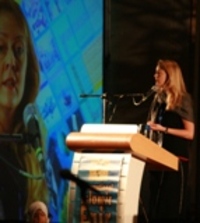 In July 2007 I was invited to speak at the International Islamic Fair in Malaysia along with 9/11 hero William Rodriguez.
The Fair is designed to increase understanding and co-operation between Islamic and non-Islamic communities. Politicians, diplomats and campaigners from around the world are invited to speak. Thousands of people attended the four day event, and the Fair made headlines across the Far East.
Here is the photo gallery of the 2007 IIF Conference.
I was honoured to receive a standing ovation, and comments included:
“Former British MI5 agent & American depleted uranium expert among best received paper presenters”
and
“The IIF2007 Conference fulfilled most of its pre-event promises – as far as content goes. In addition to the presence of William Rodriguez (last survivor of 9/11) as a session moderator, the conference participants were also ‘thrilled’ by the lectures of other overseas speakers including Sheikh Imran Hosein (former N.York mosque imam), H.E. Mahdi Ibrahim Muhammad (Ambassador / member of National Assembly, Sudan), Annie Machon (former British Intelligence MI5 agent) and Khaled Taha of Aljazeera, Qatar.”
Spies and the Law
For context, here’s a little bit of background information about the UK’s spy agencies, and the legal constraints within which they are supposed to operate.
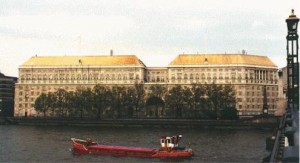 There are three primary agencies: MI5 (the UK Security Service), MI6 (Secret Intelligence Service — SIS) and GCHQ (the Government Communications HQ). Beyond this inner circle, there is the Metropolitan Police Special Branch (MPSB), the special branches of every other police force in the UK, military intelligence, and Customs, amongst others.
MI5 and MI6 were set up in 1909 during the build up to the First World War, when their remit was to uncover German spies. For the next 80 years they didn’t officially exist and operated outside the law.
In 1989 MI5 was put on a legal footing for the first time when parliament passed the Security Service Act. This stated that it had to work within legal parameters, and if it wanted to do something that would otherwise be illegal, such as breaking into and bugging someone’s house, it had to get the written permission of its political master, the Home Secretary. Without that, MI5 would be breaking the law just as you or I would be.
MI6 and GCHQ were not put on a legal footing until the 1994 Intelligence Services Act, and are answerable to the Foreign Secretary. The same Act also set up the Intelligence and Security Committee in Parliament as a sop to democratic oversight. The ISC is responsible for overseeing the policy, finance and administration of the three agencies. It has absolutely no remit to look at their operational running, nor can it investigate alleged crimes committed by them. Even if it could, the ISC has no power to call for witnesses or demand documents from the spooks. Moreover, the committee is appointed by the Prime Minister, answerable only to him, and he can vet its findings. Much of the ISC’s annual reports are blanked out.
 When I was recruited by MI5 in the early 1990s, the organisation was at great pains to explain that it worked within the law, was accountable, and its work was mainly investigating terrorism. Once I began working there, this quickly proved to be untrue. MI5 is incompetent, it breaks the law, connives at the imprisonment of innocent people, illegally bugs people, lies to government (on whom it holds personal files) and turns a blind eye to false flag terrorism. This is why I resigned and helped to blow the whistle.
With all this hysteria about the threat from Al Qaeda, and the avalanche of new powers and resources being thrown at the spooks, as well the erosion of our liberties, we need to keep a cool head. Why don’t our politicians take a step back and ask what precisely are the scale and nature of the threats facing this country, and how can we best police them? As Sir Ian Blair recently showed, we cannot take the security forces’ words about this at face value.
There’s a lot of historic baggage attached to MI5 and 6, particularly after their dirty tricks against the left in the 1980s. As they are now primarily doing a policing job against terrorism, why not just clear the decks and start again? Set up a dedicated counter-terrorism agency, which is properly accountable to parliament, as the police already are and the spies are not.
As it stands the UK has the most secretive intelligence agencies in the western world. They are exempt from the Freedom of Information Act, and protected by the draconian Official Secrets Act. The 1989 OSA makes it a criminal offence for anyone to blow the whistle on crimes committed by the spies, and it is no longer possible for a whistleblower to argue that they acted in the public interest.
No other western democracy has spies who are quite so unaccountable, nor so protected from scrutiny by the law. The closest analogies are probably the intelligence agencies of countries such as Libya or Iran. Particularly as we now know that MI5 and MI6 officers are conniving in extraordinary rendition and the use of torture.
Are they legal? Yes, now, in theory. Do they abide by the law? Only when it suits them. Are they ethical? Absolutely not.
Art; Signs of the Times
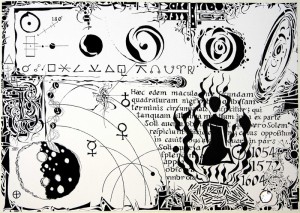 ’Signs of the Times, A coded history of alphabets and communication’ is a series of works by artist Paul Flack who collaborated with me on hidden messages and codes in art:
Inspired by the complex evolution of alphabets, words and symbols sculptor Paul Flack has been interested in language and its meaning for many years. Cryptic meaning suffuses his work, which is a blend of words and symbols from many different cultures. Hieroglyphs and runes jostle for space with modern alphabets and binary code on painted canvasses, stone carvings and sculptures. The outcome is a fluid mixture of man-made meaning and universal, geometric shapes.
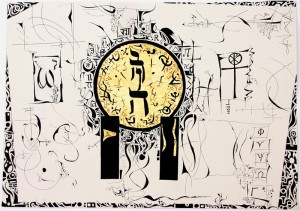 Paul’s collaboration with Annie Machon — a leading civil liberties activist and former MI5 intelligence officer — has enabled him to take his understanding of codes, censorship and the secretive side of language to a new level.
“We live in an age of spoon-fed information and extreme censorship. I want people to think about the origins of language and how it binds cultures together, as opposed to separating them” — Paul Flack
“It’s a cliché, but you really shouldn’t believe everything you read. History is written by the victorious and today’s ruling élite is certainly no less ruthless in its approach to secrecy and censorship.” — Annie Machon
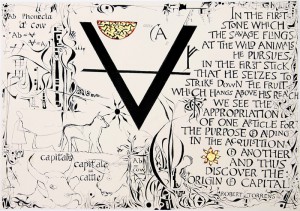 “If this sounds a bit controversial, all the better. Some alternative views of recent events are encoded into the work, and if you look hard enough you will find them.
“Of course, what you do with the information is up to you,” — Paul Flack
Coda: Sadly, Paul died unexpectedly in 2008. His was a rare and beautiful spirit, and he is much missed by his many friends.