The Real Reason for the Police State?

DroneI haven’t writ­ten here for a while, des­pite the embar­ras de richesses that has been presen­ted to us in the news recently: Dame Stella say­ing that the UK is becom­ing a police state;  drones will patrol the streets of Bri­tain, watch­ing our every move; data­bases are being built, con­tain­ing all our elec­tron­ic com­mu­nic­a­tions; ditto all our travel move­ments. What can a lone blog­ger use­fully add to this?  Only so much hot air — the facts speak for themselves.

Plus, I’ve been a bit caught up over the last couple of months with Oper­a­tion Escape Pod. Not all of us are sit­ting around wait­ing for the pris­on gates to clang shut on the UK. I’m outta here!

But I can­’t res­ist an inter­est­ing art­icle in The Spec­tat­or magazine this week. And that’s a sen­tence I nev­er thought I would write in my life.

Tim Ship­man, quot­ing a pleth­ora of anonym­ous intel­li­gence sources and former spooks, asserts that Bri­tain’s for­eign policy is being skewed by the need to pla­cate our intel­li­gence allies, and that the CIA is roam­ing free in the wilds of Yorkshire.

His sources tell him that the UK is a “swamp” of Islam­ic extrem­ism, and that the domest­ic spies are ter­ri­fied that there will be a new ter­ror­ist atro­city, prob­ably against US interests but it could be any­where, car­ried out by our very own home-grown ter­ror­ists. Accord­ing to Ship­man, this ter­rible pro­spect had all the spooks busily down­ing trebles in the bars around Vaux­hall Cross in the wake of the Mum­bai bombings.

Apart from the sug­ges­tion that the spies’ drink­ing cul­ture appears to be as robust as ever, I find this inter­est­ing because well-sourced spook spin is more likely to appear in the august pages of The Speccie than in, say, Red Pep­per. But if this is an accur­ate reflec­tion of the think­ing of our politi­cians and intel­li­gence com­munity, then this is an extremely wor­ry­ing devel­op­ment. It goes a long way to explain­ing why the UK has become the most policed state in the West­ern world.

Yes, in the 1990s the UK prac­tised a strategy of appease­ment towards Islam­ic extrem­ists. MI5’s view was always that it was bet­ter to give rad­ic­als a safe haven in the UK, which they would then be loathe to attack dir­ectly, and where a close eye could be kept on them.

This, of course, was derailed by Blair’s Mes­si­an­ic mis­sion in the Middle East. By uni­lat­er­ally sup­port­ing Bush’s adven­tur­ism in Afgh­anistan and Iraq, in the teeth of stark warn­ings about the attend­ant risks from the head of MI5, Bri­tain has become “the enemy” in the eyes of rad­ic­al Islam. The gloves are off, and we are all at great­er risk because of our former PM’s hubris.

But now we appar­ently have free-range CIA officers infilt­rat­ing the Muslim com­munit­ies of the UK.  No doubt Mossad is also again secretly  tol­er­ated, des­pite the fact that they had been banned for years from oper­at­ing in the UK because they were too unpre­dict­able (a civil ser­vice euphem­ism for violent).

And I am will­ing to bet that this inter­na­tion­al per­cep­tion that UK spooks will be caught off-guard by an appar­ently Brit­ish-ori­gin­ated ter­ror­ist attack is the reas­on for the slew of new total­it­ari­an laws that are mak­ing us all sus­pects. The drones, the datamin­ing and the dra­coni­an stop-and-search laws are designed to reas­sure our invalu­able allies in the CIA, Mossad, ISI and the FSB.  They will not be put in place to “pro­tect” us.

MPs object to police state

Dgreen An inter­est­ing polit­ic­al row has erup­ted this week in the UK about the arrest of the oppos­i­tion Tory MP, Dami­en Green, who is also the Shad­ow Min­is­ter for Immig­ra­tion.  He was arres­ted on Thursday for alleged breaches of an obscure com­mon law  “aid­ing and abet­ting mis­con­duct in pub­lic office”.

Reports indic­ate that the Met­ro­pol­it­an Police Spe­cial Branch, or as the news­pa­pers would have it the “anti-ter­ror­ism branch” was called in to invest­ig­ate leaks from the Home Office about immig­ra­tion policy, that Green was using these leaks to score points off the gov­ern­ment, and the Home Sec­ret­ary Jac­qui Smith in particular.

Nat­ur­ally, MPs from both sides of the House have been froth­ing at the mouth:  how dare Plod embar­rass an MP by arrest­ing him without warn­ing and by con­duct­ing co-ordin­ated searches of his homes and offices in both Kent and Lon­don?  News­pa­pers, par­tic­u­larly on the right of the polit­ic­al spec­trum, have been full of head­lines say­ing that this is proof that we are liv­ing in a police state.

While I have some sym­pathy for the belea­guered Mr Green, hav­ing also been hauled off by the Met Spe­cial Branch and quizzed for hours for dis­cuss­ing sens­it­ive inform­a­tion that was very much in the pub­lic interest, as well as see­ing my home ripped apart in a co-ordin­ated counter-ter­ror­ism style raid and seen friends arres­ted in co-ordin­ated dawn raids, I am still aghast at the hypo­crisy of both the politi­cians’ and medi­a’s reaction.

Many of us are already all to pain­fully aware that we live in a de facto police state.  Under the notori­ous Sec­tion 44 of the 2000 Ter­ror­ism Act, we can all be stopped and searched for no reas­on — and can even be arres­ted purely so that a bobby on the beat can ascer­tain our iden­tity.  Notices to this effect are now help­fully pinned up out­side most tube sta­tions in Lon­don.  Thou­sands of people are sub­ject to this across the UK every year on the streets of Britain.

But oth­er points rather leap to my atten­tion from the cov­er­age of this case.  If MPs don’t like the heavy-handed use and abuse of police powers, why did they pass these laws in the first place?  Did they not think through the implic­a­tions?  Or do they think that, as MPs, they are some­how above the laws of this land?

Plus, seni­or MPs are arguing that the use of leaks from dis­gruntled civil ser­vants is a time-hon­oured way for HM Oppos­i­tion in Par­lia­ment to hold the gov­ern­ment to account.  Well, that might be good for the MPs’ par­lia­ment­ary careers, but what of the hap­less and fre­quently brave souls with­in the Civil Ser­vice who face 2 years in pris­on for such leaks if they are con­victed of a breach of the 1989 Offi­cial Secrets Act?  And, of course, there is no leg­al defense under the OSA of hav­ing acted “in the pub­lic interest” — the very argu­ment that MPs are using to jus­ti­fy Green’s expos­ure of Home Office cov­er-ups and incompetence. 

As far as I can see, there have been no com­ments from either journ­al­ists or MPs about the fate of the source.    The most I could find was the fol­low­ing in the Daily Tele­graph:

An alleged “whis­tleblower”, thought to be a male Home Office offi­cial was arres­ted 10 days ago.”

Either that means that journ­al­ists and MPs could­n’t give a toss about the fate of this per­son — after all, an MP’s career is far more import­ant — or that any report­ing of the arrest of the whis­tleblower has been injunc­ted in the media to the nth degree.  This would be even more troub­ling, as someone can just be “dis­ap­peared” into a Kafka-esque leg­al nightmare. 


Echelon and the Special Relationship

Journ­al­ist and writer James Bam­ford, has a new book, “The Shad­ow Fact­ory: The Ultra-Secret NSA from 9/11 to the Eaves­drop­ping on Amer­ica” (Doubleday), which came out this week in the United States.

Bam­ford is a former pro­du­cer at ABC News of thirty years’ stand­ing, and his book has caused quite a stir. One of his key gripes is the fact that for­eign com­pan­ies try to acquire work in sens­it­ive US depart­ments. He cites in par­tic­u­lar the attempt in 2006 of Israeli data secur­ity com­pany, Check Point Soft­ware Tech­no­lo­gies, to buy an Amer­ic­an com­pany with exist­ing con­tracts at the Defence Depart­ment and the NSA. This deal was stopped after the FBI objected.

For­eign soft­ware and secur­ity com­pan­ies work­ing with­in intel­li­gence agen­cies are indeed a prob­lem for any coun­try. It com­prom­ises the very notion of nation­al sov­er­eignty. In the UK, MI5 and many oth­er gov­ern­ment depart­ments rely on pro­pri­et­ary soft­ware from com­pan­ies like Microsoft, notori­ous for their vul­ner­ab­il­ity to hack­ers, vir­uses and back door access. Should our nation’s secrets really be exposed to such eas­ily avoid­able vulnerabilities?

Anoth­er sec­tion of the book to have hit the head­lines is Bam­ford’s claims that bed­room “con­ver­sa­tions” of sol­diers, journ­al­ists and offi­cials in Iraq have been bugged by the Nation­al Secur­ity Agency (NSA).

Bam­ford, who is by no means a fan of the NSA in its cur­rent rampant form, makes the mis­take of think­ing that in the inno­cent days pre‑9/11, the agency respec­ted demo­crat­ic rights enshrined in the US con­sti­tu­tion and nev­er snooped on US cit­izens in their own country.

While tech­nic­ally this might be true, does nobody remem­ber the ECHELON system?

ECHELON was an agree­ment between the NSA and its Brit­ish equi­val­ent GCHQ (as well as the agen­cies of Canada, Aus­tralia, and New Zea­l­and) whereby they shared inform­a­tion they gathered on each oth­ers’ cit­izens. GCHQ could leg­ally eaves­drop on people out­side the UK without a war­rant, so they could tar­get US cit­izens of interest, then pass the product over to the NSA. The NSA then did the same for GCHQ. Thus both agen­cies could evade any demo­crat­ic over­sight and account­ab­il­ity, and still get the intel­li­gence they wanted.

Spe­cial rela­tion­ship, anyone?

August 2007 Mail on Sunday Article

Dav­id Shayler­’s former part­ner reveals: How the bul­ly­ing State crushed him
By ANNIE MACHON

Link to daily mail ori­gin­al — link to Daily Mail com­ments

Ten years ago this month former MI5 officer Dav­id Shayler made shock­ing rev­el­a­tions in this news­pa­per about how Bri­tain’s spies were unable to deal with the grow­ing threat of glob­al terrorism.

He dis­closed how MI5’s pecu­li­ar obses­sion with bur­eau­cracy and secrecy pre­ven­ted cru­cial inform­a­tion being used to stop bomb­ings. And he told how insuf­fi­cient agents and inept decision-mak­ing meant that ter­ror­ist groups were not prop­erly monitored.

None of his ori­gin­al dis­clos­ures was shown to be wrong. Indeed, in 2005 the bomb­ings in Lon­don proved the whis­tleblower cor­rect: MI5 was not equipped to counter ter­ror on our streets.

The Gov­ern­ment response to Dav­id’s dis­clos­ures was to place a gag­ging order on The Mail on Sunday and launch a six-year cam­paign to dis­cred­it and per­se­cute Shayler. Alastair Camp­bell threatened to ‘send in the heav­ies’ and the whis­tleblower was forced into exile abroad, jailed twice and sued for dam­ages; his friends and fam­ily were har­assed and some arrested.

He faced a bleak, uncer­tain future and for many years he was under intense stress and pres­sure, often isol­ated and always under sur­veil­lance. I had a ring­side seat for the ‘Get Shayler’ oper­a­tion because I was an MI5 officer at the same time (1991−96) and also his girl­friend and co-cam­paign­er until last year when I ended my rela­tion­ship with a broken man.

I wit­nessed first-hand the extraordin­ary psy­cho­lo­gic­al, phys­ic­al and emo­tion­al bur­den of being a whis­tleblower when the full power of the secret State is launched against you. A dec­ade on the res­ults of that per­ni­cious cam­paign became clear when I heard that Dav­id had pro­claimed him­self as “The Mes­si­ah” and “God” and could pre­dict the weath­er. I was saddened but not shocked. The story of Dav­id Shayler is not just one of a whis­tleblower but also an indict­ment of the lack of demo­cracy and account­ab­il­ity in Britain.

I first met Dav­id when we were both work­ing in F2, the counter-sub­ver­sion sec­tion of MI5, where we were repeatedly reas­sured that MI5 had to work with­in the law. We were young and keen to help pro­tect our coun­try. I noticed Dav­id imme­di­ately, as he was very bright, and always asked the dif­fi­cult ques­tions. Over a peri­od of a year we became friends, and then we fell in love.

In the run-up to the 1992 Gen­er­al Elec­tion we were involved in assess­ing any par­lia­ment­ary can­did­ate and poten­tial MP. This meant that they all had their names cross-ref­er­enced with MI5’s data­base. If any can­did­ates had a file, this was reviewed. We saw files on most of the top politi­cians of the past dec­ade, from Tony Blair down, some­thing that gave us concerns.

We then both moved to G Branch, the inter­na­tion­al counter-ter­ror­ist divi­sion, with Dav­id head­ing the Liby­an sec­tion. It was here that he wit­nessed a cata­logue of errors and crimes: the illeg­al phone-tap­ping of a prom­in­ent Guard­i­an journ­al­ist, the fail­ure of MI5 to pre­vent the bomb­ing of the Israeli embassy in Lon­don in July 1994, which res­ul­ted in the wrong­ful con­vic­tion of two inno­cent Palestini­ans, and the attemp­ted assas­sin­a­tion of Col­on­el Gad­dafi of Libya.

Dav­id raised this with his bosses at the time but they showed no interest. So we resigned from MI5 after decid­ing to go pub­lic to force an inquiry into the Gad­dafi plot.

After The Mail on Sunday rev­el­a­tions we decamped to France while Dav­id tried to get the Gov­ern­ment to take his evid­ence and invest­ig­ate MI5’s crimes, some­thing, to this day, it has refused to do. Rather than address­ing the prob­lem, the Intel­li­gence Ser­vices tried to shoot the mes­sen­ger. They planted stor­ies claim­ing Dav­id was a fan­tas­ist, over­looked for pro­mo­tion, and was too juni­or to know what he was talk­ing about. These are clas­sic tac­tics used against whis­tleblowers and were wheeled out again when Dr Dav­id Kelly took his life.

We even­tu­ally returned home in 2000, by which time Dav­id felt isol­ated and angry. He began to dis­trust friends and thought that many of them might be report­ing on him. He was con­vinced he was con­stantly fol­lowed and began to take pho­to­graphs of people in the street. When the tri­al star­ted, and with Dav­id effect­ively gagged, the jury had no choice but to convict.

He received a six-month sen­tence but the judg­ment exon­er­ated him of pla­cing agents’ lives at risk, con­ced­ing that he had spoken out in what he thought to be the pub­lic interest. Dav­id had blown the whistle with the best of motives. He had exposed hein­ous State crimes up to and includ­ing murder, yet he was the one in pris­on with his repu­ta­tion in tat­ters. His release from jail saw a changed man. Dav­id was full of anger, frus­tra­tion and bit­ter­ness and became depressed and with­drawn. He was drawn to the spir­itu­al teach­ings of kab­ba­l­ah, and became obsessed with the sub­ject instead of focus­ing on what we should do to sur­vive. Last sum­mer, I went away for a week­end. When I returned, Dav­id had shaved off all his hair and his eye­brows as part of his spir­itu­al evol­u­tion. He knew that I had always loved his long, thick hair, so it felt like a per­son­al slap in the face. He was in trouble. He was quick to anger if any­one ques­tioned him. He became obsess­ive about little details, espoused wacky the­or­ies and shunned his fam­ily and old friends. His para­noia also escal­ated. His exper­i­ence of being houn­ded and vil­i­fied for a dec­ade had left a deep per­se­cu­tion com­plex. Even­tu­ally the strain was too much and I ended the relationship.

It was dif­fi­cult as we had shared so much over the 14 years we had been togeth­er, but it felt that we were no longer a team – Dav­id was focus­ing only on eso­ter­ic issues. Look­ing back, I am still proud of what we did. I believe that if you wit­ness the crimes that we did, you have to take action. But the price for tak­ing that stand against a bully State can be high. It is tra­gic to see an hon­our­able and brave man crushed in this way. The Brit­ish Estab­lish­ment is ruth­less in pro­tect­ing its own interests rather than those of our coun­try. Today Dav­id Shayler is liv­ing testi­mony to that.

Poor Bloody Infantry

There is an ongo­ing cam­paign to save Bletch­ley Park for the nation, in the teeth of gov­ern­ment oppos­i­tion. As his­tor­ic Brit­ish monu­ments go, the ques­tion of wheth­er to pre­serve it for pos­ter­ity should be a no-brain­er. Bletch­ley is not only where Hitler­’s Enigma code machine was decryp­ted, along with many oth­er sys­tems, which argu­ably gave the Allies the intel­li­gence advant­age that led to vic­tory in World War 2, it is also where the first digit­al elec­tron­ic com­puters, code­named Colos­sus, were oper­ated. Two land­mark events of the 20th century.

Recently The Times repor­ted on this cam­paign. The art­icle also the dwells at some length on how long Bletch­ley’s secrets were kept by the 10,000 people who worked there dur­ing the war. Although this inform­a­tion was declas­si­fied after 30 years, the habit of secrecy was so deeply ingrained that many former employ­ees nev­er breathed a word. The art­icle laments the passing of this habit of dis­cre­tion from Brit­ish life, stat­ing that politi­cians and seni­or intel­li­gence officers now appear to view the pos­ses­sion of insider know­ledge as a good pen­sion fund when they come to write their memoirs.

Over the last dec­ade we have see a myri­ad of books emer­ging for the upper ech­el­ons of gov­ern­ment and intel­li­gence in the UK: Alastair Camp­bell, Robin Cook, Wash­ing­ton Ambas­sad­or Sir Chris­toph­er Mey­er, ex-MI5 chief Dame Stella Rim­ing­ton. Even Tony Blair has appar­ently signed a sev­en fig­ure deal for his memoirs.

All these books have a num­ber of char­ac­ter­ist­ics in com­mon: they are lengthy, but say little of rel­ev­ance about the burn­ing issues of the day; they appear to have been writ­ten for profit and not in the pub­lic interest; and not one of these writers has ever even been arres­ted under the Offi­cial Secrets Act, even when there is clear prima facie evid­ence of a breach.

Yet these dili­gent authors are the very people who are the first to use the OSA to stifle legit­im­ate dis­clos­ure of crime, cor­rup­tion and incom­pet­ence in the highest levels of gov­ern­ment and intel­li­gence by real whis­tleblowers, who risk their careers and their free­dom. The hypo­crisy is breathtaking.

But was the old-fash­ioned, blanket dis­cre­tion, vaunted by The Times, really such a good thing? The code of “loose talk costs lives” may have made sense dur­ing the Second World War, when this nation was fight­ing for its life. The work at Bletch­ley was mani­festly a suc­cess, obvi­at­ing any need to blow the whistle. But who can tell how these pat­ri­ot­ic men and women would have reacted had they wit­nessed crimes or incom­pet­ence that dam­aged our nation’s secur­ity, led to the deaths of our sol­diers, or even pos­sible defeat?

Also, was the 30-year non-dis­clos­ure rule around the work of Bletch­ley really neces­sary? After all, the war had been won, so how could dis­clos­ure bene­fit the enemy? This unthink­ing applic­a­tion of the stand­ard rules cost the UK dearly. In fact, it would be accur­ate to say that it severely dam­aged the UK’s eco­nom­ic well­being – some­thing the OSA is sup­posed to protect.

In 1943 the Brit­ish were the world lead­ers in digit­al elec­tron­ic com­put­ing. The dra­coni­an Offi­cial Secrets Act pre­cluded the devel­op­ment and com­mer­cial use of this know­ledge in Bri­tain after the war. In fact, mind­bog­glingly, the Colos­sus com­puters were dis­mantled and the research destroyed.

There were no sim­il­ar pro­vi­sions affect­ing the Amer­ic­an cryp­to­graph­ers who had been sta­tioned at Bletch­ley. Con­sequently, after the war they enthu­si­ast­ic­ally applied Brit­ish research and tech­no­logy to devel­op the US com­puter research pro­gramme and even­tu­ally the mar­ket, pav­ing the way to the suc­cess of Sil­ic­on Val­ley and the dom­in­a­tion of the world’s IT mar­kets for dec­ades. What price the famed Brit­ish stiff upper lip and dis­cre­tion then?

Of course, there need to be leg­al pro­vi­sions to pro­tect real secrets that could affect Bri­tain’s nation­al secur­ity. How­ever, this should be pro­por­tion­ate and bal­anced, and should not pre­vent the devel­op­ment of new research and tech­no­lo­gies, the expos­ure in the pub­lic interest of crime, and cer­tainly not the fact our coun­try was taken into war on the basis of lies.

Real­ist­ic­ally, how­ever, in the age of the inter­net such leg­al pro­vi­sions are increas­ingly mean­ing­less. Des­pite this, more and more coun­tries appear to be adopt­ing Bri­tain’s mod­el of anti­quated and dra­coni­an secrecy legislation.

We live in a coun­try that crim­in­al­ises any dis­clos­ure of sens­it­ive inform­a­tion – unless it comes in the form of mem­oirs from seni­or politi­cians, White­hall offi­cials or spooks of course. As always, there is one rule for the gen­er­als and one for the poor bloody infantry.

For the good of our coun­try, we need to rethink this legislation.

Save Our Free Speech

The Guard­i­an today repor­ted that the United Nations Com­mit­tee on Human Rights had issued a damning indict­ment of the Brit­ish gov­ern­ment’s use of legis­la­tion to sup­press a right that is fun­da­ment­al to all func­tion­ing demo­cra­cies: free­dom of expression.

This is not news to me. But it’s inter­est­ing that free­dom of expres­sion is now being cur­tailed in so many var­ied, inter­est­ing and ima­gin­at­ive ways: libel laws, ter­ror­ism laws and offi­cial secrecy. That’s quite an arsenal.

Bri­tain is now infam­ous for being the “libel cap­it­al” of the world. Wealthy indi­vidu­als can use our courts to sup­press pub­lic­a­tion of crit­ic­al books and art­icles any­where in the world, if they can prove that the book has been sold in the UK – even if it’s just one, second-hand copy on Amazon. The magazine, Private Eye, has been com­ment­ing on this extens­ively over the last year.

Then, under the slew of new counter-ter­ror­ism legis­la­tion that the Labour gov­ern­ment has intro­duced since 2001, it is now an offence to say any­thing that might “encour­age” ter­ror­ism. That defin­i­tion is so broad that, say, you or I made an inno­cent com­ment about the Palestini­an or Iraqi situ­ation, and this could be mis­con­strued by anoth­er per­son as encour­aging them to viol­ence, this could be assessed sub­ject­ively as a crim­in­al offence by the pro­sec­ut­ing author­it­ies. This is third party thought-crime.

These sort of laws have a neg­at­ive impact on free speech, as pub­lish­ers, edit­ors and journ­al­ists begin to self-cen­sor rather than run informed risks for the pub­lic good.

But it’s the third area of law that res­on­ates most with me, for obvi­ous reas­ons: the 1989 Offi­cial Secrets Act, which crim­in­al­ises any unau­thor­ised dis­clos­ure by serving or former intel­li­gence officers, noti­fied per­sons, and oth­er crown ser­vants and offi­cials. These people are the most likely to wit­ness high crimes and mis­de­mean­ors on the part of gov­ern­ment, police and the intel­li­gence ser­vices, and yet they are the most crim­in­al­ised in this coun­try for speak­ing out. Whis­tleblowers in oth­er areas of work are spe­cific­ally pro­tec­ted by the law under the Pub­lic Interest Dis­clos­ure Act (1998).

How did this hap­pen? Ever since the 1911 Offi­cial Secrets Act came into force, there has been legis­la­tion to pro­tect this nation’s genu­ine secrets against the actions of trait­ors. Under this law, crown ser­vants face 14 years in pris­on if they betray inform­a­tion to hos­tile powers. Of course we need to pro­tect genu­ine secrets, and this is cer­tainly safe­guard enough.

The change in this law was spe­cific­ally designed to gag genu­ine whis­tleblowers in sens­it­ive areas, not pro­tect nation­al secur­ity. This came about in the 1980s after the notori­ous failed pro­sec­u­tion of Min­istry of Defense civil ser­vant, Clive Pont­ing. In 1984 he blew the whistle on the fact the Brit­ish gov­ern­ment knew that the Argen­tini­an war­ship, the Gen­er­al Bel­grano, was sail­ing away from the exclu­sion zone dur­ing the Falk­lands War in 1982. Des­pite this, the order was still giv­en to attack it, and many were killed. Pont­ing was rightly out­raged by this, and went pub­lic. His actions were mani­festly in the pub­lic interest, and this was pre­cisely the suc­cess­ful defense he ran in court. Furi­ous, the Con­ser­vat­ive gov­ern­ment of the time re-wrote the secrecy laws, remov­ing the pub­lic interest defense to deter such prin­cipled whis­tleblowers in the future. And this is the cur­rent Offi­cial Secrets Act cri­ti­cised so strongly by the UN.

Inter­est­ingly, at the time the Labour party strongly opposed this change, rightly think­ing that this would cur­tail cru­cial inform­a­tion reach­ing the pub­lic domain. At this point, of course, many of them cor­rectly sus­pec­ted that they were on the receiv­ing end of illeg­al invest­ig­a­tions by MI5.

The roll call of Labour MPs who voted against the pro­posed Act as it passed through Par­lia­ment in 1988 includes such luminar­ies as Tony Blair, Jack Straw and the former Attor­ney Gen­er­al John Mor­ris. All these people went on to use the 1989 OSA to threaten and pro­sec­ute the intel­li­gence whis­tleblowers of the last decade.

The blanket ban on free­dom of expres­sion for intel­li­gence per­son­nel appears to be illeg­al under the terms of the European Con­ven­tion of Human Rights. Sure, Art­icle 10(2) does give nations the lim­ited right to cur­tail free­dom of expres­sion in a pro­por­tion­ate way to pro­tect nation­al secur­ity. How­ever, the term “nation­al secur­ity” has nev­er been defined for leg­al pur­poses in this coun­try and is used as a catch-all phrase to pre­vent dis­clos­ure of any­thing embar­rass­ing to the gov­ern­ment and the intel­li­gence agen­cies. Plus, dur­ing these cases, law­yers and judges have con­sist­ently con­fused the notion of the nation­al interest with nation­al secur­ity – two very dif­fer­ent beasts. And free­dom of expres­sion can­not be leg­ally cur­tailed under the Con­ven­tion merely for reas­ons of “the nation­al interest”.

So I was heartened to read the UN’s ver­dict on this leg­al mess: “Powers under the Offi­cial Secrets Act have been “exer­cised to frus­trate former employ­ees of the crown from bring­ing into the pub­lic domain issues of genu­ine pub­lic interest, and can be exer­cised to pre­vent the media from pub­lish­ing such matters”.”

Let’s hope this leads to the rein­state­ment of the pub­lic interest defence at the very least. Dur­ing this time of the unend­ing “war on ter­ror”, gov­ern­ments lying to take us into illeg­al wars, and the use of tor­ture and intern­ment, whis­tleblowers play an import­ant role in uphold­ing and defend­ing our demo­crat­ic val­ues. We need to pro­tect them, not pro­sec­ute them.

Fig Leaf to the Spies

The lack of any mean­ing­ful over­sight of the UK’s intel­li­gence com­munity was high­lighted again last week, when The Daily Mail repor­ted that a cru­cial fax was lost in the run-up to the 7/7 bomb­ings in Lon­don in 2005.

There has yet to be an offi­cial enquiry into the worst ter­ror­ist atro­city on the UK main­land, des­pite the call for one from trau­mat­ised fam­il­ies and sur­viv­ors and the legit­im­ate con­cerns of the Brit­ish pub­lic. To date, we have had to make do with an “offi­cial nar­rat­ive” writ­ten by a face­less bur­eau­crat and pub­lished in May 2006. As soon as it was pub­lished, the then Home Sec­ret­ary, John Reid, had to cor­rect egre­gious fac­tu­al errors when present­ing it to Parliament.

The Intel­li­gence and Secur­ity Com­mit­tee (ISC) also did a shoddy first job, when it cleared the secur­ity forces of all wrong-doing in its ini­tial report pub­lished at the same time. It claimed a lack of resources had hampered MI5’s counter-ter­ror­ism efforts.

How­ever, fol­low­ing a use­ful leak, it emerged that MI5 had not only been aware of at least two of the alleged bombers before the attack, it had been con­cerned enough to send a fax up to West York­shire Police Spe­cial Branch ask­ing them to invest­ig­ate Mohammed Sidique Khan and Shehz­ad Tan­weer. This fax was nev­er acted upon.

So the ISC has been forced to pro­duce anoth­er report, this time appar­ently admit­ting that, yes, there had been intel­li­gence fail­ures, most not­ably the lost fax. West York­shire SB should have acted on it. But the intel­li­gence officer in MI5 respons­ible for this invest­ig­a­tion should have chased it up when no response was forthcoming.

This second ISC report, which has been sit­ting on the Prime Minister’s desk for weeks already, is said to be “dev­ast­at­ing”. How­ever, I’m will­ing to bet that if/when it sees the light of day, it will be any­thing but.

The ISC is at best an over­sight fig leaf. It was formed in 1994, when MI6 and GCHQ were put on a stat­utory foot­ing for the first time with the Intel­li­gence Ser­vices Act. At the time the press wel­comed this as a great step for­ward towards demo­crat­ic account­ab­il­ity for the intel­li­gence com­munity. Well, it could not have been worse than the pre­vi­ous set-up, when MI5, MI6 and GCHQ did not offi­cially exist. They were not required to obey the laws of the land, and no MP was allowed to ask a ques­tion in Par­lia­ment about their activ­it­ies. As 1980s whis­tleblower Peter Wright so suc­cinctly put it, the spies could bug and burgle their way around with impunity.

So the estab­lish­ment of the ISC was a (very) lim­ited step in the right dir­ec­tion. How­ever, it is not a Par­lia­ment­ary Com­mit­tee. Its mem­bers are selec­ted by the Prime Min­is­ter, and it is answer­able only to the PM, who can vet its find­ings. The remit of the ISC only cov­ers mat­ters of spy policy, admin­is­tra­tion and fin­ance. It is not empowered to invest­ig­ate alleg­a­tions of oper­a­tion­al incom­pet­ence nor crimes com­mit­ted by the spies. And its annu­al report has become a joke with­in the media, as there are usu­ally more redac­tions than coher­ent sentences.

The ISC’s first big test came in the 1990s fol­low­ing the Shayler and Tom­lin­son dis­clos­ures. These involved detailed alleg­a­tions of illeg­al invest­ig­a­tions, bungled oper­a­tions and assas­sin­a­tion attempts against for­eign heads of state. It is dif­fi­cult to con­ceive of more hein­ous crimes com­mit­ted by our shad­owy spies.

But how did the ISC react? If one reads the reports from the rel­ev­ant years, the only aspect that exer­cised the ISC was Shayler’s inform­a­tion that MI5 had on many MPs and gov­ern­ment min­is­ters. The ISC was reas­sured by MI5 that would no longer be able to use these files. That’s it.

For­get about files being illeg­ally held on hun­dreds of thou­sands of inno­cent UK cit­izens; for­get about the illeg­al phone taps, the pre­vent­able deaths on UK streets from IRA bombs, inno­cent people being thrown in pris­on, and the assas­sin­a­tion attempt against Col­on­el Gad­dafi of Libya. The fear­less and etern­ally vigil­ant ISC MPs were primar­ily con­cerned about receiv­ing reas­sur­ance that their files would no longer be vet­ted by MI5 officers on the basis of mem­ber­ship to “sub­vers­ive” organ­isa­tions. What were they afraid of – that shame­ful evid­ence of early left-wing activ­ity from their fiery youth might emerge? Heav­en for­bid under New Labour.

Barely a day goes by when news­pa­per head­lines do not remind us of ter­rible threats to our nation­al secur­ity. Only in the last week, the UK media has repor­ted that the threat of espi­on­age from Rus­sia and China is at its highest since the days of the Cold War; that resur­gent Repub­lic­an ter­ror groups in North­ern Ire­land pose a graver danger to us even than Al Qaeda; that rad­ic­al­ised Brit­ish Muslim youth are return­ing from fight­ing with the Taliban to wage war on the streets of the UK. We have to take all this on trust, des­pite the intel­li­gence com­munity’s appalling track record of bend­ing the truth to gain more powers and resources. This is why mean­ing­ful over­sight is so vitally import­ant for the health of our demo­cracy. The ISC is a long way from provid­ing that.

Spooks + Politicians + Hacks = War

I keep return­ing to this sub­ject, but it is troub­ling me deeply. Read­ing the runes, all things point to the fact that we are being act­ively groomed for yet anoth­er Middle East­ern war.

As I’ve said before, the pic­ture is clearly being drawn for those who wish to join the dots. At the end of last year the entire US intel­li­gence infra­struc­ture form­ally assessed that Iran had aban­doned its nuc­le­ar weapons pro­gramme in 2003. This, of course, did not suit the hawk­ish neo-con agenda in the States.

Then Mossad, the Israeli intel­li­gence out­fit, con­veni­ently pops up claim­ing that it has new, shit-hot intel­li­gence that dis­proves the US assess­ment. Mossad passes this on to the heads of MI6 and the CIA, and shortly after­wards the Prime Min­is­ter of Israel, Ehud Olmert, vis­its George Bush on a state vis­it to Amer­ica to dis­cuss his “con­cerns” about Iran.

The third part of the equa­tion fell into place this week. Con Cough­lin, writ­ing in the right-wing UK nation­al news­pa­per, The Daily Tele­graph, unques­tion­ingly regur­git­ates inform­a­tion from anonym­ous intel­li­gence sources who state that Iran is now devel­op­ing weapons grade uranium.

Cough­lin has form. For many years he worked for The Sunday Tele­graph, oth­er­wise known as the in-house journ­al of MI6. Read­ers of this site will know that MI6 has a sec­tion called Inform­a­tion Oper­a­tions (I/Ops), which manip­u­lates the media either by plant­ing false stor­ies or mas­sa­ging the facts to suit MI6’s interests. Well, rather embar­rass­ingly, Coughlin’s involve­ment in one such oper­a­tion was exposed a few years ago.

In 1995 he was shown “inform­a­tion” by an MI6 officer whom he described as “a seni­or bank­ing offi­cial” prov­ing that Col­on­el Gadaffi’s son, Saif Al Islam, was involved in a money-laun­der­ing scam with Iran. Cough­lin duti­fully repor­ted this, and this story was used by the For­eign Office to deny Al Islam a visa to live in the UK.

What Cough­lin, and his then edit­or Domin­ic Lawson (whose broth­er-in-law was a seni­or MI6 officer), didn’t appear to know as he took this story down in short­hand, was the MI6 officer was from I/Ops, and that he was plant­ing this story in the press to ensure that the son of a then Pri­or­ity 1 Joint Intel­li­gence Com­mit­tee tar­get could not come over the UK and live high on the hog. Too polit­ic­ally embar­rass­ing, old bean.

Al Islam nat­ur­ally sued, and The Sunday Tory­graph duly settled out of court once it real­ised that intel­li­gence whis­tleblower Dav­id Shayler knew the inside track on this libel­lous story and was pre­pared to give evid­ence in court.

Cough­lin was also instru­ment­al in get­ting stor­ies link­ing Sad­dam Hus­sein to WMD and Al Qaeda into the nation­al UK media in the run-up to the Iraq war, although the vigi­lent read­er will notice these stor­ies often con­tra­dict them­selves. So it’s inter­est­ing that he’s now break­ing more “news” sug­gest­ing pre­cisely what Mossad and gov­ern­ments of the UK and the USA would have us believe: that Iran is a real, devel­op­ing nuc­le­ar threat, and that there is a sound case for war.

Lost Document Débâcle

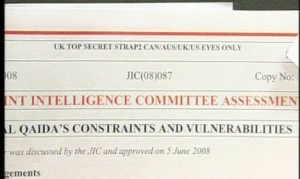
So anoth­er intel­li­gence offi­cial has mis­laid some highly clas­si­fied doc­u­ments — this time by leav­ing them lying on a com­muter train depart­ing Water­loo sta­tion. And while the Cab­in­et office (his soon to be former employ­er?) is des­per­ately try­ing to down­play the sens­it­iv­ity of these doc­u­ments, let’s not be fooled. “Top Secret – Strap – Can/Aus/UK/US Eyes Only” is very high level clas­si­fic­a­tion indeed.

In this case, it appears that the offi­cial may not even have had per­mis­sion to remove these doc­u­ments in the first place. Cab­in­et Min­is­ter, Ed Miliband, is quoted in the Daily Mail today as say­ing that there had been ‘a clear breach’ of rules for­bid­ding the remov­al of doc­u­ments without author­isa­tion. Then, hav­ing removed these doc­u­ments illeg­ally, the intel­li­gence offi­cial appears to have taken them out of the secur­ity briefcase and read them in pub­lic, before leav­ing them on the train.

One can only spec­u­late wheth­er he was drunk, simply care­less, or wheth­er this was a tim­id attempt to blow the whistle and draw the BBC’s atten­tion to yet fur­ther proof that the “war on ter­ror” is overhyped.

The secur­ity breach is not unusu­al. Over the years, drunk­en spies have mis­laid count­less doc­u­ments in pubs and on the jour­ney home. In 2000 an MI6 officer even left a laptop in a Vaux­hall bar. How­ever, the secret inform­a­tion usu­ally has a degree of low-level pro­tec­tion – the com­puter is encryp­ted or the doc­u­ments are locked in a secur­ity briefcase, not left lying around in an orange folder.

When I was work­ing for the spooks, the drink­ing cul­ture was endem­ic. Seni­or man­agers set the pace, with some going to the pub most days for lunch – one pub was fam­ously called Base Camp Two – sink­ing a few pints, and then doz­ing the after­noon away. Of course, the young­er officers fol­lowed suit, reg­u­larly meet­ing after work for a drink and a moan. Often, they would have secur­ity briefcases with them to take away the next day for work, and it was a mir­acle that more doc­u­ments were not lost.

There is spec­u­la­tion in the media that the man will be dis­cip­lined. He has already been sus­pen­ded. But the media appears to be miss­ing a trick: this is also a breach of the Offi­cial Secrets Act 1989. In this case, Sec­tion 1(1) will apply:

A per­son who is or has been—

(a) a mem­ber of the secur­ity and intel­li­gence ser­vices; or

(b) a per­son noti­fied that he is sub­ject to the pro­vi­sions of this subsection,

is guilty of an offence if without law­ful author­ity he dis­closes any inform­a­tion, doc­u­ment or oth­er art­icle relat­ing to secur­ity or intel­li­gence which is or has been in his pos­ses­sion by vir­tue of his pos­i­tion as a mem­ber of any of those ser­vices or in the course of his work while the noti­fic­a­tion is or was in force.”

So, if this offi­cial was drunk and care­less with the nation’s secrets, he deserves to face the music. The doc­u­ments were seen by a mem­ber of pub­lic and by BBC staff, so the “clear bright line” against dis­clos­ure that is always argued in whis­tleblower tri­als had already been breached.

If this was a cov­ert attempt a get­ting the inform­a­tion to the media, as happened, then this per­son is a whis­tleblower and deserves pro­tec­tion. The law makes no dis­tinc­tion based on intent, as the pub­lic interest defence was removed from the OSA in 1989 (des­pite the fact that Blair, Straw and most of the Labour gov­ern­ment past and present voted against this measure).

How­ever, such an action is clearly mor­ally dif­fer­ent from drunk­en care­less­ness, and if that was indeed his intent, he would have done bet­ter to have had the cour­age of his con­vic­tions and gone dir­ectly to the media. He would still not have had any defence under the OSA for his prin­cipled stance, but the impact and poten­tial for change would have been great­er. Bet­ter to be hung for a sheep than a lamb.

The Media and the Spies

The UK main­stream media has made much this week of Home Sec­ret­ary Jac­qui Smith’s asser­tion that MI5 had not reques­ted the government’s pro­posed exten­sion of the impris­on­ment without charge of ter­ror­ist sus­pects from 28 to 42 days.

This state­ment has caused a furore in the UK, and there is a chance that the PM may lose the key vote in Par­lia­ment on this amend­ment tomorrow.

In fact, such has been the uproar that the Dir­ect­or Gen­er­al of MI5, Jonath­an Evans, is repor­ted by Reu­ters to have made a rare pub­lic statement:

Since the secur­ity ser­vice is neither a pro­sec­ut­ing author­ity nor respons­ible for crim­in­al invest­ig­a­tions, we are not, and nev­er have been, the appro­pri­ate body to advise the gov­ern­ment on pre-charge deten­tion time lim­its,” he said in a state­ment on the MI5 website.

We have not, there­fore, sought to com­ment pub­licly or privately on the cur­rent pro­pos­als, except to say that we recog­nise the chal­lenge posed for the police ser­vice by the increas­ingly com­plex and inter­na­tion­al char­ac­ter of some recent ter­ror­ist cases.”

What par­tic­u­larly strikes me about this is an appar­ently insig­ni­fic­ant phrase, “raised pub­licly or privately”.

In con­trast to the Met­ro­pol­it­an Police Com­mis­sion­er Sir Ian Blair, who admit­ted to “unin­ten­tion­ally mis­lead­ing” the par­lia­ment­ary Joint Com­mit­tee charged with assess­ing the need to increase the deten­tion lim­it, Evans had refused to give evid­ence about the 42 day issue. So he has cer­tainly not raised this in a pub­licly account­able way.

It’s the word “private” that intrigues me. It reeks of sotto voce dis­cus­sions between old school chums at the grander gentlemen’s clubs in Lon­don: of unat­trib­ut­able brief­ings between anonym­ous MI5 officers and chosen journ­al­ists; and of cosy lunches with Fleet Street edit­ors in the DG’s din­ing room at Thames House, MI5’s Lon­don HQ.

While Evans denies using this meth­od­o­logy around the 42 day issue, his state­ment con­firms that such private dis­cus­sions do indeed play a part in influ­en­cing policy decisions and media perception.

I saw this approach first-hand in the 1990s dur­ing the whis­tleblow­ing years. In fact, it was then that MI5 stepped up its charm offens­ive with politi­cians and journ­al­ists. It was dur­ing one of the first of these cosy media lunches in Thames House, hos­ted by the then DG Steph­en Lander, that the respec­ted BBC Dip­lo­mat­ic Edit­or Mark Urb­an asked a fate­ful ques­tion about the Gad­dafi Plot and was reportedly told by Lander that “he was not here to answer half-baked ques­tions from smart-arse journ­al­ists”. So there were cer­tain short­falls in the charm, even if the lack of account­ab­il­ity held up well.

But there are oth­er, more sin­is­ter ways for the spies to manip­u­late pub­lic opin­ion. MI6 has a sens­it­ive sec­tion called Inform­a­tion Oper­a­tions (I/Ops), which exists purely to set the news agenda for the spies. I/Ops man­ages this either by mas­sa­ging the facts, spin­ning the tone of the story or, more wor­ry­ingly, plant­ing false stor­ies in a qui­es­cent press.

In the 1990s there was a fam­ous case. Col­on­el Gaddafi’s son, Saif Al Islam, applied for a visa to come to Bri­tain. I/Ops planted a com­pletely false story in The Sunday Tele­graph that he was involved in money laun­der­ing with Iran and, lo and behold, MI5 had the per­fect excuse to deny him a visa. Al Islam sub­sequently sued the news­pa­per which, faced with Shayler­’s evid­ence, settled out of court.

A few months ago the ex-head of MI6, Sir Richard Dear­love, gave a talk at the LSE about the intel­li­gence agen­cies and the media. I went along to have a laugh, and was gra­ciously allowed to ask a ques­tion. Nat­ur­ally I raised the issue of I/Ops, its rela­tion­ship with the media, and wheth­er such a role was accept­able in a mod­ern democracy.

In the con­text of the talk, what could have been more per­tin­ent? How­ever, Dear­love declined to answer. In fact, he went so far as to say that such a mat­ter was “with­in the ring of secrecy”. At which point a journ­al­ist from a pres­ti­gi­ous nation­al news­pa­per who was sit­ting next to me, turned and said glee­fully that this at last proved that I/Ops exis­ted. Grat­i­fy­ing as this was, I shall reit­er­ate my ques­tion: is the role of I/Ops accept­able in a mod­ern demo­cracy, where we are sup­posed to enjoy free­dom of inform­a­tion, trans­par­ency and account­ab­il­ity from the powers-that-be?

Spooks leave UK vulnerable to Russian mafia

Accord­ing to the Daily Mail this week, Rus­si­an secur­ity expert, Andrei Sold­atov, reck­ons the UK is wide open to the threat of the Rus­si­an mafia. He primar­ily blames the froid­eur that has blighted Anglo-Rus­si­an rela­tions since the Litv­inen­ko affair. How­ever, he also states that MI5 no longer has a role to play in invest­ig­at­ing organ­ised crime, and that has con­trib­uted to our vulnerability.

Nat­ur­ally res­ist­ing the tempta­tion to say that MI5’s involve­ment would not neces­sar­ily have afforded us any mean­ing­ful pro­tec­tion, I would say that this is down to a fun­da­ment­al prob­lem in how we organ­ise our response to threats to the nation­al secur­ity of this country.

The secur­ity infra­struc­ture in the UK has evolved over the last cen­tury into a ter­ribly Brit­ish muddle. For his­tor­ic reas­ons, we have a pleth­ora of intel­li­gence agen­cies, all com­pet­ing for fund­ing, power and prestige: MI5, MI6, GCHQ, the Met­ro­pol­it­an Police Spe­cial Branch (MPSB), spe­cial branches in every oth­er police force, mil­it­ary intel­li­gence, and HM Rev­en­ue and Cus­toms et al. Each is sup­posed to work with the oth­er, but in real­ity they guard their ter­rit­ory and intel­li­gence jeal­ously. After all, know­ledge is power.

MI5 and MPSB have always been the lead intel­li­gence organ­isa­tions oper­at­ing with­in the UK. As such, their cov­ert rivalry has been pro­trac­ted and bit­ter, but to the out­side world they appeared to rub along while MI5 was primar­ily focus­ing on espi­on­age and polit­ic­al sub­ver­sion and the Met con­cen­trated on the IRA. How­ever, after the end of the Cold War, MI5 had to find new tar­gets or lose staff, status and resources.

In 1992 the then Home Sec­ret­ary, Ken Clarke, announced that MI5 was tak­ing over the lead respons­ib­il­ity for invest­ig­at­ing IRA activ­ity on the UK main­land — work that had been done by MPSB for over 100 years. Vic­tory was largely cred­ited to clev­er White­hall man­oeuv­er­ing on the part of the head of MI5, Stella Rim­ing­ton. The Met were furi­ous, and the trans­fer of records was frac­tious, to say the least.

Also, there was a year’s delay in the han­dover of respons­ib­il­ity. So MI5 arti­fi­cially main­tained the per­ceived threat levels posed by polit­ic­al sub­ver­sion in order to retain its staff until the trans­ition was com­plete. This meant that there was no real case for the aggress­ive invest­ig­a­tion of sub­vers­ive groups in the UK – which made all such oper­a­tions illeg­al. Staff in this sec­tion, includ­ing me, voci­fer­ously argued against this con­tin­ued sur­veil­lance, rightly stat­ing that such invest­ig­a­tions were thereby flag­rantly illeg­al, but the seni­or man­age­ment ignored us in the interests of pre­serving their empires.

How­ever, in the mid-1990s, when peace appeared to be break­ing out in North­ern Ire­land and bey­ond, MI5 had to scout around for more work to jus­ti­fy its exist­ence. Hence, in 1996, the Home Sec­ret­ary agreed that they should play a role in tack­ling organ­ised crime – but only in a sup­port­ing role to MPSB. This was nev­er a par­tic­u­larly pal­at­able answer for the spooks, so it is no sur­prise that they have sub­sequently dropped this area of work now that the threat from “Al Qaeda” has grown. Ter­ror­ism has always been per­ceived as high­er status work. And of course this new threat has led to a slew of increased resources, powers and staff for MI5, not to men­tion the open­ing of eight region­al headquar­ters out­side London.

But should we really be approach­ing a sub­ject as ser­i­ous as the pro­tec­tion of our nation­al secur­ity in such a haphaz­ard way, based solely on the fact that we have these agen­cies in exist­ence, so let’s give them some work?

If we are really faced with such a ser­i­ous ter­ror­ist threat, would it not be smarter for our politi­cians to ask the basic ques­tions: what is the real­ist­ic threat to our nation­al secur­ity and the eco­nom­ic well­being of the state, and how can we best pro­tect ourselves from these threats? If the most effect­ive answer proves to be a new, ded­ic­ated counter-ter­ror­ism organ­isa­tion, so be it. We Brits love a sense of his­tory, but a new broom will often sweep clean.


Pay peanuts, get monkeys

So the spooks are yet again try­ing to recruit IT pro­fes­sion­als. MI6 is cur­rently advert­ising for a, quote, “world class enter­prise archi­tect”, but is offer­ing a salary sig­ni­fic­antly below the mar­ket rate. MI5 is con­stantly on the lookout for IT staff –as recent adverts in the press will attest.

My sense is that the agen­cies are still des­per­ately play­ing IT catch-up. In the 1990s, when I worked as an intel­li­gence officer, we were still writ­ing out everything longhand and get­ting our sec­ret­ar­ies to type it up – with all the attend­ant typos, revi­sions and delays. Inform­a­tion data­bases, such the sys­tem code­named Durbar, which held the ter­ror­ist records, could only be accessed via 1970s, beige, mon­it­or-and-key­board, all-in-one computers.

In the early 1990s MI5 did try to devel­op its own inform­a­tion man­age­ment sys­tem from scratch, rightly think­ing that buy­ing off-the-shelf from an Amer­ic­an mega­corp was prob­ably not good secur­ity. How­ever, MI5 man­age­ment still thought IT was a low pri­or­ity – des­pite the fact the effi­cient pro­cessing of inform­a­tion should have been the core work. So, the agency paid sig­ni­fic­antly below the mar­ket rates for IT pro­fes­sion­als, and pos­ted main­stream intel­li­gence officers, with no pro­ject man­age­ment exper­i­ence, to run the depart­ment for 2 year peri­ods. Need­less to say, mor­al was rock-bot­tom. The IT bods were unmo­tiv­ated, the IOs demor­al­ised at being pos­ted to a career grave­yard slot and the unwieldy sys­tem, code­named Grant, nev­er got off the ground.

In the middle of the dec­ade MI5 in des­per­a­tion bought an off-the-shelf pack­age which was based on Win­dows 95. Even then officers had to fight to have access to a ter­min­al to do their work. And, of course, Win­dows is not known as the most stable or secure sys­tem avail­able. I also heard recently that MI5 is still using this pro­pri­et­ary soft­ware, and thinks that it can pro­tect its inform­a­tion sys­tems by patch­ing up secur­ity prob­lems. It gives one such faith that MI5 can really pro­tect this coun­try from ter­ror­ist attack.

But this leads us onto a more ser­i­ous issue regard­ing our nation­al sov­er­eignty. What the hell is our gov­ern­ment doing, shov­el­ling bil­lions of pounds every year over to US IT com­pan­ies to pay for licences that then per­mit our gov­ern­ment depart­ments to use their soft­ware pack­ages? And with the cur­rent con­cerns about ter­ror­ism and the sub­sequent datamin­ing activ­it­ies of a para­noid US admin­is­tra­tion, how can we be sure that the NSA is not sneak­ing a peek at the work of our secur­ity forces via back doors in this software?

So, to pro­tect our sov­er­eignty, as well as devel­op our know­ledge base and grow our eco­nomy, why does the UK gov­ern­ment not encour­age all gov­ern­ment agen­cies and depart­ments to switch from pro­pri­et­ary to open source soft­ware? After all, many oth­er coun­tries around the world are already doing this for pre­cisely these reasons.

No doubt it’s that pesky “spe­cial rela­tion­ship” kick­ing in again.….

MI5 caught with its pants down

An MI5 A4 sur­veil­lance officer has had to resign because his wife sold a story to The News of the World news­pa­per that the For­mula One boss, Max Mos­ley, son of notori­ous fas­cist Sir Oswald Mos­ley, had indulged in a Nazi-inspired orgy with her and four oth­er pros­ti­tutes in a cel­lar in Chelsea, one of the swanki­est areas of London.

This raises an inter­est­ing ques­tion. Either the A4 officer, reportedly a former Roy­al Mar­ine, had no idea that his wife was work­ing as a pros­ti­tute, in which case, what the hell was he doing work­ing for the sur­veil­lance unit of MI5? Not quite the sharpest knife in the block, then. Or he knew, but chose to keep it quiet – a ser­i­ous vet­ting offence. Which was it?

The move against Mos­ley cer­tainly seems to have been a “hon­eytrap” of sorts – at least on the part of The News of the Screws, which reportedly equipped “Mrs Bond” with the cam­er­as. But bey­ond that? The Screws and its sis­ter paper The Sunday Times asser­ted that the MI5 con­nec­tion was just a coin­cid­ence, as did The Sunday Tele­graph, known in spook circles as the in-house magazine of MI6.

The Mos­ley case does have his­tor­ic­al echoes. A sim­il­ar, and notori­ous case, occurred in the 1970s. Lord Lamb­ton, at the time the RAF Min­is­ter in Edward Heath’s gov­ern­ment, was caught in flagrente with a call girl and, even worse, was caught on film smoking a joint. Lamb­ton had to resign in disgrace.

But there was more to it. The News of the Screws pho­to­graph­er lurk­ing in the ward­robe had been lent the night-vis­ion cam­era by an MI6 agent to obtain nice, clear images.

Why did MI6, the for­eign intel­li­gence gath­er­ing agency, tar­get Lord Lamb­ton? Well, accord­ing to the agent in ques­tion, Lee Tracey who first came to the public’s atten­tion in the Pro­fumo Affair, MI6 was motiv­ated by a desire to embar­rass MI5, which it deemed not to be up to scratch in its domest­ic spy­ing work.

So the “hon­eytrap” is a tried and tested meth­od to com­prom­ise your oppon­ents and score polit­ic­al points. But, unless there is some private feud with the spies, it does seem unlikely in this case. Mos­ley may enjoy an exot­ic sex life, but does the F1 boss really look like he poses a legit­im­ate threat to nation­al security? .

The more fun­da­ment­al issue is surely the effect­ive­ness of MI5’s in-house vet­ting sec­tion. How did the A4 officer­’s mar­riage to a pros­ti­tute escape their notice? The sec­tion respons­ible, C4, checks the back­grounds of employ­ees to the nth degree – a sys­tem called “Developed Vet­ting”. Any char­ac­ter “defects” must be picked up via an extens­ive series of checks.

In the wake of this scan­dal, an inev­it­able unnamed seni­or White­hall source was quoted as say­ing “I can­not talk about indi­vidu­al cases, but we do expect high stand­ards of beha­viour from all staff at all times, both pro­fes­sion­ally and privately”.

Well, sort of….

When I was recruited in 1991, MI5’s primary con­cern was that unknown trans­gres­sions could lead to black­mail. If the mis­de­mean­ours were minor but admit­ted, MI5 ten­ded to turn a blind eye.

In the 1990s MI5 still had an offi­cial policy of not employ­ing homo­sexu­als. As late as the 1980s, homo­sexu­al­ity had been deemed by the ser­vice to be a “char­ac­ter defect”, as well as a poten­tial source of black­mail. As you sign away your employ­ment rights when you join MI5, there was no point in any­one cry­ing “dis­crim­in­a­tion”. The pos­i­tion changed in 1995, and one brave soul did step out of the closet at the time. Also, when I worked there, dope-smoking was com­mon­place amongst young officers – and some coughed (if you’ll par­don the pun) to this dur­ing their vet­ting inter­views. No action was taken. Sim­il­arly, infi­del­ity was a vet­ting offense, but many (mar­ried) officers were at it like the pro­ver­bi­al rabbits.

Per­haps it has tightened up since my day. How­ever, this seems unlikely giv­en the recent scan­dal. How can we expect MI5 to adequately pro­tect this coun­try when it can’t even police its own staff?

Terrorism Act used against Journalist

A wor­ry­ing art­icle in today’s Guard­i­an by the indefatig­able Duncan Camp­bell, in which he reports that police are using the Ter­ror­ism Act (2000) to try to force a journ­al­ist to hand over inform­a­tion from a source.

This issue is the scared cow of journ­al­ism – that they nev­er reveal their sources. To do so would imme­di­ately deter whis­tleblowers from speak­ing in con­fid­ence to the media, and gov­ern­ment crimes and lies would remain secret. The pro­tec­tion of journ­al­ist­ic sources con­trib­utes to safe­guard­ing our demo­cracy, as legis­la­tion such as the Free­dom of Inform­a­tion Act (2000) is effect­ively tooth­less when up against the inner work­ings of the state.

Because of this, journ­al­ists with integ­rity in this coun­try and abroad are will­ing to risk pris­on rather than hand over their notes. As Camp­bell remarks, this happened to Mar­tin Bright in 2000 when he was Home Affairs Edit­or at The Observ­er. The Met­ro­pol­it­an Police Spe­cial Branch went crash­ing into the offices on Far­ring­don Road, demand­ing that he hand over all his notes on the Shayler case. More bizar­rely, they also deman­ded a let­ter Shayler had sent to The Guard­i­an, even though it had already been pub­lished in the news­pa­per. Thank­fully for Mar­tin, the Nation­al Uni­on of Journ­al­ists sup­por­ted him, and the police even­tu­ally backed off.

The fact that the police are using the Ter­ror­ism Act as is a wor­ry­ing new devel­op­ment. But it’s not just pro­duc­tion orders from the police that journ­al­ists and news­pa­pers have to be wor­ried about. The author­it­ies have a range of weapons in their arsen­al if they choose to sup­press inform­a­tion eman­at­ing from inner gov­ern­ment circles or the intel­li­gence world. And yet it is with­in these very circles that the most hein­ous crimes and viol­a­tions are com­mit­ted, and whence the most sig­ni­fic­ant whis­tleblowers tend to emerge. Think Dr Dav­id Kelly, Dav­id Shayler, Kath­er­ine Gun.

So, what else can the author­it­ies use to sup­press val­id cri­ti­cism? Well, firstly and most notori­ously, we have the Offi­cial Secrets Act in the UK. This does not just pre­vent intel­li­gence officers and noti­fied gov­ern­ment offi­cials from ever speak­ing to any­one out­side the agency about any­thing, ever (Sec­tion 1(1)). Slightly less well known is Sec­tion 5, which makes it a crime for any journ­al­ist to receive or eli­cit inform­a­tion from these whis­tleblowers that dam­ages “nation­al secur­ity” (the term to this day remains undefined). Of course, as we saw in the Shayler case, the gov­ern­ment is always extremely reluct­ant to cross the media and enforce this, so it is usu­ally just the unfor­tu­nate whis­tleblower who is hung out to dry.

If the threat of the OSA fails, the gov­ern­ment can always find a tame judge to issue an emer­gency injunc­tion. Again, this happened in the Shayler case, when an injunc­tion was taken out both against him and the UK’s nation­al media. Need­less to say, the injunc­tion against the media was dropped (even this gov­ern­ment quailed at the pro­spect of tak­ing on News Inter­na­tion­al and the Mail group), but remains in place to this day against the hap­less whistleblower.

This injunc­tion is no small thing. The government’s law­yers have used it to fright­en off pub­lish­ers from even look­ing at a nov­el (that’s right – a work of fic­tion) that Shayler wrote in 1998. Let­ters winged their way from gov­ern­ment law­yers to UK pub­lish­ers in Lon­don in 1999. And when Shayler built a web­site, hos­ted by Tab­net in Cali­for­nia, the gov­ern­ment wrote to them point­ing out that there was an injunc­tion in place and ask­ing for the site to be taken down. Tab­net gently poin­ted out that per­haps the Brit­ish gov­ern­ment had for­got­ten about 1776, and con­tin­ued to host the site.

If the OSA and injunc­tions are not enough, we also have the notori­ous D Notice Com­mit­tee (now rebranded as the Defence Press and Broad­cast­ing Advis­ory Com­mit­tee), a body that can block pub­lic­a­tion of a story by issu­ing a notice at the say-so of the gov­ern­ment. Very appro­pri­ate in a so-called demo­cracy. What makes it worse is that the Com­mit­tee is made up of volun­teers from amongst the great and the good from the media world, as well as rep­res­ent­at­ives from gov­ern­ment depart­ments. These guys, seni­or edit­ors and TV exec­ut­ives, enter the charmed inner circle and start to police their own industry. It’s amaz­ing how quickly new appointees go nat­ive and fight the government’s corner.

So there you have it – a whole bat­tery of laws to pro­tect the Brit­ish Estab­lish­ment from the scru­tiny and con­struct­ive cri­ti­cism of the media. When a journ­al­ist of integ­rity stands up to the author­it­ies, we should all sup­port them. They are provid­ing a cru­cial ser­vice of vent­il­a­tion and account­ab­il­ity for our retreat­ing demo­cracy. I wish Shiv Malik, the freel­an­cer at the eye of the cur­rent storm, the very best.