Part One of my recent interview on the excellent, independent and fearless Real News Network:
Category Archives: National security
British politicians Droning on
Published in The Huffington Post UK, 2 October 2012
Only in the mad world of modern British politics could it be possible to connect MPs, drones and royal breasts. Is this sounding a little too bizarre? Let me explain.…
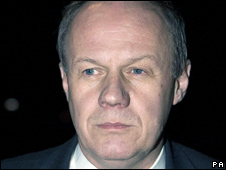 Way back in 2008 Conservative MP Damien Green, who was at the time the Shadow Minister for Immigration, was arrested on suspicion of eliciting leaks from a Home Office civil servant that appeared to confirm the then Labour government was covering up UK immigration figures.
When I say arrested, this was not the standard, civilised and pre-arranged appointment at the local nick, which the police traditionally allow their political “masters” or, for that matter, their buddies at News International.
Oh no, this was a full-on, Cold War-style arrest, carried out by the Metropolitan Police Counter-Terrorism command (known in the old days as Special Branch). Intriguingly, civil servants appeared to have misleadingly hyped up the need for a heavy-handed police response by stating that they were “in no doubt that there has been considerable damage to national security already as a result of some of these leaks”.
And indeed, the resulting arrests bore all the hall-marks of a national security case: secret police, dawn raids, and counter-terrorism style searches of the family home, the constituency office, and — shock — an invasion of Green’s office in parliament.
Yet Green was not arrested under the terms of the Official Secrets Act. Instead, both he and his hapless whistleblower, Christopher Galley, were only seized on suspicion of breaching some arcane Victorian law (“aiding and abetting misconduct in public office”). I suppose arresting a sitting MP for a breach of the OSA would have been just too politically tricky.
Leaving aside the understandable upset caused to Green’s wife and children by the raid on their home, plus the fact that the police violated not only their personal effects such as bed sheets and love letters but also confidential legal papers about child abuse cases that Mrs Green was working on, what really caused outrage in the media and political classes was the fact that Plod had dared to invade the hallowed ground of parliament.
 There was an outcry from politicians about the “encroaching police state”. The case was duly dropped, the senior officer, Assistant Commissioner Bob Quick, had to resign (but only after committing yet another political gaffe), and other stories, such as the MP expenses scandal, grabbed the attention of the mainstream media.
Roll on four years, and Damien Green has now ascended to the giddy heights of Home Office Minister of State for Police and Criminal Justice. Well, meeting his new staff must have been an interesting experience for him.
But what is this man now doing in his eminent role, to stop the slide into the encroaching police state that is the UK? Of all people, one would expect him to be sensitive to such issues.
Sadly, he appears to have already gone native on the job. It was reported yesterday that he is proposing the use of police drones to spy on the UK population, but in an “appropriate and proportionate” manner of course.
The concept of small aerial drones being used by UK police has been mooted for a few years now — indeed some police forces and security agencies have already bought them. But whereas the initial, standard justification was that it would help in the “war on terror” (as it has so ably done in the Middle East, where innocent families are routinely slaughtered in the name of assassinating militants), mission-creep has already set in. Damien Green stated at the launch of the new National Police Air Service (NPAS) that drones could be useful monitoring protests and traffic violations. It has even been reported that the Home Office plans to use non-lethal weapons to do so.
Of course there are problems around the use of drones in UK airspace. Our skies are already very crowded and they could present a hazard to aircraft, although the BBC has reported that drones could be airborne in the next few years. This appears to be the only argument holding the use of drones in check — forget about civil liberties and privacy issues.
 This is particularly pertinent as we look at the evolution of drone technology. Currently the UK police are discussing toy-sized drones, but it has already been reported that drones the size of birds or even insects, with autonomous intelligence or swarm capabilities are being developed. And don’t even get me started on the subject of potential militarisation.…
There is a whole debate to be had about what can be viewed and what cannot — where does the public sphere end and the private begin? A couple of years ago I suggested somewhat facetiously that our best hope of defeating the introduction of surveillance drones in the UK might be indignant celebs suing the paparazzi for using the technologies. But perhaps the ante has already been upped in the recent fall-out from the Duchess of Cambridge and her royally papped breasts.
If drone technology becomes widespread, then nobody will have any privacy anywhere. But who knows, before we get to that stage perhaps HM Queen will come out swinging on the side of privacy for her granddaughter-in-law, if not for the rest of her “subjects”. If that were to happen then no doubt Damien Green will abandon his new-found enthusiasm for these airborne surveillance pests; if not to stop the “encroaching police state” of which he must have such colourful recollections, then at least to safeguard any potential knighthood in his rosy ministerial future.
Gestapo Courts
Published in The Huffington Post UK, 30 September 2012
Published in The Real News Network, 30 September 2012
A lot of sound and fury has been expended in the British media over the last few months about the Coalition government’s proposal to enact secret courts via the proposed Justice and Security Bill — purely for terrorist cases, you understand. Which, of course, is OK as we all know terrorists are by definition the Baddies.
Except we need to drill down into the detail of the proposals, have a look at some history, and think through the future implications.
The concept of secret courts emerged from the official UK spook sector — MI5 and MI6 have been lobbying hard for such protection over recent years. Their argument revolves around a number of civil cases, where British victims of extraordinary rendition and subsequent torture have sued the pants off the spies through civil courts and received some recompense for their years of suffering.
 The most notorious case was that of Binyam Mohamed, who was repeatedly tortured in a black prison in Morocco, with British spies allegedly contributing to his questioning. And we’re not talking about a few stress positions, awful as they are. Mohamed was strung up and had his penis repeatedly slashed with a razor.
MI5 and MI6 are aggrieved because they could not defend themselves in the resultant civil actions brought against them, and they (and their former political master Jack Straw) are particularly worried about future cases around the MI6-organised Libyan renditions exposed last year. The spies’ argument is that having to produce evidence in their own defence would damage that ever-flexible but curiously vague concept of “national security”.
Well, they would say that, wouldn’t they?
The spooks have traditionally used the “national security” argument as the ultimate get-out-of-jail-free card. It has never been legally defined, but it is unfailingly effective with judges and politicians.
We saw similar arguments during the post‑9/11 security flap, when many terrorist suspects were scooped up and interned in high security British prisons such as Belmarsh on the say-so of faceless intelligence officers. No evidence needed to be adduced, nor could it be challenged. The subsequent control order system was equally Kafkaesque.
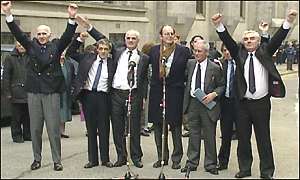 That’s not to say that certain interned individuals might not have been an active threat to the UK. However, in the “good” old days (god, I sound ancient), suspects would have had evidence gathered against them, been tried by a jury, convicted and imprisoned. The system was never perfect and evidence could be egregiously withheld, but at least appeals were possible, most notably in the case of the Birmingham Six.
Since 9/11 even breathing the word “terrorist” has meant that all these historic common law principles seem to have been jettisoned. Even before the proposed enshrinement of “secret courts” in the new Bill, they are already being used in the UK — the Special Immigration Appeal Commission (SIAC) tribunals hear secret evidence and the defendant’s chosen lawyer is not allowed to attend. Instead a special, government-approved advocate is appointed to “represent the interests” of the defendant who is not allowed to know what his accusers have to say. And there was no appeal.
But all this is so unnecessary. The powers are already in place to be used (and abused) to shroud our notionally open court process in secrecy. Judges can exclude the press and the public from court rooms by declaring the session in camera for all or part of the proceedings. Plus, in national security cases, government ministers can also issue Public Interest Immunity Certificates (PIIs) that not only bar the press from reporting the proceedings, but can also ban them from reporting they are gagged — the governmental super-injunction.
So the powers already exist to protect “national security”. No, the real point of the new secret courts is to ensure that the defendant and, particularly in my view, their chosen lawyers cannot hear the allegations if based on intelligence of any kind. Yet even the spies themselves agree that the only type of intelligence that really needs to be kept secret involves ongoing operations, agent names, and sensitive operational techniques.
 And as for the right to be tried by a jury of your peers — forget it. Of course juries will have no place in such secret courts. The only time we have seen such draconian judicial measures in the UK outside a time of official war was during the Troubles in Northern Ireland — the infamous Diplock Courts — beginning in the 1970s and which incredibly were still in use this year.
I am not an apologist of terrorism although I can understand the social injustice that can lead to it. However, I’m also very aware that the threat can be artificially ramped up and manipulated to achieve preconceived political goals.
I would suggest that the concept of secret courts will prove fatally dangerous to our democracy. It may start with the concept of getting the Big Bad Terrorist, but in more politically unstable or stringent economic times this concept is wide open to mission creep.
We are already seeing a slide towards expanding the definition of “terrorist” to include “domestic extremists”, activists, single issue campaigners et al, as I have written before. And just recently information was leaked about a new public-private EU initiative, Clean IT, that proposes ever more invasive and draconian policing powers to hunt down “terrorists” on the internet. This proposal fails to define terrorism, but does provide for endemic electronic surveillance of the EU. Pure corporatism.
Allowing secret courts to try people on the say-so of a shadowy, unaccountable and burgeoning spy community lands us straight back in the pages of history: La Terreur of revolutionary France, the creepy surveillance of the Stasi, or the disappearances and torture of the Gestapo.
Have we learned nothing?
The Lindmo Show, Norway
Following on from my talk at the Norwegian SKUP investigative journalism conference in March, I was invited onto the Anne Lindmo Show in Norway on 4 May.
Anne is one of the most famous and respected journalists in Norway, and her chat show is extremely popular on prime time NRK TV on Friday nights. We had a lively session discussing the world of spying, what it was like to blow the whistle and go on the run, and the personal price that has to be paid.
Here’s the link to the whole show, and here’s my segment:
Lindmo interview on Norwegian TV from Annie Machon on Vimeo.
The Report on BBC Radio 4 — the Death of Gareth Williams
A look at the forensic and police failures around the investigation of the still inexplicable death of intelligence officer, Gareth Williams, in London in 2010.
Here’s the link.
La Conférence régionale du journalisme d’enquête, Geneva

 The end of April saw me basking in the hot and sunny weather of Geneva, where I had been invited to give a talk (Download Geneva) at the Swiss Press Club.
We had a lovely time in Geneva, and many thanks to Jean-Philippe Ceppi and the rest of the team for such a warm, interested and interesting welcome.
The Gareth Williams Inquest
What a mess, what a cover-up. The inquest into the sad, strange death of Gareth Williams concluded yesterday, with the coroner raising more questions than she was able to answer.
It was also patently obvious that both MI6 and the Metropolitan Police Counter-Terrorism Squad (SO15) hampered the investigation, for the inevitable reasons of “national security”.
When will MI6 realise that it is not above the law?
My heart goes out to Gareth’s family.
The Scandinavian Tour 2012
I had an immensely stimulating time during my recent mini-tour of Scandinavian investigative journalism conferences, meeting informed, interesting, and interested people.
The focus of my talks was the nexus between the intelligence world and the media — lessons I had learned, researched and deduced during the whistleblowing years and beyond. I have heard so many hair-raising media stories over the years.…
And, having listened to the experiences of journalists from a wide variety of other countries, it seems I am on the right track.
 First stop was the Grav conference in Sweden, where I gave a talk and had the pleasure of meeting investigative journalists who confirmed what I was saying, even if some of them didn’t think I had quite gone far enough! We also had fun at the “mingel” evening.
Next stop, next day, was the SKUP conference in Norway where I did a talk, and also a debate about the media and whistleblowers. Note to self: never, ever agree to do a morning debate after the legendary SKUP party the night before.
Finally, last weekend, I visited the Tutki 2012 journalism conference in Finland (Download Helsinki_Talk). The response was overwhelmingly positive, and once again I had confirmation of what I was saying from the journalists themselves.
So what can we do about this situation? I shall keep spreading the word, and the journalists themselves just need to keep saying a resounding “no” to the inducements, at least if they want to work on meaningful investigations. And what real journalist doesn’t, au fond?
Next stop Geneva, which is why I’m limbering up with the French.
A blast from the past
How strange to stumble across this article in the Guardian newspaper yesterday, which describes a journalist’s justifiably paranoid experiences interviewing David Shayler and me back in 2000 while writing an article for Esquire magazine.
The author, Dr Eamonn O’Neill, now a lecturer in journalism at Strathclyde University, spent a few days with us in London and Paris way back when.
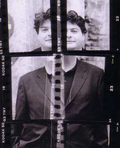 The Esquire article highlights the paranoia and surveillance that we had to live with at the time, and the contradictory briefings and slanders that were coming out of the British establishment and the media. O’Neill also intelligently tries to address the motivations of a whistleblower.
When it was published I was mildly uncomfortable about this article — I felt it didn’t do David full justice, nor did it appear to get quite to the heart of the issues he was discussing. I suppose, at the time, I was just too enmeshed in the whole situation.
Now, with hindsight, it is more perspicacious than I had thought. And rather sad.
This article is a timely reminder of how vicious the establishment can be when you cause it embarrassment and pain; the treatment meted out to David Shayler was brutal. And yet nothing has changed to this day, as we can see with the ongoing pursuit and vilification of Wikileaks.
Talks in Sweden and Norway
Off on my travels again at the end of the week, with two keynotes at Scandinavian journalism conferences.
 I shall first be speaking at the Grav conference in Sweden on Friday 23 March.
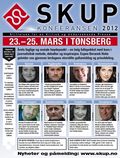 Topics under discussion will include everything from security and intelligence to the war on terror, civil liberties to ethics and media freedoms, government accountability to whistleblowing and Wikileaks.
On Saturday I travel on to Norway to speak at the SKUP conference to give a talk and also on Sunday morning to participate in a panel discussion about all things whistleblowing and Wikileaks. I gather that such discussions can get quite, um, lively.
I’m looking forward to an interesting and stimulating weekend.
Book Review on “Epilogue”
Reviewing “The Art of Betrayal” on Press TV’s Epilogue with former MP Derek Conway and Glenmore Treanar-Harvey.
The Bureau of Investigative Journalism article
Here is a recent article I wrote for The Bureau of Investigative Journalism, about our slide into a surveillance state.
TBIJ supported Wikileaks during the release of the SpyFiles. The issue is of such crucial importance for our democracy, I was disappointed that more of the mainstream media did not follow up on the stories provided.
Here’s the text:
Analysis: the slide into a surveillance state
Fifty years ago, President Eisenhower warned of the ‘disastrous rise’ of the military-industrial complex. His fears proved all too accurate.
Now in the post‑9/11 world, the threat goes even further: the military-industrial complex is evolving into the military-intelligence complex. It is a world, I fear, that is propelling us into a dystopian surveillance nightmare.
I have seen this nightmare unfold from close quarters. In the mid-90s I was an intelligence officer for MI5, the UK domestic security service. That is, until I resigned to help my former partner and colleague David Shayler blow the whistle on a catalogue of incompetence, cover-ups and crimes committed by spies. We naively hoped that this would lead to an inquiry, and a review of intelligence work and accountability within the notoriously secretive British system.
The blunders and illegal operations that we witnessed in our six years at MI5 took place at what is probably the most ethical and accountable decade in the British spying service’s 100-year history.
Even then, they were getting away with pretty much whatever they wanted.
Since the attacks of 9/11, I have watched with increasing dismay as more powers, money and resources have been pumped into the international intelligence community to combat the nebulous ‘war on terror’. As a result, civil liberties have been eroded in our own countries, and countless innocent people have been killed, maimed and displaced across the Middle East.
The Regulation of Investigatory Powers Act (RIPA), which was designed to allow our spy agencies to lawfully intercept our communications to counter terrorism and organised crime, has been routinely used and abused by almost 800 public bodies. MI5 admitted to making 1,061 mistakes or ‘administrative errors’ this year alone in its application of RIPA, according to the Interception of Communications Commissioner, Sir Paul Kennedy.
Intelligence creep extends to the police, as we saw with the undercover police scandal earlier this year, where the unaccountable National Public Order Intelligence Unit was discovered to be infiltrating harmless and legitimate protest groups for years on end.
It is a world, I fear, that is propelling us into a dystopian surveillance nightmare.
Even beyond the undercover cops, we have seen an explosion in corporate spying. This involves mercenary spy companies such as Xe (formerly Blackwater), Kroll, Aegis and Diligence offering not just security muscle in hotspots around the world, but also bespoke operations enabling big corporations to check out staff or to infiltrate and investigate protest groups that may embarrass the companies.
The mercenary spy operates without any oversight whatsoever, and can even be granted immunity from prosecution, as Xe enjoyed when operating in Iraq.
The last decade has also been a boom time for companies providing high-tech surveillance capabilities. One aspect of this in the UK – the endemic CCTV coverage – is notorious. Local councils have invested in mobile CCTV smart spy cars, while cameras that bark orders to you on the street have been trialled in Middlesbrough.
Drones are increasingly used for aerial surveillance – and the potential for militarisation of these tools is clear.
All this despite the fact that the head of the Metropolitan Police department that is responsible for processing all this surveillance information stated publicly that CCTV evidence is useless in helping to solve all but 3% of street robberies in London. In fact, since CCTV has been rolled out nationally, violent crime on the streets of Britain has increased.
But, hey, who cares about facts when security is Big Business? Someone, somewhere, is getting very rich by rolling out ever more Orwellian surveillance technology. And while the technology might not be used against the wider UK citizenry in a particularly malignant manner – yet – the same companies are certainly allowing their technologies to find their way to the more violent and repressive Middle Eastern states.
That would never happen in Britain – would it? We retain an optimistic faith in the long-term benign intentions of our government, while tut-tutting over Syrian police snatch squads pre-emptively arresting suspected dissidents. Yet this has already happened in the UK: before the royal wedding in April, protesters were pre-emptively arrested to ensure that they would not cause embarrassment. The intent is the same in Syria and Britain. Only the scale and brutality differs – at the moment.
When I worked for MI5 in the 1990s I was appalled how easily telephone interception could be used illegally, and how easily the spies could hide their incompetence and crimes from the government. In the last decade it has become much worse, with senior spies and police officers repeatedly being caught out lying to the toothless Intelligence and Security Committee in Parliament. And this is only the official intelligence sector.
How much worse is the endemic surveillance carried out by the corporate spy industry?
The balance of power, bolstered by new technologies, is shifting overwhelmingly in favour of the Big Brother state – well, almost. The WikiLeaks model is helping level the playing field, and whatever happens to this trailblazing organisation, the principles and technology are out there and will be replicated. This genie cannot be put back in the bottle. This – combined with the work of informed MPs, investigative journalists and potentially the occasional whistleblower – gives me hope that we can halt this slide into a Stasi state.
Annie Machon is a former spy with MI5, the British intelligence agency working to protect the UK’s national security against threats such as terrorism and espionage.
You can read Annie Machon’s blog ‘Using Our Intelligence’ here.
The Big Dig Journalism Conference, Copenhagen
I recently did the opening keynote at the Big Dig investigative journalism conference in Copenhagen. Thanks to the organisers for a wonderful weekend!
Mediafabric talk, Prague, October 2011
Last October I had the pleasure of speaking at the excellent Mediafabric conference in Prague. The focus of my talk was the future of intelligence, whistleblowing and journalism.
The event was organised by Sourcefabric, an international organisation that provides open source tools and solutions for journalists, so it was an eclectic and stimulating crowd of journalists, geeks, hacktavists and designers. So well done and thank you to the organisers.
Here’s the video: