Journalists need to wise up to secrecy laws

GIJC_logo

I had a fant­ast­ic time at the Glob­al Invest­ig­at­ive Journ­al­ism Con­fer­ence in Kiev last week­end.  A huge  well done to the organ­isers for a great four days, and I loved hav­ing the chance to meet so many inter­est­ing and inter­ested people from across the world!

I was invited to give the open­ing key­note speech (video to fol­low), where I dis­cussed some of my exper­i­ences from the MI5 whis­tleblow­ing years, but then went on to apply the harsh les­sons learned to the cur­rent situ­ation vis a vis the issue of spy influ­ence on the media today and the thorny issue of whis­tleblow­ing and the pro­tec­tion of sources.

Part of my talk focused on the con­trol of the media by the spies in Bri­tain.  As I have writ­ten before, this is very much a “car­rot and stick” scen­ario: the soft aspect, of course, being cosy chats with selec­ted journ­al­ists, well-timed career-enhan­cing scoops, as well as an increas­ingly unhealthy journ­al­ist­ic depend­ence on brief­ings com­ing out of the intel­li­gence world and government.

The stick aspect includes the bat­tery of harsh laws that can be called upon to sup­press free report­ing in the UK, which some­times leads to self-cen­sor­ship by the media.  These laws include:

Beginning_of_trialHow do I know all this?  Well, as you can see from many of the links in the above list, I’ve lived through much of this and have fol­lowed with great interest sim­il­ar and related cases over the years.  More inform­a­tion about these issues can be found in this excel­lent report pro­duced by Art­icle 19 and Liberty over a dec­ade ago.  The situ­ation has not improved.

While in Kiev I atten­ded an excel­lent ses­sion where two Rus­si­an journ­al­ists dis­cussed the rami­fic­a­tions of report­ing on the mod­ern incarn­a­tion of the Rus­si­an intel­li­gence agency, the FSB.

I was some­what startled to hear that even in Rus­sia journ­al­ists have more leg­al pro­tec­tion than those in the UK — ie they face no crim­in­al leg­al sanc­tion if they report whis­tleblower mater­i­al from the Rus­si­an spy agen­cies.  In the UK journ­al­ists poten­tially face 2 years in pris­on for doing so, under the invi­di­ous Sec­tion 5 of the 1989 OSA.

Way to go, Brit­ish democracy.

The Official Secrets Act — when will the British media learn?

I have been watch­ing with a cer­tain cyn­ic­al interest the unfold­ing of Oper­a­tion Weet­ing, one of the pleth­ora of Met­ro­pol­it­an Police invest­ig­a­tions into the UK phone hack­ing scan­dal, involving many of our favour­ite play­ers: shady private invest­ig­at­ors, pred­at­ory journ­al­ists, bent cop­pers, and politi­cians con­tort­ing them­selves in an effort to pro­tect both their own repu­ta­tions and their Friends in High Places.  And the ripples are spread­ing inter­na­tion­ally.  Noth­ing like a little bit of globilisation.…

Rupert_and_Rebekah The Guard­i­an news­pa­per has made most of the early run­ning in expos­ing the cor­rupt prac­tices of the now defunct News of the Screws, high­light­ing all the dubi­ous tabloid prac­tices of hack­ing, blagging, pinging, and god knows what else.  All this done with the help of bot­tom-feed­ing private invest­ig­at­ors, but also mani­festly with the help of cor­rupt police officers who were not averse to the idea of tak­ing a bribe to help their friends in Wap­ping.  And how far might this “trickle down cor­rup­tion” might have gone, um, up?

Des­pite the self-right­eous­ness of oth­er UK news­pa­pers, it has also now become appar­ent that these dubi­ous and poten­tially illeg­al prac­tices were com­mon through­out Fleet Street, and oth­er nation­al news­pa­pers are also under investigation.

And yet it appears that all this could have been nipped in the bud over a dec­ade ago, when Steven Nott, a con­cerned Brit­ish cit­izen, tried to expose the vul­ner­ab­il­ity of mobile phones after he stumbled across the prac­tice by acci­dent.  He took his find­ings to a vari­ety of nation­al news­pa­pers, all of whom seem to have ini­tially thought there was a good story, but every time the news was bur­ied.  Well, I sup­pose it would be, would­n’t it — after all, why would hacks expose a prac­tice that could be so useful?

But back to the dear old OSA and the media.

Police_news_international In yes­ter­day’s Observ­er news­pa­per, it was repor­ted that the police have threatened the journ­al­ists at The Guard­i­an with the Offi­cial Secrets Act (1989) to force them to dis­close the iden­tity of their source amongst the police officer(s) in Oper­a­tion Weet­ing who leaked use­ful inform­a­tion to the news­pa­per to help its expos­ure of illeg­al prac­tices.  And, rightly, the great and the good are up in arms about this dra­coni­an use of a par­tic­u­larly invi­di­ous law:

John Cooper, a lead­ing human rights law­yer and vis­it­ing pro­fess­or at Cardiff Uni­ver­sity, echoed Evans’s con­cerns. “In my view this is a mis­use of the 1989 act,” Cooper said. “Fun­da­ment­ally the act was designed to pre­vent espi­on­age. In extreme cases it can be used to pre­vent police officers tip­ping off crim­in­als about police invest­ig­a­tions or from selling their stor­ies. In this instance none of this is sug­ges­ted, and many believe what was done was in the pub­lic interest.

Cooper added: “The police action is very likely to con­flict with art­icle 10 of the European Con­ven­tion on Human Rights, which pro­tects free­dom of speech.”

But I think he’s miss­ing a bit of recent leg­al his­tory here.  The UK had the 1911 OSA which was sup­posed to pro­tect the coun­try from espi­on­age and trait­ors, who faced 14 years in pris­on upon con­vic­tion.  Need­less to say this pro­vi­sion was rarely used — most of the cold war Soviet moles in the estab­lish­ment were allowed to slink off to the USSR, or at the very most be stripped of their “K”.

How­ever, as I’ve writ­ten before, the revised 1989 OSA was much more use­ful for the estab­lish­ment.  It was spe­cific­ally put in place to stop whis­tleblow­ing after the embar­rass­ment of the 1980s Clive Ponting/Belgrano case. 

Ponting The new act was spe­cific­ally designed to strip away the “pub­lic interest” defence used by Pont­ing in his tri­al, and also to pen­al­ise journ­al­ists who had the temer­ity to report leaks and whis­tleblow­ing from the heart of the estab­lish­ment.  The OSA (1989) has been used extens­ively since the late 1990s, des­pite the fact that many seni­or fig­ures in the former Labour gov­ern­ment opposed its pro­vi­sions when it went through Par­lia­ment.   Journ­al­ists are just as liable as whis­tleblowers or “leak­ers” under the pro­vi­sions of this act (the infam­ous Sec­tion 5).

So, back to The Guard­i­an and its leg­al cham­pi­ons.  I agree with what they are say­ing: yes, the 1989 OSA  has a chilling effect on free­dom of speech that unduly vic­tim­ises both the whis­tleblower and the journ­al­ist; yes, it is a uniquely dra­coni­an law for a notion­al West­ern demo­cracy to have on its books; yes, there should be a defence of “act­ing in the pub­lic interest”; and yes, the OSA should be deemed to be incom­pat­ible with Sec­tion 10(2) of the European Con­ven­tion of Human Rights, guar­an­tee­ing free speech, which can only be cir­cum­scribed in the interests of “nation­al secur­ity”, itself a leg­ally undefined, neb­u­lous, and con­tro­ver­sial phrase under Brit­ish law.

David_Shayler_High_Court But if all the out­raged law­yers read up on their case law, par­tic­u­larly the hear­ings and leg­al dog­fights in the run up to Regina v Shayler cases, they will see that all these issues have been addressed, appar­ently to the sat­is­fac­tion of the hon­our­able m’luds who preside over Brit­ish courts, and cer­tainly to the estab­lish­ment fig­ures who like to use the OSA as their “get out of jail free” card.

So I wish The Guard­i­an journ­al­ists well in this con­front­a­tion.  But I have to say, per­haps they would not have found them­selves in this situ­ation today vis a vis the OSA if, rather than just a few brave journ­al­ists, the media insti­tu­tions them­selves had put up a more robust fight against its pro­vi­sions dur­ing its bas­tard birth in 1989 and its sub­sequent abuse.

It has been repor­ted today that the police may have down­graded their invest­ig­a­tion to a purely crim­in­al mat­ter, not the OSA.  Whatever hap­pens does not obvi­ate the need for the media to launch a con­cer­ted cam­paign to call for reform of the invi­di­ous OSA.  Just because one of their own is no longer threatened does not mean the chilling threat of this law has gone away.  As Mar­tin Luth­er King said while imprisoned in 1963:

Injustice any­where is a threat to justice everywhere.”

I would also sug­gest the new gen­er­a­tion work­ing in the Brit­ish media urgently read this excel­lent book­let pro­duced by John Wadham of Liberty and Art­icle 19 way back in 2000 Down­load Article_19_Liberty_on_OSA_2000,  to remind them­selves of fun­da­ment­al argu­ments against dra­coni­an legis­la­tion such as the OSA and in favour of the free­dom of the press.

Book review in The Sunday Express

Noth­ing like being paid to read a book — a win-win situ­ation for me. 

Here’s a link to my review in the Sunday Express news­pa­per of a new his­tory of MI6, called “The Art of Betray­al” by Gor­don Corera, the BBC’s Secur­ity Correspondent.

And here’s the article:

REVIEW: THE ART OF BETRAYALLIFE AND DEATH IN THE BRITISH SECRET SERVICE
Fri­day August 19, 2011
By Annie Machon

THE Art of Betray­al: Life and Death in the Brit­ish Secret Ser­vice
Gor­don Corera Weiden­feld & Nich­olson, £20

THE INTRODUCTION to The Art Of Betray­al, Gor­don Corera’s unof­fi­cial post-war his­tory of MI6, raises ques­tions about the mod­ern rel­ev­ance and eth­ic­al frame­work of our spies. It also provides an anti­dote to recent offi­cial books cel­eb­rat­ing the cen­ten­ar­ies of MI5 and MI6

Corera, the BBC’s secur­ity cor­res­pond­ent, has enjoyed priv­ileged access to key spy play­ers from the past few dec­ades and, writ­ing in an enga­ging, easy style, he picks up the story of MI6 at the point where the “offi­cial” his­tory grinds to a halt after the Second World War. 

Spy geeks will enjoy the swash­buck­ling stor­ies from the Cold War years and he offers an intel­li­gent explor­a­tion of the men­tal­ity of betray­al between the West and the former Soviet Uni­on, focus­ing on the notori­ous Philby, Pen­kovsky and Gordi­evsky cases among many others. 

For the more cyn­ic­al read­er, this book presents some prob­lems. Where Corera dis­cusses the aim­less years of MI6 post-Cold War attempts at rein­ven­tion, fol­lowed by the mus­cu­lar, mor­ally ambigu­ous post‑9/11 world, he ref­er­ences quotes from former top spies and offi­cial inquir­ies only, all of which need to be read with a healthy degree of skep­ti­cism. To use a mem­or­able quote from the Six­ties Pro­fumo Scan­dal, also men­tioned in the book: “Well, they would say that, would­n’t they?”

In Corera’s view, there has always been inher­ent ten­sion in MI6 between the “doers” (who believe that intel­li­gence is there to be acted upon James Bond-style and who want to get their hands dirty with cov­ert oper­a­tions) and the “thinkers” (those who believe, à la George Smi­ley, that know­ledge is power and should be used behind the scenes to inform offi­cial gov­ern­ment policy). 

He demon­strates that the “doers” have often been in con­trol and the image of MI6 staffed by gung-ho, James Bond wan­nabes is cer­tainly a ste­reo­type I recog­nise from my years work­ing as an intel­li­gence officer for the sis­ter spy organ­isa­tion, MI5

The prob­lem, as this book reveals, is that when the action men have the cul­tur­al ascend­ancy with­in MI6 events often go badly wrong through estab­lish­ment com­pla­cency, betray­al or mere enthu­si­ast­ic amateurism. 

That said, the oppos­ing cul­ture of the “thinkers”, or patient intel­li­gence gather­ers, led in the Six­ties and Sev­en­ties to intro­spec­tion, mole-hunt­ing para­noia and sclerosis. 

Wor­ry­ingly, many former officers down the years are quoted as say­ing that they hoped there was a “real” spy organ­isa­tion behind the appar­ently ama­teur out­fit they had joined, a sen­ti­ment shared by most of my intake in the Nineties. 

Nor does it appear that les­sons were learned from his­tory: the Oper­a­tion Gla­dio débâcle in Albania and the top­pling of Iran’s first demo­crat­ic­ally-elec­ted Pres­id­ent Mossad­eq in the Fifties could have provided valu­able les­sons for MI6 in its work in Afgh­anistan, Iraq, and Libya over the past two decades. 

Corera is remark­ably coy about Libya des­pite the wealth of now pub­licly-avail­able inform­a­tion about MI6’s med­dling in the Lock­er­bie case, the illeg­al assas­sin­a­tion plot against Gad­dafi­in 1996 and the dirty, MI6-brokered oil deals of the past decade. 

Corera pulls togeth­er his recur­ring themes in the final chapters, explor­ing the com­prom­ise of intel­li­gence in jus­ti­fy­ing the Iraq war, describ­ing how the “doers” pumped unveri­fied intel­li­gence from unproven agents dir­ectly into the veins of White­hall and Washington. 

Many civil ser­vants and middle-rank­ing spies ques­tioned and doubted but were told to shut up and fol­low orders. The res­ults are all-too tra­gic­ally well known. 

Corera does not, how­ever, go far enough. 

He appre­ci­ates that the glob­al reach of MI6 main­tains Bri­tain’s place in an exclus­ive club of world powers. At what price, though? 

Here is the ques­tion he should per­haps have asked: in light of all the mis­takes, betray­als, liber­ties com­prom­ised, les­sons unlearned and deaths, has MI6 out­lived its usefulness? 

Annie Machon is a former MI5 intel­li­gence officer and author.

Ver­dict 4/5

Spies and the Media — my recent talk at the Centre for Investigative Journalism

Here’s the film of my talk at the recent sum­mer school at the Centre for Invest­ig­at­ive Journ­al­ism in Lon­don a month ago:


Many thanks to Gav­in and the rest of the CIJ team for such a stim­u­lat­ing and thought-pro­vok­ing weekend!

UK spies get a B+ for intrusive surveillance in 2010

Black_sheep?The quan­go­crats charged with over­see­ing the leg­al­ity of the work of the UK spies have each pro­duced their undoubt­ably author­it­at­ive reports for 2010. 

Sir Paul Kennedy, the com­mis­sion­er respons­ible for over­see­ing the inter­cep­tion of com­mu­nic­a­tions, and Sir Peter Gib­son, the intel­li­gence ser­vices com­mis­sion­er, both pub­lished their reports last week. 

Gib­son has, of course, hon­our­ably now stood down from his 5‑year over­sight of MI5, MI6, and GCHQ in order to head up the inde­pend­ent enquiry into spy com­pli­city in torture. 

And both the reports say, nat­ur­ally, that it’s all hunky-dorey.  Yes, there were a few mis­takes (well, admis­trat­ive errors — 1061 over the last year), but the com­mis­sion­ers are con­fid­ent that these were neither malign in intent nor an indic­a­tion of insti­tu­tion­al failings. 

So it appears that the UK spies gained a B+ for their sur­veil­lance work last year.

Both com­mis­sion­ers pad out their reports with long-win­ded descrip­tions of what pre­cisely their role is, what powers they have, and the full, frank and open access they had to the intel­li­gence officers in the key agencies. 

They seem sub­limely unaware that when they vis­it the spy agen­cies, they are only giv­en access to the staff that the agen­cies are happy for them to meet — intel­li­gence officers pushed into the room, primped out in their party best and scrubbed behind the ears — to tell them what they want to hear. 

Any intel­li­gence officers who might have con­cerns have, in the past, been rig­or­ously banned from meet­ing those charged with hold­ing the spies to demo­crat­ic account.….

.…which is not much dif­fer­ent from the over­sight mod­el employed when gov­ern­ment min­is­ters, the notion­al polit­ic­al mas­ters of MI6, MI6 and GCHQ, sign off on bug­ging war­rants that allow the aggress­ive invest­ig­a­tion of tar­gets (ie their phones, their homes or cars, or fol­low them around).  Then the min­is­ters are only giv­en a sum­mary of a sum­mary of a sum­mary, an applic­a­tion that has been titrated through many mana­geri­al, leg­al and civil ser­vice fil­ters before land­ing on their desks. 

So, how on earth are these min­is­ters able to make a true eval­u­ation of the worth of such an applic­a­tion to bug someone? 

They just have to trust what the spies tell them — as do the commissioners. 

Keynote at Centre for Investigative Journalism Summer School, 16 July 2011

CIJ_logo_summerschool

My next talk in the UK will be a key­note at the renowned CIJ sum­mer school on 16th July. One of the major themes this year is whis­tleblow­ing, for obvi­ous Wikileaks-related reas­ons, and it appears I shall be in good company.

My talk is at 2pm on the Sat­urday.  I under­stand the key­notes are open to the pub­lic, not just sum­mer school attendees, so come along if you can and please spread the word!

UK Intelligence and Security Committee to be reformed?

The Guard­i­an’s spook com­ment­at­or extraordin­aire, Richard Norton-Taylor, has repor­ted that the cur­rent chair of the Intel­li­gence and Secur­ity Com­mit­tee (ISC) in the UK Par­lia­ment, Sir Mal­colm Rif­kind, wants the com­mit­tee to finally grow a pair.  Well, those wer­en’t quite the words used in the Grauny, but they cer­tainly cap­ture the gist.

If Rif­kind’s stated inten­tions are real­ised, the new-look ISC might well provide real, mean­ing­ful and demo­crat­ic over­sight for the first time in the 100-year his­tory of  the three key UK spy agen­cies — MI5, MI6, and GCHQ, not to men­tion the defence intel­li­gence staff, the joint intel­li­gence com­mit­tee and the new Nation­al Secur­ity Council .

FigleafFor many long years I have been dis­cuss­ing the woe­ful lack of real demo­crat­ic over­sight for the UK spies.  The privately-con­vened ISC, the demo­crat­ic fig-leaf estab­lished under the aegis of the 1994 Intel­li­gence Ser­vices Act (ISA), is appoin­ted by and answer­able only to the Prime Min­is­ter, with a remit only to look at fin­ance, policy and admin­is­tra­tion, and without the power to demand doc­u­ments or to cross-exam­ine wit­nesses under oath.  Its annu­al reports are always heav­ily redac­ted and have become a joke amongst journalists.

When the remit of the ISC was being drawn up in the early 1990s, the spooks were apo­plect­ic that Par­lia­ment should have any form of over­sight what­so­ever.  From their per­spect­ive, it was bad enough at that point that the agen­cies were put on a leg­al foot­ing for the first time.  Spy think­ing then ran pretty much along the lines of “why on earth should they be answer­able to a bunch of here-today, gone-tomor­row politi­cians, who were leaky as hell and gos­siped to journ­al­ists all the time”?

So it says a great deal that the spooks breathed a huge, col­lect­ive sigh of relief when the ISC remit was finally enshrined in law in 1994.  They really had noth­ing to worry about.  I remem­ber, I was there at the time.

This has been borne out over the last 17 years.  Time and again the spies have got away with telling bare­faced lies to the ISC.  Or at the very least being “eco­nom­ic­al with the truth”, to use one of their favour­ite phrases.  Former DG of MI5, Sir Steph­en Lander, has pub­licly said that “I blanche at some of the things I declined to tell the com­mit­tee [ISC] early on…”.  Not to men­tion the out­right lies told to the ISC over the years about issues like whis­tleblower testi­mony, tor­ture, and counter-ter­ror­ism meas­ures.

But these new devel­op­ments became yet more fas­cin­at­ing to me when I read that the cur­rent Chair of the ISC pro­pos­ing these reforms is no less than Sir Mal­colm Rif­kind, crusty Tory grandee and former Con­ser­vat­ive For­eign Min­is­ter in the mid-1990s.

For Sir Mal­colm was the For­eign Sec­ret­ary notion­ally in charge of MI6 when the intel­li­gence officers, PT16 and PT16/B, hatched the ill-judged Gad­dafi Plot when MI6 fun­ded a rag-tag group of Islam­ic extrem­ist ter­ror­ists in Libya to assas­sin­ate the Col­on­el, the key dis­clos­ure made by Dav­id Shayler when he blew the whistle way back in the late 1990s.

Obvi­ously this assas­sin­a­tion attempt was highly reck­less in a very volat­ile part of the world; obvi­ously it was uneth­ic­al, and many inno­cent people were murdered in the attack; and obvi­ously it failed, lead­ing to the shaky rap­proche­ment with Gad­dafi over the last dec­ade.  Yet now we are see­ing the use of sim­il­ar tac­tics in the cur­rent Liby­an war (this time more openly) with MI6 officers being sent to help the rebels in Benghazi and our gov­ern­ment openly and shame­lessly call­ing for régime change.

Malcolm_RifkindBut most import­antly from a leg­al per­spect­ive, in 1996 the “Gad­dafi Plot” MI6 appar­ently did not apply for pri­or writ­ten per­mis­sion from Rif­kind — which they were leg­ally obliged to do under the terms of the 1994 Intel­li­gence Ser­vices Act (the very act that also estab­lished the ISC).  This is the fabled, but real, “licence to kill” — Sec­tion 7 of the ISA — which provides immunity to MI6 officers for illeg­al acts com­mit­ted abroad, if they have the requis­ite min­is­teri­al permission.

At the time, Rif­kind pub­licly stated that he had not been approached by MI6 to sanc­tion the plot when the BBC Pan­or­ama pro­gramme con­duc­ted a spe­cial invest­ig­a­tion, screened on 7 August 1997.  Rif­kind’s state­ment was also repor­ted widely in the press over the years, includ­ing this New States­man art­icle by Mark Thomas in 2002.

That said, Rif­kind him­self wrote earli­er this year in The Tele­graph that help should now be giv­en to the Benghazi “rebels” — many of whom appear to be mem­bers of the very same group that tried to assas­sin­ate Gad­dafi with MI6’s help in 1996 — up to and includ­ing the pro­vi­sion of arms.  Rif­kind’s view of the leg­al­it­ies now appear to be some­what more flex­ible, whatever his stated pos­i­tion was back in the 90s. 

Of course, then he was notion­ally in charge of MI6 and would have to take the rap for any polit­ic­al fall-out.  Now he can relax into the role of “quis cus­todiet ipsos cus­todes?”.  Such a relief.

I shall be watch­ing devel­op­ments around Rif­kind’s pro­posed reforms with interest.

How the Light Gets In festival — my talk

My recent talk at the excel­lent How the Light Gets In philo­sophy fest­iv­al at Hay-on-Wye.  With cred­it and thanks to IAI TV and the staff of the Insti­tute of Art and Ideas, the organ­isers the event.


Fair trials in the UK courts? Anyone?

This art­icle in today’s Guard­i­an about the ongo­ing reper­cus­sions of the Mark Kennedy under­cov­er cop scan­dal earli­er this year piqued my interest.

Mark_KennedyIt appears that the Crown Pro­sec­u­tion Ser­vice (CPS) has sup­pressed key evid­ence about the all-too-appar­ent inno­cence of envir­on­ment­al pro­test­ers in the run-up to their tri­als.  In this case Mark Kennedy aka Stone, the police­man who for years infilt­rated protest groups across Europe, had cov­ertly recor­ded con­ver­sa­tions dur­ing the plan­ning ses­sions to break into Ratcliffe-on-Soar power station.

Kennedy offered to give evid­ence to prove that the unit he worked for at the time, the private and unac­count­able ACPO-run Nation­al Pub­lic Order Invest­ig­a­tions Unit (NPOIU), had witheld this key evid­ence.  It now appears that the police are claim­ing that they passed all the inform­a­tion on to the CPS, which then seems to have neg­lected  to hand it over to the pro­test­ers’ defence lawyers.

Keir_StarmerWhich makes it even more fas­cin­at­ing that in April this year the Dir­ect­or of Pub­lic Pro­sec­u­tions, fam­ous civil liber­ties QC Keir Starm­er no less, took the unpre­ced­en­ted step of encour­aging those same pro­test­ers to appeal against their con­vic­tions because of poten­tial “police” cover-ups.

It’s just amaz­ing, isn’t it, that when vital inform­a­tion can be kept safely under wraps these doughty crime-fight­ing agen­cies present a united front to the world?  But once someone shines a light into the slith­ery dark corners, they all scramble to avoid blame and leak against each other?

And yet this case is just the tip of a titan­ic leg­al ice­berg, where for years the police and the CPS have been in cahoots to cov­er up many cases of, at best, mis­com­mu­nic­a­tion, and at worst out­right lies about incom­pet­ence and poten­tially crim­in­al activity.

Ian_TomlinsonA couple of months ago George Mon­bi­ot provided an excel­lent sum­mary of recent “mis­state­ments” (a won­der­fully euphemist­ic neo­lo­gism) by the police over the last few years, includ­ing such blatant cases as the death of Ian Tom­lin­son dur­ing the Lon­don G20 protests two years ago, the ongo­ing News of the World phone hack­ing case, and the counter-ter­ror­ism style exe­cu­tion, sorry, shoot­ing of the entirely inno­cent Jean Charles de Menezes, to name but a few.

Mon­bi­ot also dwelt at length on the appalling case of Michael Doherty, a con­cerned fath­er who dis­covered that his 13 year-old daugh­ter was appar­ently being groomed by a pae­do­phile over the inter­net.  He took his con­cerns to the police, who brushed the issue aside.  When Doherty tried to push for a more informed and pro­act­ive response, he was the one who was snatched from his house in an early morn­ing raid and ended up in court, accused of abus­ive and angry phone calls to the sta­tion in a sworn state­ment by a mem­ber of the rel­ev­ant police force, sorry, ser­vice.

And that would have been that — he would have appar­ently been bang to rights on the word of a police sec­ret­ary — apart from the fact he had recor­ded all his phone calls to the police and kept metic­u­lous notes on the pro­gress of the case.  Only this evid­ence led to his right­ful acquittal.

As Mon­bi­ot rightly con­cludes, “justice is impossible if we can­not trust police forces to tell the truth”.

It appears that the notion of “cit­izen journ­al­ists” is just sooo 2006.  Now we all need to be not only journ­al­ists but also “cit­izen law­yers”, just in case we have to defend ourselves against poten­tial police lies.  Yet these are the very organ­isa­tions that are paid from the pub­lic purse to pro­tect civil soci­ety.  Is it any won­der that so many people have a grow­ing dis­trust of them and con­cerns about an encroach­ing, Stasi-like, police state?

This is all part of engrained, top-down Brit­ish cul­ture of secrecy that allows the amorph­ous “secur­ity ser­vices” to think they can get away with any­thing and everything if they make a force­ful enough pub­lic state­ment: black is white, tor­ture is “enhanced inter­rog­a­tion”, and war is peace (or at least a “peace­keep­ing” mis­sion in Libya.…).  Espe­cially if there is no mean­ing­ful over­sight.  We have entered the Orwellian world of NewSpeak.

But plus ca change, plus c’est la meme chose.  This all happened in the 1970s and 80s with the Irish com­munity, and also in the 1990s with the ter­rible mis­car­riage of justice around the Israeli embassy bomb­ing in 1994.  If you have the time, please do read the detailed case here: Down­load Israeli_Embassy_Case

We need to remem­ber our history.

The Israeli Embassy Two — a gross miscarriage of justice

Samar_Alami Jawad_Botmeh Over the last few years there have been a num­ber of egre­gious cases of police and state cov­er-ups in the UK around the deaths and wrong­ful pro­sec­u­tions of inno­cent people.

This brings to my mind the appalling mis­car­riage of justice that occurred in the 1990s when two Palestini­an stu­dents, a young woman called Samar Alami and a young man called Jawad Bot­meh, were both wrong­fully con­victed of con­spir­acy to bomb the Israeli embassy in Lon­don in July 1994. 

In this case a highly soph­ist­ic­ated car bomb as det­on­ated out­side the embassy.  Thank­fully nobody was killed, but a num­ber of people suffered minor injur­ies.   Alami and Bot­meh had con­nec­tions to Palestini­an polit­ic­al sup­port groups based in Lon­don at the time, many of whom were roun­ded up dur­ing the invest­ig­a­tion.  Bot­meh had naively helped out a shad­owy and nev­er-iden­ti­fied fig­ure called Reda Moghr­abi, who asked for assist­ance in buy­ing a second-hand car at auc­tion.  This was the car that was used in the explosion.

Why is this case an example of estab­lish­ment cov­er-up?  Well,  this was one of the cases that former MI5 officer Dav­id Shayler blew the whistle on dur­ing the 1990s.  He revealed the exist­ence of two rel­ev­ant doc­u­ments that should have been dis­closed to the defence but, for some unac­count­able reas­on, were not.

The first, an agent report from a cred­ible and trus­ted source, poin­ted to a non-Palestini­an group plan­ning the attack before it had even occurred.  This report was not acted upon by the MI5 officer respons­ible, who then tried to cov­er up her mis­take.  She was caught out, and there was a much-dis­cussed intern­al inquiry into the mat­ter with­in MI5’s G Branch (inter­na­tion­al ter­ror­ism) in late 1994.

But there was anoth­er doc­u­ment — one writ­ten by G9/1, the seni­or MI5 officer who over­saw the post-incid­ent invest­ig­a­tion.  His view was that Mossad, the extern­al Israeli intel­li­gence agency, had car­ried out a con­trolled explo­sion out­side its own embassy (the shad­owy and uniden­ti­fied Reda Moghr­abi being the poten­tially cru­cial miss­ing link) in order to acquire the long-deman­ded addi­tion­al secur­ity pro­tec­tion around Israeli interests in the UK, and also to shat­ter the Palestini­an sup­port net­works in Lon­don — a long-term object­ive of Mossad.

The gov­ern­ment at the time tried to dis­miss these dis­clos­ures.  How­ever, the much-missed Private Eye invest­ig­at­ive   journ­al­ist, Paul Foot, and the indefatig­able law­yer, Gareth Peirce, fol­lowed them up and pur­sued them tire­lessly through the media and the courts

And guess what?  It turns out that these two key doc­u­ments had indeed not been dis­closed to the leg­al defence team dur­ing the tri­al of Alami and Bot­meh — and not just by the hap­less spooks.  It emerged dur­ing the appeal hear­ing that no few­er than sev­en people from a vari­ety of police and intel­li­gence organ­isa­tions had failed to dis­close the rel­ev­ant doc­u­ment­a­tion to the defence.  This can­not be explained away as an inno­cent over­sight, a cock-up — it bears all the hall­marks of a delib­er­ate, sys­tem­ic estab­lish­ment cover-up.

All this rep­res­en­ted, at the very least, a need for a retri­al but also a pos­sible gross mis­car­riage of justice.  And yet, while acknow­ledging that these doc­u­ments did indeed exist dur­ing the appeal hear­ing and bey­ond, the presid­ing m’luds decided to ignore all case law and European law and let those two inno­cents rot in pris­on.  After all, it would be ter­ribly embar­rass­ing to vin­dic­ate the actions of an intel­li­gence whis­tleblower, would­n’t it?

As a res­ult, the poor pawns in this sick estab­lish­ment game, Jawad Bot­meh and Samar Alami, ended up serving their full sen­tences, des­pite the over­whelm­ing body of evid­ence prov­ing their inno­cence, and were finally released in 2008 and 2009 respectively.

For any­one inter­ested in the detailed hor­ror story behind this flag­rant mis­car­riage of justice, here is the rel­ev­ant chapter from my long-defunct book: Down­load The_Israeli_Embassy_Case

Guardian article: the role of the spies in the UK

Here’s the text of an art­icle I wrote for The Guard­i­an a while ago, where I sug­gest we need a fresh per­spect­ive and some clear think­ing on the role of the spies in the UK

Worth reit­er­at­ing, fol­low­ing the pre-empt­ive arrest of protesters: 

Mark_KennedyThe cas­cade of rev­el­a­tions about secret police­men, start­ing with PC Mark Kennedy/environmental act­iv­ist “Mark Stone”, has high­lighted the iden­tity crisis afflict­ing the Brit­ish secur­ity estab­lish­ment. Private under­cov­er police units are hav­ing their James Bond moment – cider shaken, not stirred – while MI5 has become ever more plod-like, yet without the accom­pa­ny­ing over­sight. How has this happened to our demo­cracy without any pub­lic debate?

From the late 19th cen­tury the Met­ro­pol­it­an Police Spe­cial Branch invest­ig­ated ter­ror­ism while MI5, estab­lished in 1909, was a counter-intel­li­gence unit focus­ing on espi­on­age and polit­ic­al “sub­ver­sion”. The switch began in 1992 when Dame Stella Rim­ing­ton, then head of MI5, effected a White­hall coup and stole primacy for invest­ig­at­ing Irish ter­ror­ism from the Met. As a res­ult MI5 magic­ally dis­covered that sub­ver­sion was not such a threat after all – this rev­el­a­tion only three years after the Ber­lin Wall came down – and trans­ferred all its staff over to the new, sexy counter-ter­ror­ism sec­tions. Since then, MI5 has been eagerly build­ing its counter-ter­ror­ism empire, des­pite this being more obvi­ously evid­en­tial police work.

Spe­cial Branch was releg­ated to a sup­port­ing role, dab­bling in organ­ised crime and anim­al rights act­iv­ists, but not ter­ribly excited about either. Its prestige had been ser­i­ously tar­nished. It also had a group of exper­i­enced under­cov­er cops – known then as the Spe­cial Duties Sec­tion – with time on their hands.

Acpo_logoIt should there­fore come as little sur­prise that Acpo, the private lim­ited com­pany com­pris­ing seni­or police officers across the coun­try, came up with the bril­liant idea of using this skill-set against UK “domest­ic extrem­ists”. Acpo set up the Nation­al Pub­lic Order Intel­li­gence Unit (NPOIU). This first focused primar­ily on anim­al rights act­iv­ists, but mis­sion creep rap­idly set in and the unit’s role expan­ded into peace­ful protest groups. When this unac­count­able, Stasi-like unit was revealed it rightly caused an out­cry, espe­cially as the term “domest­ic extrem­ist” is not recog­nised under UK law, and can­not leg­ally be used as jus­ti­fic­a­tion to aggress­ively invade an indi­vidu­al’s pri­vacy because of their legit­im­ate polit­ic­al beliefs and act­iv­ism. So, plod has become increas­ingly spooky. What of the spooks?

As I men­tioned, they have been aggress­ively hoover­ing up the pres­ti­gi­ous counter-ter­ror­ism work. But, des­pite what the Amer­ic­ans have hys­ter­ic­ally asser­ted since 9/11, ter­ror­ism is not some unique form of “evil­tude”. It is a crime – a hideous, shock­ing one, but still a crime that should be invest­ig­ated, with evid­ence gathered, due pro­cess applied and the sus­pects on tri­al in front of a jury.

A mature demo­cracy that respects human rights and the rule of law should not intern sus­pects or render them to secret pris­ons and tor­ture them for years. And yet this is pre­cisely what our spooks are now allegedly doing – par­tic­u­larly when col­lud­ing with their US counterparts.

Also, MI5 and MI6 oper­ate out­side any real­ist­ic demo­crat­ic over­sight and con­trol. The remit of the intel­li­gence and secur­ity com­mit­tee in par­lia­ment only cov­ers the policy, admin­is­tra­tion and fin­ance of the spies. Since the com­mit­tee’s incep­tion in 1994 it has repeatedly failed to mean­ing­fully address more ser­i­ous ques­tions about the spies’ role. The spooks are effect­ively above the law, while at the same time pro­tec­ted by the dra­coni­an Offi­cial Secrets Act. This makes the abuses of the NPOIU seem almost quaint. So what to do? A good first step might be to have an informed dis­cus­sion about the real­ist­ic threats to the UK. The police and spies huddle behind the pro­tect­ive phrase “nation­al secur­ity”. But what does this mean?

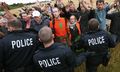
Climate_camp_and_policeThe core idea should be safe­guard­ing the nation’s integ­rity. A group of well-mean­ing envir­on­ment­al pro­test­ers should not even be on the radar. And, no mat­ter how awful, the occa­sion­al ter­ror­ist attack is not an exist­en­tial threat to the fab­ric of the nation in the way of, say, the planned Nazi inva­sion in 1940. Nor is it even close to the sus­tained bomb­ing of gov­ern­ment, infra­struc­ture and mil­it­ary tar­gets by the Pro­vi­sion­al IRA in the 70s-90s.

Once we under­stand the real threats, we as a nation can dis­cuss the steps to take to pro­tect ourselves; what meas­ures should be taken and what liber­ties occa­sion­ally and leg­ally com­prom­ised, and what demo­crat­ic account­ab­il­ity exists to ensure that the secur­ity forces do not exceed their remit and work with­in the law.

The Age of Transparency?

Black_sheep_text?Well, this is an inter­est­ing case in the US.  Thomas Drake, a former seni­or exec­ut­ive at the Amer­ic­an Nation­al Secur­ity Agency (NSA), the US elec­tron­ic eaves­drop­ping organ­isa­tion, is being charged under the 1917 US Espi­on­age Act for allegedly dis­clos­ing clas­si­fied inform­a­tion to a journ­al­ist about, gasp, the mis­man­age­ment, fin­an­cial waste and dubi­ous leg­al prac­tices of the spy­ing organ­isa­tion.  These days it might actu­ally be more news­worthy if the oppos­ite were to be disclosed.…

How­ever, under the terms of the Espi­on­age Act, this des­ig­nates him an enemy of the Amer­ic­an people on a par with bona fide trait­ors of the past who sold secrets to hos­tile powers dur­ing the Cold War.

It strikes me that someone who reports mal­prac­tice, mis­takes and under-per­form­ance on the part of his (secret­ive) employ­ers might pos­sibly be someone who still has the motiv­a­tion to try to make a dif­fer­ence, to do their best to pro­tect people and serve the genu­ine interests of the whole coun­try.  Should such people be pro­sec­uted or should they be pro­tec­ted with a leg­al chan­nel to disclosure? 

Thomas Drake does not sound like a spy who should be pro­sec­uted for espi­on­age under the USA’s anti­quated act, he sounds on the avail­able inform­a­tion like a whis­tleblower, pure and simple.  But that won’t neces­sar­ily save him leg­ally, and he is appar­ently facing dec­ades in pris­on.  Pres­id­ent Obama, who made such a song and dance about trans­par­ency and account­ab­il­ity dur­ing his elec­tion cam­paign, has an even more egre­gious track record than pre­vi­ous pres­id­ents for hunt­ing down whis­tleblowers — the new “insider threat”.

This, of course, chimes with the Brit­ish exper­i­ence.  So-called left-of-centre polit­ic­al can­did­ates get elec­ted on a plat­form of trans­par­ency, free­dom of inform­a­tion, and an eth­ic­al for­eign policy (think Blair as well as Obama), and promptly renege on all their cam­paign prom­ises once they grab the top job. 

In fact, I would sug­gest that the more pro­fessedly “lib­er­al” the  gov­ern­ment, the more it feels empowered to shred civil liber­ties.  If a right-wing gov­ern­ment were to attack basic demo­crat­ic freedoms in such a way, the offi­cial oppos­i­tion (Democrats/Labour Party/whatever) would be obliged to make a show of oppos­ing the meas­ures to keep their core voters sweet.  Once they’re in power, of course, they can do what they want.

One stark example of this occured dur­ing the passing of the Brit­ish Offi­cial Secrets Act (1989) which, as I’ve writ­ten before, was spe­cific­ally designed to gag whis­tleblowers and pen­al­ise journ­al­ists.  The old OSA (1911) was already in place to deal with real traitors.

And who voted against the passing of this act in 1989?  Yes, you’ve guessed it, all those who then went on to become Labour gov­ern­ment min­is­ters after the 1997 Labour elec­tion land­slide — Tony Blair, Jack Straw, the late Robin Cook and a scrum of oth­er rather for­get­table min­is­ters and Attor­ney Gen­er­als.….  And yet it was this very New Labour gov­ern­ment in the UK that most often used the OSA to halt the free-flow of inform­a­tion and the dis­clos­ures of informed whis­tleblowers.  Obama has indeed learnt well.

It’s an oldie but still a good­ie: as one of my law­yers once wryly told me, it does­n’t mat­ter whom you vote for, the gov­ern­ment still gets in.….

How the Light Gets In — speaking in Hay-on-Wye, May 30 2011

How_the_light_gets_in_Banner I did two ses­sions at Hay-on-Wye philo­sophy and music fest­iv­al — How the Light gets In in May 2011.

The first was a debate called “An Age of Trans­par­ency” with neo-con­ser­vat­ive com­ment­at­or Douglas Mur­ray, and philo­soph­er Nigel Warburton.

The second was my talk about “Spies, Lies, and Life on the Run”.

Here’s a link to a video of my talk.

How_the_light_gets_in_banner