Here’s an interview I did for Russia Today TV on 8th July 2010 about the US/Russian spy swap:
Category Archives: Politics
WikiLeaks Discussion Panel with Julian Assange, HAR NL 2009
Last year I had the honour to meet Julian Assange, the founder of the brilliant whistleblower website, WikiLeaks, that has been causing such a stir recently with the release of the decrypted US military film, “Collateral Murder”, and recently with the Afghan War Logs.
I have nothing but respect for WikiLeaks — it shines a torch into the dark corners of corrupt government and big business, and is the way forward in holding these organisations, which largely believe themselves to be above the law, at least somewhat to account.
Julian was kind enough to invite me to take part in a panel discussion with him at the Hacking at Random festival in the Netherlands last year. The discussion focused on whistleblowing and government accountability. Here’s the video:
The Secret Garden Party, UK 2010
 In July I was invited back to speak at the Secret Garden Party, a music, politics, and arts festival held annually somewhere, er, secret in the UK.
What a fab weekend. I have a well-known antipathy to sleeping under canvas, but this was an excellent festival — and even the compost loos were not too grim.
Listed as one of the “Star Acts” in the printed festival programme (I blush), I had the luxury of an hour and a half to speak in the première debate tent in the Rebels and Intellectuals section of the festival — The Forum — a concept that the organiser, Ben de Vere, promises to transplant to London sometime in the near future.
Anyway, I seriously recommend putting this festival in your diaries for next year, and keep an eye open for the spread of The Forum.….
Here’s the video:
Gestapo Past and Present
So last week I was on holiday with my lovely Dutchman in Cologne on the Rhine in Germany, a city steeped in history and now chiefly famous for its Gothic cathedral, widely reputed to be pretty much the last building left standing in the city at the end of WW2. Easily resisting both this religious hotspot and, with slightly more difficulty, the siren calls of the brauerei, we decided on a bit of culture, some museums and a stroll along the river.
However, it turns out that not one but two buildings had survived WW2 in their entirety. Tucked away on a backstreet, we found the second survivor: the Gestapo HQ, which had been preserved as it was found at the end of the war to serve as a ghastly warning to history.
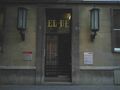 Well, as someone who regularly speaks at conferences across the world about human rights, totalitarianism and encroaching police states, I felt I had to have a look. The building is a nondescript office block that looks perfectly innocent from the outside. Three floors are open to the public. On the first is the museum, with the history of the rise to power of the Nazis. It was hideously fascinating to read how freedoms and rights were incrementally eroded as the state slipped ever more from democracy. The majority of the German people went sleep-walking into national socialism. As soon as Hitler had any sort of political power his attack-dogs, the SS, used disproportionate, sudden, and shocking violence against Germany’s own citizens to crush any nascent resistance. So from 1933 onwards the population was terrorised, as “undesirables” were routinely snatched from their homes for questioning, torture and imprisonment.
 And the propaganda in the media that was on display.…. Shall I just say, even more unsubtle than that which is used against us today. I suppose these dark arts have developed over the intervening years.
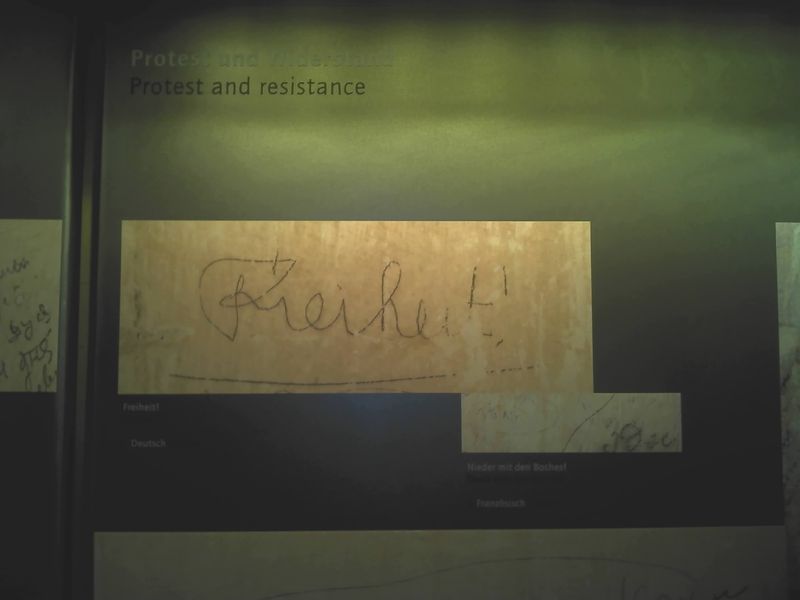
 But it was the lower floors that packed the strongest punch. The basement, just below street level, held the cells — tiny, dank spaces where as many as 30 people had been herded together. And the walls are covered in graffiti in all the languages of Europe — sad, desperate messages to the future from people who were “disappeared”. They seemed to want to leave a record of the fact simply that they had existed: they had loved, they missed their families, they were trying to hold their heads high despite the agonies inflicted daily, they were innocent, they were about to die.…..
 There was one more level — the reinforced rat hole deep underground, which served both as the air-raid shelter for the Gestapo officers (the prisoners were left upstairs in their cells during the raids), and as the torture rooms. Considerately, the Gestapo carried out their most brutal interrogations underground, so that the screams could not be heard at street level.
As we emerged, somewhat silent, from this museum, I noticed that we, and many other visitors, all turned to stare at this building: it looked so bland and innocuous from the outside. But then people would inspect the basement windows that hid the cells. The smokers in the group all sparked up as soon as they were outside, dragging hard on their cigarettes. Others just stood silently.
So the museum does its job. It is a powerful warning from the grave. Homo homini lupus: man is wolf to man, ever has been and ever will be, absent adequate legal restraint. This is why the Universal Declaration of Human Rights was put in place in 1948, to prevent such atrocities from happening again.
Yet, at the risk of sounding sententious, such abuse is going on around the world right now, particularly in the cause of the endless, nebulous “war on terror”. We have been lazy, blind and foolish, letting our basic rights slide away. People are disappeared, extraordinarily rendered, to foreign prisons and tortured for years. Assassination lists have been drawn up by US intelligence agencies; suspects face kangaroo, military-style courtrooms, where they face the death penalty but are not allowed to know the full case against them; our governments aggressively, illegally, invade other countries, and yet the politicians who lie to take us into these wars, thereby causing the needless death, poisoning, maiming and displacement of millions of people, are not called to account for their crimes, as they should be under the Nuremberg Principles, the Rome Statute, and the International Criminal Court.
We, the citizens of still just-about-functioning democracies, should be ashamed. We need to re-remember our history and take a stand — before it’s too late.
Interview on Russia Today TV, 30 June 2010
And here’s an interview I did yesterday for Russia Today TV about the the spy story:
From Russia with Love (to the USA)
I’ve been following with interest the retro, Cold War spy saga currently unfolding in the USA. The headlines being that 10 alleged Russian sleepers (“illegals” in spy lingo) have been arrested by the FBI and are now charged with “working as agents of a foreign power”, which carries a sentence of five years in prison.
These Russian “illegals”, some of whom reportedly have been living openly as Russian immigrants, some as other foreign nationals, have allegedly been infiltrating the US since the mid-1990s, and were tasked to get friendly with American power-brokers, to glean what information they could about the thoughts of the US great and the good about Russia, Iran, defence plans etc.
Whatever the truth of this case, and the charges are detailed, I find the timing and media attention given to this story interesting for three key reasons:
From what has been reported of the court papers, the FBI investigation has been going on for years. Apparently they have known about the spy ring since 2000, and have included communications intercept material in the indictment dating from 2004 and 2008, as well as sting operations from the beginning of this year. So it’s curious that the FBI decided to swoop now, in the immediate aftermath of a successful and, by all accounts friendly, meeting between the Russian and American presidents in Washington DC.
Many people are commenting on this aspect of the timing. And, indeed, one might speculate about wheels within wheels — it appears that there are still hardline factions within the US administration that want to ensure that a warmer working relationship cannot develop between Russia and the USA. A strategy of tension is good for business – especially companies like Halliburton and Xe (formerly Blackwater) which profit from building vast US military bases in Central Asia.
But what also intrigues me is the possible behind-the-scenes action.
 This story is getting blanket media coverage. It’s a good, old-fashioned, Cold War-style coup, hitting all the jingoistic spy buttons, just at a time when the US spooks are under pressure about their performance in the nebulous and ever-shifting “war on terror”, the shredding of constitutional rights, the illegal surveillance of domestic political activists, and complicity in extraordinary rendition and torture. It’s a useful “reminder” that the bloated US security infrastructure is worth all the money it costs, despite the dire state of US national finances. Pure propaganda.
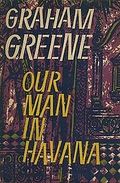
I’m also willing to bet that there is a more covert aspect to this story too — some behind-the-scenes power play. There are, at the last count, 17 acknowledged intelligence agencies in the US, all competing for prestige, power and resources. By making these arrests, the FBI will see this as a step up in the spy pecking order. It reminds me inevitably (and perhaps flippantly) of the classic spy novel by former intelligence officer Graham Greene, “Our Man in Havana”. In this no doubt entirely fictional work, a British MI6 asset invents a spy ring to increase his standing and funding from London HQ.
Also curious is the role played by one Christopher Metsos, allegedly the 11th man, not initially arrested, who is reported to have passed money to the spy ring. He was caught yesterday in Cyprus trying to board a plane to Hungary, and inexplicably granted bail — inexplicable at least to the Greek police, who always worry that their suspect will flee over the border into the Turkish segment of the island, never to be seen again. And this has indeed happened, according to The Guardian newspaper this evening. Perhaps he has some urgent appointments to sell vacuum cleaners north of the border.….
Talking about totalitarianism at ETH‑0, January 2010
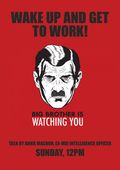 In January I had the pleasure of speaking in The Netherlands at the excellent geekfest known as ETH‑0. Rather than just banging on about the spooks, I thought it was time to take a step back and examine what exactly we mean when we talk about totalitarianism, police states, and how far down the road our countries have gone.
I also wanted to drive home to an audience, many of whom are too young to remember the Cold War, what exactly it would be like to live under a police state with its endemic surveillance.
And here’s the talk:
Dirty Tricks in Iraq and UK Media
An interesting example of press manipulation appeared today in the UK media. Britain is in the throes of a general election and many pundits are saying that the result is too close to call — the feeling being that the UK’s third party, the Liberal Democrats, may hold the balance of power in a hung parliament. The Daily Mail, one of the most rabidly right-wing of the national newspapers, chose today to print a story about the arrest and subsequent rescue of two UK soldiers in Iraq in 2005.
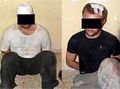 The general thrust of the piece was that the Labour government was willing to sacrifice our soldiers by refusing to authorise their rescue, in order to avoid political embarrassment. This story appears to be a fairly obvious attempt by The Daily Wail to encourage military personnel and their families to vote against the incumbent government, which was willing to sacrifice our boys’ lives for political expediency.
However,I would suggest that there is another level to this story. Many remember when the news first broke: how two SAS soldiers, working under cover and disguised as Arabs, failed to stop their car at a checkpoint and engaged in a shoot-out that killed one Iraqi and injured three more. The SAS operatives were arrested and taken to a police station where the authorities discovered that their car contained weapons and explosives. The SAS launched a rescue, ploughing into the police station with tanks, and then tracking their targets to a local militia house nearby, fighting their way in and saving their comrades. All heroic stuff. However, the obvious follow-up questions are:
1) What the hell were these two soldiers doing in disguise, and with a car-load of weaponry?
2) Precisely why was the government so embarrassed about the potential political fall-out?
I think these two questions are inter-dependent. Dirty tricks and collusion are a standard methodology for the SAS and the intelligence community — a well-documented tactic they used in the war in Northern Ireland over three decades. So just what was the intended destination of the weaponry? Would they have been used for an attack subsequently blamed on “insurgents” or “Al Qaeda”?
As for the potential political embarrassment, the Daily Mail’s excuse — that the British government didn’t want to undermine the perceived sovereignty of the Iraqis at that time — is just too feeble to stand up. The issue of political embarrassment makes far more sense if seen in terms of UK government awareness of the use by the British military of dirty tricks, collusion or false flag terrorism in Iraq.
Of course, this is a perfectly standard tactic used by many countries’ military and intelligence infrastructures. It would be naïve to think it does not happen, but it is a retrograde, risky and counter-productive tactic.
In the 21st century it is more naïve to think that such activity is either effective or acceptable in a world where the spread of democracy and the application of international law and human rights are the way forward.
Vers la Verite, Paris, October 2009
 So the Vers la Verite events in Paris earlier this month were a great success. I’ve organised a few international tours and events in my time, but this was one of the most concentrated series of different happenings I’ve been involved in. Thanks go to Debora Blake for all her work in situ in Paris, and also to the ReOpen posse, who offered a lot of practical support and were major sponsors of the weekend.
Vers la Verite was a gathering of campaigners and activists from across Europe and North America, who met to discuss “geopolitically incorrect issues” (as Debora likes to call them!), such as the illegal wars in the Middle East, media spin, intelligence manipulation, the erosion of our civil liberties in the name of the unending “war on terror” — and the need for a new, independent enquiry into the tragic events of 9/11, the nexus of so many of these issues. It was fantastic to see so many old and new friends in Paris — what a show of commitment to making the world a safer and more equitable place. It gave me hope.
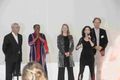 We were also privileged to have campaigners of the calibre of the 2008 US Green Party presidential candidate Congresswoman Cynthia McKinney, journalist and recent MEP Giulietto Chiesa, Professor Niels Harrit of Copenhagen University, and French actor and director Mathieu Kassovitz at the events.
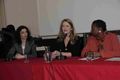 The weekend started with a press conference on Friday 9th October at the Mairie of the 2nd arrondissement in Paris, kindly hosted by the Mayor, himself a Green Party politician.
 In the evening, while the activists met up at the all-night watering hole, Café L’Etincelle on the Rue de Rivoli, Cynthia was the guest of honour at a sponsors’ dinner at the famous Le Procope brasserie. This is the oldest restaurant in Paris, and has hosted Benjamin Franklin (who reputedly worked on the draft of the American Constitution there), as well as Voltaire.
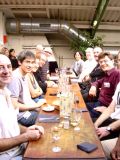 The Saturday was the main day of events, starting with a light lunch for international activists at Les Halles des Oliviers at La Bellevilloise, with impromptu music from Dr Jazzz. In the afternoon we convened for a planning session, followed in the evening by a public meeting. Debora ably hosted the event with Cynthia McKinney, Giulietto Chiesa and Niels Harrit and myself as the speakers, discussing different aspects of government cover-ups and lack of accountability, all drawn from our own experiences. The film “Zero”, directed by Giulietto Chiesa, was screened, as well as excerpts from “American Blackout” featuring Cynthia, and the work of wonderful French comedian and campaigner, Jean Marie Bigard.
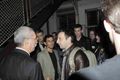 A surprise and very welcome attendee was Mathieu Kassovitz, who successfully bid in the auction for the collector’s edition of the excellent “Global Outlook” research publication, signed by Cynthia.
The weekend wrapped up with a demo on Sunday morning, marching from Place de la Republique to Place Bastille — two resonant locations — before an informal farewell Parisian lunch.
It was fantastic to meet so many inspiring people, who are committed to changing the world for the better. Thank you all for taking the time and trouble to get to Paris for the
weekend — it was great to see so many old and new friends!
And thanks once again to Debora, AtMoh, Marc, Jean Marc, Christophe (x2!), Arno and the rest of the Paris posse. Also to Cynthia, Giulietto and Niels for their professionalism, dedication and sheer joy, all in the face of adversity.
Cynthia McKinney Event in Paris, 10th October
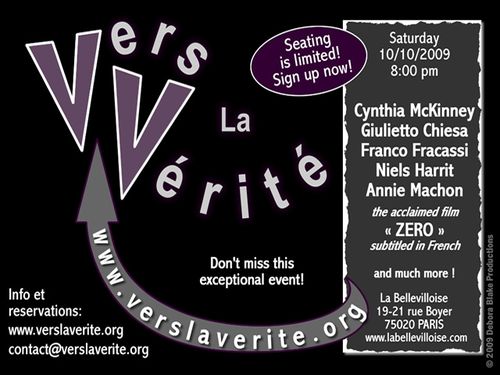
Here’s my latest effort. It should be an amazing weekend in Paris, with Congresswoman Cynthia McKinney, the 2008 US Green Party presidential candidate, headlining our “Vers la Verite” event on the Saturday night. Have a look at the website for the full line-up.
Alan Johnson’s MI5 File?
 I wonder what information, if any, MI5 has on file about new-ish UK Home Secretary, Alan Johnson? Or, more pertinently, what HE thinks the spies might have.…..
How else explain his recent comments in The Daily Torygraph? He said that he will be the voice of those who cannot defend themselves — ie those poor, anonymous intelligence officers in MI5. He even drags out the hoary old chestnut that a criminal investigation into prima facie evidence that the spooks have been involved in serious crime — the torture of another human being — would damage national security.
I’m surprised he managed to bite back Tony Blair’s infamous line, that an investigation into possible spy incompetence and crime would be a “ludicrous diversion”
Ever since Labour came to power in 1997, we have had a series of Home Secretaries straining to avoid doing their job vis a vis the spooks in Thames House: the job being that of political master of MI5, thereby providing a modicum of democratic oversight to an extremely powerful and secretive organisation, holding it to account and ensuring it obeys the law.
The role of Home Secretary is not to be the champion of unaccountable spies who are protected from investigation and oversight by a whole raft of secrecy legislation.
More and more evidence is emerging that MI5 assisted the USA’s extraordinary rendition plan, that it was complicit in torture, and that its officers have lied to cover their tracks. Under this avalanche of scandal, some MPs have finally woken up to the fact that the Home Secretary should be ensuring MI5 obeys the law. Some are even daringly suggesting that there should be proper Parliamentary oversight of the spies, rather than the fig leaf that is the Intelligence and Security Committee — hand-picked by and only answerable to the Prime Minister, and powerless to question intelligence officers under oath, demand papers, or look at anything more serious than policy, finance or administration.
 The Metropolitan Police have even begun a criminal investigation into MI5’s complicity in torture. While I doubt any case that could, ahem, “damage national security” will ever come to court, a few junior officers may be asked to do the decent thing and quietly walk the plank.
But the real issue — the closed, self-perpetuating group-think culture, where officers should just follow orders and not rock the boat — will continue unchallenged, resulting inevitably in yet more scandals.
It is time we had a Home Secretary who is up to the job and who has the backbone to initiate some meaningful reform of MI5.
The Case of Gary McKinnon
 I’ve been following the extraordinary case of Gary McKinnon for years now in a long range kind of way, but we are now in the final throes of his prolonged fight against extradition to the USA, and he needs all the support we can give him. The Daily Mail recently started a campaign against his extradition: it’s not often I agree with the Wail, but I’m wholeheartedly in favour of this initiative.
For those of you who have been living in a bunker for the last 7 years, Gary McKinnon is the self-confessed geek who went looking for evidence of UFOs and ETs on some of America’s most secret computer systems at the Pentagon and NASA.
And, when I say secret, obviously I don’t mean in the sense of encrypted or protected. The Yanks obviously didn’t feel that their national defence warrants even cursory protection, as Gary didn’t have to hack his way in past multiple layers of protection. Apparently the systems didn’t even have passwords.
Gary, who suffers from Asperger’s Syndrome, is no super hacker. Using a basic PC and a dial-up connection in his bedroom, he managed to sneak a peek at the Pentagon computers, before kindly leaving a message that the US military might like to have a think about a little bit of basic internet security. Hardly the work of a malignant, international cyber-terrorist.
UK police investigated Gary soon after this episode, way back in 2002. All he faced, under the UK’s 1990 Computer Misuse Act, would have been a bit of community service if he’d been convicted. Even that was moot, as the Crown Prosecution Service decided not to prosecute.
And that, as they say, should have been that.
However, in 2003 the UK government passed yet another draconian piece of law in response to the “war on terror” — the Extradition Act. Under this invidious, one-sided law, the US authorities can demand the extradition to America of any British citizen, without presenting any evidence of the crime for which they are wanted. Needless to say, this arrangement only works one way: if the Brits want to extradite a suspect from the US they still have to present prima facie evidence of a crime to an American court. The Act also enshrines the questionable European arrest warrant system in British law.
So how on earth did the half-wits in Parliament come to pass such an awful law? Were they too busy totting up their expense fiddles to notice that they were signing away British sovereignty? This law means that it is easier for a US court to get a Brit in the dock than it is for them to get a US citizen from another state. In the latter case, evidence is still also required.
Let’s get this straight. The UK authorities decided not to prosecute in this country. Even if they had, Gary would probably have been sentenced to community service. However, if he is extradited, he will get up to 70 years in a maximum security prison in the US.
So a year after Gary’s bedroom hack, and after the CPS had decided there was no case to answer, the US authorities demanded Gary’s extradition retroactively. The UK government, rather than protecting a British citizen, basically said “Yes, have him!”. Gary has been fighting the case ever since.
 He has not been alone. Many people from across the political spectrum see this unilateral law as invidious. And the government reckoned without his mum. Janis Sharp has fought valiantly and indefatigably to protect her son from this unjust extradition. She has lobbied MPs, talked to newspapers, gained the support of many public and celebrity figures. She even recently met the PM’s wife, Sarah Brown, who was reportedly in tears for Gary. Yet still the majority of the parliamentary half-wits refuse to do anything.
In fact, it gets worse. Over the last few years many MPs have signed Early Day Motions supporting Gary’s fight against extradition. But in a recent debate in the House of Commons about the need to revise the provisions of the Extradition Act, 74 of these MPs betrayed him and voted for the government to keep the Act in place. Only 10 Labour MPs stuck to their guns and defied the party Whip. One Labour MP, Andrew MacKinley, will stand down at the next election in protest at this hypocrisy.
This week is crunch time: on Friday a final judicial ruling will be made about the case. It was the last throw of the legal dice for Gary. If this fails, he will have to rely on political intervention, which is possible, to prevent his harmful, unjust and unnecessary extradition to the USA. Please visit the Free Gary website and do all you can in support.
Diamonds and Rust
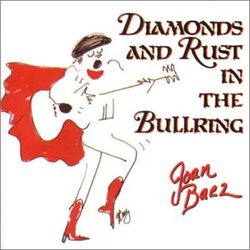 So Colonel Gaddafi of Libya has been dishing out the diplomatic gifts generously to the former US administration. Listed in the public declaration are even such items as a diamond ring presented to former Secretary of State, Condaleeza Rice, and other gifts to the value of $212,000.
This seems a slightly uneven distribution of largesse from the Middle East to the West. Before 9/11 and the ensuing war on terror, Gaddafi was still seen by the west as the head of a “rogue state”. Bombs, rather than gifts, were more likely to rain down on him.
However, since 2001 he has come back into the fold and is as keen as the coalition of the “willing” to counter the threat from Islamic extremist terrorists. So now he’s the new bestest friend of the US and UK governments in this unending fight.
But that was kind of inevitable, wasn’t it? As a secular Middle Eastern dictator, Gaddafi has traditionally had more to fear from Islamists than has the West. Particularly when these same Islamist groups have received ongoing support from those very governments that are now cosying up to Gaddafi.
Just to remind you, the reason I helped David Shayler in his whistleblowing on the crimes of MI5 and MI6 was because of just such a plot- the attempted assassination of Gaddafi in 1996 that was funded by the UK external intelligence gathering agency, MI6. In 1995 Shayler, then the head of the Libyan section in MI5, was officially briefed by his counterpart in MI6, David Watson (otherwise known as PT16/B), about an unfolding plot to kill Gaddafi. A Libyan military intelligence officer, subsequently code-named Tunworth, walked in to the British embassy in Tunis and asked to speak to the resident spook.
Tunworth said he was the head of a “ragtag group of Islamic extremists” (who subsequently turned out to have links to Al Qaeda — at a time when MI5 had begun to investigate the group), who wanted to effect a coup against Colonel Gaddafi. They needed funding to do this, and that was where MI6 came in. As a quid pro quo, Tunworth promised to hand over the two Lockerbie supsects for trial in Europe , which had for years been one of MI6’s priority targets — not to mention all those juicy oil contracts for BP et al.
Over the course of about 5 months, MI6 paid Tunworth’s group over $100,000, thereby becoming conspirators in a murder plot. Crucially, MI6 did not get the prior written permission of their political master, the Foreign Secretary, making this action illegal under the terms of the 1994 Intelligence Services Act.
Manifestly, this coup attempt did not work — Gaddafi is now a strong ally of our western governments. In fact, an explosion occurred beneath the wrong car in a cavalcade containing Gaddafi as he returned from the Libyan People’s Congress in Sirte. But innocent people died in the explosion and the ensuing security shoot-out.
So, MI6 funded an illegal, highly reckless plot in a volatile part of world that resulted in the deaths of innocent people. How more heinous a crime could there be? But to this day, despite a leaked MI6 document that proved they knew the existence of the proposed plot, and despite other intelligence sources backing up Shayler’s disclosures, the UK government has still refused to hold an enquiry. Quite the opposite — they threw the whistleblower in prison twice and tried to prosecute the investigating journalists.
Some people may call me naïve for thinking that the intelligence agencies should not get involved in operations like this. Putting aside the retort that the spies often conflate the idea of the national interest with their own, short-sighted careerism, I would like to remind such cynics that we are supposed to be living in modern democracies, where even the secret state is supposed to operate within the rule of law and democratic oversight. Illegal assassination plots, the use of torture, and false flag, state-sponsored terrorism should remain firmly within the retro, pulp-fiction world of James Bond.
Spy Chiefs attack UK Police State
 Sir Richard Dearlove, ex-head of MI6 and current Master of Pembroke College, Cambridge, has been much in the news recently after gracing the Hay on Wye book festival, where he gave a speech. In this, he is reported to have spoken out, in strong terms, against the endemic and all-pervasive surveillance society developing in the UK.
Ex-spy chiefs in the UK have a charming habit of using all these surveillance measures to the nth degree while in the shadows, and then having a Damascene conversion into civil liberties campaigners once they retire. Eliza Manningham-Buller, the ex-head of MI5, used her maiden speech in the House of Lords to argue against the extension of the time limit the police could hold a terrorist suspect without charge, and even Stella Rimington (also ex-MI5) has recently thrown her hat in the ring. They nick all my best lines these days.
Wouldn’t it be great if one of them, one day, could argue in favour of human rights, proportionality and the adherence to the law while they were still in a position to influence affairs?
Dearlove himself could have changed the course of world history if he had found the courage to speak out earlier about the fact that the intelligence case for the Iraq war was being fixed around pre-determined policy. As it is, we only know that he objected to this because of the notorious, leaked Downing Street Memo.
The Guardian newspaper reported that Dearlove even touched on the reality of obtaining ministerial permission before breaking the law. Which, of course, is the ultimate point of the 1994 Intelligence Services Act, and does indeed enshrine the fabled “licence to kill”. It states that MI6 officers can break the law abroad with impunity from prosecution if, and only if, they obtain prior written permission from their political master — in this case the Foreign Secretary.
However, according to The Guardian, he seems to have misunderstood the spirit of the law, if not the letter:
He said that the intelligence community was “sometimes asked to act in difficult circumstances. When it does, it asks for legal opinion and ministerial approval … It’s about political cover”.
Momentarily putting aside the not unimportant debate about whether the spies and the government should even be allowed technically to side-step international laws against crimes up to, and including, murder, I am still naively surprised by the shamelessness of this statement: the notion of ministerial oversight was put in place to ensure some kind of democratic oversight and accountability for the work of the spies — not to provide political cover, a fig leaf.
I think he’s rather given the game away here about how the spies really view the role of their “political masters”.