Article on life as a spy in Emirates women magazine

 click on the image above or here to download the entire article as a PDF
Article on life as a spy in Emirates women magazine
click on the image above or here to download the entire article as a PDF
A recent interview on RTTV about the ongoing civil war in Libya following the NATO invasion last year:
Part One of my recent interview on the excellent, independent and fearless Real News Network:
Published in The Huffington Post UK, 30 September 2012
Published in The Real News Network, 30 September 2012
A lot of sound and fury has been expended in the British media over the last few months about the Coalition government’s proposal to enact secret courts via the proposed Justice and Security Bill — purely for terrorist cases, you understand. Which, of course, is OK as we all know terrorists are by definition the Baddies.
Except we need to drill down into the detail of the proposals, have a look at some history, and think through the future implications.
The concept of secret courts emerged from the official UK spook sector — MI5 and MI6 have been lobbying hard for such protection over recent years. Their argument revolves around a number of civil cases, where British victims of extraordinary rendition and subsequent torture have sued the pants off the spies through civil courts and received some recompense for their years of suffering.
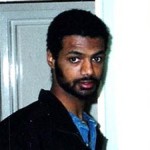 The most notorious case was that of Binyam Mohamed, who was repeatedly tortured in a black prison in Morocco, with British spies allegedly contributing to his questioning. And we’re not talking about a few stress positions, awful as they are. Mohamed was strung up and had his penis repeatedly slashed with a razor.
MI5 and MI6 are aggrieved because they could not defend themselves in the resultant civil actions brought against them, and they (and their former political master Jack Straw) are particularly worried about future cases around the MI6-organised Libyan renditions exposed last year. The spies’ argument is that having to produce evidence in their own defence would damage that ever-flexible but curiously vague concept of “national security”.
Well, they would say that, wouldn’t they?
The spooks have traditionally used the “national security” argument as the ultimate get-out-of-jail-free card. It has never been legally defined, but it is unfailingly effective with judges and politicians.
We saw similar arguments during the post‑9/11 security flap, when many terrorist suspects were scooped up and interned in high security British prisons such as Belmarsh on the say-so of faceless intelligence officers. No evidence needed to be adduced, nor could it be challenged. The subsequent control order system was equally Kafkaesque.
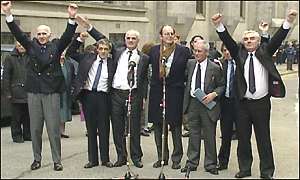 That’s not to say that certain interned individuals might not have been an active threat to the UK. However, in the “good” old days (god, I sound ancient), suspects would have had evidence gathered against them, been tried by a jury, convicted and imprisoned. The system was never perfect and evidence could be egregiously withheld, but at least appeals were possible, most notably in the case of the Birmingham Six.
Since 9/11 even breathing the word “terrorist” has meant that all these historic common law principles seem to have been jettisoned. Even before the proposed enshrinement of “secret courts” in the new Bill, they are already being used in the UK — the Special Immigration Appeal Commission (SIAC) tribunals hear secret evidence and the defendant’s chosen lawyer is not allowed to attend. Instead a special, government-approved advocate is appointed to “represent the interests” of the defendant who is not allowed to know what his accusers have to say. And there was no appeal.
But all this is so unnecessary. The powers are already in place to be used (and abused) to shroud our notionally open court process in secrecy. Judges can exclude the press and the public from court rooms by declaring the session in camera for all or part of the proceedings. Plus, in national security cases, government ministers can also issue Public Interest Immunity Certificates (PIIs) that not only bar the press from reporting the proceedings, but can also ban them from reporting they are gagged — the governmental super-injunction.
So the powers already exist to protect “national security”. No, the real point of the new secret courts is to ensure that the defendant and, particularly in my view, their chosen lawyers cannot hear the allegations if based on intelligence of any kind. Yet even the spies themselves agree that the only type of intelligence that really needs to be kept secret involves ongoing operations, agent names, and sensitive operational techniques.
 And as for the right to be tried by a jury of your peers — forget it. Of course juries will have no place in such secret courts. The only time we have seen such draconian judicial measures in the UK outside a time of official war was during the Troubles in Northern Ireland — the infamous Diplock Courts — beginning in the 1970s and which incredibly were still in use this year.
I am not an apologist of terrorism although I can understand the social injustice that can lead to it. However, I’m also very aware that the threat can be artificially ramped up and manipulated to achieve preconceived political goals.
I would suggest that the concept of secret courts will prove fatally dangerous to our democracy. It may start with the concept of getting the Big Bad Terrorist, but in more politically unstable or stringent economic times this concept is wide open to mission creep.
We are already seeing a slide towards expanding the definition of “terrorist” to include “domestic extremists”, activists, single issue campaigners et al, as I have written before. And just recently information was leaked about a new public-private EU initiative, Clean IT, that proposes ever more invasive and draconian policing powers to hunt down “terrorists” on the internet. This proposal fails to define terrorism, but does provide for endemic electronic surveillance of the EU. Pure corporatism.
Allowing secret courts to try people on the say-so of a shadowy, unaccountable and burgeoning spy community lands us straight back in the pages of history: La Terreur of revolutionary France, the creepy surveillance of the Stasi, or the disappearances and torture of the Gestapo.
Have we learned nothing?
 I have written over the years about the encroaching surveillance state, the spread of CCTV and the increasing use of drones in our skies. When the North East of England introduced talking CCTV cameras that could bark orders at passing pedestrians in 2008, I thought that we were fast approaching the reductio ad absurdum point — and indeed this subject has raised a wry laugh from audiences around the world ever since.
Recently I have been reading with dismay a slew of articles about the increasing corporatisation of the surveillance state. First I stumbled across a piece describing Facebook’s latest innovation, Facedeal: cameras planted in shops and bars that will use the facial recognition and tagging abilities of FB to recognise you as a valued customer and offer you a discount, simply because you have signed up to this Big Brother app on Facebook.
Add this to the fact that Facebook is probably, well, an open book for to the entire US security apparatus, and you can see the potential abuse of this system. We shall effectively be bribed to allow ourselves to be spied on.
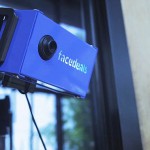 Facedeal is being trialed in the US. Some European countries, most notably Germany, have already stated that data recognition technology used even just for photo “tagging” is or could be deemed illegal. Germany specifically has regulations that allow Internet users control over their data. They are not going to like Facedeal.
Secondly, it was reported today that Google had patented intelligent image recognition technology. Combine this capability with Googles Earth and Street, and we are potentially looking at a truly panopticon society. The Germans are really not going to like that. (Nor indeed will certain of the French, including the man who earlier this year tried to sue Google after being photographed having a pee in his own front garden).
Thirdly, Boeing has triumphantly launched the concept of the drone swarm, operating with a hive mentality and upping the capabilities of military surveillance exponentially, while taking much of the risk out of any operation.
 And finally, the Wikileaks story about TrapWire. This first emerged as yet another bonkers American scheme, where the footage from CCTV street cameras was being mainlined into the security apparatus. Subsequently, it has emerged via Wikileaks that Trapwire is also being used in other western countries, including the UK.
Not only can the securocrats watch you, they too are installing face recognition software that can identify you. While this may not yet be as accurate as the spies might wish, TrapWire has also installed predictive software that apparently can assess whether you are acting, loitering or walking in a suspicious manner. So you could pre-emptively be assessed to be about to commit a crime or an act of terrorism and, no doubt, appropriately and pre-emptively “dealt with”.
All of which must be so reassuring to protest groups such as Occupy, which have been subject to massive CCTV surveillance in NYC and which have been labelled a “terrorist/extremist threat” in the City of London.
At the risk of sounding alarmist, we now all know what “being dealt with” in this era of anti-activist SWAT teams, drone strikes and kill lists can potentially entail.
So where does this leave us as concerned citizens? It strikes me that we are being catapulted into some sci-fi dystopia beyond even Orwell’s wildest imaginings. Any fan of modern thrillers and sci-fi will be familiar with the concept of integrated super-computers that can watch our every move via CCTV.
 The latter is what TrapWire et al are working towards. These new technologies remind me of a story line from a wonderful series of books called the The Laundry Files by Charles Stross. These novels are a perfect of merging of Len Deighton’s laconic spy fiction, à la Harry Palmer, with the geek universe and beyond. And, at the risk of a spoiler, one of the story lines envisages a centralised and weaponised CCTV system, mainlining into the secret services, that can be turned on UK citizens if the balloon goes up. This system is codenamed the “Scorpion Stare”.
Sounds far-fetched? Well The Laundry Files are a rollicking good read, but do bear in mind not only that our CCTV systems may be centralised courtesy of TrapWire, but also that various law enforcement agencies in the UK are using micro-drones to spy on protesters, and that they have reportedly enquired if these drones could be weaponised.….
So it all depends on how you define the balloon, I suppose.
Published in The Huffington Post UK, 3 September 2012
Following on from the article former CIA analyst, Ray McGovern, and I co-authored last month about the possible “fixing” of intelligence around Iran, here is a subsequent interview we did for The Real News Network:
By: Ray McGovern, former CIA analyst and Annie Machon, former MI5 intelligence officer
Recent remarks by the head of MI6, Sir John Sawers, leave us wondering if the Secret Intelligence Service is preparing to “fix” intelligence on Iran, as his immediate predecessor, Sir John Scarlett, did on Iraq.
 Scarlett’s pre-Iraq war role in creating “dodgy dossiers” hyping the threat of non-existent “weapons of mass destruction” is well known. As for Sawers, the red warning light for politicization blinked brightly on July 4, as he told British senior civil servants that Iran is “two years away” from becoming a “nuclear weapons state.” How did Sawers come up with “two years?”
Since late 2007, the benchmark for weighing Iran’s nuclear program has been the unanimous assessment by all 16 U.S. intelligence agencies that Iran halted its nuclear weapons program in late 2003 and that, as of mid-2007, had not restarted it. Those judgments have been revalidated every year since — despite strong pressure to bow to more ominous — but evidence-light — assessments by Israel and its neo-conservative supporters.
Intelligence Can Make a Difference
The 2007 the US National Intelligence Estimate helped to thwart plans to attack Iran in 2008, the last year of the Bush/Cheney administration. This shines through in George Bush’s own memoir, Decision Points, in which he rues the NIE’s “eye-popping declaration: ‘We judge with high confidence that in fall 2003, Tehran halted its nuclear weapons program.’”
 Bush continues, “But after the NIE, how could I possibly explain using the military to destroy the nuclear facilities of a country the intelligence community said had no active nuclear weapons program?” (Decision Points, p. 419)
Hands tied on the military side, US covert operations flowered, with $400 million appropriated at that same time for a major escalation of the dark-side struggle against Iran, according to military, intelligence, and congressional sources cited by Seymour Hersh in 2008. This clandestine but all-too-real war on Iran has included attacks with computer viruses, the murders of Iranian scientists, and what the Israelis call the “unnatural” demise of senior officials like Revolutionary Guards Major General Hassan Moghaddam father of Iran’s missile program.
Moghaddam was killed in a large explosion last November, with Time magazine citing a “western intelligence source” as saying the Israel’s Mossad was behind the blast. More threatening still to Iran are the severe economic sanctions, which are tantamount to an act of war.
Israeli Prime Minister Benjamin Netanyahu and pro-Israel neo-conservatives in the U.S. and elsewhere have been pushing hard for an attack on Iran, seizing every pretext they can find. Netanyahu was suspiciously fast off the blocks, for example, in claiming that Iran was behind the tragic terrorist bombing of Israeli tourists in Bulgaria on July 18, despite Bulgarian authorities and even the White House warning that it is too early to attribute responsibility.
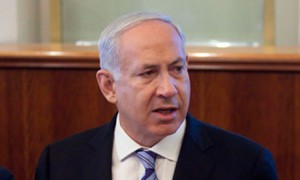 Netanyahu’s instant indictment of Iran strongly suggests he is looking for excuses to up the ante. With the Persian Gulf looking like an accident waiting to happen, stocked as it is with warships from the U.S., the U.K. and elsewhere — and with no fail-safe way of communicating with Iranian naval commanders — an escalation-generating accident or provocation is now more likely than ever.
July 23: Marking a Day of Infamy
Oddly, Sawers’s speech of July 4 came just as an important date approached — the tenth anniversary of a sad day for British intelligence on Iraq. On July 23, 2002 at a meeting at 10 Downing Street, then-MI6 head, John Dearlove, briefed Tony Blair and other senior officials on his talks with his American counterpart, CIA Director George Tenet, in Washington three days before.
In the official minutes of that briefing (now known as the Downing Street Memo), which were leaked to the London Times and published on May 1, 2005, Dearlove explains that George Bush has decided to attack Iraq and the war was to be “justified by the conjunction of terrorism and weapons of mass destruction.” While then-Foreign Secretary Jack Straw points out that the case was “thin,” Dearlove explains matter-of-factly, “The intelligence and facts are being fixed around the policy.”
 There is no sign in the minutes that anyone hiccupped — much less demurred — at making a case for war and furthering Blair’s determination to join Bush in launching the kind of “war of aggression” outlawed by the post-world war Nuremberg Tribunal and the UN treaty.
Helped by the acquiescence of their chief spies, the Blair government mainlined into the body politic un-assessed, raw intelligence and forged documents, with disastrous consequences for the world.
UK citizens were spoon-fed fake intelligence in the September Dossier (2002) and then, just six weeks before the attack on Iraq, the “Dodgy Dossier”, based largely on a 12-year old PhD thesis culled from the Internet — all presented by spy and politician alike as ominous premonitory intelligence.
So was made the case for war. All lies, resulting in hundreds of thousands dead and maimed and millions of Iraqis displaced — yet no one held to account.
Sir Richard Dearlove, who might have prevented this had he had the integrity to speak out, was allowed to retire with full honours and became the Master of a Cambridge college. John Scarlett, who as chair of the Joint Intelligence Committee signed off the fraudulent dossiers, was rewarded with the top spy job at MI6 and a knighthood. George W. Bush gave George Tenet the Presidential Medal of Freedom — the highest civilian award.
What need have we for further proof? “So are they all, all honourable men” — reminiscent of those standing with Brutus in Shakespeare’s play, but with no Mark Anthony to expose them and stir the appropriate popular reaction.
Therein lies the problem: instead of being held accountable, these “honourable men” were, well, honoured. Their soft landings offer a noxious object lesson for ambitious bureaucrats who are ready to play fast and loose with the truth and trim their sails to the prevailing winds.
Ill-got honours offer neither deterrent nor disincentive to current and future intelligence chiefs tempted to follow suit and corrupt intelligence rather than challenge their political leaders with hard, un-“fixed” facts. Integrity? In this milieu integrity brings knowing smirks rather than honours. And it can get you kicked out of the club.
Fixing Intelligence on Iran
Are we in for another round of “fixing” — this time on Iran? We may know soon. Israeli Prime Minister Netanyahu, citing the terrorist attack in Bulgaria, has already provided what amounts to a variation on Dearlove’s ten-year old theme regarding how war can be “justified by the conjunction of terrorism and weapons of mass destruction.”
According to the Jerusalem Post on July 17, Netanyahu said that all countries that understand that Iran is an exporter of world terror must join Israel in “stating that fact clearly,” in order to emphasize the importance of preventing Iran from obtaining a nuclear weapon.
Appearing yesterday on Fox News Sunday and CBS’s Face the Nation, Netanyahu returned to that theme. Putting the blame for the terrorist attack in Bulgaria squarely on Iran (and Hezbollah), Netanyahu warned of the increased dangers that would accrue if Iran acquired nuclear weapons. “What would be the consequences if the most dangerous régime in the world got the world’s most dangerous weapons?”.
Will MI6 chief Sawers model his conduct on that of his predecessors who “justified” war on Iraq? Will he “fix” intelligence around U.K./U.S./Israeli policy on Iran? Parliamentary overseers should demand a briefing from Sawers forthwith, before erstwhile bulldog Britain is again dragged like a poodle into another unnecessary war.
Annie Machon is a former intelligence officer in the UK’s MI5 Security Service and Ray McGovern is a fomer U.S Army Intelligence Officer and CIA analyst.
Following on from my talk at the Norwegian SKUP investigative journalism conference in March, I was invited onto the Anne Lindmo Show in Norway on 4 May.
Anne is one of the most famous and respected journalists in Norway, and her chat show is extremely popular on prime time NRK TV on Friday nights. We had a lively session discussing the world of spying, what it was like to blow the whistle and go on the run, and the personal price that has to be paid.
Here’s the link to the whole show, and here’s my segment:
Lindmo interview on Norwegian TV from Annie Machon on Vimeo.
A look at the forensic and police failures around the investigation of the still inexplicable death of intelligence officer, Gareth Williams, in London in 2010.
Here’s the link.

 The end of April saw me basking in the hot and sunny weather of Geneva, where I had been invited to give a talk (Download Geneva) at the Swiss Press Club.
We had a lovely time in Geneva, and many thanks to Jean-Philippe Ceppi and the rest of the team for such a warm, interested and interesting welcome.
What a mess, what a cover-up. The inquest into the sad, strange death of Gareth Williams concluded yesterday, with the coroner raising more questions than she was able to answer.
It was also patently obvious that both MI6 and the Metropolitan Police Counter-Terrorism Squad (SO15) hampered the investigation, for the inevitable reasons of “national security”.
When will MI6 realise that it is not above the law?
My heart goes out to Gareth’s family.
 I have always been ideologically opposed to war and all the horrors that flow in its wake: agonising fear and death, famine, displacement, maiming, torture, rape, internment and the breakdown of all the hard-won values of civilised human law and behaviour.
Looking back, I think that was partly why I was attracted to work in diplomacy and how I ended up being enticed into intelligence. These worlds, although by no means perfect, could conceivably be seen as the last-ditch defences before a country goes bellowing into all-out war.
I marched against the Iraq war, toured the UK to speak at Stop the War meetings, worked with Make Wars History, and have ceaselessly spoken out and written about these and related issues.
 Today in the UK we have reached a consensus that Blair’s government lied to the country into the Iraq war on the false premise of weapons of mass destruction, and subsequently enabled the Bush administration to do the same in the USA, hyping up the threat of a nuclear Iraq using false intelligence provided by MI6.
Millions of people marched then, and millions of people continue to protest against the ongoing engorgement of the military/intelligence complex, but nothing ever seems to change. It’s democratically disempowering and an enervating experience. What can we do about it?
I have a couple of suggestions (The New Stuff), but first let’s look at some of the most egregious current fake realities.
 Last year we had the spectacle of the current No 10 incumbent, Dave Cameron, stating that the Libyan intervention would be nothing like Iraq — it would be “necessary, legal and right”. But there was no subsequent joined-up thinking, and Blair and his cronies have still not been held to account for the Iraq genocide, despite prima facie breaches of international war law and of the Official Secrets Act.…
 But help might be at hand for those interested in justice, courtesy of Abdel Hakim Belhaj, former Libyan Islamic Fighting Group leader, MI6 kidnapping and torture victim, and current military commander in Tripoli.
After NATO’s humanitarian bombing of Libya last year and the fall of Gaddafi’s régime, some seriously embarrassing paperwork was found in the abandoned office of Libyan Foreign Minister and former spy head honcho, Musa Kusa (who fled to the UK and subsequently on to Qatar).
These letters, sent in 2004 by former MI6 Head of Terrorism and current BP consultant, Sir Mark Allen, gloatingly offer up the hapless Belhaj to the Libyans for torture. It almost seems like MI6 wanted a gold star from their new bestest friends.
Belhaj, understandably, is still slightly peeved about this and is now suing MI6. As a result, a frantic damage-limitation exercise is going on, with MI6 trying to buy his silence with a million quid, and scattering unattributed quotes across the British media: “it wasn’t us, gov, it was the, er, government.…”.
Which drops either (or both) Tony Blair and Jack Straw eyebrow-deep in the stinking cesspit. One or other of them should have signed off on Belhaj’s kidnapping, knowing he would be tortured in Tripoli. Or perhaps they actually are innocent of this.…. but if they didn’t sign off on the Belhaj extraordinary kidnapping, then MI6 was running rampant, working outside the law on their watch.
Either way, there are serious questions to be answered.
 Both these upstanding politicians are, of course, suffering from political amnesia about this case. In fact, Jack Straw, the Foreign Secretary at the time of the kidnapping, has said that he cannot have been expected to know everything the spies got up to — even though that was precisely his job, as he was responsible for them under the terms of the Intelligence Security Act 1994, and should certainly have had to clear an operation so politically sensitive.
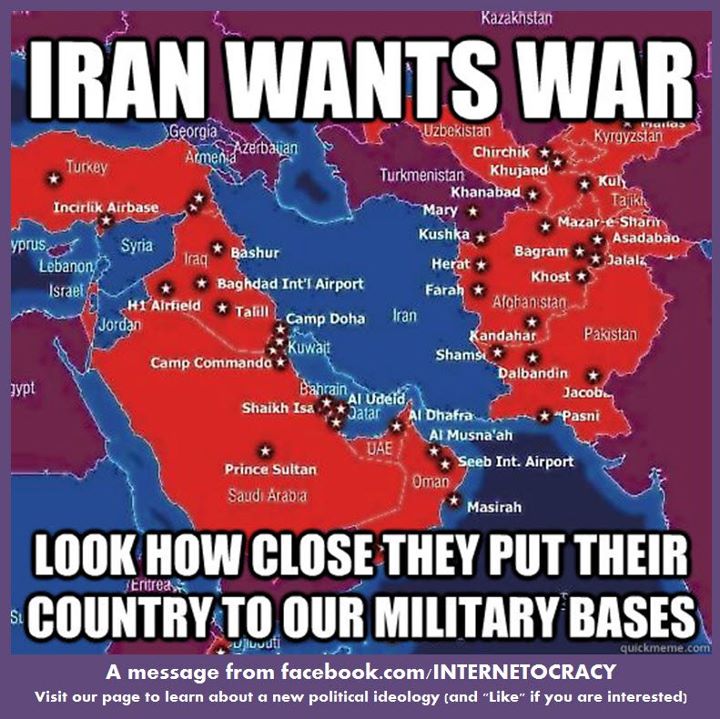
In the wake of Afghanistan, Iraq and Libya, what worries me now is that exactly the same reasons, with politicians mouthing exactly the same platitudinous “truths”, are being pushed to justify an increasingly inevitable strike against Iran.
Depressing as this all is, I would suggest that protesting each new, individual war is not the necessarily the most effective response. Just as the world’s markets have been globalised, so manifestly to the benefit of all we 99%-ers, have many other issues.
Unlike Dave Cameron, we need to apply some joined-up thinking. Global protest groups need to counter more than individual wars in Iraq, Afghanistan, Pakistan, Somalia, Libya, Sudan (North and South), Syria, Iran.….. sorry, I’m getting writer’s cramp just enumerating all the current wars.
Give me a while to overcome my moral spasm, and I shall return with a few suggestions about possible ways forward — 21st Century Pacifism; the New Stuff.
Here is the film of the debate at the SKUP investigative journalism conference in Norway on 25 March 2012:
I had an immensely stimulating time during my recent mini-tour of Scandinavian investigative journalism conferences, meeting informed, interesting, and interested people.
The focus of my talks was the nexus between the intelligence world and the media — lessons I had learned, researched and deduced during the whistleblowing years and beyond. I have heard so many hair-raising media stories over the years.…
And, having listened to the experiences of journalists from a wide variety of other countries, it seems I am on the right track.
 First stop was the Grav conference in Sweden, where I gave a talk and had the pleasure of meeting investigative journalists who confirmed what I was saying, even if some of them didn’t think I had quite gone far enough! We also had fun at the “mingel” evening.
Next stop, next day, was the SKUP conference in Norway where I did a talk, and also a debate about the media and whistleblowers. Note to self: never, ever agree to do a morning debate after the legendary SKUP party the night before.
Finally, last weekend, I visited the Tutki 2012 journalism conference in Finland (Download Helsinki_Talk). The response was overwhelmingly positive, and once again I had confirmation of what I was saying from the journalists themselves.
So what can we do about this situation? I shall keep spreading the word, and the journalists themselves just need to keep saying a resounding “no” to the inducements, at least if they want to work on meaningful investigations. And what real journalist doesn’t, au fond?
Next stop Geneva, which is why I’m limbering up with the French.