On 6 December I appeared on RTTV’s CrossTalk discussion programme alongside whistleblowing UK ex-diplomat Carne Ross, to talk about the implications of Wikileaks:
On 6 December I appeared on RTTV’s CrossTalk discussion programme alongside whistleblowing UK ex-diplomat Carne Ross, to talk about the implications of Wikileaks:
Finally the true intentions behind the draconian British law, the Official Secrets Act, and similar espionage-related laws in other countries such as the USA, have been laid bare. All is revealed — these laws apparently have nothing whatsoever to do with protecting national security and countering espionage — their primary purpose is to stifle dissent and legitimate criticism of the state.
How can I tell? Well, look at the reaction to the ongoing Wikileaks revelations, as opposed to today’s UK spy scandal involving the parliamentary assistant of a hitherto unremarkable MP.
 The now-notorious Wikileaks site has been going since 2007 and, in this brief time, has shone a bright light on such nasties as Trafigura, the BNP, Scientology, Climategate, Guantanamo, the Australian internet blacklist, Sarah Palin, and much more.
The site achieved world-wide notoriety this year with four big stories — starting with the harrowing film “Collateral Murder”, which demonstrated clearly that the Pentagon had been lying to the distraught families of the victims of this video-game nasty for years.
Since then Wikileaks has cleverly worked with selected media oulets such as The Guardian, The New York Times and Der Spiegel in Germany to give us the Afghan War logs and Iraq war files, which exposed endemic brutality, torture and war crimes (all in the name of spreading democracy, of course), and culminating over the last week with the ongoing Cablegate expose.
The response? Well the majority of the old media, particularly those that didn’t share in the juicy scoops, has been in attack mode: condemning whistleblowing; vilifying the character of Wikileaks spokesperson, Julian Assange; and gleefully reporting the widespread cyberspace crackdown (Amazon pulling the site, Paypal stopping contributions, the ongoing hack attacks).
But this is just so much hot air — what about the real substance of the disclosures? The violent horror, war crimes, and government lies? Why is our so-called Fourth Estate not demanding a response to all this terrible evidence?
 However, it is the reaction of the US political class that is most gob-smackingly shocking. The half-wits call for Assange’s prosecution under the US Espionage Act (even though he’s an Australian); to have him executed, assassinated by drone attack, or unlawfully disappeared as an “unlawful combatant”; and make hysterical calls for Wikileaks to be placed on the US list of proscribed foreign terrorist organisations. Daniel Ellsberg, the famous Pentagon Papers whistleblower, fears for Assange’s life.
Well, you can always tell how effective a whistleblower is by the response you engender when telling truth to power, and this is a pretty striking vindication.
Of course, Julian Assange is not strictly speaking a whistleblower per se. He is the next generation — a highly-capable, high-tech conduit, using his “hackivist” skills to out-pace and out-smart those who seek to conceal vital information.
As he said during a TED.com interview last summer, he strives to live by the ideal that to be a man is to be “capable and generous, not to create victims, but to nurture them…”. And this is indeed the protection Wikileaks offers, an avenue of secure disclosure for people of conscience on the inside, without their having to go public to establish the bona fides of what they are saying, with the resulting victimisation, loss of career, liberty, and possibly life.
Still, politicians seem unable to make the distinction — they are solely focused on loss of face, embarrassment, and shoring up the wall of secrecy that allows them to get away with lies, torture and war crimes. I hope that common sense will prevail and Assange will not become another sacrificial victim on the altar of “national security”.
 So why did I say at the start that the secrecy laws have come out of the closet? Well, in the wake of all this recent media and political hysteria about Wikileaks, this little espionage gem appeared in the UK media today. Essentially, the UK Home Secretary is booting out an alleged Russian spy, Ms Katia Zatuliveter who, despite getting through security vetting (MI5, anyone?), was really an SVR agent working as the Parliamentary assistant to Mike Hancock MP — a man who happens to have a special interest in Russia and who serves on the UK’s Parliamentary Defence Select Committee.
Now, in the old days such alleged activity would mean an automatic arrest and probable prosecution for espionage under the Official Secrets Acts (1911 and 1989). If we go with what the old media has reported, this would seem to be a clear-cut case. During the Cold War foreign spies working under diplomatic cover could be discreetly PNGed (the jargon for declaring a diplomat persona non grata). However, this young woman was working in Parliament, therefore can have no such diplomatic cover. But deportation and the avoidance of embarrassment seems to be the order of the day — as we saw also with the explusion of the Russian spy ring from the US last summer).
Which demonstrates with a startling clarity the real intentions behind the British OSA and the American Espionage Act. The full force of these laws will automatically be brought to bear against those exposing crime in high and secret places, pour enourager les autres, but will rarely be used against real spies.
Proof positive, I would suggest, that these laws were drafted to prevent criticism, dissent and whistleblowing, as I’ve written before, but not meaningfully to protect our national security. One can but hope that the Wikileaks débâcle acts as the long-overdue final nail in the OSA coffin.
Would it not be wonderful if our “esteemed” legislators could learn from recent events, draw a collective deep breath, and finally get to grips with those who pose a real threat to our nations — the people who lie to take us into illegal wars, and intelligence officers involved in torture, assassination and espionage?
Below is text of an article I wrote, published in The Sunday Telegraph a while ago about what it’s actually like to enter the wonderful world of spying (just in case it’s ever airbrushed out of history!):
“My so-called life as a spy”
Spies have always loved living in Pimlico: a civilised area in central London, handy for strolling to the office, and wonderfully convenient for that midnight dash to work if your operation suddenly goes live. Plus, the local pubs are pretty good for the customary after-work moan.
 I lived there myself when I worked as an intelligence officer for MI5 in the 1990s, so the murder of Gareth Williams in a nearby street gave me a bit of a jolt. While his death remains shrouded in mystery, what has been reported of his life sounds like classic GCHQ.
There are distinct cultures within each of the three major UK spy agencies: MI5, the UK domestic security service; MI6, the overseas intelligence organisation; and GCHQ, the Government Communications HQ.
MI6 officers, as people who may have to work independently and undercover abroad, tend to be confident, individualistic and “ethically flexible”, while MI5 officers need to co-ordinate a broad range of resources and people to run an operation, which requires greater team-building. Of the three agencies, GCHQ remains the most secretive and inward-looking, and is staffed predominantly with “boffin” types. Williams, with his mathematical skills and loner tendencies, would be a typical employee.
Despite the intelligence community presenting a united front to the outside world, culture clashes between the three agencies are commonplace. Staff on secondment between agencies – as Williams was, from GCHQ to MI6 – can have a rough time fitting into a new environment, working with colleagues who eye them with suspicion, as the divisions jockey for power, prestige and resources within Whitehall.
So what is life like working as a spy? The world of intelligence is not so much isolating as insulating. Even as you proceed through the convoluted recruitment process, you find yourself entering a parallel universe, one that exists alongside your everyday life.
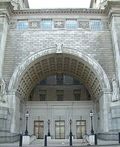 From that first, exploratory meeting with an intelligence officer in an unmarked building in central London, you have to withdraw a little from your old existence. You are asked not to tell your family and friends, and immediately have to sign a notification of the rigorous terms of the Official Secrets Act, whereby if you talk about your work, you risk imprisonment.
The process of induction into this world is intriguing, flattering and seductive. The agencies tend to avoid the James Bond wannabes, and those inspired by the fake glamour of Spooks. The key motivation is generally wanting to do a job that can make a difference, protect the country and potentially save lives. The secret element adds spice and perhaps compensates for the anorexic pay. When I started working for MI5 in 1991, at the fast-track graduate level, the starting salary was £14,500 pa – a good £5,000 less than my peer group from Cambridge earned in their blue-chip jobs. The pay has improved somewhat since then, but you don’t become a spy for the money.
The vetting process is protracted. For MI5, MI6 and GCHQ, officers are required to have the highest clearance – Developed Vetting. This begins with a home visit. Disconcertingly, I soon found myself in the family sitting room being grilled about my sex life by a little, grey-haired lady who looked just like a favourite grandmother, until you looked into her eyes.
Then the process widens. I had to nominate four friends who were willing to be interviewed about me, and they were asked to suggest yet more people… so secrecy becomes impossible. One friend, of a Left-wing hue, disapproved of my recruitment; even those who were supportive were reluctant to ask me too much. As I couldn’t talk to them freely about my life, they felt increasingly shut out, so I lost old friends along the way.
 Unsurprisingly, new officers begin to socialise increasingly with their colleagues, and close friendships grow rapidly. Within this clique, we could talk shop at dinner parties, use the same slang and terminology, discuss our work, and whinge about our bosses. With outsiders, we could never be fully ourselves. This, inevitably, often led to more than friendships. What might otherwise be called office romances flourished. I met my former partner, David Shayler, when we were both in our first posting in MI5.
Such relationships were not exactly encouraged, but were generally seen as a good thing by management – unless, of course, it was a clandestine matter that could leave the officer vulnerable to blackmail. Such affairs were seen as vetting offences.
Among spies, an old double standard held firm. There was one couple who were caught in flagrante in the office, not once but twice. The male officer was put on “gardening leave” for six months; the woman was sacked.
For the first few weeks in the job, the feeling of unreality and dislocation is strong. The only solid information you have about your new position, as you walk into the office for the first time, is the grade at which you will be working – nothing else.
My first posting was to the small counter-subversion section, F2. Even though it was a desk job, the information I was dealing with came from sensitive sources: intercepted communications, reports from agents who had penetrated target groups, police reports. And yet, within a few weeks, the handling of such secret and intrusive information became entirely normal.
Investigations can be very fast-paced, particularly in the counter-terrorism sections. Generally, officers work regular hours but occasionally, if an operation goes live, you work around the clock. If it proves a success, there might be a news item on the television about it – but obviously without the full back story. That can be a surreal experience. You feel pride that you’ve achieved what you signed up to do, but you cannot discuss it with anybody outside the office. At such moments, the disconnect from mainstream life is intensely sharp.
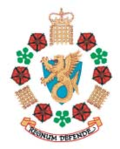 However, when something goes wrong – a bomb goes off in which civilians die – the feelings are even more intense. Guilt, anger, frustration, and a scramble to ensure that the blame doesn’t attach to your section. The official motto of MI5 is Regnum Defe
nde – defence of the realm. Staff mordantly used to joke that it should more accurately be Rectum Defende.
Personal security also ensures that there is a constant barrier between you and the normal world. If you meet someone interesting at a party, you cannot say too much about what you do, and such reticence can appear unfriendly. The cover story that MI5 officers use is that they work as civil servants at the Ministry of Defence; for MI6, it is the Foreign Office. This usually stops people from asking too much more, either through discretion or, frankly, boredom. Once or twice, people pushed me for more information, and my paranoia antennae immediately began to twitch: why are they so interested? Are they spies or, God forbid, journalists?
I had the misfortune once of using this cover story at a party, only to find my interlocutor actually worked for the real Ministry of Defence, and wanted to know which section I worked in, who my colleagues were, how long I had been there… Thankfully, the magic word “Box” – slang used to describe MI5 within Whitehall, derived from the organisation’s old PO Box 500 number – brought that line of conversation to an abrupt halt.
As an intelligence officer, you quickly learn to be discreet on the telephone and in emails. Oblique conversations become the norm, and this bleeds into your personal life, too, much to the frustration of friends and family.
The internet is another challenge. As a “spook”, the last thing you want to see is your photograph on a friend’s Facebook page. Or, even worse, holiday snaps showing you in your Speedos, as the current head of MI6, Sir John Sawyer, found to his cost last year.
And what about when you come to leave the intelligence service, as I did after five years. Can you ever really have a normal life afterwards, and shake off the mindset?
Many of my former colleagues have left and built careers in a wide variety of areas. But I wonder how many still look automatically over their shoulders as they put their key in the front door; how many tear up paper before throwing it in the bin; and how many are reflexively reticent about their personal life?
Would I want to be a spy these days? No, thank you. I’m happier in the real world.
* Annie Machon is the author of Spies, Lies and Whistleblowers (Book Guild)
For the first time in 100 years “C”, the head of the UK foreign intelligence service SIS (commonly known as MI6) has gone public.
Former career diplomat Sir John Sawers (he of Speedo fame) yesterday made a speech to the UK Society of Editors in what appeared to be a professionally diplomatic rear-guard action in response to a number of hot media topics at the moment.
Choosing both his audience wisely and his words carefully, he hit on three key areas:
Torture: Legal cases are currently going through UK courts on behalf of British victims of torture, in which MI5 and MI6 intelligence officers are alleged to have been complicit. The Metropolitan Police are currently investigating a number of cases. Over the last week, a British military training manual on “enhanced” interrogation techniques has also been made public. However, Sawers unblushingly states that MI6 abides by UK and international law and would never get involved, even tangentially, in torture cases. In fact, he goes on to assert that the UK intelligence agencies are training the rest of the world in human rights in this regard.
Whistleblowing: In the week following the latest Wikileaks coup — the Iraq War Diaries, comprising nearly 400,000 documents detailing the everyday horror of life in occupied Iraq, including war crimes such as murder, rape and torture committed by both US and UK forces — Sawers states that secrecy is not a dirty word: the intelligence agencies need to have the confidence that whistleblowers will not emerge to in order to guard agent and staff identities, as well as maintaining the confidence of their international intelligence partners that their (dirty?) secrets will remain, um, secret. One presumes he is advocating against the exposure of war crimes and justice for the victims.
This, one also presumes, is the justification for US politicians who propose cyber-attacks against Wikileaks and the declaration by some US political insiders that Julian Assange, spokesman of the organisation, should be treated as an unlawfully designated “unlawful combatant”, subject to the full rigour of extra-judicial US power, up to and including assassination.
Spurious media claims of unverified “damage” are the hoary old chestnuts always dragged out in whistleblower cases. After Wikileaks released its Afghan War Blog in July, government and intelligence commentators made apocalyptic predictions that the leak had put military and agent lives at risk. US Defense Secretary Robert Gates has since gone on the record to admit that this was simply not true.
During the Shayler whistleblowing case a decade ago, the government repeatedly tried to assert that agent lives had been put at risk, and yet the formal judgement at the end of his trial stated that this was absolutely not the case. And again, with the recent Wikileaks Iraq War Blog, government sources are using the same old mantra. When will they realise that they can only cry wolf so many times and get away with it? And when will the journalists regurgitating this spin wake up to the fact they are being played?
Accountability: Sawers goes on to describe the mechanisms of accountability, such as they are. He accurately states, as I have previously described ad nauseam, that under the 1994 Intelligence Services Act, he is notionally responsible to his political “master”, the Foreign Secretary, who has to clear in advance any legally dubious foreign operations (up to and including murder – the fabled “licence to kill” is not fiction, as you can see here).
The 1994 ISA also established the Prime Minister’s Intelligence and Security Committee (ISC) in Parliament, which many commentators seem to believe offers meaningful oversight of the spies. However, as I have detailed before, this is a mere fig leaf to real accountability: the ISC can only investigate issues of policy, finance and administration of the spy agencies. Disclosures relating to crime, operational incompetence or involvement in torture fall outside its remit.
But what happens if intelligence officers decide to operate beyond this framework? How would ministers or the ISC ever know? Other spy masters have successfully lied to their political masters in the past, after all.
Sir John has the gall to say that, if an operation is not cleared by the Foreign Secretary, it does not proceed. But what about the Gadaffi Plot way back in 1996, when MI6 was sponsoring a group of Islamic extremist terrorists in Libya to try to assassinate Colonel Gadaffi without, it has been asserted, the prior written approval of the then-Foreign secretary, Tory politician Malcom Rifkind? This was reported extensively, including in this article by Mark Thomas in the New Statesman. What happens if rogue MI6 officers blithely side-step this notional accountability — because they can, because they know they will get away with it — because they have in the past?
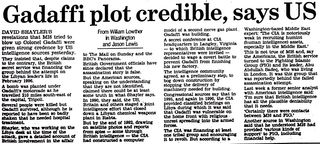 In the interests of justice, UK and international law, and accountability, perhaps a new Conservative/Coalition government should now reassess its approach to intelligence whistleblowers generally, and re-examine this specific disclosure about Libya, which has been backed up by international intelligence sources, both US and French, in order to achieve some sort of closure for the innocent victims in Libya of this MI6-funded terrorist attack? And it is finally time to hold the perpetrators to account — PT16, Richard Bartlett, and PT16B, David Watson, who were the senior officers in MI6 responsible for the murder plot.
As civilised countries, we need to rethink our approach to the issue of whistleblowing. Lies, spin, prosecutions and thuggish threats of assassination are beneath us as societies that notionally adhere to the principles of democracy. If we can only realistically hope that the actions of our governments, military forces, and intelligence agencies are transparent and accountable via whistleblowers, then we need to ensure that these people are legally protected and that their voices are heard clearly.
 In September 2010 I was invited over to New York to speak at a televised 2‑day symposium organised by the independent TV and radio station International News Net (INN). The topic under discussion was “How the world changed after 9/11”.
Speakers were invited from around the world to participate in panel discussions focusing on different areas that have been noticeably degraded and corrupted since 9/11 in response to the endless “war on terror”: civil liberties, the rule of law, intelligence, politics, economics, and the media. Some of the discussions featured academics, professionals and scientists questioning the assertions of the official US government account of 9/11 itself — the justification for so many ensuing horrors.
 I was on the same panel as Ray McGovern (army veteran and long-time CIA analyst), Coleen Rowley (FBI whistleblower), and Dr Katherine Albrecht (digital privacy campaigner). The title of the session was “Goodbye Fourth Amendment”. As I pointed out at the beginning of my talk, at least the US has a written constitution to shred — something the UK never quite managed to produce.…
Here’s the film of my session. DVDs of this and all other panel discussions are available from INN.
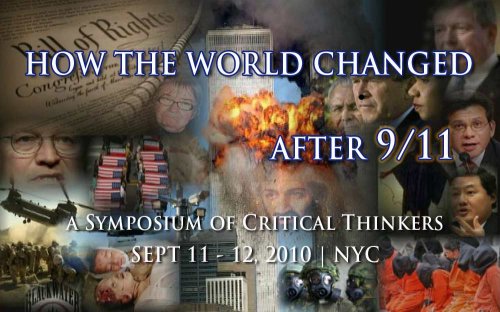
Looking forward to speaking at this conference next weekend!
A timely and necessary debate about the vital, but increasingly fragile, state of our democracy and basic civil rights.
And what a great line up — well done to the organisers!
Some of the other speakers are old friends I’ve worked with before, some I look forward to meeting for the first time.
Here’s an interview I did for Russia Today TV on 8th July 2010 about the US/Russian spy swap:
I did a PR interview for the 2008 film “The Bank Job”, which was included in the extras on the DVD.
In the interview I discussed MI5 dirty tricks and spy influence over the media.
Last year I had the honour to meet Julian Assange, the founder of the brilliant whistleblower website, WikiLeaks, that has been causing such a stir recently with the release of the decrypted US military film, “Collateral Murder”, and recently with the Afghan War Logs.
I have nothing but respect for WikiLeaks — it shines a torch into the dark corners of corrupt government and big business, and is the way forward in holding these organisations, which largely believe themselves to be above the law, at least somewhat to account.
Julian was kind enough to invite me to take part in a panel discussion with him at the Hacking at Random festival in the Netherlands last year. The discussion focused on whistleblowing and government accountability. Here’s the video:
 In July I was invited back to speak at the Secret Garden Party, a music, politics, and arts festival held annually somewhere, er, secret in the UK.
What a fab weekend. I have a well-known antipathy to sleeping under canvas, but this was an excellent festival — and even the compost loos were not too grim.
Listed as one of the “Star Acts” in the printed festival programme (I blush), I had the luxury of an hour and a half to speak in the première debate tent in the Rebels and Intellectuals section of the festival — The Forum — a concept that the organiser, Ben de Vere, promises to transplant to London sometime in the near future.
Anyway, I seriously recommend putting this festival in your diaries for next year, and keep an eye open for the spread of The Forum.….
Here’s the video:
I had the pleasure recently of working with a talented film maker called Ryan JW Smith, and his partner/producer, Brianna.
Brianna is an artist by training, and also a mean hand at producing. Ryan seems a bit of a renaissance man — film maker, poet, writer, actor. In fact, he wrote a play called “New World Order” in, I believe, iambic pentameter, and performed it to packed audiences at the Edinburgh Fringe a couple of years ago, and recently had a short film called “Army Strong” screened at a Polish film festival.
Anyway, they are in the middle of making a feature-length film about the post-apocalyptic, post‑9/11 world we all share — the lies of intelligence and government, the illegal wars, the erosion of our democratic rights. Just the sort of light material that I like to work with — and certainly what I think is of vital importance.
I’m working on helping to promote the film later this year, and organise some screening tours for them across Europe and North America.
I think it’s going to be a very powerful wake-up call to us all. Watch this space for more news.
Here’s a trailer Ryan and Brianna cut from my interviews with them called “Using Her Intelligence”. I like:
And here’s an interview I did yesterday for Russia Today TV about the the spy story:
I’ve been following with interest the retro, Cold War spy saga currently unfolding in the USA. The headlines being that 10 alleged Russian sleepers (“illegals” in spy lingo) have been arrested by the FBI and are now charged with “working as agents of a foreign power”, which carries a sentence of five years in prison.
These Russian “illegals”, some of whom reportedly have been living openly as Russian immigrants, some as other foreign nationals, have allegedly been infiltrating the US since the mid-1990s, and were tasked to get friendly with American power-brokers, to glean what information they could about the thoughts of the US great and the good about Russia, Iran, defence plans etc.
Whatever the truth of this case, and the charges are detailed, I find the timing and media attention given to this story interesting for three key reasons:
From what has been reported of the court papers, the FBI investigation has been going on for years. Apparently they have known about the spy ring since 2000, and have included communications intercept material in the indictment dating from 2004 and 2008, as well as sting operations from the beginning of this year. So it’s curious that the FBI decided to swoop now, in the immediate aftermath of a successful and, by all accounts friendly, meeting between the Russian and American presidents in Washington DC.
Many people are commenting on this aspect of the timing. And, indeed, one might speculate about wheels within wheels — it appears that there are still hardline factions within the US administration that want to ensure that a warmer working relationship cannot develop between Russia and the USA. A strategy of tension is good for business – especially companies like Halliburton and Xe (formerly Blackwater) which profit from building vast US military bases in Central Asia.
But what also intrigues me is the possible behind-the-scenes action.
 This story is getting blanket media coverage. It’s a good, old-fashioned, Cold War-style coup, hitting all the jingoistic spy buttons, just at a time when the US spooks are under pressure about their performance in the nebulous and ever-shifting “war on terror”, the shredding of constitutional rights, the illegal surveillance of domestic political activists, and complicity in extraordinary rendition and torture. It’s a useful “reminder” that the bloated US security infrastructure is worth all the money it costs, despite the dire state of US national finances. Pure propaganda.
I’m also willing to bet that there is a more covert aspect to this story too — some behind-the-scenes power play. There are, at the last count, 17 acknowledged intelligence agencies in the US, all competing for prestige, power and resources. By making these arrests, the FBI will see this as a step up in the spy pecking order. It reminds me inevitably (and perhaps flippantly) of the classic spy novel by former intelligence officer Graham Greene, “Our Man in Havana”. In this no doubt entirely fictional work, a British MI6 asset invents a spy ring to increase his standing and funding from London HQ.
Also curious is the role played by one Christopher Metsos, allegedly the 11th man, not initially arrested, who is reported to have passed money to the spy ring. He was caught yesterday in Cyprus trying to board a plane to Hungary, and inexplicably granted bail — inexplicable at least to the Greek police, who always worry that their suspect will flee over the border into the Turkish segment of the island, never to be seen again. And this has indeed happened, according to The Guardian newspaper this evening. Perhaps he has some urgent appointments to sell vacuum cleaners north of the border.….
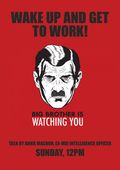 In January I had the pleasure of speaking in The Netherlands at the excellent geekfest known as ETH‑0. Rather than just banging on about the spooks, I thought it was time to take a step back and examine what exactly we mean when we talk about totalitarianism, police states, and how far down the road our countries have gone.
I also wanted to drive home to an audience, many of whom are too young to remember the Cold War, what exactly it would be like to live under a police state with its endemic surveillance.
And here’s the talk: