US Intelligence targets Wikileaks

WikileaksThe US gov­ern­ment has appar­ently been get­ting its knick­ers in a twist about the excel­lent Wikileaks web­site.  A report writ­ten in 2008 by US army counter-intel­li­gence ana­lys­ing the threat posed by this haven for whis­tleblowers has been leaked to, you’ve guessed it, the very sub­ject of the report.

Wikileaks was set up three years ago to provide a secure space for prin­cipled whis­tleblowers around the world to expose cor­rup­tion and crimes com­mit­ted by our gov­ern­ments, intel­li­gence agen­cies and mega-cor­por­a­tions.  The site takes great care to veri­fy the inform­a­tion it pub­lishes, adheres to the prin­ciple of expos­ing inform­a­tion very much in the pub­lic interest, and vig­or­ously pro­tects the identi­fy of its sources.

By doing so, Wikileaks plays a vital part in inform­ing cit­izens of what is being done (often illeg­ally) in their name.  This free flow of inform­a­tion is vital in a democracy.

Well, no gov­ern­ment likes a clued-up and crit­ic­al cit­izenry, nor does it like to have trans­par­ency and account­ab­il­ity imposed on it.  Which led to the report in question.

As I have writ­ten before ad nauseam, whis­tleblowers provide an essen­tial func­tion to the healthy work­ing of a demo­cracy.  The simplist­ic approach would be to say that if gov­ern­ments, spies and big cor­por­a­tions obeyed the law, there would be no need for whis­tleblowers.  How­ever, back in the real, post‑9/11 world, with its end­less, neb­u­lous “war on ter­ror”, illeg­al wars, tor­ture, extraordin­ary rendi­tion and Big Broth­er sur­veil­lance, we have nev­er had great­er need of them.

Rather than ensur­ing the highest stand­ards of leg­al­ity and prob­ity in pub­lic life, it is far sim­pler for the powers that be to demon­ise the whis­tleblower — a fig­ure who is now (accord­ing to the Exec­ut­ive Sum­mary of the report) appar­ently seen as the “insider threat”.  We are look­ing at a nas­cent McCarthy­ism here.  It echoes the increas­ing use by our gov­ern­ments of the term “domest­ic extrem­ists” when they are talk­ing about act­iv­ists and protesters.

There are laws to pro­tect whis­tleblowers in most areas of work now.  In the UK we have the Pub­lic Interest Dis­clos­ure Act (1998).  How­ever, gov­ern­ment, mil­it­ary, and espe­cially intel­li­gence pro­fes­sion­als are denied this pro­tec­tion, des­pite the fact that they are most often the very people to wit­ness the most hein­ous state abuses, crimes and cor­rup­tion.  If they try to do some­thing about this, they are also the people most likely to be pro­sec­uted and per­se­cuted for fol­low­ing their con­sciences, as I described in a talk at the CCC in Ber­lin a couple of years ago.

Ideally, such whis­tleblowers need a pro­tec­ted leg­al chan­nel through which to report crimes, with the con­fid­ence that these will be prop­erly invest­ig­ated and the per­pet­rat­ors held to account.  Fail­ing that, sites like Wikileaks offer an invalu­able resource.  As I said last sum­mer at the Hack­ing at Ran­dom fest­iv­al in NL, when I had the pleas­ure of shar­ing a stage with Wikileaks founder Juli­an Assange, I just wish that the organ­isa­tion had exis­ted a dec­ade earli­er to help with my own whis­tleblow­ing exploits.

The Offi­cial Secrets Act (1989) in the UK, is draf­ted to stifle whis­tleblowers rather than pro­tect real secrets.  Such laws are routinely used to cov­er up the mis­takes, embar­rass­ment and crimes of spies and gov­ern­ments, rather than to pro­tect nation­al secur­ity.  After all, even the spooks acknow­ledge that there are only three cat­egor­ies of intel­li­gence that abso­lutely require pro­tec­tion: sens­it­ive oper­a­tion­al tech­niques, agent iden­tit­ies and ongo­ing operations.

This US counter-intel­li­gence report is already 2 years old, and its strategy for dis­cred­it­ing Wikileaks (by expos­ing one of their sources pour encour­ager les autres) has, to date, mani­festly failed. Cred­it is due to the Wikileaks team in out-think­ing and tech­no­lo­gic­ally out­pa­cing the intel­li­gence com­munity, and is a ringing endorse­ment for the whole open source philosophy.

I’ve said this before, and I shall say it again: as our coun­tries evolve ever more into sur­veil­lance soci­et­ies, with big broth­er data­bases, CCTV, bio­met­ric data, police drones, vot­ing com­puters et al, geeks may be our best (and last?) defence against emer­ging Big Broth­er states.

FBI Whistleblower Sibel Edmonds

Sibel_EdmondsI strongly recom­mend you take the time to watch this film about FBI whis­tleblower, Sibel Edmonds.

Kill the Mes­sen­ger”  joins some inter­est­ing dots, not just about what might have been going on round Sibel’s case, but also adds a dif­fer­ent per­spect­ive to the notori­ous out­ing of CIA officer, Valer­ie Plame.

Of course, a film that invest­ig­ates how the might of the state can be used to stifle the legit­im­ate dis­sent of a whis­tleblower will always res­on­ate with me.

Same mes­sage, dif­fer­ent country.

Alan Johnson’s MI5 File?

Alan_JohnsonI won­der what inform­a­tion, if any, MI5 has on file about new-ish UK Home Sec­ret­ary, Alan John­son?  Or, more per­tin­ently, what HE thinks the spies might have.…..

How else explain his recent com­ments in The Daily Tory­graph? He said that he will be the voice of those who can­not defend them­selves — ie those poor, anonym­ous intel­li­gence officers in MI5.  He even drags out the hoary old chest­nut that a crim­in­al invest­ig­a­tion into prima facie evid­ence that the spooks have been involved in ser­i­ous crime — the tor­ture of anoth­er human being — would dam­age nation­al security. 

I’m sur­prised he man­aged to bite back Tony Blair’s infam­ous line, that an invest­ig­a­tion into pos­sible spy incom­pet­ence and crime would be a “ludicrous diversion”

Ever since Labour came to power in 1997, we have had a series of Home Sec­ret­ar­ies strain­ing to avoid doing their job vis a vis the spooks in Thames House: the job being that of polit­ic­al mas­ter of MI5, thereby provid­ing a modic­um of demo­crat­ic over­sight to an extremely power­ful and secret­ive organ­isa­tion, hold­ing it to account and ensur­ing it obeys the law. 

The role of Home Sec­ret­ary is not to be the cham­pi­on of unac­count­able spies who are pro­tec­ted from invest­ig­a­tion and over­sight by a whole raft of secrecy legislation.

More and more evid­ence is emer­ging that MI5 assisted the USA’s extraordin­ary rendi­tion plan, that it  was com­pli­cit in tor­ture, and that its officers have lied to cov­er their tracks.  Under this ava­lanche of scan­dal, some MPs have finally woken up to the fact that the Home Sec­ret­ary should be ensur­ing MI5 obeys the law.  Some are even dar­ingly sug­gest­ing that there should be prop­er Par­lia­ment­ary over­sight of the spies, rather than the fig leaf that is the Intel­li­gence and Secur­ity Com­mit­tee — hand-picked by and only answer­able to the Prime Min­is­ter, and power­less to ques­tion intel­li­gence officers under oath, demand papers, or look at any­thing more ser­i­ous than policy, fin­ance or administration.

Walk_the_plankThe Met­ro­pol­it­an Police have even begun a crim­in­al invest­ig­a­tion into MI5’s com­pli­city in tor­ture.  While I doubt any case that could, ahem,  “dam­age nation­al secur­ity” will ever come to court,  a few juni­or officers may be asked to do the decent thing and quietly walk the plank. 

But the real issue — the closed, self-per­petu­at­ing group-think cul­ture, where officers should just fol­low orders and not rock the boat — will con­tin­ue unchal­lenged, res­ult­ing inev­it­ably in yet more scandals.

It is time we had a Home Sec­ret­ary who is up to the job and who has the back­bone to ini­ti­ate some mean­ing­ful reform of MI5

Spy Chiefs attack UK Police State

DearloveSir Richard Dear­love, ex-head of MI6 and cur­rent Mas­ter of Pem­broke Col­lege, Cam­bridge, has been much in the news recently after gra­cing the Hay on Wye book fest­iv­al, where he gave a speech.  In this, he is repor­ted to have spoken out, in strong terms, against the endem­ic and all-per­vas­ive sur­veil­lance soci­ety devel­op­ing in the UK

Ex-spy chiefs in the UK have a charm­ing habit of using all these sur­veil­lance meas­ures to the nth degree while in the shad­ows, and then hav­ing a Dam­as­cene con­ver­sion into civil liber­ties cam­paign­ers once they retire.  Eliza Man­ning­ham-Buller, the ex-head of MI5, used her maid­en speech in the House of Lords to argue against the exten­sion of the time lim­it the police could hold a ter­ror­ist sus­pect without charge, and even Stella Rim­ing­ton (also ex-MI5) has recently thrown her hat in the ring.  They nick all my best lines these days.

Would­n’t it be great if one of them, one day, could argue in favour of human rights, pro­por­tion­al­ity and the adher­ence to the law while they were still in a pos­i­tion to influ­ence affairs?

Dear­love him­self could have changed the course of world his­tory if he had found the cour­age to speak out earli­er about the fact that the intel­li­gence case for the Iraq war was being fixed around pre-determ­ined policy.  As it is, we only know that he objec­ted to this because of the notori­ous, leaked Down­ing Street Memo.

The Guard­i­an news­pa­per repor­ted that Dear­love even touched on the real­ity of obtain­ing min­is­teri­al per­mis­sion before break­ing the law.  Which, of course, is the ulti­mate point of the 1994 Intel­li­gence Ser­vices Act, and does indeed enshrine the fabled “licence to kill”.  It states that MI6 officers can break the law abroad with impun­ity from pro­sec­u­tion if, and only if, they obtain pri­or writ­ten per­mis­sion from their polit­ic­al mas­ter — in this case the For­eign Secretary.

How­ever, accord­ing to The Guard­i­an, he seems to have mis­un­der­stood the spir­it of the law, if not the letter:

He said that the intel­li­gence com­munity was “some­times asked to act in dif­fi­cult cir­cum­stances. When it does, it asks for leg­al opin­ion and min­is­teri­al approv­al … It’s about polit­ic­al cover”. 

Moment­ar­ily put­ting aside the not unim­port­ant debate about wheth­er the spies and the gov­ern­ment should even be allowed tech­nic­ally to side-step inter­na­tion­al laws against crimes up to, and includ­ing, murder, I am still naively sur­prised by the shame­less­ness of this state­ment:  the notion of min­is­teri­al over­sight was put in place to ensure some kind of demo­crat­ic over­sight and account­ab­il­ity for the work of the spies — not to provide polit­ic­al cov­er, a fig leaf.

I think he’s rather giv­en the game away here about how the spies really view the role of  their “polit­ic­al masters”.

Make Wars History UK Tour, 2009

In Janu­ary and Feb­ru­ary 2009 Chris Cover­dale toured the UK speak­ing at Make Wars His­tory meet­ings.  I had the pleas­ure of intro­du­cing him at a num­ber of events.  The first date of the tour was in Liverpool:

Gareth Peirce on Torture, Secrecy and the British State

Gareth_Peirce_1Lead­ing UK human rights law­yer, Gareth Peirce, has writ­ten a power­ful and elo­quent art­icle in the Lon­don Review of Books about the Brit­ish state’s involve­ment in torture. 

She also broadens out the argu­ment to look at the fun­da­ment­al soci­et­al prob­lems — lack of account­ab­il­ity, secrecy, the use and abuse of the concept of “nation­al secur­ity”  — that cre­ated a cul­ture that facil­it­ates and con­dones torture.

Gareth has fought for vic­tims of injustice for four dec­ades, focus­ing primar­ily on ter­ror­ism and intel­li­gence issues. 

A long piece, but stick with.  It’s worth it!

Film Review of “Secrecy” on Cinepolitics, January 2009

Over the last few years I have been a reg­u­lar guest on polit­ic­al dis­cus­sion pro­grammes on the rap­idly grow­ing Press TV.  Occa­sion­ally I am invited onto the film review show, “Cinepol­it­ics”, by the host (and film maker) Rus­sell Michaels

The film under review is a doc­u­ment­ary called “Secrecy”, look­ing at the stifling effect cen­sor­ship and the creep­ing concept of nation­al secur­ity have had on demo­cracy in the USA under the former pres­id­en­tial régime.  When this was filmed in Janu­ary, there was hope that the new pres­id­ency might roll this back.  How­ever, “Secrecy” is just as per­tin­ent now that the issue of tor­ture and Guantanamo Bay is being addressed more openly by the media.

ETH0 Hacker Camp, January 2009

In Janu­ary 2009 I was invited to talk at ETH0, a small but select hack­er camp held in the wilds of the Neth­er­lands.  The crowd was young, hip, informed — and very inter­ested in the use and abuse of intel­li­gence and par­tic­u­larly the erosion of our most basic civil liber­ties.   Events like this give me hope.

Some of the organ­isers are also involved in plan­ning a major techno-polit­ic­al hack­er fest­iv­al, Hack­ing at Ran­dom, in NL this sum­mer.   An event not to be missed!

Canadian Speaking Tour, May 2009

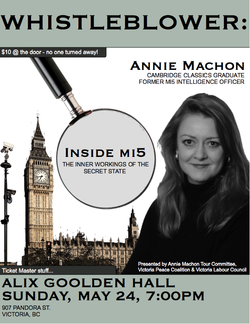
Vancouver_posterOn 22 May I shall be start­ing my very own nation­al speak­ing tour in Canada.   Fol­low­ing my vis­it to Cali­for­nia last year, the Cana­dian 9/11 Truth groups have pulled togeth­er a 7‑event tour, where I will have the chance to dis­cuss the intel­li­gence world, whis­tleblow­ing, going on the run and the issue of 9/11, par­tic­u­larly focus­ing on its reper­cus­sions around the world: the end­less “war on ter­ror”, the illeg­al wars in the Middle East, and the erosion of our demo­cra­cies in the West.

The Cana­dian Truth Move­ment tire­lessly cam­paigns for a new, inde­pend­ent inquiry in the tra­gic events of 9/11, and has in the past hos­ted speak­ers such as Pro­fess­or Dav­id Ray Griffin  and archi­tect Richard Gage.

More inform­a­tion about the tour can be obtained from: directors@vancouver911truth.org or elizwood@shaw.ca.  See you there!

Victoria_poster


Tour dates:

Fri­day 22 May — Van­couver

Sunday 24 May — Vic­tor­ia

Wed­nes­day 27 May — Ott­awa

Thursday 28 May — 
Mon­tréal

Sat­urday 30 May — Toronto 

Sunday 31 May — Waterloo 

Monday 1 June — Hamilton

Agent Names Lost

So the good times keep on rolling for the spook com­munity in the UK.  An officer of the Ser­i­ous Organ­ised Crime Agency (SOCA) appar­ently lost top secret inform­a­tion such as the names of under­cov­er agents while trav­el­ling in Ecuador.

LanderSOCA is a rel­at­ively new agency set up in 2004 to police organ­ised crime, par­tic­u­larly that revolving around the illeg­al drug trade.  The agency has the mis­for­tune to have as Chair­man Steph­en Lander, erstwhile boss of MI5; a man whose man­age­ment style was known as “Stalinesque”. 

Even before this latest blun­der, con­cerns had been raised by SOCA staff about inef­fect­ive and top-heavy man­age­ment (shades of MI5 in the 1990s)and recent ques­tions have been asked about wheth­er the agency was pro­du­cing mean­ing­ful res­ults, as the price of illi­cit drugs has plummeted on UK streets, indic­at­ing a glut of recent imports. 

This latest blun­der will hardly have reas­sured min­is­ters.  Reportedly, the hap­less SOCA officer lost a USB stick con­tain­ing the names of under­cov­er agents involved in the drug war in Ecuador, as well as inform­a­tion relat­ing to 5 years’ worth of invest­ig­a­tions.   The blun­der has reportedly jeop­ard­ised oper­a­tions that have cost in the region of £100 million.

Agent iden­tit­ies are, rightly, the most pro­tec­ted of secret inform­a­tion.  This is an unfor­giv­able gaff, and yet the officer is appar­ently only facing “dis­cip­lin­ary charges”. 

So, if you are a whis­tleblower expos­ing hein­ous spy crimes, you are put on tri­al and sent to pris­on, even if the tri­al judge acknow­ledges that no lives were ever put at risk through your dis­clos­ures.  How­ever, if you care­lessly leave top secret agent inform­a­tion lying around in hos­tile ter­rit­ory, you don’t even get the sack, let alone face pro­sec­u­tion under the Offi­cial Secrets Act.

I would sug­gest that the next intel­li­gence whis­tleblower to emerge from the shad­ows should simply claim to have dropped a USB stick out­side the offices of a nation­al news­pa­per.  A rap over the knuckles will then be the worst that they face! 

Deja Vu

I had a strong sense of déjà vu today, when I read about the woes of Mrs Green, the bar­ris­ter wife of Tory MP Dami­en Green who was arres­ted last Novem­ber for allegedly encour­aging gov­ern­ment inform­a­tion leaks.

Mr Green was arres­ted under an obscure and antique piece of legis­la­tion for “con­spir­ing to com­mit mis­con­duct in a pub­lic office and aid­ing and abet­ting, coun­selling or pro­cur­ing mis­con­duct in a pub­lic office”.  This, des­pite the fact that civil ser­vice man­dar­ins had per­suaded the Met­ro­pol­it­an Police Spe­cial Branch (MPSB) to invest­ig­ate him because he posed a “ser­i­ous threat to nation­al secur­ity”.  The case has now been dropped and reports have now shown that these civil ser­vants sig­ni­fic­antly over­stated the case to spur the police into action.

In such a case the obvi­ous step would have been for the Met to have invoked the dra­coni­an 1989 Offi­cial Secrets Act.  Cer­tainly their heavy-handed response seemed to indic­ate that this was how they were view­ing the grav­ity of the case, even if they were des­per­ately try­ing to avoid the attend­ant scan­dal such a step would have pro­voked.    Spe­cial Branch officers in the Counter-Ter­ror­ism squad are not nor­mally sent to rip apart people’s houses for minor offences.

Which takes me back to the inter­view with the out­raged Mrs Green.  A bar­ris­ter spe­cial­ising in highly con­fid­en­tial child abuse cases, she inno­cently let the secret police enter her home, only to watch in dis­be­lief as they ripped it apart in what sounds to me like a counter-ter­ror­ism style search.  They, of course, found noth­ing rel­ev­ant to their invest­ig­a­tion, but scoured the com­puters, removed the bed­sheets, took away love let­ters between the Greens, and even rifled through the chil­dren’s books.

I sup­pose I was more for­tu­nate than the hap­less Mrs Green.  When the secret police ripped apart my home in the same way back in 1997, I was in Europe with my ex-part­ner and col­league, MI5 whis­tleblower Dav­id Shayler.  After we had exposed the fact that MI5 was shame­lessly break­ing the law, the MPSB had obtained a war­rant that allowed them to search our home for mater­i­al relat­ing to our employ­ment in MI5.  As I was away, they jack­hammered the front door in, and then spent two days rip­ping through the flat in Pimlico.  It had been my home for 4 years.

Nat­ur­ally, the police found noth­ing rel­ev­ant.  That did not deter them from search­ing the place for two days, and tak­ing away bags of pos­ses­sions, includ­ing some of my under­wear, the bed­sheets, pho­to­graphs, and our love let­ters.  They also smashed up chairs and lamps, ripped the bath apart, pulled up the car­pets, and scattered my remain­ing under­wear across the bed­room floor. It looked like they had been play­ing with it.

I saw all this when I returned home a month later, and I felt viol­ated.  I know this is a com­mon reac­tion when one’s home is burgled; but in this case my home had been despoiled by the police, not by crim­in­als.  No doubt, some would say that we, and the Greens, deserved this treat­ment.  After all, we had the temer­ity to expose mal­prac­tice, lies, and crime with­in gov­ern­ment circles.  We, of course, would argue that we had acted for the pub­lic good.

Whatever.  I still think that a counter-ter­ror­ism style search of a whis­tleblower­’s house is over the top and delib­er­ately intimidatory.

The police may have ran­sacked my home, but I was nev­er charged with any offence.  Nor did I ever did get my under­wear or love let­ters back.….

The Real Reason for the Police State?

DroneI haven’t writ­ten here for a while, des­pite the embar­ras de richesses that has been presen­ted to us in the news recently: Dame Stella say­ing that the UK is becom­ing a police state;  drones will patrol the streets of Bri­tain, watch­ing our every move; data­bases are being built, con­tain­ing all our elec­tron­ic com­mu­nic­a­tions; ditto all our travel move­ments. What can a lone blog­ger use­fully add to this?  Only so much hot air — the facts speak for themselves.

Plus, I’ve been a bit caught up over the last couple of months with Oper­a­tion Escape Pod. Not all of us are sit­ting around wait­ing for the pris­on gates to clang shut on the UK. I’m outta here!

But I can­’t res­ist an inter­est­ing art­icle in The Spec­tat­or magazine this week. And that’s a sen­tence I nev­er thought I would write in my life.

Tim Ship­man, quot­ing a pleth­ora of anonym­ous intel­li­gence sources and former spooks, asserts that Bri­tain’s for­eign policy is being skewed by the need to pla­cate our intel­li­gence allies, and that the CIA is roam­ing free in the wilds of Yorkshire.

His sources tell him that the UK is a “swamp” of Islam­ic extrem­ism, and that the domest­ic spies are ter­ri­fied that there will be a new ter­ror­ist atro­city, prob­ably against US interests but it could be any­where, car­ried out by our very own home-grown ter­ror­ists. Accord­ing to Ship­man, this ter­rible pro­spect had all the spooks busily down­ing trebles in the bars around Vaux­hall Cross in the wake of the Mum­bai bombings.

Apart from the sug­ges­tion that the spies’ drink­ing cul­ture appears to be as robust as ever, I find this inter­est­ing because well-sourced spook spin is more likely to appear in the august pages of The Speccie than in, say, Red Pep­per. But if this is an accur­ate reflec­tion of the think­ing of our politi­cians and intel­li­gence com­munity, then this is an extremely wor­ry­ing devel­op­ment. It goes a long way to explain­ing why the UK has become the most policed state in the West­ern world.

Yes, in the 1990s the UK prac­tised a strategy of appease­ment towards Islam­ic extrem­ists. MI5’s view was always that it was bet­ter to give rad­ic­als a safe haven in the UK, which they would then be loathe to attack dir­ectly, and where a close eye could be kept on them.

This, of course, was derailed by Blair’s Mes­si­an­ic mis­sion in the Middle East. By uni­lat­er­ally sup­port­ing Bush’s adven­tur­ism in Afgh­anistan and Iraq, in the teeth of stark warn­ings about the attend­ant risks from the head of MI5, Bri­tain has become “the enemy” in the eyes of rad­ic­al Islam. The gloves are off, and we are all at great­er risk because of our former PM’s hubris.

But now we appar­ently have free-range CIA officers infilt­rat­ing the Muslim com­munit­ies of the UK.  No doubt Mossad is also again secretly  tol­er­ated, des­pite the fact that they had been banned for years from oper­at­ing in the UK because they were too unpre­dict­able (a civil ser­vice euphem­ism for violent).

And I am will­ing to bet that this inter­na­tion­al per­cep­tion that UK spooks will be caught off-guard by an appar­ently Brit­ish-ori­gin­ated ter­ror­ist attack is the reas­on for the slew of new total­it­ari­an laws that are mak­ing us all sus­pects. The drones, the datamin­ing and the dra­coni­an stop-and-search laws are designed to reas­sure our invalu­able allies in the CIA, Mossad, ISI and the FSB.  They will not be put in place to “pro­tect” us.

MPs object to police state

Dgreen An inter­est­ing polit­ic­al row has erup­ted this week in the UK about the arrest of the oppos­i­tion Tory MP, Dami­en Green, who is also the Shad­ow Min­is­ter for Immig­ra­tion.  He was arres­ted on Thursday for alleged breaches of an obscure com­mon law  “aid­ing and abet­ting mis­con­duct in pub­lic office”.

Reports indic­ate that the Met­ro­pol­it­an Police Spe­cial Branch, or as the news­pa­pers would have it the “anti-ter­ror­ism branch” was called in to invest­ig­ate leaks from the Home Office about immig­ra­tion policy, that Green was using these leaks to score points off the gov­ern­ment, and the Home Sec­ret­ary Jac­qui Smith in particular.

Nat­ur­ally, MPs from both sides of the House have been froth­ing at the mouth:  how dare Plod embar­rass an MP by arrest­ing him without warn­ing and by con­duct­ing co-ordin­ated searches of his homes and offices in both Kent and Lon­don?  News­pa­pers, par­tic­u­larly on the right of the polit­ic­al spec­trum, have been full of head­lines say­ing that this is proof that we are liv­ing in a police state.

While I have some sym­pathy for the belea­guered Mr Green, hav­ing also been hauled off by the Met Spe­cial Branch and quizzed for hours for dis­cuss­ing sens­it­ive inform­a­tion that was very much in the pub­lic interest, as well as see­ing my home ripped apart in a co-ordin­ated counter-ter­ror­ism style raid and seen friends arres­ted in co-ordin­ated dawn raids, I am still aghast at the hypo­crisy of both the politi­cians’ and medi­a’s reaction.

Many of us are already all to pain­fully aware that we live in a de facto police state.  Under the notori­ous Sec­tion 44 of the 2000 Ter­ror­ism Act, we can all be stopped and searched for no reas­on — and can even be arres­ted purely so that a bobby on the beat can ascer­tain our iden­tity.  Notices to this effect are now help­fully pinned up out­side most tube sta­tions in Lon­don.  Thou­sands of people are sub­ject to this across the UK every year on the streets of Britain.

But oth­er points rather leap to my atten­tion from the cov­er­age of this case.  If MPs don’t like the heavy-handed use and abuse of police powers, why did they pass these laws in the first place?  Did they not think through the implic­a­tions?  Or do they think that, as MPs, they are some­how above the laws of this land?

Plus, seni­or MPs are arguing that the use of leaks from dis­gruntled civil ser­vants is a time-hon­oured way for HM Oppos­i­tion in Par­lia­ment to hold the gov­ern­ment to account.  Well, that might be good for the MPs’ par­lia­ment­ary careers, but what of the hap­less and fre­quently brave souls with­in the Civil Ser­vice who face 2 years in pris­on for such leaks if they are con­victed of a breach of the 1989 Offi­cial Secrets Act?  And, of course, there is no leg­al defense under the OSA of hav­ing acted “in the pub­lic interest” — the very argu­ment that MPs are using to jus­ti­fy Green’s expos­ure of Home Office cov­er-ups and incompetence. 

As far as I can see, there have been no com­ments from either journ­al­ists or MPs about the fate of the source.    The most I could find was the fol­low­ing in the Daily Tele­graph:

An alleged “whis­tleblower”, thought to be a male Home Office offi­cial was arres­ted 10 days ago.”

Either that means that journ­al­ists and MPs could­n’t give a toss about the fate of this per­son — after all, an MP’s career is far more import­ant — or that any report­ing of the arrest of the whis­tleblower has been injunc­ted in the media to the nth degree.  This would be even more troub­ling, as someone can just be “dis­ap­peared” into a Kafka-esque leg­al nightmare.