MI5 looking for a Needle in the Haystack

The Xmas Day “Al Qaeda” ter­ror attack on a transat­lantic flight bound for Detroit is an inter­est­ing one.  Awful for those on the flight, of course, and my heart goes out to them for the fear they must have experienced.

But which are the gov­ern­ments most staunch in their pro­sec­u­tion of the war on ter­ror?  Let’s call them the “Axis of Good”.….

The USA, the UK, and the Netherlands.

So it must be just nuts to them that the imme­di­ately iden­ti­fi­able Al Qaeda ter­ror­ist is repor­ted to be a Nigeri­an-born UK engin­eer­ing stu­dent who is fly­ing via Schiphol air­port in NL to the USA.  Even bet­ter, he acquired his “bomb” in Yemen — inter­est­ingly, a coun­try that is under increas­ing assault by the US mil­it­ary at the moment. 

This ticks a num­ber of use­ful nation­al secur­ity boxes, remind­ing us what a threat our nations face. 

The alleged ter­ror­ist is repor­ted to have been on the watch list of the US secur­ity appar­at­us, but not on the “no fly” list — which is unveri­fi­able any­way, but reportedly con­tains the names of over a mil­lion people. So yet anoth­er break-down in this unwieldy secur­ity system.

Airport-securityWe already have a situ­ation where all cit­izens of the US, UK and NL are effect­ively treated like crim­in­als every time they take a plane, as well as every­one else attempt­ing to fly into these coun­tries.  How­ever, this incid­ent has demon­strated that the secur­ity around fly­ing is not just a slow irrit­ant — a “Big Broth­er Lite” with its stu­pid restric­tions around liquids, maquil­lage, shoes, belts and laptops — it has been dra­mat­ic­ally shown not to work.

Identi­fy­ing poten­tial ter­ror­ists is like look­ing for a needle in a hay­stack.  This has become an estab­lish­ment cliché these days: the ter­ror­ists have to be lucky only once, and the secur­ity ser­vices have to be con­stantly lucky to stop an attack.  The odds are acknow­ledged to be impossible. 

What used to be agreed with­in Brit­ish and oth­er European spook circles is the view that the best intel­li­gence comes from tricky-to-run human sources.  They may have their flaws, but they can occa­sion­ally provide pre­cise and lifesav­ing intel­li­gence. The US approach has long been dia­met­ric­ally opposed to this approach — instead they sit back and hoover up every scrap of inform­a­tion via data min­ing and hope to sieve some­thing out of it.  They then tend to respond with whizz-bang, hands-off gad­getry, much like a deadly video game.

So, that said, let’s make two guesses how this new attack will be inter­preted and used by our gov­ern­ments and secur­ity forces:

1) They admit that they need to reas­sess their approach to the “war on terror”.

2) Focus on ever more dra­coni­an data min­ing meas­ures at the point of travel — wheth­er they work or not, wheth­er they slide us ever near­er a police-state or not — until we are effect­ively pris­on­ers in our own countries. 

A dif­fi­cult pre­dic­tion for 2010. 

The final annoy­ance will, at least from a per­son­al per­spect­ive, be that they now ban the car­ry­ing of powders as well as liquids on board a flight.  If they stop me trav­el­ling with my Max Factor, that’s it.  Trains only in the future.

Happy New Year!

Alan Johnson’s MI5 File?

Alan_JohnsonI won­der what inform­a­tion, if any, MI5 has on file about new-ish UK Home Sec­ret­ary, Alan John­son?  Or, more per­tin­ently, what HE thinks the spies might have.…..

How else explain his recent com­ments in The Daily Tory­graph? He said that he will be the voice of those who can­not defend them­selves — ie those poor, anonym­ous intel­li­gence officers in MI5.  He even drags out the hoary old chest­nut that a crim­in­al invest­ig­a­tion into prima facie evid­ence that the spooks have been involved in ser­i­ous crime — the tor­ture of anoth­er human being — would dam­age nation­al security. 

I’m sur­prised he man­aged to bite back Tony Blair’s infam­ous line, that an invest­ig­a­tion into pos­sible spy incom­pet­ence and crime would be a “ludicrous diversion”

Ever since Labour came to power in 1997, we have had a series of Home Sec­ret­ar­ies strain­ing to avoid doing their job vis a vis the spooks in Thames House: the job being that of polit­ic­al mas­ter of MI5, thereby provid­ing a modic­um of demo­crat­ic over­sight to an extremely power­ful and secret­ive organ­isa­tion, hold­ing it to account and ensur­ing it obeys the law. 

The role of Home Sec­ret­ary is not to be the cham­pi­on of unac­count­able spies who are pro­tec­ted from invest­ig­a­tion and over­sight by a whole raft of secrecy legislation.

More and more evid­ence is emer­ging that MI5 assisted the USA’s extraordin­ary rendi­tion plan, that it  was com­pli­cit in tor­ture, and that its officers have lied to cov­er their tracks.  Under this ava­lanche of scan­dal, some MPs have finally woken up to the fact that the Home Sec­ret­ary should be ensur­ing MI5 obeys the law.  Some are even dar­ingly sug­gest­ing that there should be prop­er Par­lia­ment­ary over­sight of the spies, rather than the fig leaf that is the Intel­li­gence and Secur­ity Com­mit­tee — hand-picked by and only answer­able to the Prime Min­is­ter, and power­less to ques­tion intel­li­gence officers under oath, demand papers, or look at any­thing more ser­i­ous than policy, fin­ance or administration.

Walk_the_plankThe Met­ro­pol­it­an Police have even begun a crim­in­al invest­ig­a­tion into MI5’s com­pli­city in tor­ture.  While I doubt any case that could, ahem,  “dam­age nation­al secur­ity” will ever come to court,  a few juni­or officers may be asked to do the decent thing and quietly walk the plank. 

But the real issue — the closed, self-per­petu­at­ing group-think cul­ture, where officers should just fol­low orders and not rock the boat — will con­tin­ue unchal­lenged, res­ult­ing inev­it­ably in yet more scandals.

It is time we had a Home Sec­ret­ary who is up to the job and who has the back­bone to ini­ti­ate some mean­ing­ful reform of MI5

Spy Chiefs attack UK Police State

DearloveSir Richard Dear­love, ex-head of MI6 and cur­rent Mas­ter of Pem­broke Col­lege, Cam­bridge, has been much in the news recently after gra­cing the Hay on Wye book fest­iv­al, where he gave a speech.  In this, he is repor­ted to have spoken out, in strong terms, against the endem­ic and all-per­vas­ive sur­veil­lance soci­ety devel­op­ing in the UK

Ex-spy chiefs in the UK have a charm­ing habit of using all these sur­veil­lance meas­ures to the nth degree while in the shad­ows, and then hav­ing a Dam­as­cene con­ver­sion into civil liber­ties cam­paign­ers once they retire.  Eliza Man­ning­ham-Buller, the ex-head of MI5, used her maid­en speech in the House of Lords to argue against the exten­sion of the time lim­it the police could hold a ter­ror­ist sus­pect without charge, and even Stella Rim­ing­ton (also ex-MI5) has recently thrown her hat in the ring.  They nick all my best lines these days.

Would­n’t it be great if one of them, one day, could argue in favour of human rights, pro­por­tion­al­ity and the adher­ence to the law while they were still in a pos­i­tion to influ­ence affairs?

Dear­love him­self could have changed the course of world his­tory if he had found the cour­age to speak out earli­er about the fact that the intel­li­gence case for the Iraq war was being fixed around pre-determ­ined policy.  As it is, we only know that he objec­ted to this because of the notori­ous, leaked Down­ing Street Memo.

The Guard­i­an news­pa­per repor­ted that Dear­love even touched on the real­ity of obtain­ing min­is­teri­al per­mis­sion before break­ing the law.  Which, of course, is the ulti­mate point of the 1994 Intel­li­gence Ser­vices Act, and does indeed enshrine the fabled “licence to kill”.  It states that MI6 officers can break the law abroad with impun­ity from pro­sec­u­tion if, and only if, they obtain pri­or writ­ten per­mis­sion from their polit­ic­al mas­ter — in this case the For­eign Secretary.

How­ever, accord­ing to The Guard­i­an, he seems to have mis­un­der­stood the spir­it of the law, if not the letter:

He said that the intel­li­gence com­munity was “some­times asked to act in dif­fi­cult cir­cum­stances. When it does, it asks for leg­al opin­ion and min­is­teri­al approv­al … It’s about polit­ic­al cover”. 

Moment­ar­ily put­ting aside the not unim­port­ant debate about wheth­er the spies and the gov­ern­ment should even be allowed tech­nic­ally to side-step inter­na­tion­al laws against crimes up to, and includ­ing, murder, I am still naively sur­prised by the shame­less­ness of this state­ment:  the notion of min­is­teri­al over­sight was put in place to ensure some kind of demo­crat­ic over­sight and account­ab­il­ity for the work of the spies — not to provide polit­ic­al cov­er, a fig leaf.

I think he’s rather giv­en the game away here about how the spies really view the role of  their “polit­ic­al masters”.

The Real Reason for the Police State?

DroneI haven’t writ­ten here for a while, des­pite the embar­ras de richesses that has been presen­ted to us in the news recently: Dame Stella say­ing that the UK is becom­ing a police state;  drones will patrol the streets of Bri­tain, watch­ing our every move; data­bases are being built, con­tain­ing all our elec­tron­ic com­mu­nic­a­tions; ditto all our travel move­ments. What can a lone blog­ger use­fully add to this?  Only so much hot air — the facts speak for themselves.

Plus, I’ve been a bit caught up over the last couple of months with Oper­a­tion Escape Pod. Not all of us are sit­ting around wait­ing for the pris­on gates to clang shut on the UK. I’m outta here!

But I can­’t res­ist an inter­est­ing art­icle in The Spec­tat­or magazine this week. And that’s a sen­tence I nev­er thought I would write in my life.

Tim Ship­man, quot­ing a pleth­ora of anonym­ous intel­li­gence sources and former spooks, asserts that Bri­tain’s for­eign policy is being skewed by the need to pla­cate our intel­li­gence allies, and that the CIA is roam­ing free in the wilds of Yorkshire.

His sources tell him that the UK is a “swamp” of Islam­ic extrem­ism, and that the domest­ic spies are ter­ri­fied that there will be a new ter­ror­ist atro­city, prob­ably against US interests but it could be any­where, car­ried out by our very own home-grown ter­ror­ists. Accord­ing to Ship­man, this ter­rible pro­spect had all the spooks busily down­ing trebles in the bars around Vaux­hall Cross in the wake of the Mum­bai bombings.

Apart from the sug­ges­tion that the spies’ drink­ing cul­ture appears to be as robust as ever, I find this inter­est­ing because well-sourced spook spin is more likely to appear in the august pages of The Speccie than in, say, Red Pep­per. But if this is an accur­ate reflec­tion of the think­ing of our politi­cians and intel­li­gence com­munity, then this is an extremely wor­ry­ing devel­op­ment. It goes a long way to explain­ing why the UK has become the most policed state in the West­ern world.

Yes, in the 1990s the UK prac­tised a strategy of appease­ment towards Islam­ic extrem­ists. MI5’s view was always that it was bet­ter to give rad­ic­als a safe haven in the UK, which they would then be loathe to attack dir­ectly, and where a close eye could be kept on them.

This, of course, was derailed by Blair’s Mes­si­an­ic mis­sion in the Middle East. By uni­lat­er­ally sup­port­ing Bush’s adven­tur­ism in Afgh­anistan and Iraq, in the teeth of stark warn­ings about the attend­ant risks from the head of MI5, Bri­tain has become “the enemy” in the eyes of rad­ic­al Islam. The gloves are off, and we are all at great­er risk because of our former PM’s hubris.

But now we appar­ently have free-range CIA officers infilt­rat­ing the Muslim com­munit­ies of the UK.  No doubt Mossad is also again secretly  tol­er­ated, des­pite the fact that they had been banned for years from oper­at­ing in the UK because they were too unpre­dict­able (a civil ser­vice euphem­ism for violent).

And I am will­ing to bet that this inter­na­tion­al per­cep­tion that UK spooks will be caught off-guard by an appar­ently Brit­ish-ori­gin­ated ter­ror­ist attack is the reas­on for the slew of new total­it­ari­an laws that are mak­ing us all sus­pects. The drones, the datamin­ing and the dra­coni­an stop-and-search laws are designed to reas­sure our invalu­able allies in the CIA, Mossad, ISI and the FSB.  They will not be put in place to “pro­tect” us.

MPs object to police state

Dgreen An inter­est­ing polit­ic­al row has erup­ted this week in the UK about the arrest of the oppos­i­tion Tory MP, Dami­en Green, who is also the Shad­ow Min­is­ter for Immig­ra­tion.  He was arres­ted on Thursday for alleged breaches of an obscure com­mon law  “aid­ing and abet­ting mis­con­duct in pub­lic office”.

Reports indic­ate that the Met­ro­pol­it­an Police Spe­cial Branch, or as the news­pa­pers would have it the “anti-ter­ror­ism branch” was called in to invest­ig­ate leaks from the Home Office about immig­ra­tion policy, that Green was using these leaks to score points off the gov­ern­ment, and the Home Sec­ret­ary Jac­qui Smith in particular.

Nat­ur­ally, MPs from both sides of the House have been froth­ing at the mouth:  how dare Plod embar­rass an MP by arrest­ing him without warn­ing and by con­duct­ing co-ordin­ated searches of his homes and offices in both Kent and Lon­don?  News­pa­pers, par­tic­u­larly on the right of the polit­ic­al spec­trum, have been full of head­lines say­ing that this is proof that we are liv­ing in a police state.

While I have some sym­pathy for the belea­guered Mr Green, hav­ing also been hauled off by the Met Spe­cial Branch and quizzed for hours for dis­cuss­ing sens­it­ive inform­a­tion that was very much in the pub­lic interest, as well as see­ing my home ripped apart in a co-ordin­ated counter-ter­ror­ism style raid and seen friends arres­ted in co-ordin­ated dawn raids, I am still aghast at the hypo­crisy of both the politi­cians’ and medi­a’s reaction.

Many of us are already all to pain­fully aware that we live in a de facto police state.  Under the notori­ous Sec­tion 44 of the 2000 Ter­ror­ism Act, we can all be stopped and searched for no reas­on — and can even be arres­ted purely so that a bobby on the beat can ascer­tain our iden­tity.  Notices to this effect are now help­fully pinned up out­side most tube sta­tions in Lon­don.  Thou­sands of people are sub­ject to this across the UK every year on the streets of Britain.

But oth­er points rather leap to my atten­tion from the cov­er­age of this case.  If MPs don’t like the heavy-handed use and abuse of police powers, why did they pass these laws in the first place?  Did they not think through the implic­a­tions?  Or do they think that, as MPs, they are some­how above the laws of this land?

Plus, seni­or MPs are arguing that the use of leaks from dis­gruntled civil ser­vants is a time-hon­oured way for HM Oppos­i­tion in Par­lia­ment to hold the gov­ern­ment to account.  Well, that might be good for the MPs’ par­lia­ment­ary careers, but what of the hap­less and fre­quently brave souls with­in the Civil Ser­vice who face 2 years in pris­on for such leaks if they are con­victed of a breach of the 1989 Offi­cial Secrets Act?  And, of course, there is no leg­al defense under the OSA of hav­ing acted “in the pub­lic interest” — the very argu­ment that MPs are using to jus­ti­fy Green’s expos­ure of Home Office cov­er-ups and incompetence. 

As far as I can see, there have been no com­ments from either journ­al­ists or MPs about the fate of the source.    The most I could find was the fol­low­ing in the Daily Tele­graph:

An alleged “whis­tleblower”, thought to be a male Home Office offi­cial was arres­ted 10 days ago.”

Either that means that journ­al­ists and MPs could­n’t give a toss about the fate of this per­son — after all, an MP’s career is far more import­ant — or that any report­ing of the arrest of the whis­tleblower has been injunc­ted in the media to the nth degree.  This would be even more troub­ling, as someone can just be “dis­ap­peared” into a Kafka-esque leg­al nightmare. 


New Statesman Article, August 2008

The new spies

Steph­en Armstrong

When
the Cold War ended, it did­n’t spell cur­tains for the secret agent.
Private espi­on­age is a boom­ing industry and envir­on­ment­al protest
groups are its prime target


As you hunker down for the last few days of the Camp for Climate
Action, dis­cuss­ing how to force your way into King­s­north power station
in an attempt to pre­vent the con­struc­tion of a new coal facil­ity, cast
your eyes around your fel­low pro­test­ers. Do they look entirely bona
fide to you? And don’t look for the old-school spe­cial branch officers
— Kent Police are a tiny force. It’s the cor­por­ate spies hired by
private com­pan­ies you need to watch out for.

Accord­ing to the private espi­on­age industry itself, roughly one in four of your com­rades is on a mul­tina­tion­al’s payroll.

Rus­sell Corn, man­aging dir­ect­or of Dili­gence, one of a growing
num­ber of “cor­por­ate intel­li­gence agen­cies”, with offices high in the
Canary Wharf glass tower, says private spies make up 25 per cent of
every act­iv­ist camp. “If you stuck an inter­cept up near one of those
camps, you would­n’t believe the amount of out­go­ing calls after every
meet­ing say­ing, ‘Tomor­row we’re going to cut the fence’,” he smiles.
“Eas­ily one in four of the people there are tak­ing the corporate
shilling.”

In April this year, for instance, the anti-avi­ation cam­paign network
Plane Stu­pid, one of the main organ­isers of the eco-camp built to
protest against the expan­sion of Heath­row Air­port, announced that one
of its act­iv­ists, Ken Tobi­as, was actu­ally called Toby Kend­all, was
work­ing for a cor­por­ate espi­on­age firm called C2i, and had been leaking
inform­a­tion about the group to pay­ing cli­ents and the media. He had
been hired by an as yet unknown private com­pany to provide information
and dis­rupt the group’s campaigning.

When Tobi­as first turned up at Plane Stu­pid’s meet­ings in July 2007,
he seemed a com­mit­ted former Oxford stu­dent ded­ic­ated to reducing
air­craft emis­sions. The group gradu­ally became sus­pi­cious because he
showed up early at meet­ings, con­stantly pushed for increas­ingly drama
tic dir­ect action and — the ulti­mate giveaway — dressed a little too
well for an eco­w­ar­ri­or. When they showed his pic­ture around Oxford they
found an old col­lege pal who iden­ti­fied him as Toby Kend­all. A quick
Google search revealed his Bebo page with a link to a corporate
net­work­ing site, where his job as an “ana­lyst” at C2i International,
work­ing in “secur­ity and invest­ig­a­tions”, was pas­ted in full public
view.

Just a month earli­er, a woman called Cara Schaf­fer had con­tac­ted the
Student/Farmworker Alli­ance, an ideal­ist­ic bunch of Amer­ic­an college
stu­dents who lobby fast-food com­pan­ies to help migrant work­ers in
Flor­ida who har­vest toma­toes. Like the cockle-pick­ers of More­cambe Bay,
many of these work­ers are smuggled into the US by gangs which then take
their pass­ports and force them to work without pay to clear often
fic­ti­tious debts to regain their papers.

Digging up dirt

Again, Schaf­fer­’s excess­ive eager­ness aroused sus­pi­cion, and again,
the inter­net revealed her true iden­tity. She owned Dip­lo­mat­ic Tactical
Ser­vices, a private espi­on­age firm which had pre viously hired as a
sub­con­tract­or one Guillermo Zara bozo, today facing murder charges in
Miami for his role in allegedly execut­ing four crew mem­bers of a
chartered fish­ing boat, an alleg­a­tion he denies. Schaf­fer turned out to
be work­ing for Bur­ger King — the home, per­haps appro­pri­ately, of the
Whopper.

The cute thing about these two bozos is that they got caught pretty
early on, but that was because they were young and had no back­ground in
espionage.

The real mar­ket is in prop­er, old-school spies who are suddenly
enter­ing the private sec­tor. For pro­fes­sion­al spooks, the 1990s were no
fun at all. The Cold War was over, defence spend­ing was down and a
detailed know­ledge of cold-drop tech­niques in cent­ral Ber­lin was
use­less to gov­ern­ments look­ing for Arab­ic speak­ers who knew the Quran.

From New York and Lon­don to Moscow and Beijing, any decent-sized
cor­por­a­tion can now hire former agents from the CIA, FBI, MI5, MI6 and
the KGB. The ex-spooks are selling their old skills and con­tacts to
mul­tina­tion­als, hedge funds and olig­archs, dig­ging up dirt on
com­pet­it­ors, uncov­er­ing the secrets of board­room rivals and exposing
invest­ment tar­gets. They are also keep­ing tabs on journalists,
pro­test­ers and even poten­tial employees.

MI5 and MI6 in par­tic­u­lar have always guided ex-employ­ees into
secur­ity com­pan­ies,” explains Annie Machon, the former MI5 agent who
helped Dav­id Shayler blow the whistle on the secur­ity ser­vices back in
1997. “It’s always use­ful to them to have friends they can tap for info
or recruit for a job that requires plaus­ible deni­ab­il­ity. The big
change in recent years has been the huge growth in these companies.
Where before it was a hand­ful of private detect­ive agen­cies, now there
are hun­dreds of mul­tina­tion­al secur­ity organ­isa­tions, which operate
with less reg­u­la­tion than the spooks them­selves,” she says.

Corn’s com­pany Dili­gence, for instance, was set up in 2000 by Nick
Day, a former MI5 spy, and an ex-CIA agent, Mike Baker. Before long,
the duo had built up a roster of high-pay­ing cli­ents includ­ing Enron,
oil and phar­ma­ceut­ic­al com­pan­ies, as well as law firms and hedge funds.
In 2001, a small invest­ment by the Wash­ing­ton lob­by­ing com­pany Barbour
Grif­fith & Rogers pro­pelled their growth. How­ever, BGR and Baker
sold their stakes in 2005, shortly before a scan­dal shook Diligence.
KPMG, the glob­al pro­fes­sion­al ser­vices firm, accused Dili­gence staff of
imper­son­at­ing Brit­ish spies to gain inform­a­tion on a cor­por­ate takeover
for a Rus­si­an tele­coms cli­ent called Alfa Group. Dili­gence settled the
law­suit without admit­ting liability.

Since then, it has recruited the former Con­ser­vat­ive Party leader
Michael Howard as chair­man of its European oper­a­tions. And it is that
sort of respect­ab­il­ity and lob­by­ing power that big play­ers are after.
In 2007, the par­ent com­pany of the US private mil­it­ary firm Blackwater,
which hit the head­lines for gun­ning down Iraqi civil­ians in Baghdad
last Septem­ber, entered this mar­ket through Total Intelligence
Solu­tions (TIS), a new CIA-type private oper­a­tion, to provide
intel­li­gence ser­vices to com­mer­cial clients.

Discreet investigations

Black­wa­ter­’s vice-chair­man, J Cofer Black, who runs TIS, spent three
dec­ades in the CIA and the state depart­ment, becom­ing dir­ect­or of the
Coun­terter­ror­ist Centre and co-ordin­at­or for counter ter­ror­ism, a job
with ambas­sad­ori­al rank. He describes the new com­pany as bring­ing “the
intel­li­gence-gath­er­ing meth­od­o­logy and ana­lyt­ic­al skills traditionally
honed by CIA oper­at­ives dir­ectly to the board­room. With a ser­vice like
this, CEOs and their secur­ity per­son­nel will be able to respond to
threats quickly and con­fid­ently — wheth­er it’s determ­in­ing which city
is safest to open a new plant in or work­ing to keep employ­ees out of
harm’s way after a ter­ror­ist attack.”

Black also says TIS will oper­ate a “24/7 intel­li­gence fusion and
warn­ing centre” that will mon­it­or civil unrest, ter­ror­ism, economic
sta­bil­ity, envir­on­ment­al and health con­cerns, and information
tech­no­logy secur­ity around the world.

The estab­lished firms already oper­at­ing in this area include Kroll,
Aegis, Garda, Con­trol Risks, GPW and Hakluyt & Co. More firms are
open­ing every day and there is little reg­u­la­tion of the sector.

Hakluyt & Co was foun­ded in 1995 by former Brit­ish MI6 officers,
with a repu­ta­tion for dis­creet and effect­ive invest­ig­a­tions. The
com­pany but­ler, a former gurkha, greets vis­it­ors to its Lon­don HQ, a
town house off Park Lane. In winter, meet­ings can be con­duc­ted beside
the fire. Com­puters are rarely in sight. Hakluyt’s advis­ory board has
become an exit cham­ber for cap­tains of industry and former government
offi­cials. Mem­bers have included Sir Rod Edding­ton, a former BA CEO,
and Sir Chris­toph­er Gent, former chief exec­ut­ive of Vodafone.

It is hard to work well for an oil com­pany without know­ing who all
the key decision-makers in a gov­ern­ment are and hav­ing the right
con­tacts to reach them,” explains Stéphane Gérardin, who runs the
French private secur­ity com­pany Géos. “We have an intel­li­gence section
where we employ some invest­ig­at­ive journ­al­ists, people from the finance
sec­tor, from equity banks and some from secur­ity backgrounds.

It is an import­ant part of image pro­tec­tion for our cli­ents as
well. We have our own track­ing and mon­it­or­ing centre, with analysts
doing risk map­ping and pre­par­ing our cli­ents for every potential
prob­lem. It could be about alert­ing them to loc­al sens­it­iv­it­ies. Or, in
this glob­al­ised inter­net age, it can be a group of stu­dents in
Cam­bridge who have launched a protest web­site, who may be send­ing out a
petition.

So we need to be able to under­stand and pre­pare our own propaganda
to counter such attacks. This is work we do to pro­tect our clients.”

Trusted friend

Like the state secur­ity ser­vices, which ended up run­ning Class War
in the 1990s after a hugely suc­cess­ful pen­et­ra­tion, these spies work to
become reli­able mem­bers of any protest move­ment. In April 2007, the
Cam­paign Against Arms Trade called in the police after court documents
showed that the weapons man­u­fac­turer BAE Sys­tems had paid a private
agency to spy on the peace group.

BAE admit­ted that it had paid £2,500 a month to LigneDeux
Asso­ci­ates, whose agent Paul Mer­cer — accep­ted as a trus­ted mem­ber of
the cam­paign — passed inform­a­tion, includ­ing a leg­ally privileged
doc­u­ment, to BAE’s dir­ect­or of secur­ity, Mike McGinty.

Unlike the secur­ity ser­vices, how­ever, these ser­vices don’t bother
with pen­et­rat­ing the far left or anti-fas­cist groups. Their cli­ents are
only inter­ested in the protest move­ments that threaten corporations.
And as that is the nature of much protest in these times, it is a wide
field, but with a par­tic­u­lar impact on envir­on­ment­al groups.

At any of this sum­mer­’s green protests the cor­por­ate spies will be
there, out-of-work MI5 agents tap­ping green act­iv­ists’ mobile phones to
sell the inform­a­tion on to inter­ested companies.

Rus­sell Corn knows of incid­ents where a spook at a meet­ing has
sug­ges­ted a high-street bank as a tar­get, then left the meet­ing to
phone the officers of said bank, telling them that he has pen­et­rated an
act­iv­ist camp plan­ning an attack and offer­ing to sell the details. Corn
has no time for such beha­viour, however.

The thing about a really good private spy,” he tells me, “is that you’ll nev­er know he’s around and he’ll nev­er get caught.

The fact you can­’t see them … it means noth­ing at all.” 

Boiling a Frog

Last Sunday George Bush gra­ciously flew into the UK for a final offi­cial vis­it before he steps down as pres­id­ent in Janu­ary next year. PM Gor­don Brown looked dis­tinctly uncom­fort­able at their joint press con­fer­ence, par­tic­u­larly when he had to announce that the UK would con­tin­ue to sup­port US mil­it­ary adven­tur­ism in the Middle East by send­ing yet more troops out there.

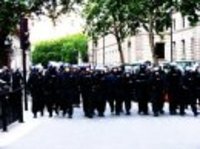
Of course, over the years many mil­lions of us opposed these illeg­al wars, but to no avail. This was the last oppor­tun­ity for peace pro­test­ers in the UK to vent their feel­ings towards Bush. The police respon­ded in an increas­ingly heavy-handed way, pen­ning the peacen­iks up, beat­ing inno­cent people around the head for no reas­on, and call­ing in the armoured riot police.

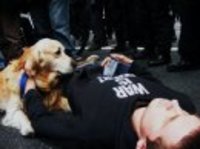
One friend of mine said that they were stand­ing there play­ing protest songs when sud­denly a wall of Rob­ocop lookalikes appeared and began to advance on them. My friend, a seasoned act­iv­ist, had nev­er seen any­thing quite like it; even he was unnerved. Anoth­er decided to make a stand. Well, to be exact, he lay down at their feet, pro­tec­ted only by Solomon his trusty Peace Dog.

Des­pite all this, the police per­sisted in blam­ing the pro­test­ers. Deputy Assist­ant Com­mis­sion­er Chris Allis­on announced that the Met would hold an enquiry and said: “We are ser­i­ously dis­ap­poin­ted by the irre­spons­ible and crim­in­al action of those who have chal­lenged police….”

Allis­on then went on to make a state­ment that chilled my heart: he said that the protest could have been used as a “cov­er” for ter­ror­ists tar­get­ing George Bush.

So this is what it has come to. Many intel­li­gent com­ment­at­ors over recent years have said that politi­cians and police use the threat of ter­ror­ism to gain more and more dra­coni­an powers. Time and again we have seen inno­cent people stopped for no good reas­on under Sec­tion 44 of the Ter­ror­ism Act. Infam­ously, this Act was also used to throw 87 year old Wal­ter Wolfgang out of a Labour Party con­fer­ence for heck­ling Jack Straw. Police can even arrest you now purely to ascer­tain your identity.

But for a seni­or police­man to claim that viol­ence is accept­able against peace cam­paign­ers as they might be har­bour­ing ter­ror­ists is one step bey­ond. The tac­tics the US army has used so dis­astrously on the streets of Bagh­dad have now been impor­ted to the streets of Westminster.

I have been say­ing for a long time that the laws are already in place for the UK to be defined as effect­ively a police state. The only reas­on that this is not yet obvi­ous to all is because these laws are not applied more widely. But per­haps we are see­ing the first signs of this now.

Where will this end? The Ger­man people did not just wake up one day in 1939 and find that they lived under a fas­cist régime. The pro­cess was slow, and the erosion of demo­cracy incre­ment­al. The vast major­ity was not even aware of what was hap­pen­ing to their coun­try until it was too late.

They say that if you put a frog in cold water, and then gradu­ally heat up the pot, the frog can­not detect the change in tem­per­at­ure fast enough and will sit there boil­ing to death. This, I fear, is what is hap­pen­ing to our democracy.


Cockle Rustlers under Surveillance

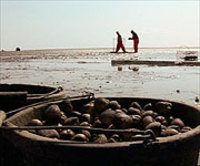
Four times in the past three years, powers designed to catch ter­ror­ists have been deployed against poten­tial cockle rust­lers on the sands out­side Poole Har­bour in Dor­set. I kid you not. The Inde­pend­ent news­pa­per yes­ter­day repor­ted that Poole Bor­ough Coun­cil had used the sweep­ing sur­veil­lance of the Reg­u­la­tion of Invest­ig­at­ory Powers Act (2000), oth­er­wise known as RIPA, to police the cockle fish­er­men of Dorset.

RIPA was inten­ded (the gov­ern­ment told us in 2000) merely to update for the inter­net age the old Inter­cep­tion of Com­mu­nic­a­tions Act (1985) that for the first time had reg­u­lated the intrus­ive sur­veil­lance car­ried out by spooks and police. In fact, the Grim RIPA massively expan­ded state intru­sion into our per­son­al lives, so that nine gov­ern­ment organ­iz­a­tions, includ­ing the secur­ity ser­vices and police, and 792 pub­lic author­it­ies (of which 474 are loc­al coun­cils) now have the powers to snoop on our private com­mu­nic­a­tions, and then some.

In fact, doc­u­ments dis­closed under the Free­dom of Inform­a­tion Act sug­gest that Poole Bor­ough Coun­cil may have the dubi­ous dis­tinc­tion of being the nosi­est in the UK, using RIPA not only to police its waters, but also to check on the res­id­en­tial status of loc­als, dam­age caused to traffic bar­ri­ers or oth­er minor infrac­tions. Hardly the stuff of James Bond.

Inad­vert­ently, Poole Coun­cil has provided a clas­sic case of reduc­tio ad absurdum, but this can be use­ful in high­light­ing more ser­i­ous flaws.

In the last dec­ade we have seen a slew of laws passed by our elec­ted rep­res­ent­at­ives in par­lia­ment that are poten­tially dan­ger­ous to our demo­cracy and way of life. All these laws have been whipped through par­lia­ment, and the media has ten­ded not to give them much consideration.

One such law that springs to mind is the Civil Con­tin­gen­cies Act (2004). This was passed with barely a mur­mur and, in the wake of the foot and mouth crisis, was deemed to be A Good Thing. How­ever, the dev­il is always in the detail. This law allows any seni­or gov­ern­ment min­is­ter, at the stroke of a pen, to declare a 30 day state of emer­gency. Under these terms, the author­it­ies can pre­vent our free asso­ci­ation at polit­ic­al meet­ings or demon­stra­tions, they can quar­ant­ine us, or pre­vent us mov­ing freely around our coun­try. They can even seize our homes, demol­ish them, and not have to pay a penny in com­pens­a­tion, as this will have been done to pro­tect “nation­al security”.

But the real stinker was the draft of the Legis­lat­ive and Reg­u­lat­ory Reform Act (2006). If Blair had suc­ceeded in passing this law, it would have spelled the end of 700 years of par­lia­ment­ary demo­cracy in Bri­tain. Had the ori­gin­al draft been approved, any seni­or gov­ern­ment min­is­ter could have abol­ished any law pre­vi­ously passed by our Houses of Parliament.

Not for noth­ing was this nick­named the “Abol­i­tion of Par­lia­ment Bill” (well, that and the fact that its form­al title is a tongue-twister – try say­ing it out loud!). Fol­low­ing a cit­izens’ cam­paign, the Bill was watered down as it passed through the Houses of Par­lia­ment. How­ever, even though lim­ited safe­guards have been intro­duced, min­is­ters are still in a pos­i­tion to tinker with any Brit­ish laws except the Human Rights Act. So, the tend­ency for author­it­ari­an gov­ern­ment may have been reined in this time, but we need to remain vigilant.

Many people are aware and are also appre­hens­ive of how these laws could be mis­used against the cit­izens of the UK if a more ruth­less and dra­coni­an gov­ern­ment were in power. Many com­ment­at­ors say we are sleep-walk­ing towards a police state. The tragedy is that we are pretty much there – most of the neces­sary laws are in place. It is time for us all to re-engage in the demo­crat­ic pro­cess and halt this rush towards a com­pletely unac­count­able government.

CCTV doesn’t prevent crime

So, the argu­ment about CCTV and our big broth­er soci­ety rumbles on. A seni­or police­man, Detect­ive Chief Inspect­or Mick Neville of the Visu­al Images, Iden­ti­fic­a­tions and Detec­tions Office (Viido) at New Scot­land Yard, has been quoted as say­ing that only 3 per cent of crimes have been solved by CCTV evid­ence. Des­pite the UK hav­ing the highest per cap­ita num­ber of CCTVs in the world, this brave new world has failed to make us safer.

A few oth­er police forces, and nat­ur­ally the secur­ity com­pan­ies flog­ging the kit, say that CCTV has at least dra­mat­ic­ally reduced oppor­tun­ist­ic crimes. Who should we believe?

What can­not be dis­puted is the fact that there are well over 4,000,000 CCTVs in this coun­try, and the organ­isa­tion, Pri­vacy Inter­na­tion­al, assesses that we are the most watched cit­izenry in Europe.

While some law-abid­ing cit­izens say they feel intim­id­ated by CCTV and how the inform­a­tion could poten­tially be mis­used, most people seem not to care. In fact, the major­ity appar­ently feel safer if they can see CCTV on the streets, even if this per­vas­ive sur­veil­lance has in no way dis­cour­aged crimes of viol­ence. So why this gap between per­cep­tion and reality?

One of my pet the­or­ies has always been to blame Big Broth­er. No, not the book. I have always been flum­moxed by the pop­ular­ity of the TV show and the pleth­ora of real­ity TV spin-offs. My instinct­ive reac­tion was that it was sim­il­ar to being “groomed” to accept round-the-clock intru­sion into our per­son­al lives. More than accept – desire it. The clear mes­sage is that such sur­veil­lance can lead to instant fame, wealth and access to the Z‑list parties of Lon­don. And for that we are sleep-walk­ing into a real Orwellian nightmare.

Slightly flip­pant the­or­ies aside, it is inter­est­ing that one of the most cited examples of the need for CCTV was the Bish­opsgate bomb­ing in Lon­don in 1993. In this case a lorry bomb, filled with a tonne of home made explos­ive (HME) was det­on­ated in the heart of the city of Lon­don by the IRA. One per­son was killed, many were injured, and hun­dreds of mil­lions of pounds worth of dam­age was caused, not to men­tion the fact threat the IRA scored a huge pub­li­city coup.

But this had noth­ing to do with the lack or oth­er­wise of CCTV in the streets of the City. It was an intel­li­gence fail­ure, pure and simple.

This attack could and should have been pre­ven­ted. It occurred while I was work­ing in MI5, and it was widely known in the ser­vice at the time that the bomber should have been arres­ted six months before dur­ing a sur­veil­lance oper­a­tion. Des­pite the fact that he was seen check­ing out anoth­er lorry bomb in stor­age, he was allowed to walk free and escape to the Repub­lic of Ire­land due to pro­ced­ur­al cock-ups. Months later, he returned to the City and bombed Bishopsgate.

By rely­ing increas­ingly on tech­no­lo­gies to pro­tect us, we are fol­low­ing in the foot­steps of the Amer­ic­ans. They have always had an over-reli­ance on gad­gets and giz­mos when seek­ing to invest­ig­ate crim­in­als and ter­ror­ists: satel­lite track­ing, phone taps, bugs. But this hoover­ing up of inform­a­tion is nev­er an adequate replace­ment for pre­cise invest­ig­at­ive work. Plus, any crim­in­al or ter­ror­ist worth their salt these days knows not to dis­cuss sens­it­ive plans electronically.

Scat­ter-gun approaches to gath­er­ing intel­li­gence, such as blanket sur­veil­lance, still at this stage require human beings to pro­cess and assess it for evid­en­tial use. That, accord­ing to DCI Neville, is part of the prob­lem. There is just too much com­ing in, not enough staff, insuf­fi­cient co-oper­a­tion between forces, and the job lacks per­ceived status with­in the police.

The oth­er prob­lem of an over-reli­ance on tech­no­logy is that it can always be hacked. The most recent hack­ing has broken the RFID chips that we all carry in our pass­ports, Oyster cards and the planned ID cards. New tech­no­lo­gies can­not guar­an­tee that our per­son­al data is secure, so rather than pro­tect­ing us, they make us more liable to crimes such as iden­tity theft.

So once again nation­al and loc­al gov­ern­ment bod­ies have rushed to buy up tech­no­logy, without fully think­ing through either its applic­a­tion or its use­ful­ness. And without fully assess­ing the implic­a­tions for a free soci­ety. Just because the tech­no­logy exists, it does not mean that it is fit for pur­pose, nor that it will make us safer.


MI5 must back use of phone-taps

This is an art­icle of mine that appeared in The Guard­i­an on Wed­nes­day August 03 2005 .

Calls for justice

MI5 must back use of phone-taps

When I worked in MI5 in the 1990s, the use of tele­phone inter­cept mater­i­al (code­named Lin­en) was even then a hot top­ic of dis­cus­sion. Most of the new­er officers and the leg­al advisers advoc­ated its use. The MI5 old guard tried to claim that it was a sensitive
tech­nique and if used in court, tele­phone intel­li­gence would be lost.

Every­one knows tele­phone lines can be bugged. And if, in a spe­cif­ic court case, evid­ence of par­tic­u­lar sens­it­iv­ity occurred in an inter­cept, its exist­ence could be pro­tec­ted by pub­lic interest immunity certificates.

The with­hold­ing of Lin­en is a hangover from the cold war, when tele­phone taps were used purely to gath­er intel­li­gence on espi­on­age and polit­ic­al tar­gets. Now that MI5 is doing largely police-style, evid­en­tial work to bring ter­ror­ists to tri­al, it needs to update its methods.

Intel­li­gence gathered from bugs planted in a sus­pect’s prop­erty is already used as evid­ence in Brit­ish courts, although this is argu­ably a more sens­it­ive tech­nique. Most west­ern demo­cra­cies allow the use of intel­li­gence derived from tele­phone bugs.

Most Bel­marsh internees are incar­cer­ated on the basis of “secret and reli­able intel­li­gence” — ie tele­phone taps — which can­not be used in a court of law to charge them. Per­haps MI5 does not want Lin­en exposed to the scru­tiny of a court of law in these cases because the intel­li­gence is so weak.

In the early 1970s, the then prime min­is­ter, Har­old Wilson, was dis­suaded from employ­ing Judith Hart as a min­is­ter because of “secret and reli­able intel­li­gence”. It turned out that all she had done was ring up a friend who happened to work in the Com­mun­ist party HQ and call her “com­rade”, a prac­tice com­mon in leftwing circles at the time.

MI5 needs to drag itself into the 21st cen­tury and allow its intel­li­gence to be used as evid­ence. It needs to ensure that the new breed of ter­ror­ists threat­en­ing our coun­try can feel the full force of Brit­ish justice, nota bul­let in the back of the head.

Annie Machon is the author of Spies, Lies and Whis­tleblowers: MI5 and the Dav­id Shayler Affair

August 2000 — Telegraph Interview

He’s got nothing to hide, says girlfriend

DAVID SHAYLER’S girl­friend says she has no regrets about giv­ing up her luc­rat­ive career in the City to spend three years “on the run” with a man widely denounced as a self-publicist.

Annie Machon, 32, her­self a former MI5 officer and a Cam­bridge clas­sics gradu­ate, gave up her job as a man­age­ment con­sult­ant to join Shayler in his self-imposed exile. She said yes­ter­day “You don’t sac­ri­fice that amount of time and give up your whole life for someone who just wants to have a bit of fun and do this for publicity,” .

I went on the record, ini­tially, because of all the mis­in­form­a­tion that was com­ing out about him, back­room brief­ings, all sorts of lies, that he was unem­ployed, that he was denied pro­mo­tion, that he was­n’t up to the job, even that he was sacked from MI5.

I haven’t had much sleep,” she said after Shayler­’s release on bail from Char­ing Cross police sta­tion in cent­ral Lon­don. “I have been quite appre­hens­ive for some weeks, since we decided we should try to come back. Obvi­ously neither of us knew what to expect. He’s got noth­ing to hide. He wants to put his case to push for more openness.

It’s good that people are pick­ing up on his cause and are begin­ning to talk about the issues he’s raised, rather than about his per­son­al­ity.” Money paid for a news­pa­per exclus­ive about his story sus­tained the two for most of their exile. They sub­sist now on his weekly column in Punch magazine.

But she feels neither can go back to their jobs as man­age­ment con­sult­ants, which they took after they left MI5. “I think things have changed so much and we’ve been through so much it would be very dif­fi­cult to go back three years to what we were then.”

The two have been togeth­er for sev­en and a half years since meet­ing in an MI5 lib­rary, but there is no talk of mar­riage. Instead, she seems con­tent with social nor­mal­ity instead of a life spent look­ing over her shoulder. Return­ing to Lon­don with a media cir­cus in train is a very dif­fer­ent exper­i­ence from when she skulked through the cap­it­al, expect­ing to be fol­lowed, bugged or arrested.

It’s been three years almost to the day,” she said, “and it has def­in­itely taken an emo­tion­al toll. In fact, the stress of the whole thing has been quite intense.”

Last night, she and Shayler were plan­ning a quiet fam­ily din­ner. “It will be the first time in three years that we have been able to dine out openly togeth­er in Bri­tain,” she said. “I hope there will be no more look­ing over our shoulders.”

Guardian Interview 2000 — No place to hide

The Sabine Dur­rant inter­view with me in The Guard­i­an, April 2000
No place to hide

How big a price can a woman pay for stand­ing by her man? The part­ner of exiled MI6 whis­tleblower Dav­id Shayler lives and loves on the run — with Big Broth­er watch­ing her every move

Annie Machon and her boy­friend, Dav­id Shayler, the former MI5 officers now liv­ing in Par­is, have got used to feel­ing watched. Their phone plays up. Their emails go miss­ing. Even the walls of their flat seem to look down on them. If they want to dis­cuss “an issue”, they find a safe café to do it in. A dif­fer­ent one each time? “Of course,” says Machon with a slight curve to her lips. And in bed? “We have dis­cussed that, yes,” she says. “You just try and blank it out and get on with your life.”

She is poised and con­trolled. She remains cool even when recall­ing “sweaty cop­pers” read­ing out her love let­ters in the course of an  inter­rog­a­tion. Even when describ­ing the state of her under­wear (“inside out, with the crotches turned up as if they’d been sniff­ing them”) after their flat in Pimlico had been searched.

Machon, who is 31, has been at Shayler­’s side since he fled to France in 1997 to escape pro­sec­u­tion for break­ing the Offi­cial Secrets Act when his claims of MI5 incom­pet­ence were first pub­lished in a Sunday news­pa­per. They packed for a fort­night. They’ve been gone two and a half years.

Shayler is a straight­for­ward love or hate fig­ure. He is either the whis­tleblower, fired by mor­al pur­pose to draw atten­tion to bungling with­in the intel­li­gence ser­vices, from rev­el­a­tions that they mon­itored “sub­vers­ives” includ­ing such threats to nation­al secur­ity as Har­riet Har­man and the reg­gae band UB40, to his more recent alleg­a­tions that MI6 was behind an illeg­al assas­sin­a­tion attempt on Muam­mar Gadafy, the Liby­an pres­id­ent. Or, as MI5 would have it (in an inter­est­ing mélange of con­tra­dic­tions), he is the trait­or, the self-pub­li­cist, the break­er of offi­cial secrets, the fantasist.

Machon has remained a much more enig­mat­ic fig­ure. At first she was just “Shayler­’s girl­friend”. With her blonde hair and big blue eyes, she looked like a deb, a nurs­ery school teach­er, caught up in events bey­ond her con­trol. A former MI5 officer her­self, she made no dir­ect alleg­a­tions while sup­port­ing Shayler in his. But this may not have been cau­tion so much as sound management.

Unlike Shayler (who spent four months in jail before extra­di­tion pro­ceed­ings failed; he is now being sued in the civil courts) she is at liberty to come and go in Bri­tain. “It’s import­ant that I remain free to travel, import­ant I remain out of reproach.”

Machon was in Lon­don to deliv­er to Scot­land Yard a dossier sup­port­ing Shayler­’s Gadafy claims (an MI6 file recently pos­ted on the inter­net also appears to con­firm the alleg­a­tions). She holds press con­fer­ences. She meets with MPs. With law­yers. She wants account­ab­il­ity. She wants free­dom of expres­sion. She wants amnesty. She wants Shayler to be listened to. Taken ser­i­ously. To be allowed home. Then she wants to be left alone.

We meet at Vaux­hall under­ground sta­tion, close by the MI6 build­ing, although she doesn’t
want to hang around long. The closest café is too close. She walks very fast to the next. She does­n’t look over her shoulder once. She sees con­nec­tions where oth­ers might see blank walls. There are advert­ise­ments for laptops nearby. She refers to the recent stor­ies of the mugged MI5 officer, whose laptop was nicked and the drunk­en MI6 officer who mis­laid his. “What a coin­cid­ence,” she smiles sar­don­ic­ally. If she and Shayler win their case, she says she does­n’t think they’ll ever come back to Lon­don. “Dave would feel quite uncom­fort­able liv­ing here,” she says. “I would too. It’s just that sense of unease all the time.”

She is all in black, although her nails are gold. She is pale and slim, unlike Shayler whose plump­ness in pho­to­graphs can make him look like a yob. (“He put on weight at MI5, actu­ally. Social­ising after work — that drink­ing cul­ture he talked about — and also a sense
of unease. He eats when he’s feel­ing stressed. He’s joined a health club now. He swims nearly every day.”)

It’s not the only reas­on they seem an unlikely couple. A Middles­brough boy, with work­ing-class roots, Shayler is said to be chippy about pub­lic-school Oxbridge types.

Machon, who is the daugh­ter of a pilot turned news­pa­per­man, and from an old Guern­sey fam­ily, went to a private girls’ school and then to Cam­bridge, where she stud­ied clas­sics. “Yes, yes, I know. I think he did think I was a bit posh at first, but he squared it with the fact that I was a schol­ar­ship girl. Also we both moved around a lot when we were young. We had that in common.”

Machon says that as soon as they met in an MI5 lib­rary they made each oth­er laugh and that their rela­tion­ship is “pas­sion­ate”. There are hints of that in her story. The night before she came back to Eng­land for the first time, sus­pect­ing she would be arres­ted, but not sure wheth­er they would con­fis­cate her pass­port, they lay in bed and held each oth­er and cried, “not know­ing when we would see each oth­er again”. Then, after 10 months in hid­ing at a farm­house in south-west France, when he was sud­denly taken into cus­tody, for days she walked around with “no one’s hand in mine”.

Inter­est­ingly, too, while Machon looks as though but­ter would­n’t melt in her mouth,
she found out soon after join­ing MI5 (after sit­ting the for­eign office exams), that  psy­cho­lo­gic­al pro­fil­ing had marked her out as a mav­er­ick. “I was hav­ing a bit of a debate with my man­ager in the office and she said, ‘I’ve been warned about you’.” She smiles enig­mat­ic­ally. “I was quite flattered.”

She and Shayler had already left MI5 when Shayler decided to go pub­lic, both had nice well-paid jobs as man­age­ment con­sult­ants. They had a nice social life, nice Pimlico flat.
She did­n’t want him to go to the papers. “It was­n’t so much doubt as fear. I knew they’d come after us and I knew what they could do against us. If you’ve worked for MI5 it does­n’t help your para­noia, put it that way.”

She slips a light­er out of her cigar­ette pack­et and lights up. “And I must say I was shown to be right. Not that I’d ever say I told you so to Dave.”

The papers ran the story on a bank hol­i­day week­end. Machon and Shayler got the last plane out of Heath­row on the Sat­urday night, to Ams­ter­dam. They braced them­selves. Then Diana, Prin­cess of Wales was killed. “In one sense it was a relief because the pres­sure was taken off us. In anoth­er it was ter­rible. An injunc­tion had been put on the paper and if she had­n’t died, Fleet Street would have been up in arms about gag­ging the free press, they would have been more bal­anced in their assess­ment of Dave, demanding
inquir­ies. As it was, there were a lot of back­room brief­ings against him, say­ing he was a loud­mouth, unbal­anced, and we were bur­ied there.”

She uses the word “bur­ied” a lot. It’s hard to tell wheth­er it is a good thing or a bad thing for someone who needs pub­li­city (“it’s our only pro­tec­tion”) and yet longs to hide. On the run, they “bur­ied them­selves” in the French coun­tryside, a dif­fer­ent hotel every night, pay­ing cash.

After that they were “bur­ied” again in a remote farm­house near Per­pig­nan, “freez­ing cold, miles from the shops”, liv­ing off their £40,000 news­pa­per earn­ings, where Shayler wrote his nov­el (it has since been banned) and she kept house. The Brit­ish gov­ern­ment pre­ten­ded to nego­ti­ate with them, she says. “They thought we’d run out of money and rot abroad. They wanted to bury us.”

It was only when Shayler was in pris­on, when the worst had happened, that she got
her con­fid­ence back. “I found I was tough­er than I thought. Dave had always been the more ebul­li­ent char­ac­ter. And sud­denly when he was arres­ted, even though I was des­per­ately lonely, it was, ‘Right, you’ve got to do it.’ ”

Actu­ally, there was worse to come: an approach by an armed Liby­an a week after Shayler­’s release. He offered a six-fig­ure sum in exchange for names linked to the Gadafy plot and evid­ence on Lock­er­bie (Shayler had been an expert). He fol­lowed them
when they refused. A few nights later their buzzer rang for five minutes in the night: “We cowered in the corner with our kit­chen knives.” They repor­ted the incid­ent to MI5, and were told it was a mat­ter for the French, who told them it was a mat­ter for the Brits.

What does Machon hope for now? She says she can­’t think what to do with her life. “I’m a dif­fer­ent per­son to the one I was two years ago.” Maybe an old house in Nor­mandy: Shayler could con­tin­ue writ­ing, nov­els, his column for Punch.

What about chil­dren? “I don’t want those. Neither of us does. We nev­er have. I’m not at all mater­nal. I’ve nev­er felt the desire. My broth­er is 11 years young­er and I don’t have a
romantic view of chil­dren. I know what they’re like.”

I was going to sug­gest that when she hits her mid-30s she might change her mind, but then I saw the look in her eye and changes of mind did­n’t seem to come into it.