A review on “Cinepolitics” of the new film of John Le Carre’s classic spy novel, and its continuing relevance:
A review on “Cinepolitics” of the new film of John Le Carre’s classic spy novel, and its continuing relevance:
Libya, MI6, torture, and more happy subjects discussed recently on “Africa Today” on Press TV.
The programme was interesting, informed and balanced. Do have a watch:
My RTTV interview today about Libya, torture, and UK double-dealing:
A recent interview on Press TV about the spies’ manipulation of the media:
My interview on 29 April 2011 for RTTV about the pre-emptive arrests of UK political activists in the run-up to the royal wedding.
Thoughtcrime appears to have arrived in the UK — and I accidentally became a royal wedding commentator (sort of).
Well, never say never in life.…
Here is an interview I did today for RRTV about the evolving war in Libya:
Here is an interview I did for RTTV on 3 March 2011 about the possibility of Western intervention in the unfolding Libyan crisis:
Interestingly, a radio recording of the Dutch “rescue” mission I mentioned has appeared on the internet. It appears that the pilots were less than honest about their flight plans and intentions, saying that they were heading to their ship south of Malta rather than back towards Tripoli.… where they are eventually caught.
Also, do have a read of this excellent article by Seamus Milne of The Guardian about ramifications of possible Western intervention.
That said, it looks like this viewpoint is being ignored. The Daily Mail reported today that MI6 officers and SAS soldiers are massing in the East of Libya to assist the rebels. Well, at least they’re doing it openly now, unlike the illegal and failed Gaddafi Plot of 1996.
My interview for RTTV about the current Libyan crisis:
On 6 December I appeared on RTTV’s CrossTalk discussion programme alongside whistleblowing UK ex-diplomat Carne Ross, to talk about the implications of Wikileaks:
Here’s an interview I did for Russia Today TV on 8th July 2010 about the US/Russian spy swap:
And here’s an interview I did yesterday for Russia Today TV about the the spy story:
Over the last few years I have been a regular guest on political discussion programmes on the rapidly growing Press TV. Occasionally I am invited onto the film review show, “Cinepolitics”, by the host (and film maker) Russell Michaels.
The film under review is a documentary called “Secrecy”, looking at the stifling effect censorship and the creeping concept of national security have had on democracy in the USA under the former presidential régime. When this was filmed in January, there was hope that the new presidency might roll this back. However, “Secrecy” is just as pertinent now that the issue of torture and Guantanamo Bay is being addressed more openly by the media.
Stephen Armstrong published an interesting article in today’s New Statesman magazine. Based on his new book War plc: the Rise of the New Corporate Mercenary, it examines the rise of the corporate security consultant. Or in basic English – mercenaries.
I met Stephen when I was invited by James Whale to review the book on Press TV. I was impressed with his research and depth of knowledge on this subject. It was an unusually harmonious talk show — rather than arguing, we all took a broadly similar approach to the issue of mercenaries, oversight and accountability.
The increasing privatisation of intelligence is an insidious development in the world of espionage and war. For many decades there have existed on the fringes of the official intelligence world a few private security companies; think Kroll, Blackwater, Aegis. These companies are often the last refuge of .….. former intelligence officers of the western spook organisations.
These people, often frustrated at the overly bureaucratic nature of the governmental spy organisations, resign and are gently steered towards these corporations. That, or the relocation officers get them nice juicy jobs at merchant banks, arms companies or international quangos. It’s always useful to have reliable chaps in useful places, after all.
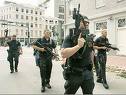 In the last decade, however, we have seen an explosion in the number of these companies. One of my former colleagues is a founder of Diligence, which is going from strength to strength. These kinds of companies specialise in corporate spying, the neutralisation of opposition and protest groups, and security. The latter usually boils down to providing military muscle in hot spots like Iraq. While I can see the attraction for soldiers leaving crack regiments and wondering what on earth they can do with their specialised expertise, and who then decide that earning £10,000 a week risking their lives in Baghdad is a good bet, this has worrying implications for the rule of law.
Leaving aside the small matter that, under international and domestic UK law, all wars of aggression are illegal, our official British military presence in Afghanistan and Iraq is at least to a certain degree accountable. The most egregious war crimes have resulted in court martials. But the new mercenaries live in a legal no-man’s land, and in this territory anything goes. Or can at least be covered up.
This is the same principle that has guided these unofficial spook companies over the years – plausible deniability. What little democratic oversight there is in the UK of the intelligence community still does give them limited pause for thought: what if the media hears about it? What if an MP asks an awkward question? By using former colleagues in the corporate intelligence world, MI5, MI6 et al can out source the risk.
The oversight and accountability for the official spooks and the army are bad enough. The privatisation of intelligence and military might makes a further mockery of the feeble oversight provisions in place in this country. This is a worrying development in legal and democratic terms; more importantly, it has a direct, daily impact on the rights of innocent men, women and children around the world. We need to ensure that the official and unofficial spooks and military are accountable under the law.