 This is an interview I recorded for Resonance FM with We Are Change UK, a rapidly-growing activist group in the USA and Europe, in which I get the chance to discuss the spies, their crimes, cover-ups, the media, the war on terror and the erosion of our freedoms, amongst many other issues:
Category Archives: War
Gareth Peirce talks to Moazzam Begg
An interview between Guantanamo detainee, Moazzam Begg, and human rights lawyer Gareth Peirce.
I have written before about the appalling treatment of people like Moazzam, who are kidnapped, tortured, and held illegally without charge in America’s secret prison camps and Gitmo. Here he has the chance to interview Gareth about this and the wider implications:
Gareth Peirce has worked indefatigably over many years to defend victims of miscarriages of justice in the UK courts and beyond. The roll call of those she has helped, not just legally but also with emotional support and a gentle and humane approach, includes: the Guildford Four, the Birmingham Six, Samar Alami and Jawed Botmeh (the Israeli Embassy Two), David Shayler, the Belmarsh internees, Judith Ward, the family of Jean Charles de Menezes, and now the Guantanamo victims.
Gareth is a true hero of our times.
Cynthia McKinney and Annie Machon in Amsterdam, 2007
After the London event in 2007, Cynthia McKinney and I flew over to Amsterdam for an interview at a big public event organised by new media organisation, Docs at the Docks.
Introducing Congresswoman Cynthia McKinney in London, 2007
The Rise of the Mercenary
Stephen Armstrong published an interesting article in today’s New Statesman magazine. Based on his new book War plc: the Rise of the New Corporate Mercenary, it examines the rise of the corporate security consultant. Or in basic English – mercenaries.
I met Stephen when I was invited by James Whale to review the book on Press TV. I was impressed with his research and depth of knowledge on this subject. It was an unusually harmonious talk show — rather than arguing, we all took a broadly similar approach to the issue of mercenaries, oversight and accountability.
The increasing privatisation of intelligence is an insidious development in the world of espionage and war. For many decades there have existed on the fringes of the official intelligence world a few private security companies; think Kroll, Blackwater, Aegis. These companies are often the last refuge of .….. former intelligence officers of the western spook organisations.
These people, often frustrated at the overly bureaucratic nature of the governmental spy organisations, resign and are gently steered towards these corporations. That, or the relocation officers get them nice juicy jobs at merchant banks, arms companies or international quangos. It’s always useful to have reliable chaps in useful places, after all.
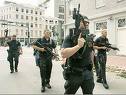 In the last decade, however, we have seen an explosion in the number of these companies. One of my former colleagues is a founder of Diligence, which is going from strength to strength. These kinds of companies specialise in corporate spying, the neutralisation of opposition and protest groups, and security. The latter usually boils down to providing military muscle in hot spots like Iraq. While I can see the attraction for soldiers leaving crack regiments and wondering what on earth they can do with their specialised expertise, and who then decide that earning £10,000 a week risking their lives in Baghdad is a good bet, this has worrying implications for the rule of law.
Leaving aside the small matter that, under international and domestic UK law, all wars of aggression are illegal, our official British military presence in Afghanistan and Iraq is at least to a certain degree accountable. The most egregious war crimes have resulted in court martials. But the new mercenaries live in a legal no-man’s land, and in this territory anything goes. Or can at least be covered up.
This is the same principle that has guided these unofficial spook companies over the years – plausible deniability. What little democratic oversight there is in the UK of the intelligence community still does give them limited pause for thought: what if the media hears about it? What if an MP asks an awkward question? By using former colleagues in the corporate intelligence world, MI5, MI6 et al can out source the risk.
The oversight and accountability for the official spooks and the army are bad enough. The privatisation of intelligence and military might makes a further mockery of the feeble oversight provisions in place in this country. This is a worrying development in legal and democratic terms; more importantly, it has a direct, daily impact on the rights of innocent men, women and children around the world. We need to ensure that the official and unofficial spooks and military are accountable under the law.
Spooks + Politicians + Hacks = War
I keep returning to this subject, but it is troubling me deeply. Reading the runes, all things point to the fact that we are being actively groomed for yet another Middle Eastern war.
As I’ve said before, the picture is clearly being drawn for those who wish to join the dots. At the end of last year the entire US intelligence infrastructure formally assessed that Iran had abandoned its nuclear weapons programme in 2003. This, of course, did not suit the hawkish neo-con agenda in the States.
Then Mossad, the Israeli intelligence outfit, conveniently pops up claiming that it has new, shit-hot intelligence that disproves the US assessment. Mossad passes this on to the heads of MI6 and the CIA, and shortly afterwards the Prime Minister of Israel, Ehud Olmert, visits George Bush on a state visit to America to discuss his “concerns” about Iran.
The third part of the equation fell into place this week. Con Coughlin, writing in the right-wing UK national newspaper, The Daily Telegraph, unquestioningly regurgitates information from anonymous intelligence sources who state that Iran is now developing weapons grade uranium.
Coughlin has form. For many years he worked for The Sunday Telegraph, otherwise known as the in-house journal of MI6. Readers of this site will know that MI6 has a section called Information Operations (I/Ops), which manipulates the media either by planting false stories or massaging the facts to suit MI6’s interests. Well, rather embarrassingly, Coughlin’s involvement in one such operation was exposed a few years ago.
In 1995 he was shown “information” by an MI6 officer whom he described as “a senior banking official” proving that Colonel Gadaffi’s son, Saif Al Islam, was involved in a money-laundering scam with Iran. Coughlin dutifully reported this, and this story was used by the Foreign Office to deny Al Islam a visa to live in the UK.
What Coughlin, and his then editor Dominic Lawson (whose brother-in-law was a senior MI6 officer), didn’t appear to know as he took this story down in shorthand, was the MI6 officer was from I/Ops, and that he was planting this story in the press to ensure that the son of a then Priority 1 Joint Intelligence Committee target could not come over the UK and live high on the hog. Too politically embarrassing, old bean.
Al Islam naturally sued, and The Sunday Torygraph duly settled out of court once it realised that intelligence whistleblower David Shayler knew the inside track on this libellous story and was prepared to give evidence in court.
Coughlin was also instrumental in getting stories linking Saddam Hussein to WMD and Al Qaeda into the national UK media in the run-up to the Iraq war, although the vigilent reader will notice these stories often contradict themselves. So it’s interesting that he’s now breaking more “news” suggesting precisely what Mossad and governments of the UK and the USA would have us believe: that Iran is a real, developing nuclear threat, and that there is a sound case for war.
Boiling a Frog
Last Sunday George Bush graciously flew into the UK for a final official visit before he steps down as president in January next year. PM Gordon Brown looked distinctly uncomfortable at their joint press conference, particularly when he had to announce that the UK would continue to support US military adventurism in the Middle East by sending yet more troops out there.
Of course, over the years many millions of us opposed these illegal wars, but to no avail. This was the last opportunity for peace protesters in the UK to vent their feelings towards Bush. The police responded in an increasingly heavy-handed way, penning the peaceniks up, beating innocent people around the head for no reason, and calling in the armoured riot police.
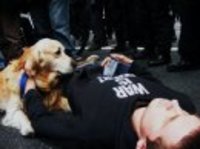 One friend of mine said that they were standing there playing protest songs when suddenly a wall of Robocop lookalikes appeared and began to advance on them. My friend, a seasoned activist, had never seen anything quite like it; even he was unnerved. Another decided to make a stand. Well, to be exact, he lay down at their feet, protected only by Solomon his trusty Peace Dog.
Despite all this, the police persisted in blaming the protesters. Deputy Assistant Commissioner Chris Allison announced that the Met would hold an enquiry and said: “We are seriously disappointed by the irresponsible and criminal action of those who have challenged police….”
Allison then went on to make a statement that chilled my heart: he said that the protest could have been used as a “cover” for terrorists targeting George Bush.
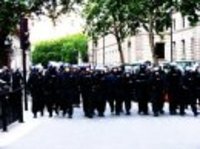 So this is what it has come to. Many intelligent commentators over recent years have said that politicians and police use the threat of terrorism to gain more and more draconian powers. Time and again we have seen innocent people stopped for no good reason under Section 44 of the Terrorism Act. Infamously, this Act was also used to throw 87 year old Walter Wolfgang out of a Labour Party conference for heckling Jack Straw. Police can even arrest you now purely to ascertain your identity.
But for a senior policeman to claim that violence is acceptable against peace campaigners as they might be harbouring terrorists is one step beyond. The tactics the US army has used so disastrously on the streets of Baghdad have now been imported to the streets of Westminster.
 I have been saying for a long time that the laws are already in place for the UK to be defined as effectively a police state. The only reason that this is not yet obvious to all is because these laws are not applied more widely. But perhaps we are seeing the first signs of this now.
Where will this end? The German people did not just wake up one day in 1939 and find that they lived under a fascist régime. The process was slow, and the erosion of democracy incremental. The vast majority was not even aware of what was happening to their country until it was too late.
They say that if you put a frog in cold water, and then gradually heat up the pot, the frog cannot detect the change in temperature fast enough and will sit there boiling to death. This, I fear, is what is happening to our democracy.
Iran Threat — First the Spooks, now the Politicians
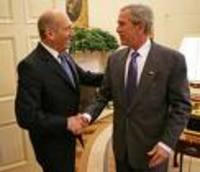 As I posted on on 7 May, Israeli intelligence is claiming it has new intelligence that proves the recent US National Intelligence Estimate wrong in its assessment of the nuclear threat posed by Iran.
Mossad claims to have solid intelligence that proves Iran is still trying to develop a nuclear military capability. There have been recent high-level talks about this between the intelligence agencies of the US, UK and Israel.
A report in The Guardian today now indicates that the politicians are following suit. Israeli Prime Minister, Ehud Olmert, is set to meet President Bush today to discuss the threat from Iran. It would not surprise me if the US soon announces that it has proof of Iran’s nuclear intent, and tries to push for another a “pre-emptive”, and highly illegal, attack.
Iran threat ramped up
The Sunday Times reported last weekend that Sir John Scarlett, the current head of MI6, is to fly to Israel at the end of the month to meet his counter-part, Meir Dagan, the head of Mossad. Whitehall has tried to downplay the meeting as “routine”. However, the focus of the meeting appears to be to discuss Israel’s assessment of Iran’s nuclear capability.
In recent years the neo-cons in power in the US have made no secret of their desire to “finish the job” in the Middle East and attack Iran. For the last two years there has been much sabre-rattling on both sides. The polemics from the US usually coincided with Iran’s plans to trade increasing amounts of its oil in euros. The south west region of Iran has vast oil reserves, and if Iran switched trading currencies, this would have an extremely detrimental effect on the power of the petrodollar, and the American economy as a whole.
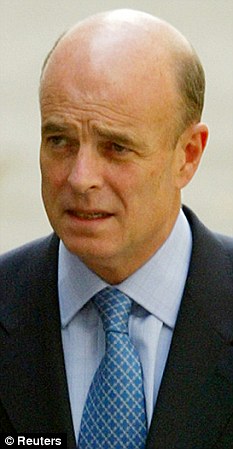 Lest we forget, Saddam Hussein had also begun to trade in euros what little oil he could prior to the Iraq war in 2003. Scarlett, a career MI6 officer, played a leading role in making the case for that war. At the time he was Chair of the Joint Intelligence Committee, and came to public attention when he signed off the notorious September Dossier. It has since become apparent that Iraq did not have WMD, nor was it trying to acquire uranium from Niger, as MI6 had stated in the dossier. This claim was based on forged documents.
So the timing of the new Israeli intelligence is interesting, to say the least. Last week, Iran announced that it was going to trade ALL its oil in euros and the yen, and Israel appears to be furiously lobbying the US and UK about Iran’s increasing nuclear threat. Israeli intelligence sources are claiming that they have information “on a par with” that which led to the bombing of the Syrian nuclear power station.
Based on this, they are asking the US government to reassess the level of threat posed by Iran. In December 2007 the combined thinking of the whole of America’s intelligence infrastructure was published in the US National Intelligence Estimate. It clearly stated that Iran had stopped developing its nuclear weapons programme in 2003 because of international pressure.
But the apparent triumph of international diplomacy does not suit the agenda of the hawks in the US administration. What could be better than to have the spy agencies of its closest allies conveniently reveal new intelligence saying that Iran now poses an increasing nuclear threat?
The (Il)legal Road to War
Yet another article has appeared about the mess that is the wars in Afghanistan and Iraq. Max Hastings, writing in the Daily Mail yesterday, described how our soldiers in Afghanistan feel that the continued conflict is pointless if there is no clear political strategy to resolve the situation.
The British army is overstretched, apparently at the behest of the USA. According to the article, our military badly needs to redeploy both normal troops and the SAS from Iraq to Afghanistan, but the US is unwilling to allow this to happen for political reasons. The Americans also appear to be making shameless use of the SAS.
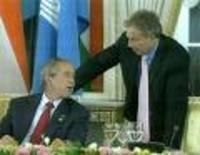 So, let’s remind ourselves of how we got into this mess. At an informal meeting with Bush in 2002, Blair unilaterally committed this country to support the American invasion of Iraq. Without the support of Blair, Bush could not have pretended that he had a meaningful international coalition to invade Iraq.
Having made this promise, Blair needed to deliver. Intelligence material, rather than being used to inform policy making, was manipulated to fit around pre-determined decisions. This was summarised clearly by the then head of MI6, Sir Richard Dearlove, in the notorious leaked “Downing Street Memo”, in which he is quoted as saying that the intelligence and facts were being fixed around the policy.
Following on from this came the September Dossier, which not only placed undue emphasis on the claim that WMD could be launched against British interests in 45 minutes, but also the fake intelligence that Saddam was trying to procure uranium from Niger. And finally, we had the Dodgy Dossier of February 2003, based largely on a 12 year old PhD thesis culled from the internet, but which also contained nuggets of raw intelligence from MI6. Interestingly, it has been established by the Foreign Affairs Select Committee in parliament that Blair did not have prior written permission from MI6 to publish this intelligence, which leaves him wide open to prosecution under Section 1(1) of the 1989 Official Secrets Act.
These are the false assertions that inexorably took this country to war. But even if these claims had been true, aggressive war is illegal under both international and British law. A raft of legislation prohibits our country engaging in any military action except in self-defence:
 The General Treaty for the Renunciation of War (Kellogg-Briand Pact)
The United Nations Charter
The Nuremburg Judgment
The Nuremburg Principles
The Rome Statute of the International Criminal Court
The UK’s International Criminal Court Act 2001
The Iraq and Afghan wars are unwinnable and illegal. It is time for the people of the UK to inform themselves of the laws of war and demand that they be upheld. We are all equal under the law – even the former Prime Minister. Every day we delay results in the deaths of more of our servicemen and of yet more innocent people in the Middle East.
.
UK Police Chief Misleads MPs
An interesting article appeared in The Sunday Times today, stating that Britain’s top policeman, the Commissioner of the Metropolitan Police Sir Ian Blair, had “unwittingly” misled the parliamentary Intelligence and Security Committee about the need to increase the period of detention without charge for terrorist suspects in the UK from 28 to 42 days. Blair claimed that 12 major terrorist operations had been foiled in Britain since 2005. In fact, the article reports that only 6 plots have been stopped. Blair has had to issue a grovelling apology via the Press Association for this, umm, gaffe.
But the article neglects to tell us how and why this new information came to light. So allow me to speculate.
The Met, along with its shadowy cohorts in MI5, is entrusted with protecting Britain from terrorist threats. Since 9/11 and the all-pervasive war on terror, Britain’s security forces have been granted sweeping new powers, resources and a huge increase in staffing levels to do this job. To ensure this is justified, they are continually telling us of the huge threat we face from terrorism and how successful they are in protecting us. It is in their interests to talk this up.
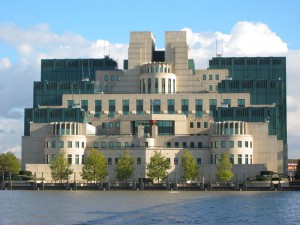 Meanwhile, over on the south bank of the river, MI6 continues to suffer from the loss of prestige brought about by its mistakes and lack of good intelligence in the run-up to the Iraq invasion. There is no love lost between these three agencies, as they compete for power and resources. So, to use a good civil service phrase, I cannot rule out the possibility that someone in MI6 leaked this information to have a pop at the Met and MI5.
However, there is a more serious aspect to this incident. But for this information emerging, MPs and public alike would have had no way of knowing that the perceived threat from terrorism had been grossly inflated in order for the police to gain yet more powers. We would have had to take Sir Ian’s word.
Well, we’ve been here before many, many times, most notoriously when the intelligence agencies would have us believe that Saddam had WMD that could attack British interests with 45 minutes. This, of course, led to the Iraq war and the deaths of hundreds of thousands of innocent men, women and children.
So how can we ensure we are told the truth by the spies? Well, greater accountability and effective parliamentary oversight would be a step in the right direction. But we don’t just need the correct mechanisms in place in parliament. We also need MPs with the knowledge, intelligence and integrity to ask the difficult questions when faced with bogus assertions.
British Spies and Torture
On 30th April, The Guardian newspaper reported that yet another man, picked up in a British counter-terrorism operation in Pakistan, has come forward claiming that he was tortured by the Pakistani intelligence agency, the ISI, with the collusion of British spooks
This is part of a growing body of evidence indicating that British intelligence officers are continuing to flout the law in one of the most heinous ways possible, the prolonged torture of another human being. Allegations have been emerging for years that detainees of notorious camps such as Guantanamo and Abu Ghraib have heard British voices either during the interrogation sessions or directing the line of questioning. Many of these detainees are also the victims of “extraordinary rendition”, in itself an extraordinarily euphemistic phrase for the kidnapping and transportation of terrorist suspects to Third World countries where they can be held indefinitely and tortured with impunity.
This is a situation that haunts me. I worked as an intelligence officer for MI5 in the 1990s, before leaving to blow the whistle. Perhaps I worked with some of the people now directly involved in torture? Perhaps I was even friends with some of them, met them for drinks, had them round for dinner? How could young, idealistic officers, committed to protecting their country by legal means, make that personal moral journey and participate in such barbaric acts?
 These questions ran through my head when, in 2007, I had the honour to meet a gentle, spiritual man called Moazzam Begg. He is a British citizen who went to Pakistan with his family to help build a school. One night, his door was broken down, and he was hooded, cuffed and bundled out of his home by Americans, in front of his hysterical wife and young children. That was the last they saw of him for over 3 years. Initially he was tortured in the notorious Bagram airbase, before ending up in Guantanamo, which he said was a relief to reach as the conditions were so much better. Needless to say, he was released with out charge, and is now suing MI5 and MI6 for compensation. He has also written a book about his experiences and now spends his time helping the campaign, Cage Prisoners.
Britain was the first state to ratify the European Convention of Human Rights, which includes Article 3 — no one shall be subjected to torture or to inhuman or degrading treatment or punishment. It is impossible for a state to derogate from this article. So how and why has Britain stooped to the level that it will apparently participate in such activity? The “apocalyptic scenario” much loved by apologists of torture, where a terrorist has to be broken to reveal the location of the ticking bomb, occurs only in fantastical TV dramas like “24”, never in real life.
In the 1990s the accepted MI5 position was that torture doesn’t work. This was a lesson the UK security forces had learned the hard way in 1970s Northern Ireland. Then, IRA suspects had been rounded up, interned without trial and subjected to what the Americans would no doubt nowadays call “enhanced interrogation techniques”. But the security forces got it wrong. The vast majority of internees were arrested on the basis of the flimsiest intelligence and had no links whatsoever with the IRA. Well, at least when they entered prison. Internment proved to be the best possible recruiting drive for the IRA.
So why has this thinking changed? I would suggest this is part of a core problem for MI5 – the shroud of secrecy within which it continues to operate and the complete lack of accountability and oversight for the organisation. There is no ventilation, no constructive criticism, no debate. Once a new doctrine has been adopted by the leadership, in slavish imitation of US policy, it rapidly spreads throughout the organisation as officers are told to “just follow orders”. To do anything else is career suicide. This leads to a self-perpetuating oligarchy where illegal or unethical behaviour is accepted as the norm.
Of course, you may well argue that a spy organisation has to operate in secret. Well, yes and no. Of course it needs to protect sensitive operational techniques, ongoing operations and the identities of agents. However, beyond that it should be open to scrutiny and democratic accountability, just as the police anti-terrorism branch is. After all, they do virtually the same work, so why should they be any less accountable?
The tradition of UK spies operating in absolute secrecy is a hangover from the bad old days of the cold war, and is utterly inappropriate to a modern counter-terrorist organisation. Increased openness and accountability is not only essential in a modern democracy, it also ensures that the spies cannot continue to brush their mistakes and criminality under the carpet. Britain deserves better from those charged with protecting its national security.
The UK Spies: Ineffective, Unethical and Unaccountable
The text of my article for e‑International Relations, March 2008:
The UK Intelligence Community: Ineffective, Unethical and Unaccountable
 The USA and the UK are enmeshed in an apparently unending war of attrition – sorry peacekeeping — in Iraq. Why? Well, we may remember that the UK was assured by former Prime Minister Tony Blair, in sincere terms, that Saddam Hussein possessed weapons of mass destruction which could be deployed again British interests within 45 minutes. Indeed the press was awash with “45 minutes from Armageddon” headlines on 18th March 2003, the day of the crucial war debate in the British parliament. The implication was that Britain was directly at threat from the evil Iraqis.
The US varied the diet. George Bush, in his State of the Union address before the war, assured his nation that Iraq had been attempting to buy material to make nuclear weapons from Niger. The American media and public fell for this claim, hook, line and sinker.
What do these two erroneous claims have in common? Well, both were “sexed up” for public consumption.
We all know now that there never were any WMDs to be found in Iraq. After 10 years of punitive sanctions, the country simply didn’t have the capability, even if it had the will, to develop them. The Niger claim is even more tenuous. This was based on an intelligence report emanating from the British Secret Intelligence Service (commonly know as SIS or MI6), which was based on forgeries.
We have had headline after screaming headline stating that yet another terrorist cell has been rounded up in Britain. The Ricin plot? The beheading of a British Muslim serviceman? The liquid bombs on airplanes? Yet, if one reads the newspapers carefully, one finds that charges are dropped quietly after a few months.
So, why is this happening? I can hazard a few guesses. In the 1990s I worked for 6 years as an intelligence officer for MI5, investigating political “subversives”, Irish terrorists, and Middle Eastern terrorism. In late 1996 I, with my then partner and colleague David Shayler, left the service in disgust at the incompetent and corrupt culture to blow the whistle on the UK intelligence establishment. This was not a case of sour grapes – we were both competent officers who regularly received performance related bonuses.
However, we had grown increasingly concerned about breaches of the law; ineptitude (which led to bombs going off that could and should have been prevented); files on politicians; the jailing of innocent people; illegal phone taps; and the illegal sponsoring of terrorism abroad, funded by UK tax-payers.
The key reason that we left and went public is probably one of the most heinous crimes – SIS funded an Islamic extremist group in Libya to try to assassinate Colonel Gaddafi in 1996. The attack failed, but killed innocent people. The attack was also illegal under British law. The 1994 intelligence Services Act, which put SIS on a legal footing for the first time in its 80 year history, stated that its officers were immune from prosecution in the UK for illegal acts committed abroad, if they had the prior written permission of its political master – ie the Foreign Secretary. In this case they did not.
So, the assassination attempt was not only immoral, unethical and highly reckless in a volatile area of the world, but also illegal under British law.
In August 1997 we went public in a national British newspaper about our concerns. We hoped that the newly-elected Labour government would take our evidence and begin an investigation of the intelligence agencies. After all, many Labour MPs had been on the receiving end of spook investigations in their radical youth. Many had also opposed the draconian UK law, the Official Secrets Act (OSA 1989), which deprived an intelligence whistleblower of a public interest defence.
However, it was not to be. I have no proof, but I can speculate that the Labour government did the spies’ bidding for fear of what might be on their MI5 files. They issued an injunction against David and the national press. They failed to extradite him from France in 1998 but, when he returned voluntarily to face trail in the UK in 2000, they lynched him in the media. They also ensured that, through a series of pre-trial legal hearings, he was not allowed to say anything in his own defence and was not able to freely question his accusers. Indeed the judge ordered the jury to convict.
The whole sorry saga of the Shayler affair shows in detail how the British establishment will always shoot the messenger to protect its own interests. If the British government had taken Shayler’s evidence, investigated his disclosures, and reformed the services so that they were subject to effective oversight and had to obey the law, they may well be working more efficiently to protect us from threats to our national’s security. After all, the focus of their work is now counter-terrorism, and they use the same resources and techniques as the police. Why should they not be subject to the same checks and balances?
Instead, MI5 and SIS continue to operate outside meaningful democratic control. Their cultures are self-perpetuating oligarchies, where mistakes are glossed over and repeated, and where questions and independent thought are discouraged. We deserve better.
AltVoices Article, June 2007
My article in AltVoices.org, June 2007:
THE OFFICIAL SILENCING ACT
Last month the UK’s draconian secrecy laws were again used to criminalise two honourable whistleblowers. The UK’s supine mainstream media failed both to question the validity of these convictions and to hold the government to account.
by Annie Machon
On May 9 David Keogh, a 50-year-old communications officer in the Cabinet Office, and Leo O’Connor, 44, a researcher for an anti-war Labour MP, were convicted of breaching the Official Secrets Act (1989).
Keogh’s crime was to have leaked an “extremely sensitive” memo to O’Connor, detailing a conversation about Iraq between Tony Blair and George W. Bush in April 2004.
Keogh passed the document to O’Connor to give to his MP in the hope it would reach the public domain, expose Bush as a “madman”, and lead to questions in Parliament. The memo was deemed to be so secret that much of the trial was held in camera.
Keogh was found guilty of two breaches of the OSA, O’Connor of one, and they received sentences of six months and three months respectively.
 This bald summary of the case was all that appeared in the mainstream UK media. No doubt many people will have taken this case at face value. After all, the UK should be able to protect its national security and impose tough legal sanctions for treachery, shouldn’t it?
Except that this was not treachery. Keogh and O’Connor were not passing the UK’s secrets to an enemy power. They acted from conscience to expose possible wrongdoing at the highest level.
The media should have use this trial to address the ongoing debate in the UK about the continual use and abuse of the OSA. Unfortunately for the British people, the media toed the official line and kept quiet.
The UK’s secrecy laws are a very British muddle. The first OSA was enacted in 1911 to prosecute traitors. This law remained in place until the 1980s, when the Thatcher government was rocked by the allegations of civil servant Clive Ponting about a cover-up over the attack on the Argentine ship the General Belgrano during the Falklands War.
During his trial, Ponting relied on the public interest defence available under the 1911 Act. He was acquitted, and the Conservative government immediately drew up a new law, the 1989 OSA. This new law was designed primarily to intimidate and silence whistleblowers. Treachery is still prosecuted under the 1911 Act.
The 1989 Act, opposed at the time by Tony Blair and most of the current Labour government, ensures that anyone who is or has been a member of the intelligence community faces two years in prison if they disclose information relating to their work without permission, regardless of whether they are blowing the whistle on criminal activity.
Since coming to power in 1997, Blair’s government has repeatedly used this Act to suppress legitimate dissent, silence political opposition and protect criminals within the intelligence establishment.
In 1997, MI6 whistleblower Richard Tomlinson had no option but to plead guilty during his trial, and was sentenced to six months in prison.
Around the same time MI5 whistleblower David Shayler disclosed the illegal 1995 MI6 plot to assassinate Colonel Gaddafi of Libya, as well as a string of other crimes committed by MI5.
During his trial Shayler argued that, under Article 10 of the European Convention of Human Rights, legislation such as the OSA is only proportionate in suppressing a whistleblower’s right to speak out in order to protect “national security”.
However, his judges effectively ruled that this right should also be curtailed for “national interest” considerations. This nebulous concept, undefined for the purposes of the OSA, is routinely wheeled out to spare the blushes of politicians and incompetent spy agencies.
In 2002 Shayler did win from the courts the defence of “necessity”. However, the Law Lords specifically denied him this defence without hearing his evidence. Shayler was convicted in November 2002 of three breaches of the OSA and sentenced to six months in prison.
In 2003 the late Dr David Kelly would also have faced an OSA trial for his alleged comments about the government “sexing up” the notorious dodgy dossier before the war in Iraq.
The 1989 OSA does not just apply to those in and around the intelligence community. Other civil servants, as well as journalists who publish their disclosures, face the same prison sentence if the prosecution can prove “damage to national security”. Keogh and O’Connor were convicted under these provisions, although the prosecution reportedly relied only on the “national interest” argument.
The UK government is increasingly concerned about security leaks during the unending “war on terror”, and is now talking about doubling to four years the sentence for whistleblowing.
By failing to challenge this or to campaign for the restoration of the public interest defence, journalists are complicit in criminalising honourable people. The media’s craven attitude allows the government and intelligence agencies to continue literally to get away with murder.