Part One of my recent interview on the excellent, independent and fearless Real News Network:
Tag Archives: intelligence
Interview about Iran on The Real News Network
Following on from the article former CIA analyst, Ray McGovern, and I co-authored last month about the possible “fixing” of intelligence around Iran, here is a subsequent interview we did for The Real News Network:
Will MI6 “fix” intelligence on Iran?
By: Ray McGovern, former CIA analyst and Annie Machon, former MI5 intelligence officer
Recent remarks by the head of MI6, Sir John Sawers, leave us wondering if the Secret Intelligence Service is preparing to “fix” intelligence on Iran, as his immediate predecessor, Sir John Scarlett, did on Iraq.
 Scarlett’s pre-Iraq war role in creating “dodgy dossiers” hyping the threat of non-existent “weapons of mass destruction” is well known. As for Sawers, the red warning light for politicization blinked brightly on July 4, as he told British senior civil servants that Iran is “two years away” from becoming a “nuclear weapons state.” How did Sawers come up with “two years?”
Since late 2007, the benchmark for weighing Iran’s nuclear program has been the unanimous assessment by all 16 U.S. intelligence agencies that Iran halted its nuclear weapons program in late 2003 and that, as of mid-2007, had not restarted it. Those judgments have been revalidated every year since — despite strong pressure to bow to more ominous — but evidence-light — assessments by Israel and its neo-conservative supporters.
Intelligence Can Make a Difference
The 2007 the US National Intelligence Estimate helped to thwart plans to attack Iran in 2008, the last year of the Bush/Cheney administration. This shines through in George Bush’s own memoir, Decision Points, in which he rues the NIE’s “eye-popping declaration: ‘We judge with high confidence that in fall 2003, Tehran halted its nuclear weapons program.’”
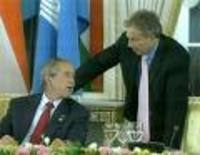 Bush continues, “But after the NIE, how could I possibly explain using the military to destroy the nuclear facilities of a country the intelligence community said had no active nuclear weapons program?” (Decision Points, p. 419)
Hands tied on the military side, US covert operations flowered, with $400 million appropriated at that same time for a major escalation of the dark-side struggle against Iran, according to military, intelligence, and congressional sources cited by Seymour Hersh in 2008. This clandestine but all-too-real war on Iran has included attacks with computer viruses, the murders of Iranian scientists, and what the Israelis call the “unnatural” demise of senior officials like Revolutionary Guards Major General Hassan Moghaddam father of Iran’s missile program.
Moghaddam was killed in a large explosion last November, with Time magazine citing a “western intelligence source” as saying the Israel’s Mossad was behind the blast. More threatening still to Iran are the severe economic sanctions, which are tantamount to an act of war.
Israeli Prime Minister Benjamin Netanyahu and pro-Israel neo-conservatives in the U.S. and elsewhere have been pushing hard for an attack on Iran, seizing every pretext they can find. Netanyahu was suspiciously fast off the blocks, for example, in claiming that Iran was behind the tragic terrorist bombing of Israeli tourists in Bulgaria on July 18, despite Bulgarian authorities and even the White House warning that it is too early to attribute responsibility.
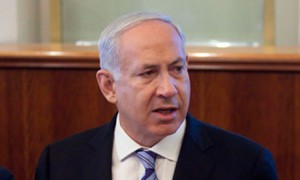 Netanyahu’s instant indictment of Iran strongly suggests he is looking for excuses to up the ante. With the Persian Gulf looking like an accident waiting to happen, stocked as it is with warships from the U.S., the U.K. and elsewhere — and with no fail-safe way of communicating with Iranian naval commanders — an escalation-generating accident or provocation is now more likely than ever.
July 23: Marking a Day of Infamy
Oddly, Sawers’s speech of July 4 came just as an important date approached — the tenth anniversary of a sad day for British intelligence on Iraq. On July 23, 2002 at a meeting at 10 Downing Street, then-MI6 head, John Dearlove, briefed Tony Blair and other senior officials on his talks with his American counterpart, CIA Director George Tenet, in Washington three days before.
In the official minutes of that briefing (now known as the Downing Street Memo), which were leaked to the London Times and published on May 1, 2005, Dearlove explains that George Bush has decided to attack Iraq and the war was to be “justified by the conjunction of terrorism and weapons of mass destruction.” While then-Foreign Secretary Jack Straw points out that the case was “thin,” Dearlove explains matter-of-factly, “The intelligence and facts are being fixed around the policy.”
 There is no sign in the minutes that anyone hiccupped — much less demurred — at making a case for war and furthering Blair’s determination to join Bush in launching the kind of “war of aggression” outlawed by the post-world war Nuremberg Tribunal and the UN treaty.
Helped by the acquiescence of their chief spies, the Blair government mainlined into the body politic un-assessed, raw intelligence and forged documents, with disastrous consequences for the world.
UK citizens were spoon-fed fake intelligence in the September Dossier (2002) and then, just six weeks before the attack on Iraq, the “Dodgy Dossier”, based largely on a 12-year old PhD thesis culled from the Internet — all presented by spy and politician alike as ominous premonitory intelligence.
So was made the case for war. All lies, resulting in hundreds of thousands dead and maimed and millions of Iraqis displaced — yet no one held to account.
Sir Richard Dearlove, who might have prevented this had he had the integrity to speak out, was allowed to retire with full honours and became the Master of a Cambridge college. John Scarlett, who as chair of the Joint Intelligence Committee signed off the fraudulent dossiers, was rewarded with the top spy job at MI6 and a knighthood. George W. Bush gave George Tenet the Presidential Medal of Freedom — the highest civilian award.
What need have we for further proof? “So are they all, all honourable men” — reminiscent of those standing with Brutus in Shakespeare’s play, but with no Mark Anthony to expose them and stir the appropriate popular reaction.
Therein lies the problem: instead of being held accountable, these “honourable men” were, well, honoured. Their soft landings offer a noxious object lesson for ambitious bureaucrats who are ready to play fast and loose with the truth and trim their sails to the prevailing winds.
Ill-got honours offer neither deterrent nor disincentive to current and future intelligence chiefs tempted to follow suit and corrupt intelligence rather than challenge their political leaders with hard, un-“fixed” facts. Integrity? In this milieu integrity brings knowing smirks rather than honours. And it can get you kicked out of the club.
Fixing Intelligence on Iran
Are we in for another round of “fixing” — this time on Iran? We may know soon. Israeli Prime Minister Netanyahu, citing the terrorist attack in Bulgaria, has already provided what amounts to a variation on Dearlove’s ten-year old theme regarding how war can be “justified by the conjunction of terrorism and weapons of mass destruction.”
According to the Jerusalem Post on July 17, Netanyahu said that all countries that understand that Iran is an exporter of world terror must join Israel in “stating that fact clearly,” in order to emphasize the importance of preventing Iran from obtaining a nuclear weapon.
Appearing yesterday on Fox News Sunday and CBS’s Face the Nation, Netanyahu returned to that theme. Putting the blame for the terrorist attack in Bulgaria squarely on Iran (and Hezbollah), Netanyahu warned of the increased dangers that would accrue if Iran acquired nuclear weapons. “What would be the consequences if the most dangerous régime in the world got the world’s most dangerous weapons?”.
Will MI6 chief Sawers model his conduct on that of his predecessors who “justified” war on Iraq? Will he “fix” intelligence around U.K./U.S./Israeli policy on Iran? Parliamentary overseers should demand a briefing from Sawers forthwith, before erstwhile bulldog Britain is again dragged like a poodle into another unnecessary war.
Annie Machon is a former intelligence officer in the UK’s MI5 Security Service and Ray McGovern is a fomer U.S Army Intelligence Officer and CIA analyst.
The Report on BBC Radio 4 — the Death of Gareth Williams
A look at the forensic and police failures around the investigation of the still inexplicable death of intelligence officer, Gareth Williams, in London in 2010.
Here’s the link.
La Conférence régionale du journalisme d’enquête, Geneva

 The end of April saw me basking in the hot and sunny weather of Geneva, where I had been invited to give a talk (Download Geneva) at the Swiss Press Club.
We had a lovely time in Geneva, and many thanks to Jean-Philippe Ceppi and the rest of the team for such a warm, interested and interesting welcome.
The Gareth Williams Inquest
What a mess, what a cover-up. The inquest into the sad, strange death of Gareth Williams concluded yesterday, with the coroner raising more questions than she was able to answer.
It was also patently obvious that both MI6 and the Metropolitan Police Counter-Terrorism Squad (SO15) hampered the investigation, for the inevitable reasons of “national security”.
When will MI6 realise that it is not above the law?
My heart goes out to Gareth’s family.
21st Century Pacificism (The Old Stuff)
 I have always been ideologically opposed to war and all the horrors that flow in its wake: agonising fear and death, famine, displacement, maiming, torture, rape, internment and the breakdown of all the hard-won values of civilised human law and behaviour.
Looking back, I think that was partly why I was attracted to work in diplomacy and how I ended up being enticed into intelligence. These worlds, although by no means perfect, could conceivably be seen as the last-ditch defences before a country goes bellowing into all-out war.
I marched against the Iraq war, toured the UK to speak at Stop the War meetings, worked with Make Wars History, and have ceaselessly spoken out and written about these and related issues.
 Today in the UK we have reached a consensus that Blair’s government lied to the country into the Iraq war on the false premise of weapons of mass destruction, and subsequently enabled the Bush administration to do the same in the USA, hyping up the threat of a nuclear Iraq using false intelligence provided by MI6.
Millions of people marched then, and millions of people continue to protest against the ongoing engorgement of the military/intelligence complex, but nothing ever seems to change. It’s democratically disempowering and an enervating experience. What can we do about it?
I have a couple of suggestions (The New Stuff), but first let’s look at some of the most egregious current fake realities.
 Last year we had the spectacle of the current No 10 incumbent, Dave Cameron, stating that the Libyan intervention would be nothing like Iraq — it would be “necessary, legal and right”. But there was no subsequent joined-up thinking, and Blair and his cronies have still not been held to account for the Iraq genocide, despite prima facie breaches of international war law and of the Official Secrets Act.…
 But help might be at hand for those interested in justice, courtesy of Abdel Hakim Belhaj, former Libyan Islamic Fighting Group leader, MI6 kidnapping and torture victim, and current military commander in Tripoli.
After NATO’s humanitarian bombing of Libya last year and the fall of Gaddafi’s régime, some seriously embarrassing paperwork was found in the abandoned office of Libyan Foreign Minister and former spy head honcho, Musa Kusa (who fled to the UK and subsequently on to Qatar).
These letters, sent in 2004 by former MI6 Head of Terrorism and current BP consultant, Sir Mark Allen, gloatingly offer up the hapless Belhaj to the Libyans for torture. It almost seems like MI6 wanted a gold star from their new bestest friends.
Belhaj, understandably, is still slightly peeved about this and is now suing MI6. As a result, a frantic damage-limitation exercise is going on, with MI6 trying to buy his silence with a million quid, and scattering unattributed quotes across the British media: “it wasn’t us, gov, it was the, er, government.…”.
Which drops either (or both) Tony Blair and Jack Straw eyebrow-deep in the stinking cesspit. One or other of them should have signed off on Belhaj’s kidnapping, knowing he would be tortured in Tripoli. Or perhaps they actually are innocent of this.…. but if they didn’t sign off on the Belhaj extraordinary kidnapping, then MI6 was running rampant, working outside the law on their watch.
Either way, there are serious questions to be answered.
 Both these upstanding politicians are, of course, suffering from political amnesia about this case. In fact, Jack Straw, the Foreign Secretary at the time of the kidnapping, has said that he cannot have been expected to know everything the spies got up to — even though that was precisely his job, as he was responsible for them under the terms of the Intelligence Security Act 1994, and should certainly have had to clear an operation so politically sensitive.
In the wake of Afghanistan, Iraq and Libya, what worries me now is that exactly the same reasons, with politicians mouthing exactly the same platitudinous “truths”, are being pushed to justify an increasingly inevitable strike against Iran.
Depressing as this all is, I would suggest that protesting each new, individual war is not the necessarily the most effective response. Just as the world’s markets have been globalised, so manifestly to the benefit of all we 99%-ers, have many other issues.
Unlike Dave Cameron, we need to apply some joined-up thinking. Global protest groups need to counter more than individual wars in Iraq, Afghanistan, Pakistan, Somalia, Libya, Sudan (North and South), Syria, Iran.….. sorry, I’m getting writer’s cramp just enumerating all the current wars.
Give me a while to overcome my moral spasm, and I shall return with a few suggestions about possible ways forward — 21st Century Pacifism; the New Stuff.
The Scandinavian Tour 2012
I had an immensely stimulating time during my recent mini-tour of Scandinavian investigative journalism conferences, meeting informed, interesting, and interested people.
The focus of my talks was the nexus between the intelligence world and the media — lessons I had learned, researched and deduced during the whistleblowing years and beyond. I have heard so many hair-raising media stories over the years.…
And, having listened to the experiences of journalists from a wide variety of other countries, it seems I am on the right track.
 First stop was the Grav conference in Sweden, where I gave a talk and had the pleasure of meeting investigative journalists who confirmed what I was saying, even if some of them didn’t think I had quite gone far enough! We also had fun at the “mingel” evening.
Next stop, next day, was the SKUP conference in Norway where I did a talk, and also a debate about the media and whistleblowers. Note to self: never, ever agree to do a morning debate after the legendary SKUP party the night before.
Finally, last weekend, I visited the Tutki 2012 journalism conference in Finland (Download Helsinki_Talk). The response was overwhelmingly positive, and once again I had confirmation of what I was saying from the journalists themselves.
So what can we do about this situation? I shall keep spreading the word, and the journalists themselves just need to keep saying a resounding “no” to the inducements, at least if they want to work on meaningful investigations. And what real journalist doesn’t, au fond?
Next stop Geneva, which is why I’m limbering up with the French.
A blast from the past
How strange to stumble across this article in the Guardian newspaper yesterday, which describes a journalist’s justifiably paranoid experiences interviewing David Shayler and me back in 2000 while writing an article for Esquire magazine.
The author, Dr Eamonn O’Neill, now a lecturer in journalism at Strathclyde University, spent a few days with us in London and Paris way back when.
 The Esquire article highlights the paranoia and surveillance that we had to live with at the time, and the contradictory briefings and slanders that were coming out of the British establishment and the media. O’Neill also intelligently tries to address the motivations of a whistleblower.
When it was published I was mildly uncomfortable about this article — I felt it didn’t do David full justice, nor did it appear to get quite to the heart of the issues he was discussing. I suppose, at the time, I was just too enmeshed in the whole situation.
Now, with hindsight, it is more perspicacious than I had thought. And rather sad.
This article is a timely reminder of how vicious the establishment can be when you cause it embarrassment and pain; the treatment meted out to David Shayler was brutal. And yet nothing has changed to this day, as we can see with the ongoing pursuit and vilification of Wikileaks.
“Subversion” old and new
 An interesting article in yesterday’s Telegraph by political commentator Peter Oborne about Abu Qatada. This case has caused much sound and fury amongst the British political and media classes over the last couple of days. Oborne’s article strips out the bombast and takes us back to basic principles — as did this other recent article in the Independent a day or two ago by Christina Patterson.
However, what really grabbed my attention in Oborne’s article was his reference to David Maxwell Fyfe, the British politician and lawyer who was tasked by Sir Winston Churchill to lay the foundations of the European system of human rights after the atrocities of World War Two — a period when the need for basic rights was seared into people’s minds.
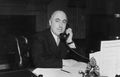 While Maxwell Fyfe laid some good foundations for European law, his name also has resonance to all who worked for the UK domestic Security Service, MI5, during or in the immediate aftermath of the Cold War. It was Maxwell Fyfe’s directive, issued in 1952, that was instrumental in allowing MI5 to spy on British political activists subversives. This directive remained in place until 1989, when MI5 was placed on a legal footing for the first time in its then 80 year history, with the Security Service Act 1989. Here is a segment about the Maxwell Fyfe directive from my old book, “Spies, Lies and Whistleblowers”:
“Background to subversion
At this time MI5 was still using the same criteria for recording individual subversives and their sympathisers as was set out by Home Secretary David Maxwell-Fyfe in 1952. He called on the services to identify any individual engaged in undermining Parliamentary democracy, national security and/or the economic well-being of the UK by violent, industrial or political means. In fact, many would argue that groups who used only political means to get their point across were merely exercising their democratic rights. In fact, MI5 used photos of demonstrations, copies of election lists and even lists of subscribers to radical left-wing book clubs as indicators of subversive sympathy and membership. Of course, the world was a very different place when I joined the section, almost 40 years after Maxwell-Fyfe’s declaration, not least because of the disintegration of the Soviet Union and its Eastern bloc allies.
 From Maxwell-Fyfe’s statement to Parliament, which was never made law, MI5 and subsequent governments used to argue that all members of certain parties –such as the Communist Party of Great Britain (CPGB) or later the bewildering array of Trotskyists, with names like the International Marxist Group (IMG), Workers’ Revolutionary Party (WRP) Major and Minor, Revolutionary Communist Party (RCP) and Revolutionary Communist Group (RCG), anarchists and the extreme right — were threats to the security of the state or our democratic system. This in itself is a contentious proposition. None of these Trotskyist groups was cultivating Eastern bloc finance or building bombs in smoky back rooms, but were instead using legitimate democratic methods to make their case, such as standing in elections, organising demonstrations and educating ‘the workers’. They certainly had no allegiance to a foreign power, the primary raison d’etre for the investigation of subversion, because, unlike the Communist Party, they abhorred the Eastern bloc.
 Since MI5 was effectively investigating individuals for holding opinions the government did not like — a very un-British position — it was always at pains to point out that it took its responsibilities with regard to human rights very seriously, although not seriously enough to ensure that these activities were regulated by a legal framework. All the service’s phone taps prior to the passing of the Interception of Communications Act (IOCA) in 1985 were unlawful because there was no legislation governing the interception of communications.”
The directive was not a legally binding document, but it was the basis for the work of F Branch, MI5’s massive section tasked with hunting “subversives” during those decades. It allowed intelligence officers great latitude in interpreting what was deemed subversive activity and who were “legitimate’ targets. And yet there were many, many instances of the abuse of this system by paranoid, senior intelligence officers over the years. More information can be found in this chapter on subversion from the book.
So my point is, yes, Britain ostensibly led the way in developing a system to protect human rights in the aftermath of the Second World War. But the very architect of that system then produced the directive that gave British spies carte blanche to investigate political dissidents within their own country, which they abused for decades.
 And now we have commentators rightly saying that we should uphold basic human rights’ values in cases such as Abu Qatada. But what about all the UK activists who were illegally investigated by MI5 from 1952 to the 1990s? And, more pertinently today, what about all the activists and protesters who have been aggressively spied upon by the unaccountable, undercover police of the NPOIU since the 1990s, under the illegal category of “domestic extremists”?
I was heartened to see 87 year old artist and peace activist John Catt is suing the NPOIU for intrusive surveillance over the last 6 years. Perhaps he should quote Maxwell Fyfe on human rights during his case?
One man’s terrorist is another man’s activist
Here we go again. In this heartwarming article in today’s Guardian newspaper, British MPs on the Home Affairs Committee have decided that the internet is the most significant factor in the radicalisation of violent extremists and conclude that Something Must Be Done.
One paragraph leapt out at me:
“The Commons home affairs committee says internet service providers need to be as effective at removing material that promotes violent extremism as they are in removing content that is sexual or breaches copyright.” (My emphasis.)
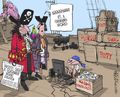 Most of us are aware of the recent dogfight in the US about the proposed SOPA and PIPA laws to crack down on copyright infringement and, as a result, there is a somewhat belated but steadily increasing outcry in Europe about the imminent imposition of ACTA across the continent.
I have written before about how such laws provide the military-intelligence complex with the perfect stalking horse for a panoptic surveillance state, and the campaigning writer, Cory Doctorow, summed it up beautifully when he wrote that “you can’t make a system that prevents spying by secret police and allows spying by media giants”.
And, lo, it is now apparently coming to pass. The Parliamentary half-wits are now proposing to use commercial legislation such as the utterly undemocratic ACTA as a benchmark for countering potential terrorists and extremists. Might they have failed to notice the plethora of existing counter-terrorism and eavesdropping legislation, put in place for this very purpose and already much used and abused by a wide range of public bodies in the UK?
This yet again highlights the mission-creepy Big Brother corporatist group-think. Rather than having to spell it out in boring old linear text, here is some useful linkage — what I like to think of as 3‑D writing:
Protester = activist = domestic extremist = violent extremist = terrorist
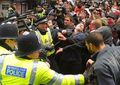
I’m sure you can see where I am heading. To name but a few notorious abuses, we already live in a world where western governments and spy agencies collude in the kidnapping, torture and assassination of alleged terrorist suspects; the NDAA now endorses these practices within the US; British police spy on innocent protest groups for years; legitimate protesters can be “kettled”, beaten up and maced; activists can be pre-emptively arrested as easily in the UK as in Syria; and where American politicians want to designate the high-tech publishing organisation Wikileaks as a terrorist group.
There is an old aphorism that one man’s terrorist was another man’s freedom fighter. I think the time has come for an update:
One man’s terrorist is another man’s activist.
And we are all increasingly at risk.
Judicial rendition — the UK-US extradition treaty is a farce
Sometimes I sit here reading the news — on subjects in which I take a deep interest such as the recent police investigation into UK spy complicity in torture, where the police decided not to prosecute — and feel that I should comment. But really, what would be the point? Of course the police would not find enough concrete evidence, of course no individual spies would be held to account, despite the fact that the British government has already paid massive settlements to the victims.
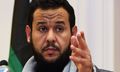 Now there are reports that the police will be investigating MI6 involvement in the extraordinary rendition and torture of two Libyans. The case appears bang to rights, with documentary evidence that high-ranking MI6 officers and government ministers were involved in and approved the operation. Yet I’m willing to bet that the plods at Scotland Yard will still not be able to find the requisite evidence to prosecute anybody.
The inevitable (and probably wished-for outcome on the part of the authorities) is that people become so weary and cynical about the lack of justice that they stop fighting for it. And they can temporarily succeed, when we succumb to cynical burnout.
But the case reported in today’s Daily Mail, that of a young British student facing extradition to the US despite having broken no laws in the UK, succeeded in rousing my wrath.
 The hapless 23-year old Richard O’Dwyer faces 10 years in a maximum security American prison. His crime, according to the US, is that he set up a UK-based website that provided links to other international websites that allegedly hosted copyright material.
This case is so troubling on so many levels it is difficult to know where to begin. There are issues around the crackdown of US corporate copyright law, issues around the inequality of the unilateral Extradition Act 2003, and historic questions of US hypocrisy about extradition.
So let’s start with the unsupported allegations against poor Richard O’Dwyer. He is a student who built a website that collated a list of sites in other countries that host films, books and music for free download. O’Dwyer did not himself download any copyrighted material, and the websites he linked to were apparently within jurisdictions where such downloads are not illegal. Providing a signpost to other legal international sites is manifestly not a crime in the UK and he has never been charged.
However, over the last couple of decades the US entertainment lobby has been fighting a vicious rearguard action against copyright infringement, starting with the music, then the film, and now the publishing industry. The lobbyists have proved victorious and the invidious SOPA and PIPA laws are soon to be passed by the US Congress. All well and good you might think — it’s one of those mad US issues. But oh no, these laws have global reach. What might be legal within the UK might still mean that you fall foul of US legislation.
 Which is where the Extradition Act 2003 becomes particularly threatening. This law means that any UK citizen can be demanded by and handed over to the US with no prima facie evidence. As we have seen in the appalling case of alleged hacker Gary McKinnon, it matters not if the “crime” were committed on UK soil (as you can see here, McKinnon’s case was not prosecuted by the UK authorities in 2002. If it had been, he would have received a maximum sentence of 6 months’ community service: if extradited he is facing up to 70 years in a US maximum security prison).
The UK government has tried to spin the egregious Libyan cases as “judicial rendition” rather than “extraordinary kidnapping” or whatever it’s supposed to be. So I think it would be accurate to call Gary McKinnon’s case “judicial rendition” too, rather than boring old extradition.
Richard O’Dwyer apparently didn’t commit anything that could be deemed to be a crime in the UK, and yet he is still facing extradition to the US and a 10 year stretch. The new US laws like SOPA threaten all of us, and not just with judicial rendition.
As I have mentioned before, digital rights activist Cory Doctorow summed it up best: “you can’t make a system that prevents spying by secret police and allows spying by media giants”. These corporate internet laws are a Trojan horse that will threaten our basic civil liberties across the board.
So now to my third point. The hypocrisy around the American stance on extradition with the UK is breathtaking. The UK has been dispatching its own citizens off at an alarming rate to the “tender” mercies of the US judicial system since 2004, with no prima facie evidence required. In fact, the legal proof required to get a UK citizen extradited to the US is less than that required for someone to be extradited from one US state to another.
The US, on the other hand, delayed ratifying the law until 2006, and the burden of proof required to extradite someone to the UK remains high, so it is unbalanced not only in concept but also in practice. And this despite the fact that the law was seen as crucial to facilitate the transfer of highly dangerous terrorist suspects in the endless “war on terror”.
Why has this happened? One can but speculate about the power of the Irish lobby in the US government, as Sir Menzies Campbell did during a parliamentary debate about the Act in 2006. However, it is well known that the US was remarkably coy about extraditing IRA suspects back to the UK to stand trial during the 30-year “Troubles” in Northern Ireland. We even have well-known apologists such as Congressman Peter King, the Chairman of the Homeland Security Committee attempting to demonise organisations like Wikileaks as terrorist organisations, while at the same being a life-long supporter of Sinn Féin, the political wing of the Provisional IRA.
 The double standards are breath-taking. The US dictates an extradition treaty with the UK to stop terrorism, but then uses this law to target those who might potentially, tangentially, minutely threaten the profits of the US entertainment mega-corps; and then it delays ratifying and implementing its own law for potentially dubious political reasons.
And the UK government yet again rolls over and takes it, while innocent students such as Richard O’Dwyer must pay the price. As his mother is quoted as saying: “if they can come for Richard, they can come for anyone”.
Book Review on “Epilogue”
Reviewing “The Art of Betrayal” on Press TV’s Epilogue with former MP Derek Conway and Glenmore Treanar-Harvey.
Mediafabric talk, Prague, October 2011
Last October I had the pleasure of speaking at the excellent Mediafabric conference in Prague. The focus of my talk was the future of intelligence, whistleblowing and journalism.
The event was organised by Sourcefabric, an international organisation that provides open source tools and solutions for journalists, so it was an eclectic and stimulating crowd of journalists, geeks, hacktavists and designers. So well done and thank you to the organisers.
Here’s the video: